
Why Hiring Feels Harder Than It Should
If you run a small or mid sized business, you’ve probably felt this.
You need people.
Good people.
And you need them now.
But hiring keeps dragging on. Roles stay open. Your team feels stretched thin. Leaders end up doing interviews late at night. And every bad hire costs more than most teams expect.
I’ve worked with many growing businesses, and most leaders reach the same realization.
Hiring usually starts breaking long before companies ask for help.
That’s where RPO comes in, when it’s done the right way.
What RPO Is and Why SMBs Use It Differently
Recruitment Process Outsourcing, or RPO, means outsourcing part or all of your hiring process to a dedicated recruiting team.
That support can include
• Sourcing candidates
• Screening and interviews
• Recruiter support
• Hiring coordination
• Process support and reporting
What matters most is how it’s applied.
RPO for SMBs Is Not Enterprise RPO
Most RPO content is written for large companies. That approach rarely works well for smaller teams.
SMBs are different because
• Hiring volume is lower but more urgent
• Budgets are tighter
• Each hire has a bigger impact
• Flexibility matters more than scale
Small and mid sized businesses usually do not need a full RPO model. They need focused support that fits into how they already operate.
Why More SMBs Are Turning to RPO
I see the same pattern play out again and again.
Companies handle hiring internally for as long as they can. Early on, it works. Then growth picks up. Hiring becomes reactive. Eventually, the process starts to strain the business.
Here are the real reasons SMBs begin exploring RPO.
The Real Drivers Behind RPO Adoption
• Internal HR feels overwhelmed
• Founders and leaders spend too much time recruiting
• Time to hire keeps increasing
• Bad hires cost more than expected
• The talent market is more competitive
RPO gives SMBs access to experienced recruiters without adding full time overhead. When done well, it also brings structure, consistency, and better decision making.
The Hidden Cost of Delayed Hiring
Most leaders think about hiring costs as recruiter fees.
That’s only part of the picture.
The real cost also includes
• Lost revenue from open roles
• Team burnout
• Missed growth opportunities
• Rushed decisions that lead to poor hires
For SMBs, one wrong hire can slow growth for months.
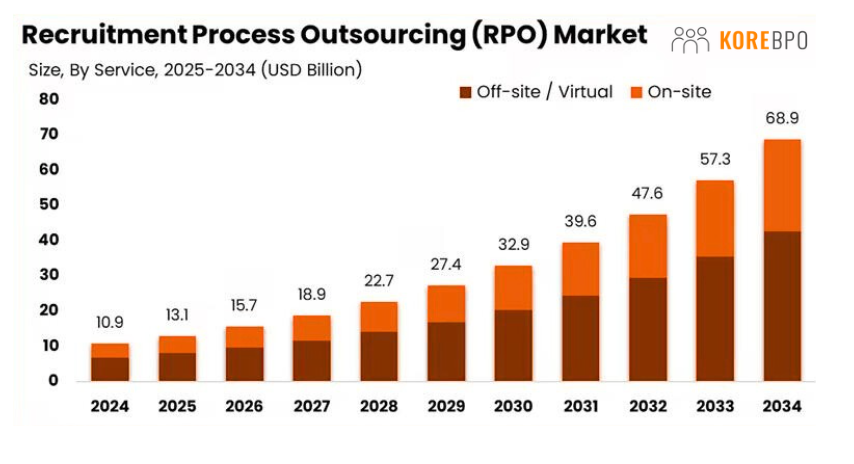
RPO Market Trends SMB Leaders Should Know
The RPO market is growing quickly. That affects pricing, quality, and how many providers are available.
What’s Driving Growth
• Ongoing talent shortages
• Remote and global hiring
• Better recruiting tools
• Demand for flexible staffing models
Why This Matters for SMBs
More providers now offer SMB friendly models. That’s helpful, but it also makes choosing the right partner harder.
Not every provider that says they support SMBs actually understands how SMBs operate.
How to Evaluate RPO Providers as an SMB
This is where most comparison articles miss the mark. Listing provider names without context does not help.
Here’s what actually matters.
The 7 Criteria SMBs Should Focus On
• Experience with small and mid-sized businesses
• Flexible engagement options
• Speed to first qualified candidate
• Recruiter quality and specialization
• Clear communication and reporting
• Ability to integrate with your team
• Transparent pricing and expectations
If a provider only talks about enterprise clients, that’s usually a warning sign.
Metrics That Matter More Than Volume
Large companies focus on scale. SMBs focus on results.
Pay attention to metrics like
• Time to first candidate
• Time to fill
• Hiring manager satisfaction
• 90 day retention
If a provider can’t clearly explain how they track these, keep looking.
Best RPO Providers for Small and Mid-Sized Businesses
Not every RPO provider is a fit for SMBs. Some are built for high volume. Others are designed for flexibility and integration.
When evaluating providers, focus on how well they match your operating style.
What Strong SMB RPO Partners Have in Common
• Recruiters who work like part of your team
• Support that can scale up or down
• Clear ownership and accountability
• Simple processes that do not slow hiring
Be cautious of providers that push long contracts before proving value.
RPO Pricing Models Explained
Pricing is one of the biggest questions and one of the least explained topics.
Here’s a simple breakdown.
Common RPO Pricing Models
• Cost per hire
• Monthly retainer
• Hybrid models that combine both
What SMBs Can Expect
Pricing depends on role complexity, hiring volume, and scope. Transparency matters more than the model itself.
If pricing feels vague, problems usually show up later.
When RPO Is Not the Right Fit
RPO is effective, but it’s not always the answer.
It may not be the right move if
• You only hire once or twice a year
• Roles are not clearly defined
• Leadership can’t commit time early in the process
A good provider will be honest about this upfront.
Common RPO Mistakes SMBs Make
These issues come up more often than they should.
Where Things Go Wrong
• Choosing providers built for enterprise hiring
• Expecting immediate results without setup
• Fully handing off hiring with no internal ownership
• Failing to define success early
RPO works best as a partnership, not a handoff.
What SMB Leaders Learn After Using RPO
These lessons tend to surface after a few hiring cycles.
Lessons From Real Engagements
• Partial outsourcing often works better than full outsourcing
• Integration matters more than vendor relationships
• Transparency builds trust faster than promises
• Starting small reduces risk
Learning these earlier saves time and money.
How to Choose the Right RPO Partner Step by Step
If you’re evaluating providers, use a simple process.
A Simple Selection Framework
Define your hiring goals
Identify internal gaps
Shortlist providers with SMB experience
Start with a pilot or limited scope
Review results after 60 to 90 days
Questions to Ask Before You Sign
• Who will actually work on our roles?
• How fast can we expect results?
• How do you support low volume hiring?
• What does success look like in the first 90 days?
Clear answers matter more than polished sales materials.
FAQs
What does RPO actually cover for a small business?
It typically includes sourcing, screening, interview coordination, and recruiter support focused on the most time consuming hiring tasks.
Is RPO only for fast growing companies?
No, it also works for stable SMBs that hire consistently but lack internal recruiting capacity.
What is the difference between RPO and a staffing company?
In fact, RPO enhances your recruitment process as it helps fill jobs while onboarding, instead of filling jobs one by one.
Is a full-time hiring manager necessary to work with RPO?
No, you just need a clear point of contact and defined hiring priorities.
When can SMBs see results?
In most SMBs, noticeable results are observed between 30 to 60 days.
Final Thoughts for SMB Leaders
Hiring should support growth, not slow it down.
The right RPO partner helps you move faster, hire better, and free up leadership time. The wrong one adds friction.
Focus on fit. Focus on transparency. Start small when needed.
Want Help Deciding If RPO Makes Sense for Your Business
If you’re unsure whether RPO is the right move, that’s normal.
If you want a practical conversation about hiring goals, challenges, and options, reach out. Ask questions. Share your situation. Or book time to talk through next steps. The goal isn’t outsourcing for the sake of it.
The goal is to build a hiring system that actually works.
