

If you’ve tried to hire an experienced accountant in the last 2 years, you already know the problem. It’s slow. It’s expensive. And even when you find someone solid, you’re often paying $70k to $110k before benefits, taxes, and overhead.
Meanwhile, reporting deadlines haven’t slowed down. Compliance hasn’t become easier. Investors still expect clean numbers every month.
Across the SMB market, growth isn’t breaking sales teams first. It’s breaking finance.
That’s why more companies are building offshore accounting teams. Not because it’s trendy. Not because it’s low cost labor. But because it solves real operational pressure.
Your business may need an offshore accountant now, not 2 years from now.
What Is Offshore Accounting?
Offshore accounting means hiring qualified accounting professionals in another country to handle defined finance functions for your business.
This often includes
- Accounts payable and receivable
- Bank reconciliations
- Payroll processing
- Month end close support
- Financial reporting preparation
- Bookkeeping and transaction coding
Random outsourcing is not the same as this. A committed team member who works within your systems, adheres to your SOPs, and reports to your leadership is provided by a structured offshore model.
When done right, it truly feels like an extension of your internal team.
The Talent Shortage Is Not Temporary
Many leaders assume the accounting hiring market will normalize soon. That’s unlikely.
The CPA workforce is aging. Fewer graduates are entering accounting programs. Experienced controllers are being pulled into strategic roles faster than companies can replace them.
If you’re waiting for salaries to drop or hiring to become easy again, you may be waiting a long time.
An offshore accountant gives you access to a global talent pool instead of competing only in your local market.
Labor Costs Are Climbing Faster Than Revenue
Consider the numbers.
A mid level in house accountant can cost
- $80k base salary
- 20% to 30% benefits and taxes
- Recruiting fees
- Training time
- Software licenses
The real cost can easily reach $100k or more each year.
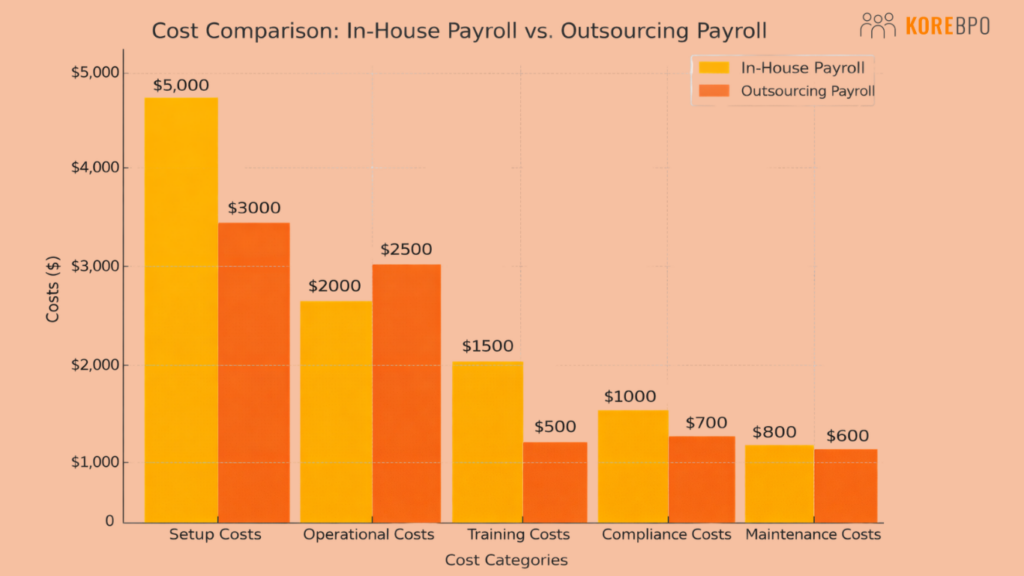
An offshore accounting professional with similar technical capability may cost 40% to 60% less, depending on role and experience. (madrasaccountancy.com)
That difference compounds every year.
This isn’t about cutting corners. It’s about allocating capital wisely so your business can scale.
Growth Breaks Finance First
Here’s a common pattern.
A company grows from $3M to $10M in revenue. Sales are strong. Revenue looks healthy. But finance is still run by 1 bookkeeper and a part time controller.
Then pressure builds.
- Month end close stretches from 5 days to 15.
- Reporting becomes reactive.
- Cash flow visibility drops.
- Errors increase.
An offshore accountant stabilizes that layer before it cracks.
Stability in finance protects everything else.
Offshore Accounting ROI and What the Math Looks Like
Most owners want to understand the return before making a move.
A practical transition model follows a 30 60 90 day structure.
First 30 days focus on process mapping, access setup, and SOP documentation.
Days 30 to 60 focus on parallel processing, quality checks, and workflow refinement.
Days 60 to 90 focus on full responsibility transition, KPI tracking, and performance stabilization.
In many cases, cost savings begin offsetting transition costs within the first year.
ROI isn’t only financial.
You also gain
- Faster close cycles
- Cleaner reporting
- Reduced leadership stress
- Capacity to scale without emergency hiring
Offshore Versus In House Accounting
In house model
- High fixed payroll costs
- Limited local talent pool
- Slow hiring cycles
- Less flexibility during downturns
Offshore model
- Lower variable cost structure
- Access to global accounting talent
- Faster onboarding
- Scalable team expansion
This doesn’t mean eliminating internal finance leadership. It means building a hybrid model.
Strategic oversight stays internal. Process driven execution scales offshore.
What Tasks Should You Offshore First?
If you’re considering offshore accounting, don’t move everything at once.
Start with repeatable, rules based functions
- Accounts payable
- Accounts receivable
- Bank reconciliations
- Expense coding
- Payroll support
- Reporting preparation
Keep strategic planning, investor communication, and high level financial decisions in house.
The goal is leverage, not loss of control.
Is Offshore Accounting Safe?
This question matters.
Offshore accounting works when structure and accountability are clear.
Strong offshore models include
- Role based system access
- Documented workflows
- Defined KPIs
- Regular reporting cadence
- U.S. compliance alignment where required
Risk usually comes from poor process design, not geography.
Who Benefits Most From an Offshore Accountant?
Companies that benefit most include
- SMBs scaling past $5M in revenue
- IT and service firms with recurring billing complexity
- Executive teams stretched thin
- Businesses preparing for funding or acquisition
If your finance team feels reactive instead of proactive, that’s a signal.
When Offshore Accounting Might Not Be the Right Fit
Offshore accounting may not be ideal if
- Your processes are undocumented
- You resist structured oversight
- You expect zero onboarding time
Like any team expansion, it requires management and clear accountability.
When implemented correctly, it becomes a long term competitive advantage.
How to Successfully Transition to Offshore Accounting
If you’re ready to explore this approach, start with a clear plan.
- Audit your current accounting workflow.
- Identify repetitive and time heavy processes.
- Document clear SOPs.
- Define measurable KPIs.It’s different from random outsourcing. Transition gradually over 60 to 90 days.
This approach reduces friction and increases long term success.
FAQs
How soon can an offshore accountant realistically get started?
Most structured engagements can be initiated within 30 days, and a complete transition process can be achieved in 60 to 90 days.
Will my financial reporting suffer if I move offshore?
Not if it’s set up correctly, because defined KPIs and internal review layers often improve both accuracy and turnaround time.
How much can a small business actually save with offshore accounting?
Depending on the structure, many businesses reduce accounting labor costs by 40 to 60 percent each year.
Do I lose control of my finances if I outsource offshore?
No, leadership and decision making stay with you while the offshore team supports the day to day execution.
What’s the biggest mistake during an offshore transition?
The biggest issue is unclear processes, which is why documentation, structured onboarding, and defined accountability matter so much.
Final Thoughts
Offshore accounting is no longer just a cost strategy. It’s a resilience strategy.
Companies that build hybrid finance teams today move faster, scale cleaner, and operate with better visibility tomorrow.
If you’re feeling pressure in your finance department, you’re not alone. Many growing businesses are experiencing the same strain.
If you’d like to evaluate whether an offshore accountant makes sense for your business, schedule a strategy call with our team at Kore BPO. We’ll walk through your current structure, cost profile, and growth plans with you.
You’ll get a clear roadmap, structured implementation guidance, and a team that integrates seamlessly with your operations.
