

Hiring experienced backend engineers has become one of the hardest problems for growing tech companies. I’ve worked with enough founders and IT leaders to see the same pattern repeat over and over.
The product roadmap is good. The funding is in place. The problem is that hiring good engineers, especially backend developers who can work on big systems, takes much longer than expected.
In many cases, hiring a senior backend engineer can take as long as 60–120 days. The product roadmap is moving. (trio.dev/)
That’s one of the reasons more companies are turning to offshore development teams.
The global IT outsourcing market is already worth over $600B, and it continues to grow as companies look for ways to scale development faster while controlling costs.
But here’s the truth most blog posts skip.
Offshore hiring isn’t just about saving money. When done correctly, it gives companies something much more valuable.
Benefits include:
- Faster access to experienced engineers
- Ability to scale development teams quickly
- Access to global talent pools that are difficult to reach locally
In this guide, I’ll walk through how SaaS companies and enterprise teams hire offshore Java developers the right way—based on what we’ve seen work in real-world projects.
Why Companies Hire Offshore Java Developers
Most companies turn to offshore engineers for one core reason: capacity
Companies need to hire faster than local markets allow.
Growing Demand for Backend Engineering Talent
Software development needs continue to grow for businesses across a wide range of industries.
Enterprise businesses, software-as-a-service businesses, fintech platforms, and logistics businesses are the types of businesses that need backend infrastructure to be strong.
But seasoned engineers, especially those who have a track record of working on large-scale systems, are not easy to hire.
Common hiring challenges:
- Limited local talent pools
- Long hiring cycles
- Rising developer salaries
- Competition with Large Tech Companies
Offshore hiring helps organizations bypass many of these constraints.
Access to Global Java Talent Pools
Java is one of the most popular programming languages for enterprise systems. That means large developer communities exist around the world.
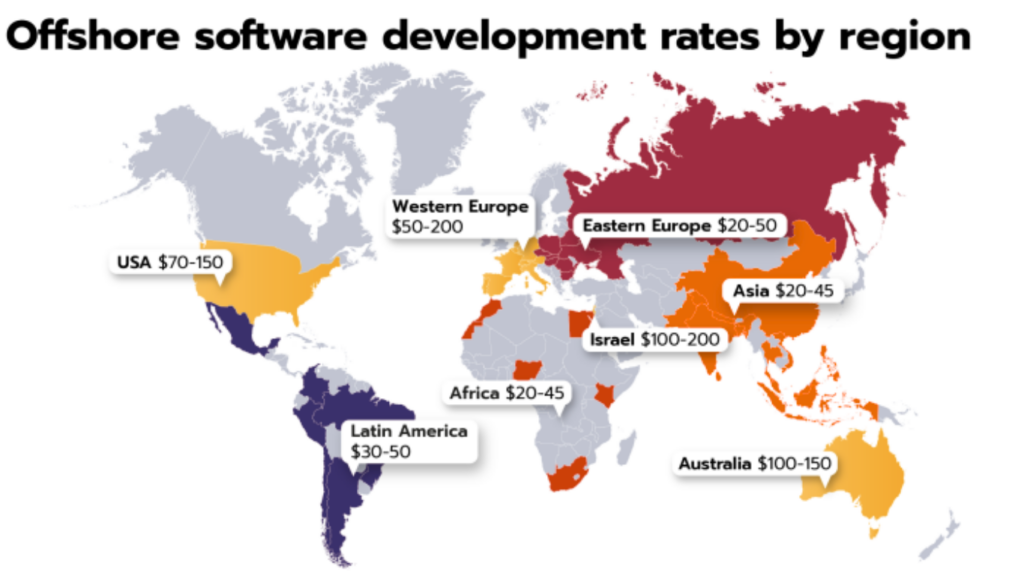
Some popular offshore destinations for Java development
- Eastern Europe (Poland, Ukraine, Romania)
- Southeast Asia (Philippines, Vietnam)
- Latin America (Brazil, Mexico, Colombia)
These countries have robust engineering education systems and mature outsourcing infrastructure
Why Java Is Still Critical for SaaS and Enterprise Systems
Newer technologies may have emerged, but Java remains one of the key technologies for large-scale systems.
It is widely used in finance, logistics, healthcare, and other SaaS applications where reliability is paramount.
Java’s Strength in Enterprise Environments
There are a number of reasons for Java’s continued success in the enterprise space.
Key advantages
- Mature ecosystem and libraries
- Stability and long-term support
- Strong performance through the JVM
- Compatibility with modern cloud platforms
If you need a system to run reliably for years, Java is still one of the safest bets.
The Enterprise Java Technology Stack
When it comes to hiring offshore Java developers, the typical requirements are for developers to have experience working with the modern Java stack.
Common technologies include
- Spring Boot
- Hibernate
- RESTful APIs
- Docker
- Kubernetes
- AWS, Azure, or Google Cloud
- CI/CD pipelines
A developer who knows this entire stack is worth ten times more than a developer who knows the language alone.
Offshore Hiring Models Explained
Before hiring offshore developers, it is helpful to understand the different models. Each of the models works best in different situations.
Dedicated Development Teams
This model creates a long-term engineering extension of your internal team.
Developers typically
- Attend daily standups
- Work inside sprint cycles
- Follow internal engineering standards
For SaaS platforms, this is usually the most effective approach.
Staff Augmentation
Staff augmentation allows companies to add engineers to an existing team.
This works well when
- Internal engineering leadership already exists
- Teams need additional capacity
- Projects need to scale quickly
Project-Based Outsourcing
This model involves handing off a clearly defined project to an external team.
This model works best when
- Project scope is fixed
- Specific expertise is missing internally
- Minimal internal management is preferred
Step-by-Step Guide to Hiring Offshore Java Developers
The recruitment of offshore developers should be a well-planned activity. Organizations having difficulties with offshore development are typically those organizations that rush the recruitment of developers.
Here’s the framework we typically recommend.
Step 1: Define Technical Requirements
Start with clarity about the system you’re building.
Important questions
- Is the system microservices-based or monolithic
- Which cloud infrastructure is used
- What frameworks are required
Define technical requirements such as
- Java version
- Spring Boot experience
- API design experience
- Database technologies
- Cloud deployment skills
This step prevents hiring developers whose experience doesn’t match the project.
Step 2: Choose the Right Offshore Region
Different regions offer different advantages.
Important considerations
- Time-zone overlap
- English proficiency
- Developer availability
- Hourly rates
For example
- Eastern Europe often offers a strong engineering education
- Latin America offers convenient time zones for US companies
- Southeast Asia provides competitive pricing
Step 3: Evaluate Technical Skills
When screening developers, look beyond basic coding ability.
Strong offshore Java developers usually demonstrate
- Microservices architecture knowledge
- API design experience
- Familiarity with containerization
- Cloud deployment experience
- Test-driven development practices
Coding tests can also help validate practical skills
Step 4: Assess Communication Skills
Communication is one of the biggest success factors for offshore teams.
During interviews, evaluate:
- English proficiency
- Ability to explain technical concepts clearly
- Experience working in distributed teams
Developers who communicate clearly tend to integrate much faster into remote teams.
Step 5: Conduct Technical Interviews
Technical interviews should include theoretical as well as practical knowledge.
Example questions include:
- How does JVM memory management work
- How would you design a scalable REST API
- What strategies prevent microservice failures
These questions help identify engineers who understand system architecture—not just coding syntax.
Step 6: Start with a Trial Project
One strategy we often recommend is a short trial engagement.
Trial projects may include
- Building a small API feature
- Integrating with an existing system
- Implementing a backend service
Trial projects help assess the working relationship before making long-term commitments
How to Onboard Offshore Java Developers Successfully
Recruiting the best offshore developers is just the first step in the process; onboarding them also plays a significant role in ensuring offshore success.
Build a Structured Onboarding Process
A strong onboarding process should include
- Architecture documentation
- Access to repositories and tools
- Environment setup guides
- Introductions to internal teams
This reduces friction during the first few weeks.
Integrate Developers into Agile Workflows
To get the best out of offshore developers, they must be integrated into existing workflows.
Developers should participate in
- Sprint planning
- Daily standups
- Backlog grooming
- Sprint retrospectives
Offshore developers should be considered as full members of the team, rather than contractors.
Typical Time-to-Productivity
Most experienced developers tend to reach full productivity levels after about 4 to 6 weeks.
A typical ramp-up period may be divided into
- Week 1-2 — onboarding and environment setup
- Week 3-4 — initial development tasks
- Month 2+ — full sprint contributions
Cost Breakdown of Offshore Java Developers
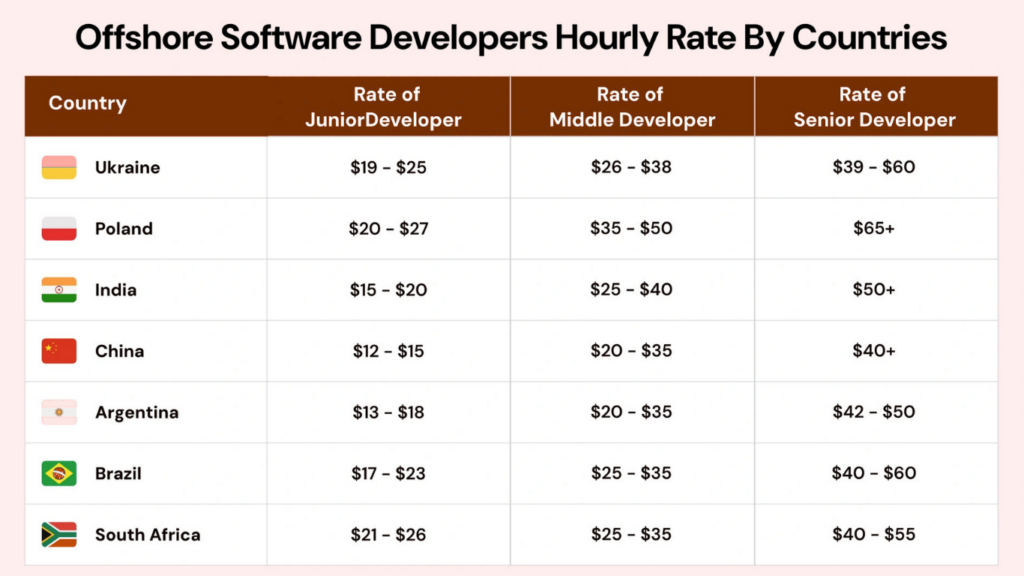
The cost of hiring an offshore Java developer varies depending on location and experience level.
| Region | Junior | Mid-Level | Senior |
| US | $90-$120/hr | $120-$150/hr | $150-$200/hr |
| Eastern Europe | $30-$45/hr | $45-$65/hr | $65-$90/hr |
| Southeast Asia | $20-$35/hr | $35-$50/hr | $50-$70/hr |
Factors affecting pricing include
- Developer experience
- Project complexity
- Required frameworks
- Cloud infrastructure expertise
Operator Insights on Managing Offshore Engineering Teams
After working with offshore teams for several years, several things have become apparent Successful offshore partnerships typically consist of:
- Clear development processes
- Consistent communication schedules
- Strong technical leadership
- Well-documented systems
Companies that treat offshore teams as long-term engineering partners tend to get the best results.
Frequently Asked Questions About Hiring Offshore Java Developers
How much does it cost to hire offshore Java developers
Rates typically range from $30-$90/hr, depending on region and developer experience.
Which countries have strong Java developer communities
Popular regions include Eastern Europe, Southeast Asia, and Latin America due to strong engineering education programs.
How long does it take to hire offshore developers?
Hiring timelines usually range from 3-6 weeks when working with established outsourcing partners.
Is offshore development reliable for SaaS platforms
Yes. Many large SaaS platforms rely on distributed engineering teams. The key is proper onboarding and communication structure.
Final Thoughts
Adding to your capabilities as an engineer through offshore Java developers can be a great strategy for you. However, it is not just a matter of hiring offshore developers; the process is also crucial.
If you are strategic in hiring offshore developers for your company, you can use this as a powerful tool for you.
Ready to Build an Offshore Support Team
Ready to Build an Offshore Support Team
If you’ve considered offshore hiring, the next step is understanding what works best for your business.
At Kore BPO, we assist businesses in building offshore support teams that work alongside your existing business processes. This could include research, marketing, and other administrative functions that can assist your engineering and/or product development teams.
If you need help in determining your alternatives for offshore outsourcing
- Schedule a consultation
- Discuss your operational needs
- Discover how offshore support teams can help your business scale
Get in touch with our team at Kore BPO.
