

The biggest mistake in this decision is starting with cost.
Because cheaper talent doesn’t automatically mean lower cost.
We’ve seen companies spend 40-60% less on offshore data scientists and still end up with slower delivery, more rework, and stalled projects. (medium.com)
We’ve also seen lean offshore teams outperform expensive in-house hires by a wide margin.
So what’s actually driving the difference?
The real decision is not offshore vs in-house.
It’s cost vs output vs execution risk.
In this guide, we break it down the way operators actually think about it.
- Fully loaded cost, not just salary
- Performance differences in real teams
- Why data science changes the equation
- When offshore works and when it does not
What Companies Get Wrong About Offshore vs In-House
The “Cheaper = Better” Myth
Most teams start with a simple assumption.
Offshore is 50% cheaper, so it must be the better option.
That only looks at surface-level cost.
What actually impacts your outcome comes down to a few things.
- Time spent clarifying requirements
- Rework due to misalignment
- Management overhead
- Ramp time before productivity
In practice, we see two outcomes.
- Teams save on salary but lose those savings in delays
- Teams structure the work well and outperform in-house
The difference is not location.
It’s how the work is set up.
Why Data Science Changes the Equation
This is where most comparisons fall apart.
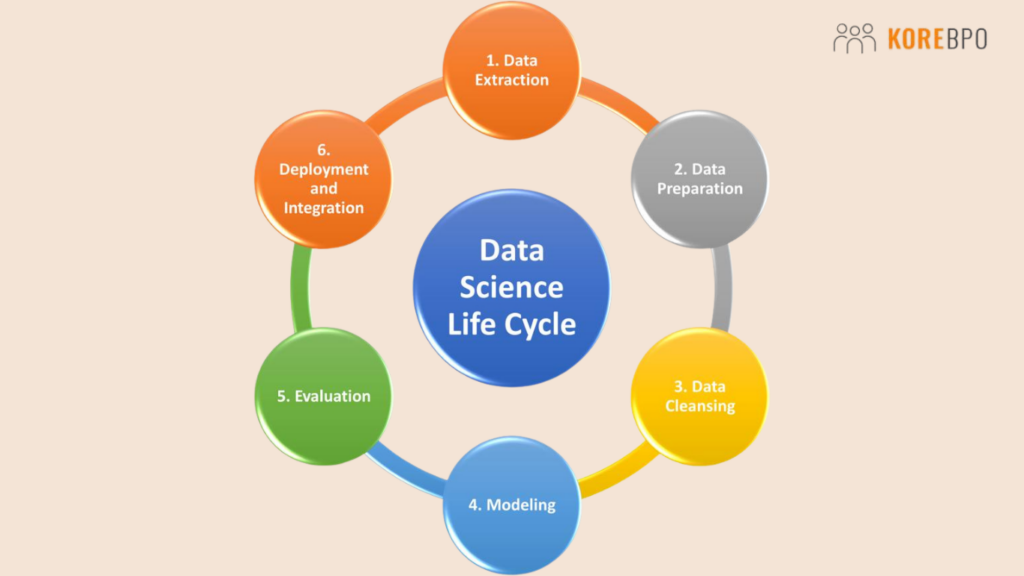
Data science is not the same as software development.
Here’s how the work actually breaks down.
- 60-80% of the time is spent on data preparation
- Problems are not clearly defined upfront
- Outputs are iterative, not predictable
- Business context matters as much as technical skill
In practical terms, execution can be offshore, but understanding cannot be separated from the business.
And data science depends heavily on that understanding.
Fully Loaded Cost Comparison
Let’s get specific.
In-House Data Scientist Cost Breakdown
A typical US-based hire includes:
- Base salary: $120k-$160k
- Bonus and equity: $10k-$40k
- Benefits: 20-30%
- Hiring cost: 20-25% of salary
- Tools, infrastructure, and overhead
The real total cost usually lands between $160k-$250k+ per year.
Offshore Data Scientist Cost Breakdown
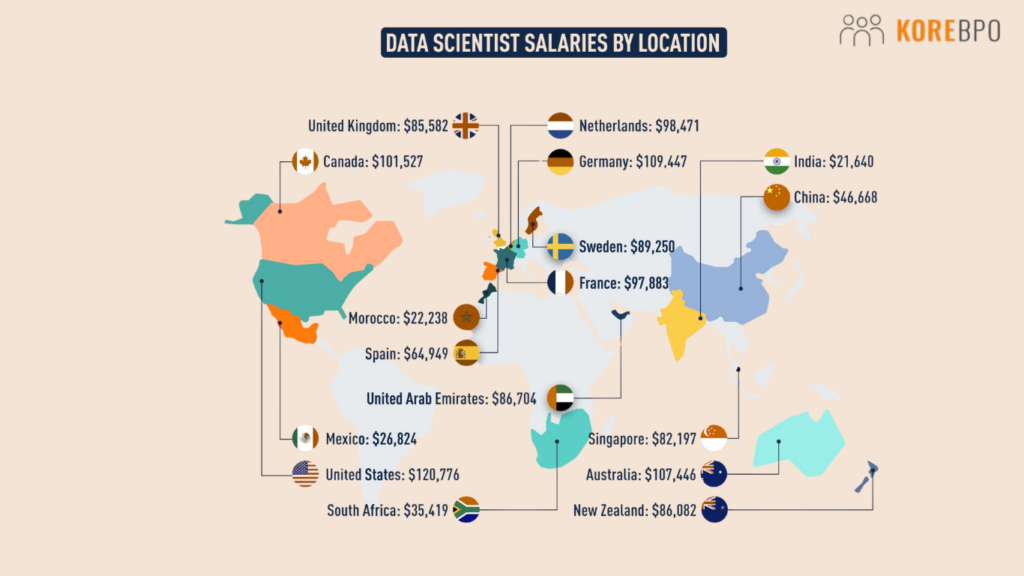
Depending on the region:
- India: $25k-$60k
- Eastern Europe: $45k-$90k
- LATAM: $40k-$80k
Additional costs include:
- Vendor margin or management layer
- Collaboration tools
- Internal oversight
The real total cost usually lands between $30k-$100k per year.
The Hidden Costs That Skew Decisions
This is where decisions often go wrong.
- Employee turnover: 50-200% of salary
- Poor data quality: $12.9M per year impact (average enterprise)
- Project overruns: around 45% of IT projects
What this means in practice:
Bad execution removes any cost advantage quickly.
Performance Comparison
Cost is easy to measure.
Performance is what actually matters.
Productivity Differences
- Remote teams can be 10-30% more productive when workflows are structured
- Unstructured work leads to a fast productivity decline
Ramp Time Reality
This is often underestimated.
- In-house ramp time: 30-60 days
- Offshore ramp time: 60-120 days
What matters more is time to autonomy, not just onboarding speed.
Communication and Execution Risk
- Around 30% of failures are tied to communication issues
- Time zones slow iteration cycles
- Misalignment creates rework
In practice:
- Strong management makes offshore work well
- Weak management makes offshore struggle
Cost per Output Is What Actually Matters
Instead of asking what a person costs, focus on output.
- Cost per model delivered
- Cost per experiment cycle
- Cost per deployment
A $60k offshore hire who delivers slowly can cost more than a $180k in-house hire who delivers quickly.
The Data Science Reality Most Teams Miss
60-80% of Work Is Data Preparation
This is the biggest bottleneck.
It requires:
- Access to internal systems
- Context on how data is used
- Close collaboration with stakeholders
Why Most Models Never Ship
- Only 20-30% of models reach production
- Up to 85% of AI projects fail to deliver value
The issue is not talent.
It comes down to:
- Poor data
- Undefined goals
- Misalignment
Dependency on Business Context
Data scientists do more than build models.
They translate business problems into something technical.
That translation is difficult to offshore without strong internal ownership.
What Actually Happens in Real Teams
In practice, these patterns often show up.
Where Offshore Teams Excel
- Clearly defined workflows
- Repeatable processes
- High-volume execution
Where Offshore Teams Struggle
- Ambiguous problem statements
- Constantly changing priorities
- Limited data access
The Biggest Mistakes Companies Make
- Treating data science like software development work
- Underestimating ramp time
- Not assigning an internal owner
If the internal team is unclear, offshore setups amplify the confusion.
When Each Model Works
Choose Offshore If
- You need cost efficiency
- The work is well-defined
- You have internal oversight
Choose In-House If
- Speed matters
- Work is exploratory
- Stakeholder alignment is critical
Why Hybrid Models Often Work Better
This is the model most teams end up with.
- Strategy and leadership stay in-house
- Execution and scaling move offshore
Why this works:
- You keep control
- You reduce cost
- You improve output
For most SMBs, the better model is not choosing one side. It is building a setup with clear ownership, practical workflows, and offshore support that integrates cleanly with the internal team.
That’s where structured outsourcing support matters. The value comes from customized setups, scalable teams, and day-to-day operational alignment, not just lower cost.
Decision Framework
Ask these questions first:
- Do we have clear problem definitions?
- Do we have clean and accessible data?
- Do we have internal ownership of this work?
- Are we optimizing for cost or speed?
If these are unclear, fix that before choosing a model.
Case-Style Scenarios
Startup Scaling Fast
- Needs speed and flexibility
- Best fit: hybrid
Enterprise Cutting Costs
- Needs efficiency
- Best fit: offshore with strong governance
Mid-Market Building First Data Team
- Needs alignment and learning
- Best fit: in-house first, then offshore
Key Takeaways
- Offshore is cheaper but not automatically better
- Performance depends on structure, not location
- Data science requires alignment more than execution
- Hybrid models often create a better balance of cost, control, and output
FAQs
Is offshore data science really cheaper in the long run?
Only if execution is structured—otherwise delays and rework can erase 40-60% cost savings.
When does hiring in-house data scientists make more sense?
When work is ambiguous, fast iteration is critical, and tight stakeholder alignment is required.
Why do offshore data science projects fail?
Lack of clear problem definition, poor data access, and weak internal ownership—not talent.
What’s the biggest cost factor companies underestimate?
Ramp time and management overhead, which can double the expected timeline to productivity.
Is a hybrid model better than choosing offshore or in-house?
Yes—keeping strategy in-house and execution offshore often delivers the best balance of cost, speed, and control.
What This Means for Your Team
If you’re deciding between offshore and in-house, don’t start with cost.
Start with:
- Clarity
- Ownership
- Execution model
Then choose the structure that supports it.
Because the wrong setup will cost more, regardless of where the team sits.
In practice, every team is different. What works for one company breaks for another.
- Get a practical cost and performance breakdown for your team
- See where offshore support makes sense and where it does not
- Avoid setup mistakes that create delays and rework
If you want help thinking this through, start with your current setup and where execution is breaking down. That’s usually where the real cost sits.
Book a working session with Kore BPO, and we’ll walk through your setup together—no generic advice, just a clear plan based on how your team actually operates.
