Building an Offshore Recruitment Center Checklist & Cost Model for SMBs (2025 Guide)

- 01Why This Matters Right Now
- 02What Is an Offshore Recruitment Center?
- 03Why SMBs Are Turning to Offshore Recruitment Cente
- 04Offshore Recruitment Center Setup Checklist
- 05Offshore Recruitment Cost Model (2025 Benchmarks)
- 06Estimated Annual Spend (5-Person ORC Example)
- 07Common Mistakes to Avoid
- 08Measuring Success
- 09FAQs
- 10Final Thoughts
- 11Let’s Build Your Offshore Advantage
Why This Matters Right Now
If you’re running a growing business, you’ve probably felt the hiring squeeze.
Good recruiters are expensive, local talent is scarce, and hiring timelines keep getting longer.
The good news is that offshore recruitment centers (ORCs) are no longer just for large companies. SMBs across the U.S. are building lean offshore recruiting teams that cut hiring costs by 40 to 50 percent while tapping into a deeper talent pool.
Here’s the challenge: The success of an offshore center depends on how it’s built, from structure to compliance to cost modeling. I’ve seen companies rush into this and waste months of effort. This article explains how to do it right, backed by real data, practical checklists, and lessons we’ve learned at Kore BPO, helping clients build their own offshore teams.
What Is an Offshore Recruitment Center?
An Offshore Recruitment Center (ORC) is your own dedicated recruiting team operating in another country, not a third-party agency or short-term vendor.
Think of it as your company’s recruitment branch office overseas.
| Model | Ownership | Typical Use Case | Key Advantage |
| In-house recruiting | 100% owned | Local hiring only | Control and culture fit |
| Outsourced agency | External | Project-based hiring | Speed and flexibility |
| Offshore recruitment center | Co-managed or owned | Continuous hiring | Cost efficiency and scalability |
At KORE BPO, we help SMBs start small, often with 3 to 5 offshore recruiters, and scale as they build rhythm and trust.
Why SMBs Are Turning to Offshore Recruitment Centers
1. Rising Hiring Costs
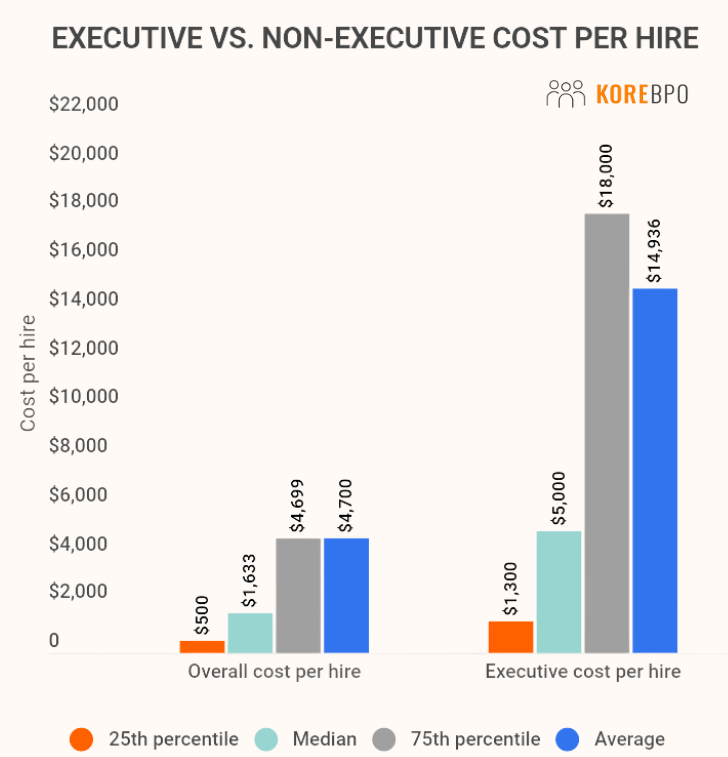
The average U.S. cost per hire now exceeds $4,700 (SHRM).
One of our clients reduced its cost per hire by 45 percent in six months by shifting sourcing and screening offshore.
2. Talent Shortages and Global Reach
Global recruiting isn’t just less expensive, it’s faster as well. Offshore help brings you 24/7 coverage in various time zones, as well as the expertise that you may require.
3. Technology and AI Support
According to Deloitte’s 2024 Outsourcing Survey, 83 percent of organizations now integrate AI into their outsourced operations (Deloitte). Kore BPO helps clients leverage these same tools for automated sourcing, resume screening, and candidate scoring to improve quality and speed.
Offshore Recruitment Center Setup Checklist
The configuration of your ORC is far from a cookie-cutter approach, but once you deconstruct the process, predictability ensues.
Step 1. Define a Business Case
- Determine your hiring targets & chokepoints every year.
- Explain: Calculate your current cost-per-hire and time-to-fill.
- You will decide whether you want an ORC partnership facilitated by a Kore BPO or an entirely owned structure.
Step 2. Pick the Right Location
Compare regions based on cost, talent depth, and time zone overlap. The right geography can speed up hiring while keeping quality high.
In India and the Philippines, freelance recruiters typically charge between $20 and $40 per hour, driven by a large English-speaking talent pool and low operational costs (Workmate Pro, GoHire).
Eastern Europe sees average recruiter rates between $40 and $70 per hour, with strong access to tech talent and familiarity with EU compliance standards (nCube).
In Latin America, recruiters often charge $45 to $85 per hour, reflecting its alignment with U.S. time zones and growing bilingual talent base (DistantJob, Upwork).
These figures reflect averages for freelance and contract recruiters, not retained search firms or percentage-based placements.
Step 3. Plan Ramp-Up and Productivity
You should expect 12 to 16 weeks before your offshore recruiters are at 80 percent productivity, as compared to their onshore counterparts’ productivity.
It doesn’t happen immediately, and it’s a process.
You should spend this training period learning about tools, company culture, and key metrics.
Step 4. Build Infrastructure
- Establish secure communication channels and collaboration tools like Slack, Zoom, and your ATS.
- Kore BPO is compliant with data privacy laws and labor laws
- Develop standard operating procedures related to sourcing, screening and reporting.
Step 5. Establish Governance
- Conduct a biweekly review of KPI: active applications, interviewees, and hires.
- Utilize shared dashboards to enhance transparency.
- Assign one local liaison to every 3 to 4 offshore recruiters.
Step 6. Measure, Improve and Scale
- In Review ROI/Performance ROI/Performance Review ROI
- Add team leaders or recruiter specialists as required.
- Scale recruiting personnel from 3 to 5 to 10 or more, depending on the volume of hiring.
Offshore Recruitment Cost Model (2025 Benchmarks)
Typical Annual Cost Breakdown
| Cost Component | % of Total | What’ Included |
| Salaries & Benefits | 60 to 65% | Core offshore recruiting team; supported by BPO studies showing labor = 60 to 75% of total costs. (Goodcall, Voiso) |
| Infrastructure & Tech | 15% | ATS, sourcing tools, productivity apps, office/seat cost. Industry norm: 15–25%. |
| Management & Training | 10 to 15% | Local team leads, onboarding, coaching sessions; included within labor in most BPO benchmarks but broken out separately here. |
| Compliance & Legal | 5% | Local employment compliance, contracts, NDAs, data security requirements. |
Estimated Annual Spend (5-Person ORC Example)
| Model | Approx. Cost | Cost Savings |
| Onshore (U.S.) | $450K | – |
| Offshore (India/Philippines) | $220K | ≈45–50% savings, consistent with offshore savings ranges (40–70%). (Relay Human Cloud, Outsource Accelerator) |
Most SMBs we work with see payback in around six months, which lines up with outsourcing ROI studies citing 3 to 12‑month breakeven windows. (Assuretrac, Practolytics)
Common Mistakes to Avoid
- Skipping change management: Teams need clear processes for collaboration.
- Chasing the cheapest vendor: Cost means nothing without quality controls.
- Ignoring compliance: Labor and data rules vary by country.
Poor communication: Out of sight does not mean out of mind; governance matters.
Measuring Success
- Time-to-fill (target under 30 days)
- Cost-per-hire (target 40 percent or more below domestic)
- Offer-to-acceptance ratio
- Recruiter productivity (placements per month)
- Retention rate of offshore staff
Use a simple dashboard, even a Google Sheet, to track progress each quarter.
FAQs
How long does it take to set up an offshore recruitment center?
Usually 8 to 12 weeks, depending on legal setup and team size. Partner-supported centers can launch faster.
What’s the difference between an ORC and outsourcing recruitment?
Outsourcing means paying per hire. An ORC is your own embedded team that learns your brand, tools, and culture.
Which countries are best for SMBs?
India takes the lead for affordability and scale, followed by the Phillipines. Eastern Europe and Latin America offer time zone or compliance advantages.
Final Thoughts
Building an offshore recruitment center isn’t about cutting corners; it’s about building capability. The companies doing this right aren’t chasing cheap labor. They’re building predictable, scalable hiring engines.
If you’re serious about lowering hiring costs and scaling faster in 2025, now’s the time to explore it.
Let’s Build Your Offshore Advantage
Want to see what your cost model looks like?
Book a free strategy call with Kore BPO to explore your offshore recruitment savings and design your first global hiring team.
Related Articles



Ready to Build Your Offshore Team?
Get pre-screened resumes in 2 to 5 days. No upfront fees. One partner from hire to payroll.
Contact Us