Hire WordPress Developers Offshore
Hire vetted offshore WordPress developers through Kore BPO. Resumes in 2–5 business days. Custom theme builders, WooCommerce specialists, and plugin engineers placed at 60–70% below US market rates with $0 upfront fees.

Why Finding a Real WordPress Developer Is Trickier Than It Looks
WordPress powers 43% of all websites globally as of June 2026 (W3Techs, 2026). The developer supply looks enormous on paper. The pool of candidates who can actually build a WooCommerce checkout from scratch, architect a clean plugin, or implement a Gutenberg block theme without opening a page builder tutorial is much smaller than the resume volume suggests.
- Every WordPress resume lists WooCommerce. Most of those developers have configured an off-the-shelf theme and installed a payments plugin. That's not the same as writing custom checkout hooks, shipping logic, or order management code.
- Keyword-based ATS screening can't tell the difference. You end up interviewing 20 people and finding two who can actually build.
- The candidate who looks right on paper shows up to the technical screen and can't explain what a WP_Query filter does without Googling it.
- A WooCommerce engineer and a theme developer are not the same profile. Neither are a plugin architect and a headless WordPress specialist. These are distinct disciplines with different toolsets and different debugging instincts.
- Generalist staffing agencies treat them as one role, forward whoever lists WordPress, and leave you to figure out the mismatch on week three.
- You pay senior rates for someone who knows how to configure Divi. What you needed was someone who can write shipping method API logic in WooCommerce's HPOS (High-Performance Order Storage) framework.
Elementor, Divi, and Beaver Builder are configuration tools. Useful for marketing teams. They are not what you need when the WooCommerce checkout breaks or when you're building a custom post type with full REST API exposure. Developers who've spent their careers in page builders often can't debug PHP-level WordPress issues and produce sites that fail on any infrastructure change. The distinction matters before you hire, not after. We screen for it specifically.
What Type of WordPress Developer Do You Actually Need?
WordPress developer is not one role. It's four, at minimum. Where your requirement falls determines everything about how we source, screen, and match your candidate.
Custom Theme Development
Block themes, FSE template hierarchy, child theme architecture, custom Gutenberg blocks built with React and block.json, PHP template files, CSS architecture, and Core Web Vitals optimization. The developer who makes the site look and work exactly right.
Plugin Development
Custom plugin architecture from scratch, WP hooks and filters, settings API, custom admin pages, post meta registration, capability checks, nonce verification, and data sanitization. The developer who builds functionality that themes can't touch.
WooCommerce Engineering
Store builds, checkout flow customization, HPOS order management, payment gateway integration (Stripe, Braintree, Authorize.net), custom shipping methods, subscription plugin architecture, multi-currency setups, and product variation logic.
Headless and REST API
WP-JSON custom endpoints, WPGraphQL for decoupled frontend delivery, ACF integration with REST, authentication handling, and JAMstack or Next.js frontend support. WordPress as a backend CMS, not a front-rendering engine.

What a Vetted WordPress Developer Actually Knows
WordPress developers specialize in building on top of the WordPress application layer. They're PHP developers with deep knowledge of the WP hooks system, the REST API, WooCommerce internals, and the Gutenberg block editor. They're not general-purpose web developers. The best ones know exactly where WordPress ends and where custom PHP begins.
One thing we see a lot. Companies assume their senior WordPress hire can do everything from custom block development to WooCommerce gateway integration to headless API work. That's three different specialists. Most developers are strong in one track, competent in a second, and a learning curve in the third. Our screening identifies which track each candidate actually owns.
Five Situations That Actually Require a WordPress Developer
Not every website problem needs a dedicated WordPress developer. These five do. They come up more than you'd expect across ecommerce businesses, agencies, and SaaS companies with WordPress-based marketing infrastructure.
Your WooCommerce Checkout Is Breaking Revenue
Discount logic that doesn't stack correctly, a shipping rule the native settings can't handle, or a payment gateway that drops orders without logging why. These require a developer with production WooCommerce experience, not a generalist who'll spend three weeks in the documentation before touching the code.
You're Migrating From a Classic Theme to a Block Theme
Moving custom template logic into FSE template parts without losing functionality or wrecking page layout takes someone who understands both architectures. Handing this to a developer who only knows classic themes produces a rebuild that takes twice as long and breaks half of what worked before.
Your Agency Needs Reliable Offshore Build Capacity
Not a freelancer available between other clients. A dedicated WordPress developer who shows up five days a week, follows your process, ships on client deadlines, and becomes a real extension of your delivery team. Agency fulfillment is one of the most common use cases we staff for.
A Legacy Plugin Has No Living Author
A contractor built something three years ago and no one on your team can read it. You need a WordPress developer who can work through hook-based legacy code, document what it actually does, and extend it without breaking the parts that are still holding the site together.
You're Launching a WordPress Multisite Network
Multisite network administration, cross-site content management, shared plugin architecture, and user role segregation across subsites are genuinely different from single-site WordPress. If your developer hasn't managed a multisite environment before, launch week is the wrong time to find that out.
How We Screen for Real WordPress Depth
Most staffing agencies run one technical call. We run four track-specific stages. A WordPress developer who passes all four actually knows the difference between a filter and an action, can debug a WooCommerce checkout issue in a staging environment, and won't mistake Elementor familiarity for plugin development experience.
Here's where it gets specific. The gap between "has built WordPress sites" and "can architect a production WooCommerce extension" is wider than most hiring managers expect. We built our screening around that gap, not around what's easy to test in a 30-minute call.
WordPress Core Depth Assessment
Written challenge covering custom hook registration, custom post type architecture with meta boxes, REST API endpoint creation, and a debugging exercise on a deliberately broken functions.php. Not a multiple-choice quiz. Candidates who rely on page builders or basic plugin installation don't pass this stage. They're redirected to a different role track.
Specialization Track Interview
Three tracks screened with different criteria. Theme track covers Gutenberg block development, FSE template hierarchy, and block.json configuration. WooCommerce track covers HPOS implementation, checkout hooks, and payment gateway architecture. Plugin track covers settings API, admin pages, nonce verification, and data sanitization. A WooCommerce engineer shouldn't be assessed like a theme developer. We don't do that.
Live Debug and Refactor
Candidate reviews a real WordPress snippet with three deliberate issues: a direct database query missing wpdb->prepare(), an unsanitized $_POST value saved to options, and a missing nonce check on a form handler. What they catch tells us about their security awareness. How they fix it tells us about their coding instincts. Most candidates catch two of three. The ones we place catch all three and explain why each matters.
Communication and Overlap Review
English fluency assessment in async format (a Loom walkthrough explaining a technical decision), plus a simulated client question about a vague requirement. We also confirm overlap hours with your core working window. WooCommerce debugging and live site issues require real-time communication windows. Async-only setups work for some roles. Not this one.
Full disclosure. We're a staffing company. We benefit when you hire through us. But we also know that a WordPress developer who can't debug a production WooCommerce issue costs you more in lost revenue than any placement fee. That's why this process exists.
From Open Req to First Commit in Three Steps
Most clients have vetted resumes in front of them within 2–5 business days. You interview only candidates who passed the full four-stage screening process. You don't pay until you hire.
Define Your WordPress Stack
- Tell us your theme setup, active plugins, WooCommerce version if applicable, and what you're actually trying to build or fix
- Tell us which track you need: theme, plugin, WooCommerce, headless, or a combination
- Tell us your overlap hour requirements and whether you need dedicated full-time or project-based
- One call is usually all it takes. No lengthy intake forms.
Receive Vetted Candidates
- Pre-screened against your specific WP stack and specialization track, not just "WordPress developer"
- Resumes arrive in 2–5 business days with a technical brief summarizing what we found in screening
- Candidates include relevant code samples or portfolio links matched to your codebase type
- You interview only the ones who passed the four-stage process
Onboard and Ship
- Structured onboarding from day one. Staging environment access, local development setup, codebase walkthrough, first task scoped and assigned.
- Overlap hours confirmed and documented before the first day
- 30-day check-in built into every engagement, not optional
- If it doesn't work out, we replace. That's the commitment.
What an Offshore WordPress Developer From Kore BPO Actually Delivers
So what does that look like in practice? These are the actual deliverables clients ship after placing a WordPress developer through us. Not marketing categories. Real work that moves through staging and into production.
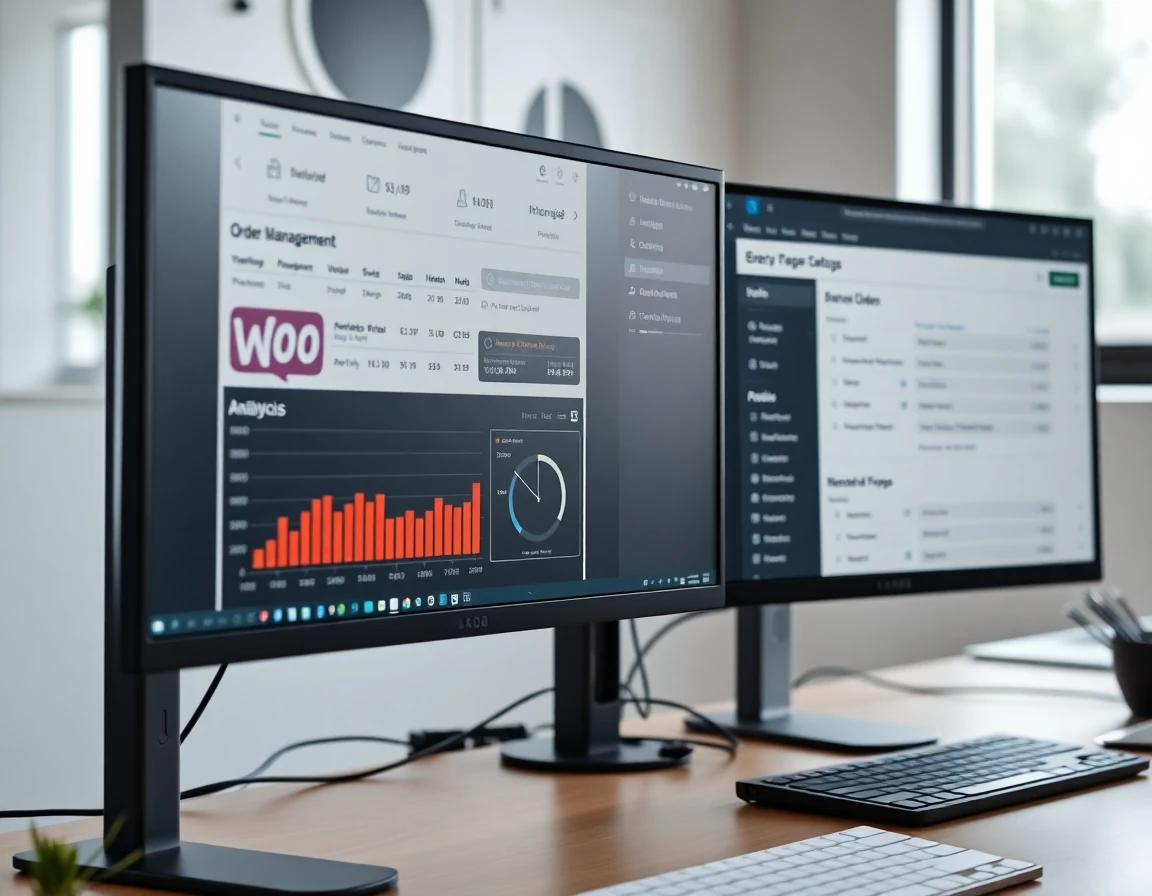
WordPress Developer Salaries: Offshore vs US Onshore
Glassdoor puts the average US WordPress developer salary at $87,106 per year in 2026. ZipRecruiter reports WooCommerce developers averaging $84,542. Senior roles run toward $116K-$120K. Offshore through Kore BPO, you're looking at a fraction of those numbers, with dedicated full-time placement and no time-to-fill that drags past 30 days.
At this stage most hiring managers ask the same things. What does mid-level actually cost per month? What's the total annual gap versus hiring locally? And does the quality hold? The table lays out the cost side. The four-stage screening process handles the quality side.
| Experience Level | Kore BPO Monthly Rate | US Annual Salary | Estimated Annual Savings |
|---|---|---|---|
| Junior WordPress Developer (1–3 yrs) | $1,600 – $2,600/mo | $65K – $82K/yr | ~$45K – $60K/yr |
| Mid-Level WordPress Developer (3–6 yrs) | $2,500 – $3,800/mo | $84K – $105K/yr | ~$55K – $75K/yr |
| Senior WordPress Developer (6+ yrs) | $3,600 – $5,200/mo | $105K – $120K/yr | ~$70K – $88K/yr |
| WooCommerce Architect / Lead Developer | $5,000 – $7,000/mo | $116K – $148K/yr | ~$82K – $108K/yr |
US salary benchmarks sourced from Glassdoor and ZipRecruiter, 2026. Kore BPO monthly rates cover dedicated full-time placement. WooCommerce architect range per ZipRecruiter 2026 WooCommerce developer data. Savings estimates are directional and vary by location, stack requirements, and engagement model. Offshore rates from India, Philippines, and Latin America talent pools.
On engagement models: most WordPress placements run as dedicated full-time developers. Project-based works well for defined scopes (a theme migration, a plugin build with a clear specification). Contract-to-hire is available for clients who want a trial window before committing. We'll recommend what fits your situation, not what's easiest for us to fill.
Your WordPress stack on the table. Candidates back in 48 hours.
Tell us your theme setup, WooCommerce version, and the specialization track you need. We match from the right pool, not the general pool.
Start the SearchWho This Works For, and Who It Probably Doesn't
Not every company should use a staffing partner for WordPress. Many should. Here's the honest split.
Probably Not the Right Fit
- Businesses that need a five-page brochure site with no custom functionality — a freelancer with Elementor and a premium theme is faster and cheaper for that scope
- Teams that want an async-only arrangement with no real-time overlap — WooCommerce debugging and live checkout issues require occasional synchronous windows; if that's a hard constraint, match expectations upfront
- Startups hiring their first technical employee who want one person to do WordPress, DevOps, mobile, and backend API work — that's not what a WordPress specialist is built for
- Organizations filling one WordPress role every few years with no timeline pressure — a standard job posting handles that fine without a staffing partner
Built Exactly for This
- Ecommerce companies on WooCommerce that need custom checkout logic, payment gateway work, subscription management, or HPOS migration and can't afford a developer who figures it out on the job
- Digital agencies delivering WordPress projects to clients who need reliable offshore build capacity, not another freelancer who's available between their other clients
- SaaS companies with WordPress-based marketing sites or plugin-dependent products that need ongoing custom development and someone who actually owns the codebase
- Content platforms running WordPress multisite who need someone with real multisite administration experience, not a first-timer billing discovery hours at a senior rate
Before You Post the Job Description
Real questions from hiring managers and agency owners who've tried to hire WordPress developers on their own first.
What's the difference between a WordPress developer and a PHP developer?
A WordPress developer is a PHP developer who specializes in the WordPress application layer, but the skill sets diverge significantly from there. A PHP developer fluent in Laravel doesn't automatically understand WP_Query, the WordPress hooks and actions system, WooCommerce HPOS, or Gutenberg block architecture. They're writing PHP, but they're working in a completely different application context. The reverse is also true: a senior WordPress developer who has spent years in WooCommerce and custom plugin work often doesn't have the architecture instincts for a Laravel microservices backend. If your product runs on WordPress, screen for WordPress depth specifically. We assess both disciplines separately and we don't conflate them in placement.
How much does an offshore WordPress developer cost per month?
$2,500 to $3,800 per month for a dedicated mid-level developer through Kore BPO. Junior profiles start around $1,600. Senior WordPress developers with WooCommerce depth run $3,600-$5,200. WooCommerce architects and lead developers reach $5,000-$7,000. Compare that to the $84K-$105K US annual salary range for comparable experience (Glassdoor and ZipRecruiter, 2026) and the math writes itself. No upfront placement fee. You pay when you hire, not when you get the first resume.
Can an offshore WordPress developer handle WooCommerce?
Depends entirely on the developer, not the geography. WooCommerce development is a specialization within WordPress, and our WooCommerce track screens specifically for checkout hooks, HPOS order management, payment gateway architecture, and subscription plugin integration. A general WordPress developer placed without that screening won't handle complex WooCommerce work well. A developer who passed the WooCommerce track assessment will. Tell us your WooCommerce requirements upfront (checkout customization, HPOS migration, gateway integration, subscription logic, multi-currency) and we match from the right pool, not the general WordPress pool.
How long does it take to get candidates from Kore BPO?
2–5 business days to first resumes for most WordPress developer roles. Mid-level theme and plugin developers run toward the fast end of that window. Senior WooCommerce architects with specific gateway experience (Stripe Connect, Braintree, Authorize.net integrations) run closer to two weeks, because that's what senior actually means. US companies hiring for equivalent WordPress roles directly average 40+ days to first interview. The speed difference isn't a shortcut in vetting. It's an actively maintained offshore candidate pool that we screen continuously rather than starting from scratch when your requirement comes in.
What if the developer makes a mistake on the live site?
Wrong question, slightly. Every Kore BPO engagement includes a staging environment requirement in the setup. Production deployments go through a review process, not direct pushes. That eliminates most live-site incidents before they happen. For the ones that don't get caught in staging: the 30-day structured check-in catches fit and process issues before they become expensive ones. And if something is genuinely wrong beyond what a check-in resolves, we stay involved and we replace. The commitment doesn't end after the first invoice.
Do your WordPress developers work during US business hours?
Most have 4–6 hours of overlap with US Eastern and Central time. Full EST coverage comes from our Latin America talent pool. South and Southeast Asia candidates run earlier, with overlap during US morning hours (7 AM–1 PM EST is typical). WooCommerce debugging and live ecommerce support often need real-time windows. We match timezone requirements as part of the intake, not as something you discover after the developer starts. If you need afternoon US coverage specifically, tell us in the first call and we source from the right geography.
Other Offshore Tech Roles We Place
WordPress developers often work alongside PHP engineers, full-stack developers, and DevOps specialists. If you're building a broader offshore development team, these roles go through the same vetting process.
Stop Waiting for a WordPress Developer Who Actually Ships
Every week your WooCommerce store or WordPress platform runs without its developer is a week of deferred launches, unresolved plugin conflicts, and checkout issues collecting dust. Vetted resumes before the end of this week. Tell us why that timeline doesn't work and we'll find one that does.
See WordPress Developer Resumes