
Startups hire offshore DevOps engineers to speed up hiring, improve deployments, and scale without infrastructure bottlenecks.
- 01Introduction
- 02The Real Reason Startups Struggle to Scale
- 03Why Local DevOps Hiring Slows You Down
- 04The Hidden Cost of Waiting
- 05What Offshore DevOps Actually Solves
- 06How DevOps Drives Startup Growth
- 07Offshore DevOps and Speed
- 08Cost vs Output
- 09When Should a Startup Hire Offshore DevOps Engineers
- 10How to Structure an Offshore DevOps Team
- 11Common Mistakes Startups Make
- 12Offshore DevOps Risks and How to Handle Them
- 13Why Offshore DevOps Is Becoming Standard
- 14What High-Performing Teams Do Differently
- 15How Kore BPO Helps Startups Scale Faster
- 16Scaling Without Breaking Your Infrastructure
- 17FAQs
- 18Bottom Line
Introduction
If you speak to enough founders, you’ll soon realize this is something they all have in common:
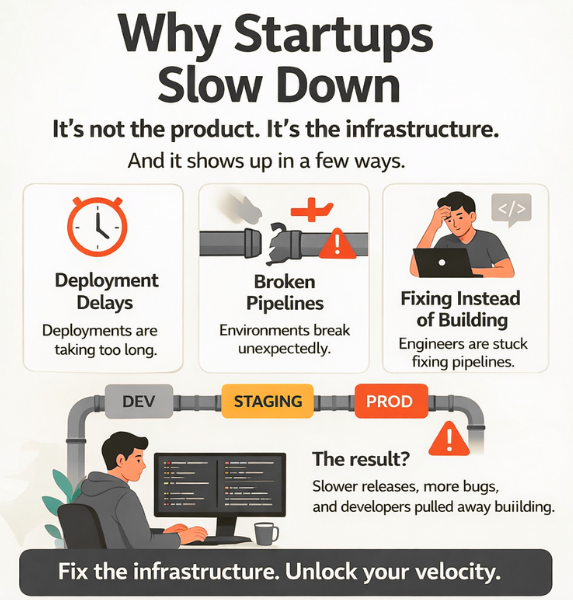
“We’re not slow because of the product. We’re slow because of the infrastructure.”
And that usually shows up in a few ways:
- Deployments are taking too long
- Environments breaking unexpectedly
- Engineers are stuck fixing pipelines instead of building features
At the same time, it can take your company anywhere between 30-60 days to hire a good DevOps person. By this point, however, your needs have shifted.
So startups are doing something different.
They’re hiring offshore DevOps engineers, not just to save money, but to go fast without breaking anything.
This isn’t a trend. It’s becoming a standard operating model.
The Real Reason Startups Struggle to Scale
Most teams don’t realize when DevOps issues begin.
It’s earlier than you think.
DevOps Breaks Around the Same Point
You’ll typically start seeing issues when:
- You have 5-8 engineers
- You’re managing multiple environments (dev, staging, prod)
- You start getting real user traffic
And then things start slipping:
- Deployments become inconsistent
- Bugs show up after release
- Nobody fully owns infrastructure
That’s the moment where the velocity drops.
Why Local DevOps Hiring Slows You Down
Hiring locally sounds like a dream come true. It’s hard.
- Time to hire: 30-60 days
- Salary range: $140k-$180k+
- Competition: extremely high
And here’s the real issue:
You don’t just need a DevOps engineer.
You need the right one, and that takes even longer.
The Hidden Cost of Waiting
Waiting to hire a DevOps engineer has a ripple effect:
- Slower feature releases
- More production issues
- Developers are wasting time on infrastructure
This is where most startups lose momentum.
What Offshore DevOps Actually Solves
Let’s get this out of the way.
Yes, offshore hiring reduces cost by 40-70%. (relayhumancloud)
But that’s not the main reason startups do it.
Faster Hiring Cycles
This is the real unlock.
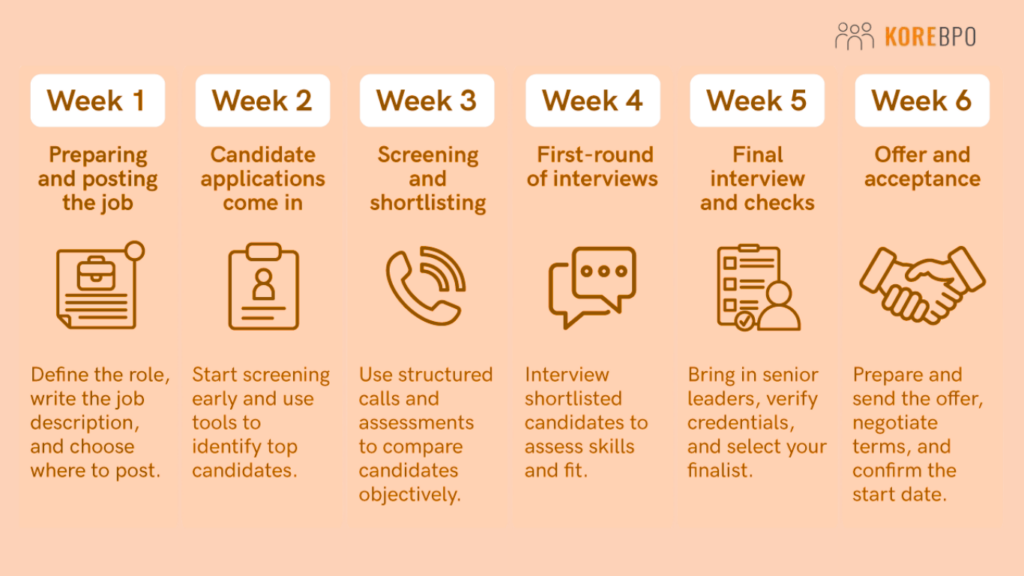
- Offshore DevOps hire time: 2-4 weeks
- Local DevOps hire time: 30-60 days
In some cases, we can begin in less than 2 weeks.
That speed matters more than anything else.
Immediate Access to Specialized Talent
DevOps is not a job function. DevOps is a combination of skill sets:
- CI/CD pipeline engineers
- Cloud infrastructure specialists
- Site Reliability Engineers (SREs)
Offshore hiring gives you access to these skills without waiting months.
`Time Zone Leverage
There’s a lot of talk about 24/7 development.
What actually works:
- Clear handoffs
- Defined overlap windows
- Documented workflows
Without that, you’re creating confusion.
How DevOps Drives Startup Growth
Most articles stop at hiring.
But the real value is what DevOps enables.
Faster Deployment Cycles
With proper CI/CD:
- You move from weekly releases to multiple releases per week
- Manual steps disappear
- Rollbacks become easier
That alone changes how fast you can ship.
Improved Stability and Uptime
Strong DevOps reduces:
- Deployment failures
- Downtime
- Firefighting
And that frees up your team to focus on product.
Infrastructure That Scales With You
Instead of reacting to growth, you’re prepared for it:
- Automated scaling
- Infrastructure as code
- Predictable environments
This is what allows startups to grow without constant friction.
Offshore DevOps and Speed
Startups aren’t just hiring offshore to save money.
They’re doing it to move faster.
How Startups Reduce Time to Market
Offshore DevOps helps in 3 key ways:
- Faster hiring, which reduces delays in getting started
- Parallel work, where infrastructure and product move together
- Continuous delivery, which speeds up releases
What This Looks Like in Practice
You’ll start seeing:
- Features shipped faster
- Bugs fixed quicker
- Shorter feedback loops
And that compounds over time.
Cost vs Output
Let’s talk numbers in a practical way.
Cost Comparison
- Local DevOps engineer salary: $140k-$180k per year
- Offshore DevOps engineer salary: $30k-$70k per year
Yes, the savings are significant.
What Actually Matters
What matters more:
- How fast do you ship
- How stable is your product
- How much developer time can you recover
The real ROI is velocity, not salary savings.
When Should a Startup Hire Offshore DevOps Engineers
Stage-Based Breakdown
Seed stage:
- Keep it simple
- Basic deployment setup
- Minimal infrastructure
Series A:
- Build CI/CD pipelines
- Standardize environments
- Reduce deployment friction
Series B and beyond:
- Focus on scalability
- Monitoring and reliability
- Advanced infrastructure
Signs You Need DevOps Now
If you’re seeing any of these, you’re already late:
- Deployments are slow or manual
- Production bugs are increasing
- Developers are managing infrastructure
How to Structure an Offshore DevOps Team
Recommended Setup
Start small:
- 1 senior DevOps engineer
- 1-2 mid-level engineers
That’s usually enough to stabilize and scale.
Ownership Model
DevOps should own:
- CI/CD pipelines
- Infrastructure
- Monitoring and alerts
If ownership is unclear, things break quickly.
Integration With Your Team
Make it part of your workflow:
- Daily overlap hours
- Shared tools and processes
- Clear communication channels
Common Mistakes Startups Make
These show up again and again:
- Treating DevOps as support instead of ownership
- Hiring the wrong profile
- Overengineering too early
- Poor onboarding
Overengineering Example
- Complex Kubernetes setups too early
- Too many tools
- Infrastructure built for scale you don’t have yet
Keep it simple early.
Offshore DevOps Risks and How to Handle Them
This isn’t risk-free.
Communication Gaps
Fix it with:
- Structured overlap
- Clear documentation
Security Concerns
Handle with:
- Role-based access
- Audit logs
- Defined permissions
Quality Variability
Solve through:
- Strong vetting
- Clear standards
- Ongoing management
Why Offshore DevOps Is Becoming Standard
This shift isn’t slowing down.
- Global talent is expanding
- Remote work is now normal
- DevOps demand keeps growing
And local supply hasn’t caught up.
What High-Performing Teams Do Differently
The best teams:
- Keep systems simple
- Own infrastructure end-to-end
- Document everything
- Stay aligned with product teams
That’s what makes it work.
How Kore BPO Helps Startups Scale Faster
We’ve seen this across different teams and stages.
What works consistently:
- Fast hiring cycles, typically in 2-4 weeks(infeedo.ai)
- Pre-vetted DevOps talent matched to your needs
- Clear onboarding, ownership, and integration into your existing team
- Flexible team structure, scalable with your growth needs
- Security, access, and operational reliability
Typical Outcomes
Teams usually see:
- Faster deployments
- Fewer infrastructure issues
- Improved development velocity
Not overnight, but quickly.
Scaling Without Breaking Your Infrastructure
Startups don’t fail because they lack ideas.
They fail because they cannot execute fast enough.
Key Takeaways
- DevOps is needed earlier than most teams expect
- Offshore hiring removes hiring bottlenecks
- Speed is the real advantage
- Execution and structure determine success
FAQs
Bottom Line
If you’re:
- Struggling to hire DevOps locally
- Slowing down because of the infrastructure
- Trying to scale without breaking things
Let’s talk.
- Get a clear DevOps hiring plan
- Understand what roles you actually need
- See how offshore can fit your team
Reach out to start the conversation.
How quickly can I hire an offshore DevOps engineer?
Will offshore DevOps engineers integrate well with my team?
Is quality a risk when hiring offshore DevOps talent?
What’s the biggest mistake startups make with offshore DevOps?

Related Articles



Ready to Build Your Offshore Team?
Get pre-screened resumes in 2 to 5 days. No upfront fees. One partner from hire to payroll.
Contact Us