
Offshore vs agency isn’t about rates—it’s about speed, rework, and total cost over time.
- 01What “Cost-Effective” Actually Means
- 02Offshore Salesforce Developer: Lower Cost, Higher Dependency
- 03Salesforce Agency: Higher Cost, Lower Execution Risk
- 04Side by side: Offshore Developer vs Agency
- 05The Most Overlooked Factor: Time-to-Value
- 06Where Most Projects Go Wrong
- 07The Hybrid Model (What Actually Works Best)
- 08How to Choose the Right Model
- 09FAQs
- 10Final Thoughts: What Actually Costs Less?
- 11Want Help Deciding What’s Right for Your Team?
If you’re trying to build or scale on Salesforce, this question comes up fast:
Should you hire an offshore Salesforce developer… or go with an agency?
On paper, the answer looks obvious.
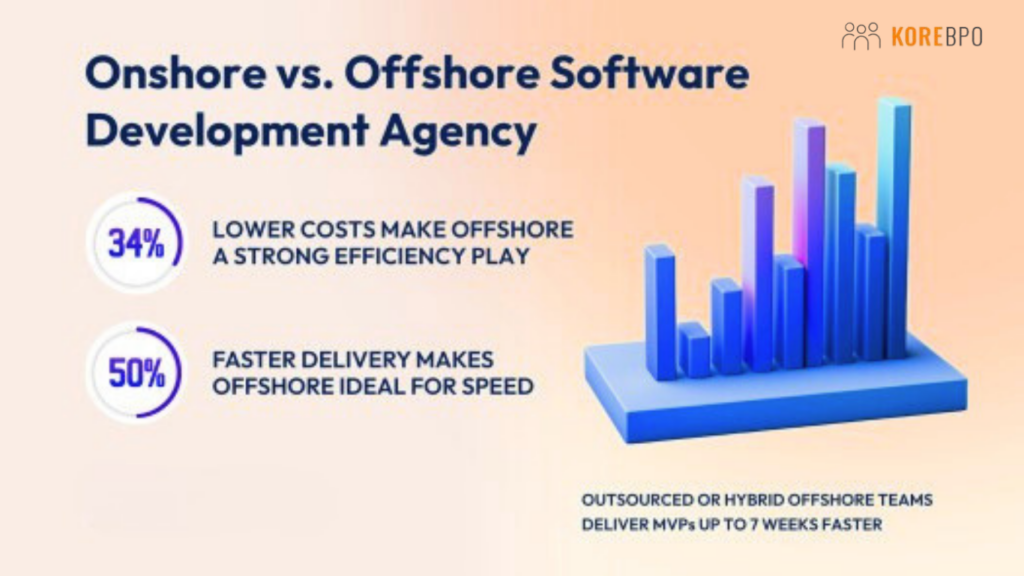
Offshore developer: $25–$70/hr
Agency: $100–$200/hr
Case closed, right?
Not really.
After working with dozens of teams, we can tell you this:
The cheapest option upfront is rarely the cheapest outcome over 6–12 months.
Let’s break it down properly.
What “Cost-Effective” Actually Means
Most teams look at hourly rates. That’s the mistake.
Cost-effective really comes down to
- How fast you get working features
- How often do you redo work
- How much management overhead is required
- How stable the final system is
Or simply
Cost = Rate × Time × Rework
And rework is where things get expensive.
Offshore Salesforce Developer: Lower Cost, Higher Dependency
Typical Cost Range
- $25–$70/hr depending on region
- ~$7k–$9k/month for a full-time developer
On paper, it’s a clear win.
Where Offshore Developers Work Well
Offshore developers can be extremely effective when
- Requirements are clearly defined
- The scope doesn’t change often
- You have strong internal leadership
- Work is modular (not deeply interconnected)
Where Offshore Starts to Break
This is where companies underestimate cost.
Common issues
- No clear product owner
- Weak documentation
- Constant scope changes
- No QA structure
And then this happens
- Features get rebuilt
- Timelines stretch
- Costs quietly double
Hidden Costs of Offshore Developers
These don’t show up in hourly rates
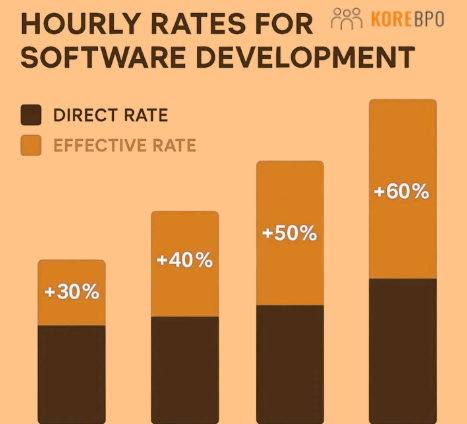
- Time spent managing tasks
- Communication delays (time zones, clarity)
- QA and bug fixing
- Rework due to misalignment
In many cases, teams underestimate coordination overhead by 20–30%.
Salesforce Agency: Higher Cost, Lower Execution Risk
Typical Cost Range
- $100–$200/hr (mid-tier)
- $200–$400+/hr (enterprise consultancies)
Yes, it’s more expensive upfront.
What You’re Actually Paying For
Agencies don’t just provide developers. They provide
- Architecture oversight
- QA processes
- Project management
- Delivery accountability
When Agencies Are More Cost-Effective
Agencies tend to win when
- Projects involve integrations (ERP, APIs, data migration)
- You’re using CPQ or multi-cloud setups
- Requirements are still evolving
- Internal technical leadership is limited
The Trade-Off
Agencies reduce
- Risk
- Rework
- Oversight burden
But increase
- Hourly cost
- Less direct control
- Potential over-engineering
Side by side: Offshore Developer vs Agency
Cost Comparison
- Offshore developer: $25–$70/hr
- Agency: $100–$200/hr
Real-World Performance Comparison
Offshore Developer
- Lower upfront cost
- Requires strong internal management
- Higher risk of rework
- Slower without a clear direction
Agency
- Higher upfront cost
- Structured delivery
- Lower rework risk
- Faster time-to-completion (in complex builds)
The Most Overlooked Factor: Time-to-Value
This is where decisions go wrong.
Teams focus on rate instead of speed.
Let’s break that down
- Offshore setup: $10k/month × 4 months = $40k
- Agency team: $20k/month × 1.5 months = $30k
The “more expensive” option actually costs less.
Where Most Projects Go Wrong
From what we’ve seen, cost overruns usually come from
- Poor requirements upfront
- Lack of technical ownership
- No QA process
- Over-reliance on a single developer
The Hybrid Model (What Actually Works Best)
This is where it gets interesting.
The highest-performing teams don’t choose one or the other.
They combine both.
Typical Hybrid Setup
- Offshore developers for execution
- Senior lead or agency layer for
- Architecture
- QA
- Delivery management
Why This Works
- Reduces cost by 20–40% vs full agency()
- Maintains delivery quality
- Speeds up execution
- Minimizes rework
How to Choose the Right Model
Here’s a simple decision framework.
Choose an Offshore Developer If
- You know exactly what needs to be built
- Work is straightforward
- You have strong internal technical leadership
- Budget is tight
Choose an Agency If
- Requirements are unclear
- Project involves integrations or complexity
- You need speed and reliability
- You don’t have internal Salesforce expertise
Choose a Hybrid Model If
- You want to balance cost and performance
- You’re scaling ongoing Salesforce work
- You need both execution and oversight
FAQs
Final Thoughts: What Actually Costs Less?
If you’re looking purely at hourly rates
Offshore developers win
But if you’re looking at total cost over 6–12 months
It depends on execution, not pricing
- Simple work → offshore is more cost-effective
- Complex work → agencies often win
- Ongoing work → hybrid is usually best
Want Help Deciding What’s Right for Your Team?
If you’re weighing offshore vs agency vs hybrid, the best next step is to look at your actual use case—not just pricing tables.
At Kore BPO, we help teams.
- Break down the real project scope
- Estimate true cost (not just hourly)
- Design the right delivery model
- Avoid costly rework cycles
If you want a practical recommendation based on your setup, book a quick consultation with our team—no pressure—just a clear direction.
Is hiring an offshore Salesforce developer always cheaper than an agency?
When does a Salesforce agency become more cost-effective?
What is the highest hidden cost of offshore developers?
What is the hybrid model in Salesforce outsourcing?
How should teams decide between offshore, agency, or hybrid?

Related Articles



Ready to Build Your Offshore Team?
Get pre-screened resumes in 2 to 5 days. No upfront fees. One partner from hire to payroll.
Contact Us