What Is an Argentina Staffing Agency? A 2026 Guide for US Companies


- 01What an Argentina Staffing Agency Actually Does
- 02Why US Companies Are Staffing From Argentina Now
- 03The Real Cost Savings
- 04The Timezone Edge
- 05The Peso Risk Nobody Mentions in the Pitch
- 06Legal and Compliance Considerations
- 07Best Cities to Staff From
- 08How to Choose an Argentina Staffing Partner
- 09How Kore BPO Staffs Argentina Differently
- 10Common Questions
A founder emailed me in June asking if hiring in Argentina was “too risky right now” because of the news he’d been reading about the peso. Fair question. The answer wasn’t a flat yes or no, and it’s the same answer I give anyone weighing Argentina against Mexico or Colombia. The risk is real, it’s just not the risk that shows up in most sales decks, and a decent staffing partner prices around it instead of pretending it doesn’t exist.
A Country That Gets Undersold on Talent and Oversold on Instability
An Argentina staffing agency is a firm that recruits, vets, and places Argentina-based workers into roles for US companies, typically through staff augmentation, an employer of record arrangement, or a full BPO engagement, depending on how much of the legal and payroll load you want to hand off. It’s the same three-model split you’ll find behind every LatAm staffing conversation. What makes Argentina specifically worth a closer look is the combination sitting underneath those models: some of the strongest engineering talent and English proficiency in the region, paired with a currency situation that genuinely needs a knowledgeable partner to manage well.
This guide covers what an Argentina staffing agency actually does, what the country’s developer talent and cost picture look like heading into 2026, the currency risk most comparison posts skip over entirely, and how to tell a partner who’s built for that risk from one who’s just hoping it doesn’t come up.
What an Argentina Staffing Agency Actually Does
Three service models get sold under the same “Argentina staffing” label, and they solve different problems. Staff augmentation places an Argentina-based worker inside your existing team structure, embedded day to day, while the agency handles recruiting, payroll, and local compliance in the background. Employer of record is narrower by design. A licensed EOR entity becomes the legal employer of record in Argentina so your company never has to register a local entity just to hire one or two people. A full BPO arrangement goes further still, handing an entire function like fintech development or customer operations to the partner rather than just supplying individual headcount.
The pricing conversation and the compliance conversation get blurred together constantly, and that’s usually where the real markup hides. A staff augmentation quote typically bundles recruiting, payroll, and a management fee into one monthly number. An EOR quote is closer to true employment cost plus a flat per-head service fee. Neither structure is wrong on its own, but a partner who can’t walk you through which one you’re actually paying for, line by line, is a partner worth a second question before you sign. If you want the timezone-alignment piece of this broken out on its own, our guide to what a nearshore staffing agency does goes deeper on that specific model.
Most of Kore BPO’s Argentina placements run through staff augmentation, sourced against roles in software development, data, and fintech operations, since that’s where the country’s talent bench runs deepest.
Why US Companies Are Staffing From Argentina Right Now
Three things line up at once, and none of them are a short-term blip.
Start with the talent itself. Argentina is home to an estimated 115,000 software developers, and the country ranked 26th globally, and first among every Latin American nation, on the 2025 EF English Proficiency Index, landing in the “High” proficiency band. That’s not a marginal edge over neighboring countries. It’s the difference between a developer who can sit in on a live sprint planning call and one who needs everything routed through written translation first.
Second, the demand is already proven at scale, not theoretical. Argentina’s IT market is on pace to grow by $8.48 billion between 2024 and 2029, a 9% compound annual growth rate. SAP runs an official office in Buenos Aires, and IBM operates a technology campus in the same metro area, well before “nearshoring” became a boardroom buzzword. They didn’t build there for the exchange rate alone.
Third, Argentina passed the RIGI large-investment incentive law in 2024, offering a fixed 25% corporate tax rate and reduced withholding for qualifying long-term projects, technology included. That’s a government actively trying to make the country cheaper and less friction-heavy to invest in, which tends to be a leading indicator for where staffing demand goes next, not a lagging one.
 2024 baseline
2029, +$8.48B, 9% CAGR
2024 baseline
2029, +$8.48B, 9% CAGR
The Real Cost Savings
Argentina developers run roughly 50% to 65% below equivalent US salaries once every mandatory employer cost gets added back in. Not the number a recruiter quotes on the first call. The number after social security contributions, the 13th-month bonus, and the staffing partner’s own fee all land on top of base pay.
The Bureau of Labor Statistics puts the 2026 median US software developer salary at $133,080, with the 10th percentile at $71,280 and the 90th percentile near $205,000. Layer on the standard 25% to 40% for US payroll taxes, benefits, and overhead, and a fully loaded mid-level domestic hire runs $166,000 to $186,000 a year. A comparable mid-level developer sourced from Argentina, fully loaded with Argentina’s own mandatory contributions included, lands closer to $51,000 to $67,500.
| Role | US Fully Loaded Cost | Argentina Fully Loaded Cost |
|---|---|---|
| Junior software developer | $89,000–$100,000/yr | $31,500–$42,000/yr |
| Mid-level software developer | $166,000–$186,000/yr | $51,000–$67,500/yr |
| Senior software developer | $256,000–$287,000/yr | $76,500–$123,800/yr |
| Data analyst | $95,000–$115,000/yr | $34,000–$50,000/yr |
Run that gap across a five-person engineering pod and you’re not looking at a rounding difference anymore. You’re looking at a sixth headcount you never had to ask finance for.
None of that savings is free money sitting on the table, though. A staffing partner’s markup typically runs 25% to 40% on top of base compensation for staff augmentation, or 15% to 25% for an EOR arrangement. Ask for the breakdown in writing before you sign. A vendor who hedges on that number is telling you something, whether they mean to or not.
The Timezone Edge
Buenos Aires sits just 1 hour ahead of US Eastern time during US daylight saving months, and 2 hours ahead the rest of the year. That’s tighter than Mexico, tighter than Colombia, and dramatically tighter than any offshore option in Asia. A 10am standup in New York lands at 11am or noon in Buenos Aires, comfortably inside the same working day on both ends.
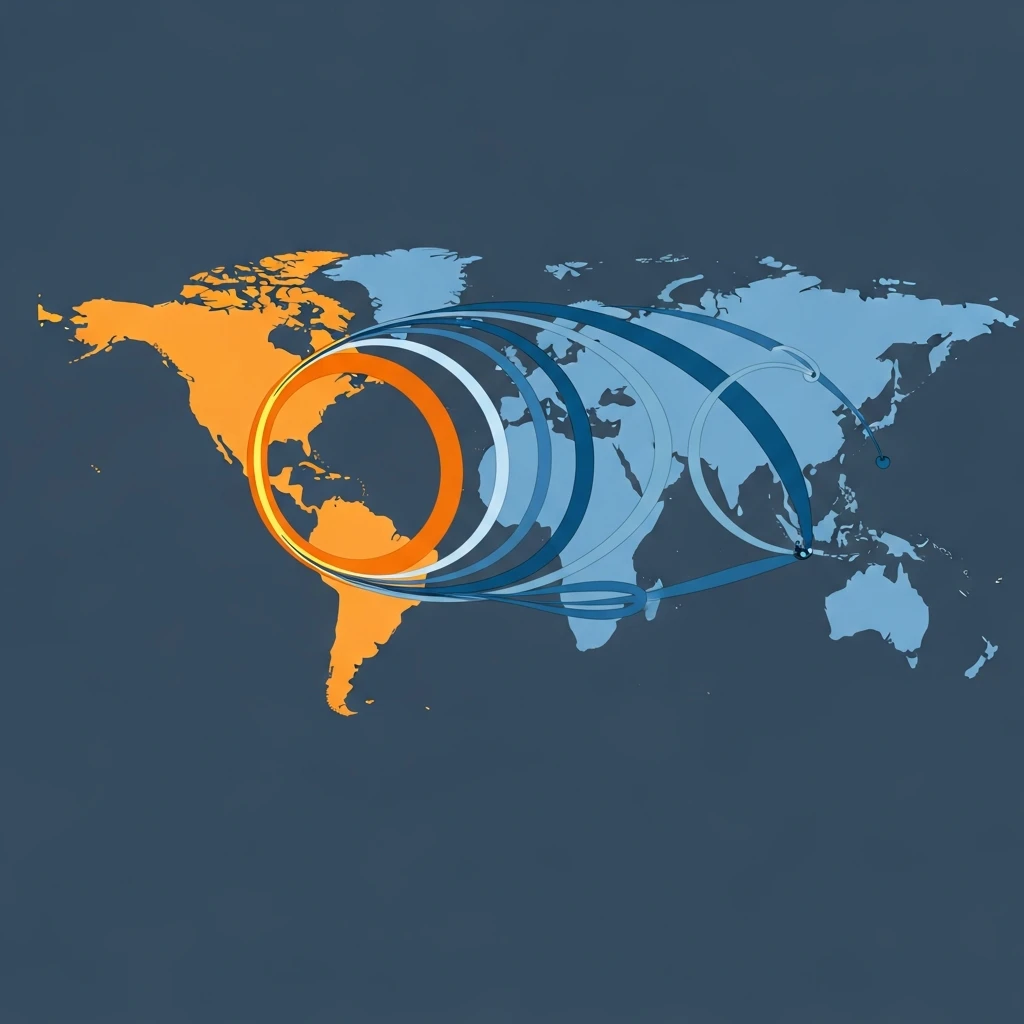 Americas: 1–3 hrs from US
Asia: 10.5–13.5 hrs from US
Americas: 1–3 hrs from US
Asia: 10.5–13.5 hrs from US
That overlap changes how work actually gets unblocked, not just how fast a Slack message gets answered. A developer stuck on a blocker at 2pm can ask a question and get a same-afternoon answer instead of losing the rest of the day waiting on a teammate 12 time zones away. Code review happens live. Standups happen live. Sprint planning doesn’t need to be recorded and watched the next morning.
That doesn’t make offshore staffing the wrong call for every workload. Overnight QA runs, 24-hour support coverage, and genuinely async work all play to offshore regions’ strengths in ways same-timezone staffing can’t match on cost. But for iterative, collaborative work where a team is actively building something together in real time, Argentina’s overlap is about as tight as nearshore staffing gets.
The Peso Risk Nobody Mentions in the Pitch
Here’s the part most Argentina staffing content skips entirely, and it’s the one question worth asking before anything else. Argentina’s monthly inflation dipped below 2% in June 2026, the first sub-2% reading since August 2025, but StoneX still projects annual CPI landing between 30% and 32% for the year, and the Peterson Institute has flagged renewed peso volatility risk as seasonal dollar inflows from agricultural exports fade and private-sector dollar demand climbs.
None of that should scare a company away from staffing in Argentina. It should change how the contract gets structured. The workaround the market settled on years ago is simple, and it’s the same one Kore BPO uses: price and pay compensation in US dollars, not pesos, with the local employer of record or staffing entity handling the peso-denominated employer contributions on the back end. The worker still gets paid predictably. Your budget doesn’t move every time the exchange rate does. A partner who quotes you a peso-denominated rate for a role you’re paying for in dollars is passing currency risk straight to you without saying so.
Ask any Argentina staffing partner directly whether compensation is quoted and paid in USD, and who absorbs peso volatility on the employer-contribution side. If the answer is vague, that vagueness is the actual risk, not the exchange rate itself.
Legal and Compliance Considerations
Argentina’s labor code carries mandatory obligations well beyond a US-style offer letter, and an employer of record exists specifically to absorb this layer.
The aguinaldo, Argentina’s 13th-month bonus, is a legal requirement paid in two installments each year, one by June 30th and one by December 18th, each equal to 50% of the highest monthly wage earned in the preceding six months. Employer contributions on top of base salary run roughly 24% to 26.4%, covering pensions, healthcare, and social security. Argentina also passed Law 27,802 in March 2026, a labor reform that recalculated the statutory severance base to exclude non-monthly payments like the aguinaldo and vacation bonus, a meaningful shift from the prior calculation method.
Data privacy adds one more layer worth knowing about upfront. Argentina’s Personal Data Protection Act, enacted in 2000, was the first data protection law in Latin America to earn an EU adequacy finding, and it applies to any company processing the personal data of people located in Argentina, regardless of where that company is headquartered.
An EOR is the right structure for the first 8 to 12 hires in Argentina, before the volume justifies standing up a local entity of your own. Past that point, most companies shift toward a direct entity paired with a staffing partner for sourcing, since the per-head EOR fee starts costing more than the entity itself.
Not Sure If Argentina Is the Right Fit for Your Team?
Compare your role requirements against Kore BPO’s Argentina talent bench in a quick call.
Best Cities to Staff From in Argentina
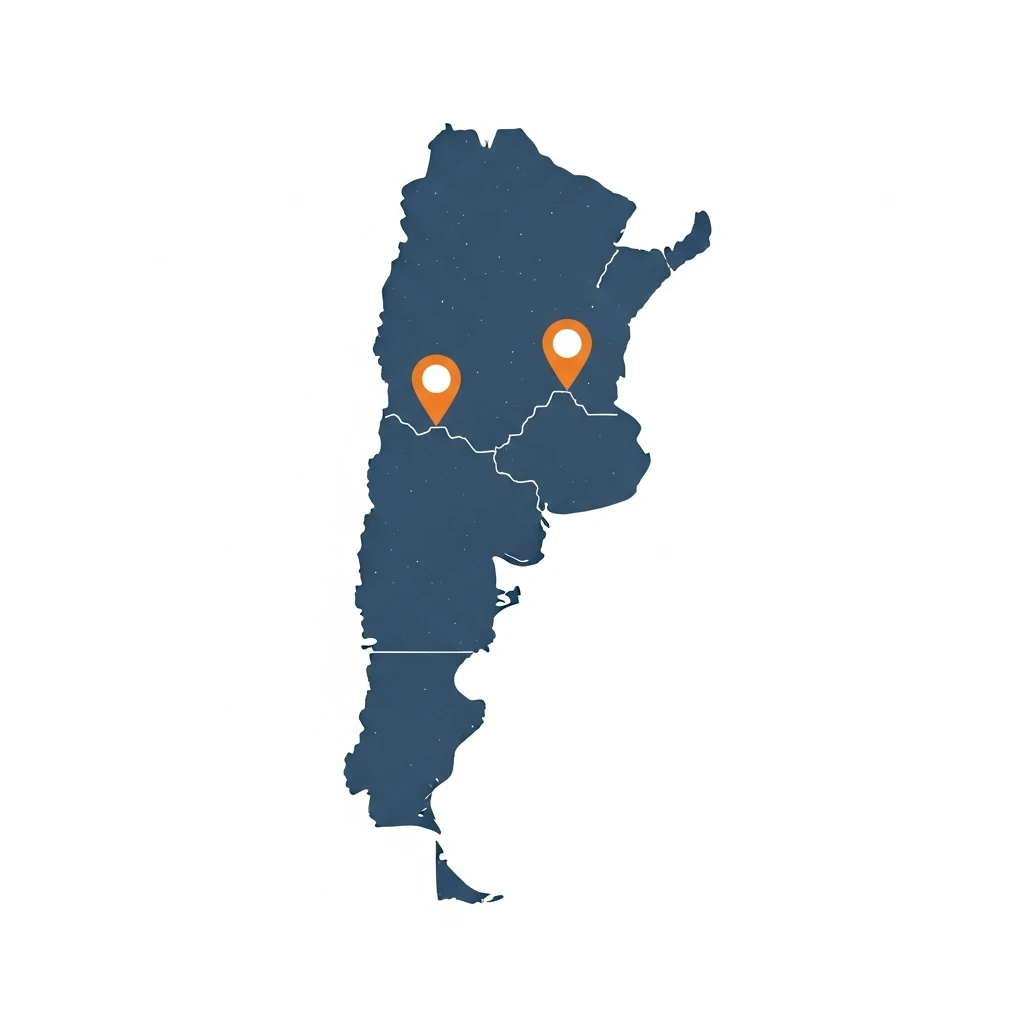
Two cities cover most of the country’s staffing demand, and they solve slightly different problems.
Buenos Aires is the clear center of gravity, home to the largest share of the country’s developer base and the headquarters of regional players like MercadoLibre and Ualá. It holds the deepest bench of senior fintech and full-stack engineers in the country, which makes it the default pick for complex product work or anything touching payments infrastructure.
Córdoba is the country’s second hub, carrying a strong software export base and meaningfully lower operating costs than the capital. StartupBlink’s 2026 Global Startup Ecosystem Index ranks Córdoba 228th worldwide, with 9.4% annual ecosystem growth, reflecting a talent pool that’s grown well past its university-town reputation. It’s a strong fit when the role doesn’t need Buenos Aires’ fintech density specifically and the budget has more room to work with.
 Buenos Aires
Cordoba
Buenos Aires
Cordoba
Picking Córdoba purely to save another 10% to 15% on rate, for a role that actually needs Buenos Aires’ fintech-specific depth, is a common way to end up re-sourcing three months later. Match the city to the skill depth the role needs, not just the number on the rate card.
How to Choose an Argentina Staffing Partner
Ask four questions before signing anything. Skip one and you’ll likely find out why it mattered later, at a worse time than now.
- Is compensation quoted and paid in US dollars, and who specifically absorbs peso volatility on the employer-contribution side?
- Break down the markup line by line. A partner who won’t show you the fee structure in writing is usually hiding something inside it.
- Who owns compliance if Argentina’s labor law changes mid-contract, the way it just did with the March 2026 severance reform? That answer needs to be in the contract, not a verbal assurance.
- What happens if the placed worker leaves in month four? A real replacement guarantee separates an actual staffing partner from a lead-gen operation wearing a staffing label.
A partner who answers the currency question specifically, in writing, on the first call, is worth a second call. One who changes the subject isn’t.
How Kore BPO Staffs Argentina Differently
Kore BPO is a staffing and BPO firm placing data, software, and operations talent with US companies, running out of Dallas, Texas, with a Latin America bench built through our office in San Jose, Costa Rica, and a second office in Hyderabad, India, for offshore roles outside the Americas. We’ve placed 6,236 hires across 257 clients, and every Argentina placement we run is priced and paid in USD from day one, specifically because that’s the structural fix for the currency risk covered above, not a footnote we add after the contract is signed.
If you’re hiring one role a year in Argentina, a direct local staffing partner probably makes more sense than paying for the multi-country infrastructure we’ve built. We’re not the right fit for everyone, and saying that up front costs less than a bad reference six months in. What we do bring is $0 upfront fees, candidate resumes back in 2 to 5 business days, and a fee structure you can see the moment you ask for it. If you want to see how that’s worked out for other companies, our case studies cover real placements, not composite examples built to look good in a deck.
Questions Worth Asking Before You Sign
Is Argentina staffing riskier than Mexico or Colombia because of the peso?
Riskier only if compensation is quoted in pesos rather than US dollars. Structured correctly, with pay set and delivered in USD and the local employer of record absorbing peso-side employer contributions, currency volatility becomes the staffing partner’s operational problem to manage, not a budget swing your company has to absorb.
How much cheaper is an Argentina developer than a US one, realistically?
50% to 65% less on a fully loaded basis, before any staffing partner fee. A mid-level US developer running $166,000 to $186,000 fully loaded compares to roughly $51,000 to $67,500 for an equivalent Argentina hire once mandatory local contributions are included.
Do I need a legal entity in Argentina to hire there?
Not right away. An employer of record can legally employ Argentina-based workers on your behalf without you registering a local entity, which typically covers the first 8 to 12 hires. Past that volume, a direct entity paired with a staffing partner for sourcing usually costs less than continuing to pay per-head EOR fees.
What’s the timezone difference between Argentina and the US?
Buenos Aires runs 1 hour ahead of US Eastern time during US daylight saving months and 2 hours ahead the rest of the year, giving Argentina one of the tightest working-hour overlaps of any Latin American staffing market.
Buenos Aires or Cordoba, which should I staff from?
Buenos Aires for fintech-heavy or complex product roles, since it holds the deepest bench of senior engineers in the country. Cordoba for roles that don’t need that specific depth and where a lower operating cost matters more than access to the capital’s talent density.
Is Argentina staffing only useful for software roles?
No. Software and fintech get most of the attention because that’s where the country’s talent bench is strongest, but data, operations, and finance roles staff well from Argentina too, often with the same fast time-to-fill as technical positions.
Related Articles



Ready to Staff Your Next Role From Argentina?
Kore BPO sources vetted Argentina talent for US teams, priced and paid in USD from day one. Pre-screened candidates in 2–5 business days. $0 upfront.
Talk to Our Team