Offshore
AI Engineer
Vetted offshore AI engineers, placed with US companies in 2-5 business days. Candidates build production LLM applications, RAG pipelines, and AI agents on top of OpenAI, Anthropic, and open-source models, sourced from Hyderabad, India and San Jose, Costa Rica. They own the integration, evaluation, and cost control that a prompt in a playground never had to deal with.
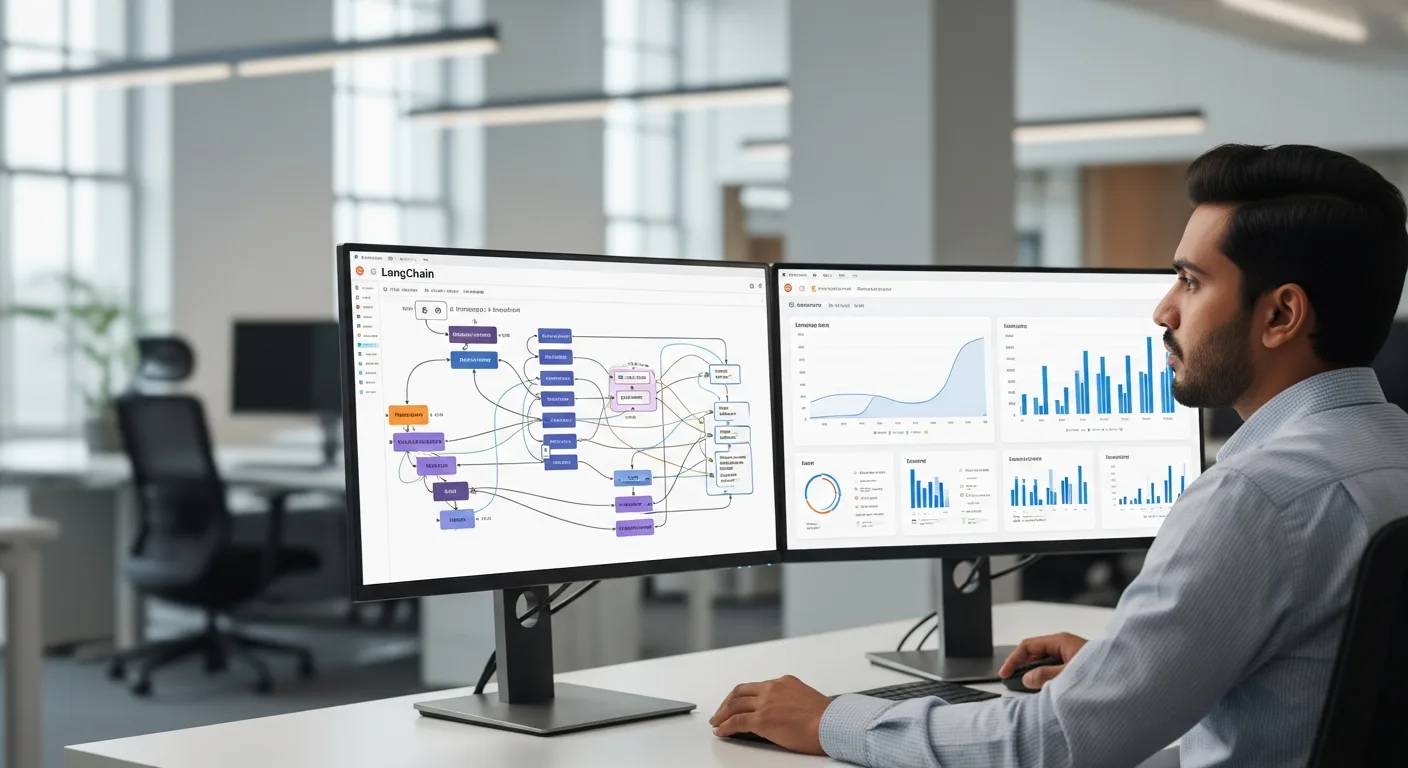
Kore BPO places vetted offshore AI engineers with US companies in 2-5 business days at 60-70% below US market rates. Candidates build production LLM applications, RAG pipelines, and AI agents, sourced from Hyderabad, India and San Jose, Costa Rica.
Somebody wired up a chatbot against an LLM API for a leadership demo. It answered a handful of scripted questions cleanly, everyone in the room nodded, and the roadmap slide said "launching Q3." Nine months later, it's still the same demo, running on the same hardcoded prompt, because turning an API call into something that survives real customers asking real questions is a different job entirely.
That gap isn't a data science problem, and it isn't a classic machine learning problem either. Nobody needs to train a model from scratch here. What's missing is the engineering discipline that wraps a foundation model in retrieval, guardrails, evaluation, and cost controls, and ships it as something customers or employees actually use every day. That's what an offshore AI engineer does.
An AI engineer builds and ships applications powered by large language models and other foundation models, wiring in retrieval, tool use, and safety guardrails so an API call becomes a real product feature. It's a different discipline from training models from scratch or running exploratory research, closer to product engineering with an LLM at the center than to classic ML.
Kore BPO is a US-owned offshore staffing firm with offices in Dallas TX, Hyderabad India, and San Jose Costa Rica. We've placed 6,236 offshore hires across 257 US clients. If your team already has an offshore software engineer shipping the surrounding product, or an offshore data scientist exploring what a model could do, an AI engineer is usually the piece that turns "we tested this in a notebook" or "we tried an API" into a feature that ships and stays reliable under real traffic.
Full disclosure. We're a staffing company. We benefit when you hire through us. If someone just needs to tweak a system prompt by Friday, that's a freelancer's afternoon. But if an AI feature has been "almost done" for two quarters, keep reading.

AI Engineer vs Machine Learning Engineer vs Data Scientist
Three titles that get used almost interchangeably on a job board, and describe genuinely different work. Here's the honest breakdown, so the req you post actually matches the gap you have.
| Dimension | AI Engineer | ML Engineer | Data Scientist |
|---|---|---|---|
| Primary function | Builds products on top of foundation models, RAG, agents, prompt and evaluation pipelines, cost and latency control | Deploys, scales, and maintains custom-trained ML models in production, with monitoring and retraining built in | Explores data, builds and validates models, and answers specific business questions with statistics |
| Core tools | LangChain, LlamaIndex, OpenAI & Anthropic APIs, vector databases, prompt evaluation frameworks | PyTorch, TensorFlow, Docker, Kubernetes, MLflow, SageMaker or Vertex AI | Python, R, Scikit-learn, Jupyter, statistical modeling, A/B testing frameworks |
| Output | A shipped AI feature, chatbot, copilot, or agent, running on an existing foundation model with real guardrails | A custom model running in production, serving predictions reliably, with drift detection | A validated model or analysis, usually still living in a notebook, ready to hand off |
| When to hire | An LLM pilot needs to move past the demo, or a product roadmap has an AI feature nobody's shipped yet | A custom model already tests well and nobody owns getting it into production | You need someone to explore the data, test hypotheses, and build the first version of a model |
| US market rate | $95K-$135K annually (mid-level) | $105K-$140K annually (mid-level) | $100K-$140K annually (mid-level) |
| Offshore cost (India) | $13K-$21K annually | $15K-$25K annually | $13K-$22K annually |
If the goal is shipping a feature built on an existing LLM, hire the AI engineer. If a custom model already needs deployment and monitoring infrastructure, that's an ML engineer. If nobody's explored the data or built a model yet, start with a data scientist. Rate ranges above are directional, for role comparison only. See the sourced salary table further down this page for the AI engineer figures broken out by experience level.
Skills We Screen For By Category
Every resume that crosses our desk for this role lists "LLMs" and "prompt engineering" somewhere near the top. That tells us almost nothing. Wiring an API call into a demo takes an afternoon. Making retrieval accurate, keeping an agent from looping forever, and holding a cost budget under real traffic takes actual engineering. Every AI engineer placement goes through a category-by-category check, not a single take-home chatbot exercise.
Frameworks & Integration
Framework familiarity is the easy part of the interview, honestly. Almost every candidate can name these. Fewer can explain why a given orchestration pattern breaks under concurrent load.
Vector Search Pipelines
This is where most "we built a chatbot" pilots quietly fail in production. Bad chunking and lazy embedding choices are the single most common reason a RAG system hallucinates.
Multi-Step Automation
An agent that can call three tools in a demo is one thing. An agent that fails gracefully, doesn't loop forever, and logs every decision for debugging is the actual production bar.
Quality & Safety
Almost nobody screens for this and it's usually the difference between a demo and something legal will actually approve for customer-facing use.
Production Operations
The bill that arrives after launch is what actually kills most internal AI pilots, not a lack of accuracy. We screen for engineers who plan for it up front.
Industry Credentials
A reasonable baseline signal, nothing more. None of these certify whether someone can debug a RAG pipeline that's confidently making things up.
The Chatbot Pilot Stuck in Demo Mode
It answered every question in the leadership walkthrough. Real customers ask things nobody scripted for, and it falls apart fast.
The RAG System That Keeps Making Things Up
It's supposed to answer from your own documents. Instead it confidently invents answers, because the retrieval layer was never actually tuned.
The Internal Copilot Everyone Asked For
Support or sales wants an assistant that can actually see their tickets and CRM data, not a general chatbot with none of the context.
The Agent That Needs to Take Real Actions
Answering questions isn't enough anymore. The next ask is an agent that books, updates, or files something correctly, every time.
The AI Feature on the Roadmap for Two Quarters
It's been announced to the board twice. Nobody on the current team has actually shipped an LLM feature past a prototype before.

How We Screen Offshore AI Engineers
Hiring managers ask a version of the same three questions at this stage. Can this person ship something past a prototype. Will the retrieval layer actually hold up on messy real-world documents. What happens to the API bill once real traffic hits it?
Five checks, built around what actually breaks in production LLM systems. Every Kore BPO placement for this role runs through all five, in this order.
Shipped AI Portfolio Review
Live projects and GitHub history reviewed first, not a polished slide deck describing a chatbot that never left staging.
Prompt & LLM Integration Assessment
A live exercise wiring an LLM API into a working feature, scoped to the provider your team actually uses.
RAG & Retrieval Architecture Exercise
Building or debugging a retrieval pipeline against messy real documents, the exact failure mode most pilots hit first.
Live Agent Design & Debug
Design a multi-step agent workflow or debug one that's looping or hallucinating. This is where the real gaps show up.
Client Interview & Selection
You interview the top one or two candidates directly. No agency on the call. Reference checks come after you decide.
Offshore AI Engineer Cost in India vs Costa Rica vs US
Budget conversations about this hire tend to circle the same handful of questions. What does a mid-level AI engineer actually cost, fully loaded. Is this talent even findable right now given how hot the market is. Does the offshore savings number survive contact with management overhead. $84,000 to $116,500 is ZipRecruiter's current 25th-to-75th percentile range for "AI Engineer" nationally as of June 2026. Here's how it breaks down across engagement location and experience.
| Experience Level | US Market Rate | India | Costa Rica | Typical Savings |
|---|---|---|---|---|
| Entry-level (0-2 yrs) | $70K-$90K | $9K-$14K | $22K-$33K | 84-87% |
| Mid-level (2-5 yrs) | $90K-$118K | $13K-$21K | $32K-$50K | 80-84% |
| Senior (5-8 yrs) | $118K-$145K | $21K-$31K | $50K-$72K | 76-80% |
| Lead / Staff (8+ yrs) | $145K-$175K | $30K-$46K | $70K-$95K | 72-76% |
US figures are anchored to ZipRecruiter's June 2026 AI Engineer salary data (national average $101,752, 25th percentile $84,000, 75th percentile $116,500, 90th percentile $135,000), mapped across experience tiers. ZipRecruiter's separate "Generative AI Engineer" listing reports a higher national average of $115,864, reflecting how much this specific niche's pay varies by exact title and specialization. India and Costa Rica figures are Kore BPO's typical fully managed engagement cost range for this role, extrapolated using the same offshore-to-US ratio published on our machine learning engineer and data scientist salary tables. These are not independently audited or externally sourced numbers. Actual rates vary by specialization, industry, and engagement structure. Contact us for a custom cost model for your team.
Engagement Models for This Role
Most companies calling us about AI engineering work fall into two camps. Either an LLM pilot already proved the concept and someone needs to own turning it into a real feature, or there's a specific product push, a support copilot, a document search tool, an internal agent, that has to ship on a deadline. Teams juggling more than one AI initiative usually hit the point where the person who built the demo can't also own hardening it for production.
Dedicated Full-Time
A single AI engineer fully embedded in your team, owning LLM integration, evaluation, and cost control on an ongoing basis. The most common arrangement for this role.
Contract-to-Hire
Evaluate the working relationship before committing long-term. Common for companies testing offshore for the first time on an AI-critical feature.
AI Product Pod
An AI engineer paired with an offshore software engineer. Fits teams that need both the LLM integration work and the surrounding product engineering to ship together.

Not Every AI Engineer Is the Same Hire
"AI engineer" covers more ground than the title suggests. We screen and place against four common sub-specialties, matched to what your requisition actually needs.
RAG & Retrieval Specialist
Owns chunking strategy, embeddings, and vector search tuning. Fits teams whose AI feature keeps hallucinating on real documents.
Agentic Workflow Engineer
Builds multi-step agents with reliable tool calling and error handling. Fits automation initiatives past the single-prompt stage.
LLM Application Engineer
Wraps a foundation model in the product layer, prompts, guardrails, UI integration. Fits customer-facing chatbot and copilot builds.
AI Platform Engineer
Handles model routing, caching, and cost and latency observability across providers. Fits teams running AI at real production volume.

Good Fit, Maybe, or Not a Fit
Staffing firms benefit when you hire. We're one, and we'd rather say that outright than bury it in fine print. So when we say this isn't right for everyone, we mean it.
Good Fit
- An LLM pilot needs to move past a demo with a hardcoded prompt
- A RAG system is live and hallucinating on real customer documents
- The roadmap has promised an AI feature nobody's shipped past prototype
- An internal copilot needs real access to your data, not a generic chatbot
Maybe, Talk First
- You're not sure if the gap is an AI engineer or an ML engineer
- Nobody's explored what a model could do with your data yet
- You want strategic AI direction without a full-time hire yet
Not a Fit
- One system prompt needs a quick tweak by Friday. That's a freelancer job
- You need someone to train a foundation model from scratch, that's a rare research specialty, not this role
- Customer data must remain entirely on US soil under any circumstances
The Real Questions Behind the Objections
Can someone offshore be trusted with a feature that touches real customer data and a live LLM API key? What happens if the model provider changes pricing or deprecates an endpoint mid-engagement? Is this whole category still going to be a real job in two years, or is it hype?
Fair questions, every one. Here's the honest version. Data access and API key handling are governed by the same access controls and NDAs used across every Kore BPO engagement, not something invented specifically for AI roles. Model provider risk is exactly why the screening process tests for model routing and multi-provider fluency directly, a candidate who's only ever wired up one API and never planned for a fallback doesn't pass that stage.
"Isn't this just a ChatGPT wrapper anyone could build?" A weekend demo, sure. A feature that holds up under real traffic, real edge cases, and a real budget is a different project, and that gap is exactly why this role exists.
On whether the category holds up. LinkedIn's data, reported through CBS News, ranks AI engineer as the fastest-growing job title for young workers in the US for the second year running, with 75,000 AI engineer postings among 639,000 AI-related roles added between 2023 and 2025. That's not a hype cycle, that's hiring demand outpacing the supply of people who've actually shipped one of these systems.
On cost specifically. A US mid-level AI engineer runs $90K to $118K before benefits and overhead, based on ZipRecruiter's percentile bands for June 2026. Fully loaded, that figure often climbs past $135K. An offshore placement through Kore BPO usually saves 76% to 87% of that, depending on experience level and location, without the multi-month search that leaves an AI feature stuck in demo mode the whole time.
What Hiring Managers Ask Before They Call
What does an offshore AI engineer actually do day to day?
Turning an LLM API call into a working product feature is the core of it. They build retrieval pipelines, wire up agents and tool calling, write and test prompts, set evaluation and guardrails, and watch token cost and latency once real traffic hits. On a mature engagement they also get pulled into provider and model routing decisions before a new AI feature ever reaches customers.
How is an AI engineer different from a machine learning engineer?
Scope, mostly. An ML engineer deploys and maintains custom-trained models, built from your own data, in production. An AI engineer builds products on top of existing foundation models like GPT or Claude, using retrieval, prompts, and agents rather than training a model from scratch. If your model is custom-built and needs deployment infrastructure, hire the ML engineer. If you're building on an existing LLM, the AI engineer is the right hire.
How is an AI engineer different from a data scientist?
A data scientist explores data, tests hypotheses, and builds the first version of a model or analysis, usually in a notebook. An AI engineer takes an existing foundation model and ships it as a real product feature, chatbot, copilot, or agent. If nobody's explored what a model could do with your data yet, start with an offshore data scientist instead.
How fast can Kore BPO deliver AI engineer candidates?
2 to 5 business days for a shortlisted set of resumes, and 2 to 4 weeks for full placement, including the RAG architecture exercise, live agent design round, and your own interviews. Senior candidates with real shipped production experience, not just weekend chatbot projects, sometimes take slightly longer to source. That combination is genuinely rare right now.
What does an offshore AI engineer cost compared to a US hire?
$84,000 to $116,500 is ZipRecruiter's current 25th-to-75th percentile range for "AI Engineer" nationally, as of June 2026, with a national average of $101,752. A fully managed offshore engagement through Kore BPO for a comparable mid-level candidate typically runs $13,000 to $21,000 in Hyderabad or $32,000 to $50,000 in Costa Rica. Those specific figures are Kore BPO's own engagement cost range, not an independently published market survey. The salary table above breaks out all four experience tiers.
Do your AI engineers work with a specific model provider, or across all of them?
Across providers, and we screen for that flexibility on purpose. Most engagements build on whichever foundation model API the client has already standardized on, sometimes more than one at once for cost or reliability reasons. Candidates are evaluated on model routing and provider-agnostic architecture, not loyalty to a single vendor's tooling, since pricing and capabilities shift often enough that lock-in is a real risk.
How do you screen for real production AI skill, not just prompt tinkering?
Backwards from how most agencies run it, on purpose. We start with a candidate's actual shipped projects and GitHub history, not a portfolio of chatbot demos that never left staging. Then comes a live exercise building or debugging a RAG pipeline against messy real documents, followed by an agent design and debug round testing how they'd catch a workflow that's looping or hallucinating. Resumes come last in the process.
Stop Letting the AI Feature Sit in Demo Mode
Every month an AI pilot stays stuck in a leadership demo, competitors ship the real thing and customers notice the gap.
Still researching? See the machine learning engineer or data scientist pages if you're not sure which role fits your team yet.
Get AI Engineer Candidates in 2-5 Days