
Talend killed its free edition back in January 2024, and most teams didn’t feel it right away. Two years on, unpatched connectors are starting to fail against every Salesforce and Snowflake API update, and the security gaps nobody’s patching are showing up in vendor risk reviews. That’s pushing a fresh wave of companies to hire ETL help in 2026, and the first question almost all of them ask is the same. What does an offshore ETL developer cost by country, and does the tool stack change the number?
Short answer. Yes, quite a bit, and most rate guides don’t split it out. This one does. If you’re building or expanding an offshore data team through Kore BPO’s offshore roles program, the numbers below cover country-level rates for India, the Philippines, Poland, Ukraine, and Latin America, then layer in what Airflow, Spark, and Talend specifically do to that number.
Kore BPO is a US-owned offshore staffing partner based in Dallas, placing vetted data engineers, including ETL and pipeline specialists, for US companies with no upfront fees. We’re not neutral on this topic. We place these hires every month, which means the ranges below reflect what we actually see clients pay, not a scraped average from a job board that never placed anyone.
Offshore ETL Developer Cost by Country
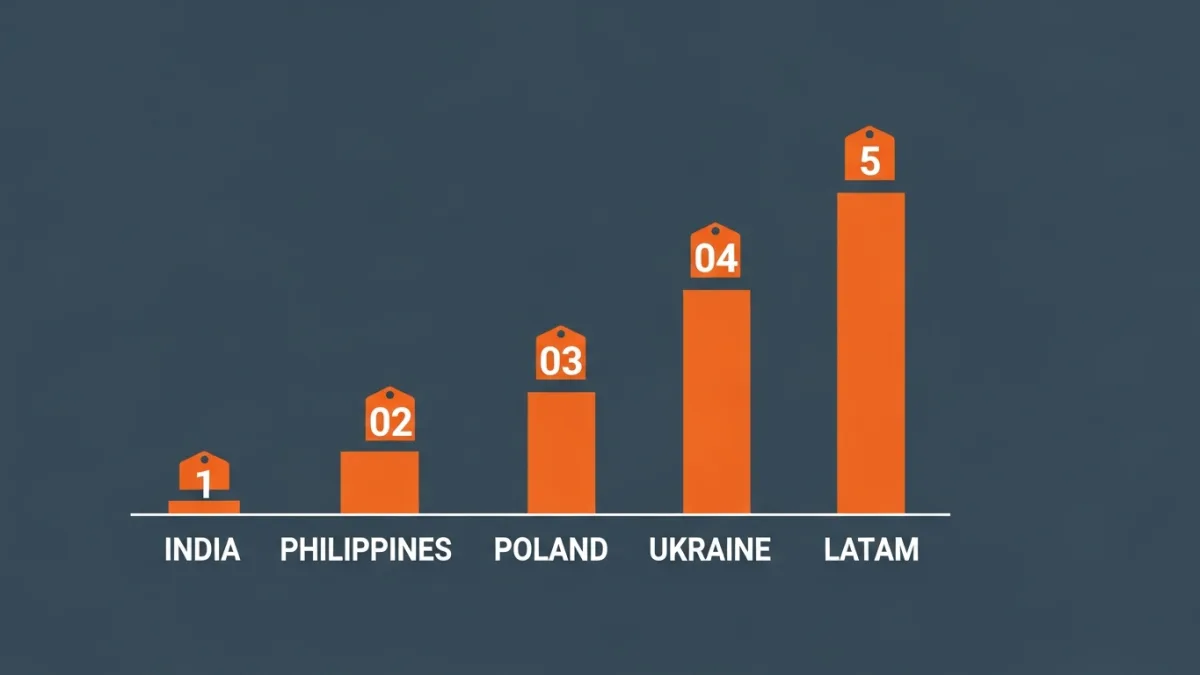
Offshore ETL developer rates vary by 3 to 4 times depending on country and seniority. Junior talent in South Asia starts around $18/hr, while senior Eastern European specialists with cloud-platform depth can run $60 to $70/hr. Geography sets the floor. Seniority and tool stack set everything above it.
| Country | Junior (0-2 yrs) | Mid-Level (3-5 yrs) | Senior (6+ yrs) |
|---|---|---|---|
| India | $18-25/hr | $28-35/hr | $38-50/hr |
| Philippines | $20-28/hr | $28-36/hr | $36-45/hr |
| Poland | $25-32/hr | $35-48/hr | $50-70/hr |
| Ukraine | $22-30/hr | $30-42/hr | $42-55/hr |
| Mexico & Brazil | $25-32/hr | $32-48/hr | $48-65/hr |
These are Kore BPO’s typical placement bands for 2026, built from actual candidate offers, not job-board medians that blend generalist developers into ETL-specific figures. India and the Philippines win on pure cost. Poland and Ukraine win on senior-level depth, especially for teams that need someone who’s already migrated a legacy pipeline off deprecated tooling. Mexico and Brazil split the difference and add real-time overlap with US business hours, which matters more than people admit until their first 11pm Slack thread about a broken load.
Airflow vs Spark vs Talend: Does Your Tool Stack Change the Rate?
Yes. Talend specialists cost 10 to 20% more than Airflow or Spark engineers with comparable experience, mostly because Talend’s shrinking pool of Open Studio-trained developers is now competing for the smaller group of people who’ve also touched the paid Qlik Talend Cloud migration path. Airflow and Spark, by contrast, sit in a much deeper, faster-growing candidate pool.
Apache Airflow is the orchestration layer. It schedules and monitors DAGs (directed acyclic graphs) written in Python, and it’s become close to a default choice for teams building modern pipelines from scratch. US Airflow developers average $114K a year in base pay, and offshore Airflow talent tends to sit at the lower-to-mid end of the country bands above, because the skill is in higher supply than Talend specifically.
Spark handles the heavy lifting. Distributed processing across large datasets, usually paired with Airflow for scheduling rather than used as a standalone tool. Engineers who can tune Spark jobs for cost (not just get them running, but get them running without a $4,000 surprise on the Databricks bill) sit closer to the senior end of whatever country band they’re in, tool aside.
Talend is the odd one out. Salary.com puts US Talend ETL Developer pay at $128,550 a year, and Glassdoor’s range runs comparably high. That premium follows offshore too. It’s not that Talend is harder to learn. It’s that fewer people are learning it now that the free on-ramp is gone, which is the whole subject of the next section.
| Tool | Primary Role | US Annual Avg | Offshore Rate vs Airflow Baseline |
|---|---|---|---|
| Apache Airflow | Orchestration, scheduling | $114K | Baseline |
| Apache Spark | Distributed processing | $120K-140K | +5-10% |
| Talend | Visual ETL, data integration | $128K-138K | +10-20% |
Why Talend’s 2024 Retirement Is Still Pushing Costs Up in 2026
Qlik, which acquired Talend in 2023, discontinued Talend Open Studio, the free open-source edition, on January 31, 2024. No more updates. No security patches. The connector library froze on that date, and it hasn’t moved since.
That doesn’t sound urgent in isolation. Frozen software keeps running, right up until it doesn’t. Two years is roughly how long it takes for connector drift to become a real problem, and 2026 is when that clock is running out for a lot of companies at once. Salesforce, Snowflake, and half a dozen other SaaS platforms have shipped API changes since January 2024 that Open Studio’s frozen connectors were never updated to handle. Add a security audit that flags unpatched software as a compliance finding, which is happening more often as vendor risk reviews get stricter, and a team that was fine ignoring this in 2024 is suddenly not fine ignoring it in 2026.
So companies split into two camps. One pays for Qlik Talend Cloud and keeps their existing Talend logic, which still needs someone who knows the platform. The other rips Talend out entirely and rebuilds on Airflow or Spark, which needs someone who can migrate legacy ETL jobs without breaking finance’s month-end close in the process. Both paths need a specific kind of senior offshore hire, not a generalist. That’s the actual reason Talend rates haven’t softened even as the free entry point disappeared. Fewer new Talend developers are entering the pipeline, and the ones who are get pulled straight into migration work, which pays more than routine maintenance ever did.
If your team is still on an unpatched Open Studio install right now, that’s worth flagging internally before it shows up in someone else’s audit first.
See Kore BPO’s ETL Developer Roles
Vetted offshore ETL developers across Airflow, Spark, and Talend, resumes in 2 to 5 business days.
US Onshore vs Offshore: The Real Cost Gap
A senior US ETL developer runs $100 to $150/hr, sometimes higher for Talend or cloud-platform specialists, while an equally senior offshore hire runs $38 to $70/hr depending on country. That’s a 40 to 65% reduction before factoring in the overhead most US teams don’t count, like a Bay Area office lease per engineer or a six-week notice period when someone leaves.
Indeed’s 2026 data puts average US ETL developer pay well into six figures once you include mid-level and senior roles, and that’s before recruiter fees, benefits load, and the 3 to 6 months it typically takes to fill a specialized data role domestically. Offshore doesn’t just shrink the hourly number. It shrinks the time-to-hire too, which is its own kind of cost most budgets don’t line-item.
This tracks the broader pattern across offshore software roles, not just ETL specifically. Kore BPO’s offshore developer cost by country guide covers the general software engineering rate landscape if you’re staffing beyond just data roles. ETL work sits at the higher end of that range because of the specialization, not because offshore data talent is somehow different from offshore engineering talent generally.
What Actually Drives the Rate Beyond Country
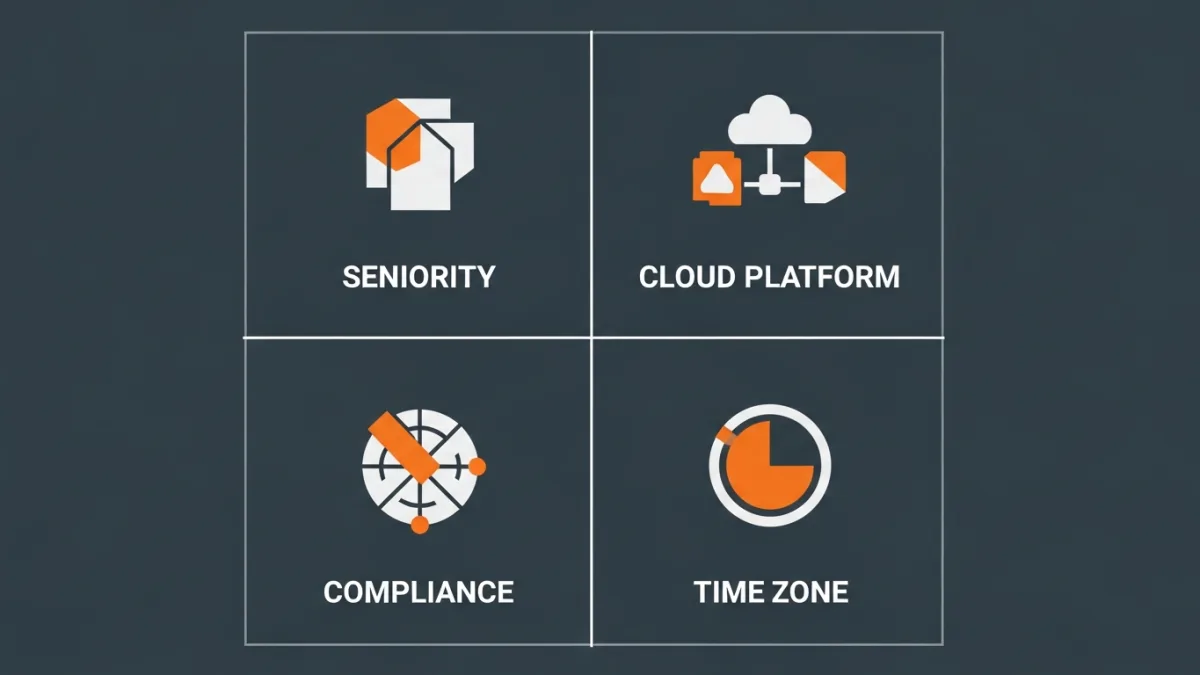
Country picks the band. Four other factors decide where you land inside it.
Seniority is the biggest lever, and it isn’t subtle. The gap between a 2-year and an 8-year offshore ETL developer is often larger than the gap between two countries at the same seniority level. Don’t let country savings tempt you into hiring junior for a role that needs someone who’s broken a production pipeline before and knows what that actually feels like.
Cloud platform experience adds a real premium. Snowflake, Databricks, and AWS Glue-specific experience runs 15 to 25% above a generalist ETL rate, because those platforms have their own cost-control quirks that only show up after you’ve been burned by one. An engineer who’s optimized a Snowflake warehouse for spend, not just query speed, is worth the premium if your data volume justifies it.
Compliance and governance background matters more than most job posts account for. Healthcare, finance, and any team touching PII needs someone who’s handled HIPAA or SOC 2-adjacent data pipelines before, and that experience isn’t evenly distributed across offshore markets. Poland and Ukraine tend to have deeper bench strength here, largely from EU data protection work.
Communication and timezone overlap is the quiet cost multiplier. A developer who can join a live standup and debug in real time is worth more than one who only communicates async, even at identical technical skill. This is where offshore data engineer hires from Latin America tend to close the gap on India’s raw cost advantage, because 3 to 5 hours of real overlap changes how fast problems actually get solved.
How to Vet an Offshore ETL Developer Before You Hire
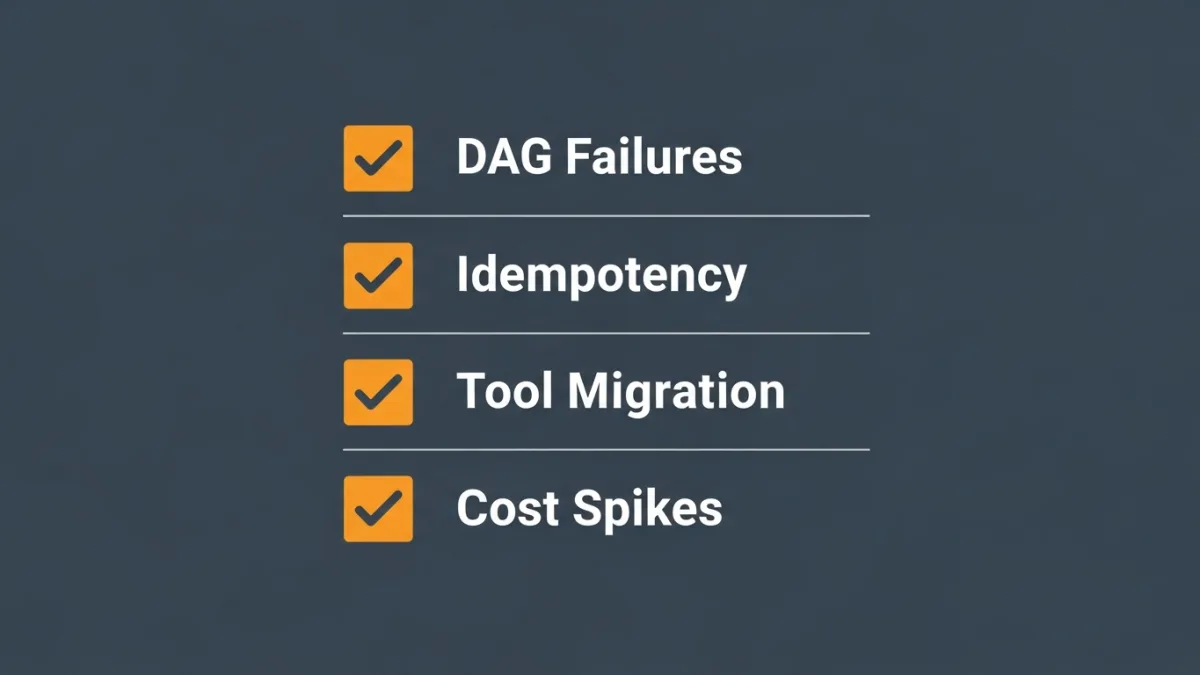
Most bad ETL hires don’t fail on syntax. They fail on judgment, the kind you only see once something breaks. Four questions catch that early.
An offshore ETL specialist who answers all four with specifics, not textbook definitions, is worth paying toward the top of their country’s band. One who can’t is a savings that costs you more later.
Country sets the floor. Tool stack and seniority set the ceiling. And in 2026 specifically, the Talend situation is quietly reshuffling who costs what, which is exactly the kind of thing a generic offshore rate card misses.
If you’re staffing this role, Kore BPO places vetted offshore ETL developers across Airflow, Spark, and Talend, with resumes back in 2 to 5 business days and nothing owed until you actually hire. Start at korebpo.com/offshore-roles to see current openings and typical placement timelines.
What Teams Ask Before Hiring an Offshore ETL Developer
So how much should you actually budget for an offshore ETL developer?
$28 to $50/hr for a solid mid-to-senior hire covers most companies comfortably, landing you in Poland, Ukraine, or the upper end of India and the Philippines. Budget toward $60/hr if you specifically need Talend migration experience or deep Snowflake cost optimization. Going below $25/hr for anything beyond junior, routine maintenance work usually means paying for it later in rework.
Airflow or Talend, which one’s actually cheaper to staff?
Airflow, by a meaningful margin. It’s open source with a much larger, faster-growing candidate pool, so offshore Airflow specialists typically run 10 to 20% below Talend specialists at the same seniority. That gap has widened since Talend’s free edition went away in 2024, not narrowed.
Wait, is Talend Open Studio really gone for good?
As a maintained product, yes. Qlik discontinued it on January 31, 2024, and installations already running will keep running, but with no security patches and a frozen connector library. If your team is still on it, that’s a decision worth revisiting before an outdated connector breaks against an updated API, or before it shows up as a finding in someone else’s security review.
Which country is the best fit specifically for ETL work, not just development generally?
Poland and Ukraine for senior migration and compliance-heavy work. India and the Philippines for cost-efficient junior-to-mid pipeline maintenance at scale. Mexico and Brazil when timezone overlap matters more than shaving another $10/hr off the rate. There isn’t one universal answer here. It depends which of those three things you’re actually optimizing for.
Realistically, how fast can you get an offshore ETL developer started?
2 to 5 business days for a first slate of vetted resumes through Kore BPO, then usually 1 to 2 weeks of interviews before an offer goes out. Total time from kickoff to a working developer is typically 3 to 4 weeks, faster than the 3 to 6 months a specialized domestic ETL hire usually takes end to end.

Related Articles



Ready to Hire an Offshore ETL Developer?
Kore BPO places vetted offshore ETL developers across Airflow, Spark, and Talend for US companies. Resumes in 2 to 5 business days.
See Offshore Roles