Offshore iOS Developer Cost in 2026: Full Rate Guide by Country


- 01What Does an Offshore iOS Developer Actually Cost?
- 02iOS Developer Rates by Country: 2026 Full Breakdown
- 03Hidden Costs That Push Your Budget 30–45% Higher
- 04How Seniority Changes the Math
- 05Offshore vs. In-House: Three-Year Cost Comparison
- 06Which Region Fits Your iOS Project?
- 07What Kore BPO Sees When Clients Run These Numbers
- 08Before You Hire an Offshore iOS Developer
Last updated: June 26, 2026
Most companies pricing an offshore iOS hire do the same thing. They find a rate, drop it into a spreadsheet, and present a number to finance.
Then the first invoice arrives. It’s 35% higher.
That gap between the quoted rate and what you actually pay is where offshore iOS budgets collapse in year one. Not because anyone lied. Because the rate they found was a base rate, and the all-in number is a different animal. Management overhead, async communication gaps, App Store rejection cycles, onboarding ramp time, none of that shows up in a line item until it’s already on the books.
This post covers what offshore iOS developers actually cost in 2026, broken down by country and seniority, including the hidden cost multipliers most rate guides quietly skip. We place developers across offshore developer roles in Southeast Asia, Eastern Europe, and Latin America for US companies every month. These numbers come from what we actually see, not from what service providers advertise on landing pages.
What Does an Offshore iOS Developer Actually Cost?
The global range runs from $18 to $75/hr. Most mid-to-senior offshore iOS hires land in the $30 to $55/hr band depending on country. US in-house equivalents average $133,169/year on Glassdoor, or roughly $64/hr at standard full-time hours.
iOS developer rates sit roughly 12 to 18% above general software developer rates for the same region and seniority. The premium exists because Apple’s ecosystem demands specific knowledge that most software developers don’t carry. SwiftUI, UIKit, AVFoundation, the App Store review process, Apple’s privacy framework requirements, ATT enforcement changes since 2023. Not every developer who writes Swift has shipped a real app through the App Store. That distinction is visible in their portfolio. And in their rate.
The demand picture is shifting too. SwiftUI has become the default framework for new builds, but a significant chunk of enterprise iOS codebases are still UIKit-heavy. A developer who can navigate both, bridge them during migration, and know when to push back on architectural decisions commands a premium in every region. In 2026, that profile runs $45 to $65/hr in Eastern Europe and $35 to $50/hr in India and the Philippines, even when general senior software dev rates in those same markets are lower.
Eastern European senior iOS developers at $45–$62/hr cost roughly 50% less than equivalent US contract talent at $110–$140/hr on most platforms (Lemon.io, 2026).
Stack Overflow’s 2024 Developer Survey put the median mobile developer salary at $185,000 including equity. The Glassdoor baseline of $133,169/yr doesn’t include stock. Against either number, the case for offshore iOS rates holds. The question is which region, which seniority tier, and what the real all-in cost looks like before you sign anything.
iOS Developer Rates by Country: 2026 Full Breakdown
Country selection is the biggest lever on your iOS budget. A senior iOS developer in the Philippines costs less per year than a junior in most Western European markets. A senior in Poland with SwiftUI production experience runs about the same as a US mid-level developer. The table below pulls from Lemon.io’s 2026 iOS rate data, Arc.dev, and Aalpha’s 2026 country rate guide.
| Country / Region | Junior Rate | Mid-Level Rate | Senior Rate | Senior Annual Est. |
|---|---|---|---|---|
| India | $18–$25/hr | $25–$38/hr | $35–$45/hr | ~$75k |
| Philippines | $15–$22/hr | $22–$35/hr | $30–$45/hr | ~$65k |
| Vietnam | $18–$28/hr | $25–$38/hr | $32–$48/hr | ~$70k |
| Ukraine | $25–$35/hr | $35–$48/hr | $45–$62/hr | ~$90k |
| Romania | $28–$38/hr | $38–$50/hr | $48–$65/hr | ~$95k |
| Poland | $30–$42/hr | $40–$55/hr | $52–$70/hr | ~$110k |
| Colombia | $28–$36/hr | $36–$48/hr | $45–$60/hr | ~$88k |
| Mexico | $30–$40/hr | $40–$52/hr | $50–$70/hr | ~$100k |
| US (benchmark) | $65–$90/hr | $90–$120/hr | $120–$150/hr | ~$165k |
Senior annual estimates assume 2,080 billable hours at the midpoint of the senior rate range. Use these as planning anchors, not hard commitments. Actual numbers shift based on contract structure, overlap hours required, and management model.
India and Southeast Asia
India has the deepest bench for iOS developers at any seniority level. Mid-level developers run $25 to $38/hr. Seniors with SwiftUI and App Store experience land in the $35 to $45/hr range. The Philippines overlaps in price, usually $30 to $45/hr for senior developers, with Vietnam emerging as a strong third option in the $32 to $48/hr senior band.
The caution across this region isn’t price. It’s what “senior” actually means on a resume. A developer who spent four of their six years on a legacy UIKit codebase and one year touching React Native is not the same as a senior iOS developer who has shipped five App Store-reviewed products. That distinction has to be explicit in your technical screening. Title inflation is real here, and it shows up as rework costs, not rate costs.
According to Arc.dev’s 2026 salary data, India-based iOS developers average $29/hr at the mid level. Developers placed through structured vetting partners typically run $32 to $40/hr at the same seniority. That $3 to $10 gap is the vetting overhead you’re paying either way.
Eastern Europe
Eastern Europe runs higher, but the rate band compressed significantly between 2022 and 2025 as Ukrainian talent entered the remote market at scale. Senior iOS developers in Eastern Europe land in a $45 to $62/hr median band per Lemon.io’s 2026 data, with SwiftUI specialists and Xcode Cloud CI/CD experience pushing $65/hr or above.
Ukraine specifically has a deep Swift talent pool with rates still compressed relative to Poland and Romania. Somewhere between $45 and $62/hr for senior developers, a discount that exists because of ongoing market displacement and probably won’t hold beyond 2027. Companies hiring Ukrainian iOS developers in 2026 are getting real quality at a rate that reflects macro conditions more than skill market value.
Poland sits at the top of the region at $52 to $70/hr for senior developers. The time zone argument is genuine for European-aligned product teams, and Poland has strong Swift community presence with several iOS-focused agencies headquartered there.
Latin America
The LatAm pitch for iOS isn’t always rates. It’s hours. Colombian, Mexican, and Argentinian developers work within 1 to 3 hours of US Eastern. That synchrony changes how teams collaborate on app builds where design reviews, App Store submission calls, and product demos all need real-time back-and-forth.
Senior iOS rates in Colombia run $45 to $60/hr. Mexico $50 to $70/hr. The tradeoff is pool size. LatAm has fewer dedicated iOS developers than India or Eastern Europe. Good developers here get placed fast. If you’re sourcing in Q3 or Q4, expect 5 to 8 weeks instead of 2 to 4. According to Second Talent’s 2026 mobile developer rate data, Latin American iOS developers average about 52% below US equivalent rates. That savings still holds in 2026, though it’s narrowing as LatAm developer salaries respond to US remote demand.
Hidden Costs That Push Your Budget 30–45% Higher
Offshore iOS base rates inflate 30 to 45% when management overhead, tooling, and async coordination costs stack on top. A $35/hr quote realistically runs $45 to $50/hr all-in. Budget that before the first proposal lands, not after.
The cost categories that don’t appear in a quoted rate are predictable. Project manager time, whether internal or an offshore lead. Slack, Jira, and Xcode Cloud license seats. The knowledge transfer phase at onboarding. And the rework cycles from async communication on specs that weren’t tight enough when the developer started.
iOS projects carry one additional cost layer that general software dev often doesn’t: App Store review cycles. A developer who submits a build with a missing privacy description, a deprecated API call, or an ATT disclosure timing issue gets rejected. The review takes 1 to 3 days. The fix takes hours. The resubmission takes another day. Three to five rejection cycles on a new app adds a week to 10 days of calendar time that doesn’t appear on any rate card. That’s a real budget item, even if no one invoices you for it directly.
The full breakdown of how these numbers stack is in Kore BPO’s offshore developer TCO guide, which walks through the complete cost model with a worked example.
| Cost Component | SE Asia ($32/hr Base) | Eastern Europe ($52/hr Base) |
|---|---|---|
| Base hourly rate | $32.00/hr | $52.00/hr |
| Project management overhead (~15%) | +$4.80/hr | +$7.80/hr |
| Communication and tooling (~8%) | +$2.56/hr | +$4.16/hr |
| Onboarding and ramp (annualized) | +$1.60/hr | +$2.00/hr |
| App Store rework buffer (~8%) | +$2.56/hr | +$4.16/hr |
| Realistic all-in rate | ~$43–$48/hr | ~$67–$75/hr |
These overhead percentages reflect structured engagements with clear specs, weekly syncs, and a named technical reviewer on the client side. Underdefined projects push overhead above 50%. App Store rework buffer varies by app complexity: simple consumer apps may see 4–6%; enterprise apps with custom entitlements and third-party SDK compliance can exceed 15%.
How Seniority Changes the Math
The rate gap between a junior and senior offshore iOS developer isn’t really an hourly story. It’s a supervision story.

Junior developers at $18 to $25/hr pull 8 to 12 hours of internal oversight per week. Code review, spec clarification, App Store submission guidance, Xcode environment troubleshooting. When that oversight falls on a senior internal engineer who has other things to do, the cost is real whether or not it shows on an invoice.
Do the math on it. A junior offshore iOS hire at $22/hr with 10 hours per week of internal senior oversight at a $75/hr internal cost baseline runs an effective rate of about $22 + ($75 × 0.25) = roughly $41/hr fully loaded. A senior offshore developer at $42/hr requiring 2 hours of oversight per week runs $42 + ($75 × 0.05) = roughly $46/hr. The spread is smaller than the rate cards suggest. And the output difference is not.
Mid-level developers sit in the sweet spot for most US companies. They reduce oversight load by roughly 60% compared to juniors. They’re not quite running independently, but close. That profile, $28 to $40/hr in Southeast Asia and $38 to $52/hr in Eastern Europe, is where the value-per-dollar argument holds strongest for teams without deep internal iOS bench strength.
Senior iOS developers with SwiftUI production experience, async/await proficiency, and documented App Store submission history at $42 to $65/hr typically ramp in 2 to 4 weeks and run independently from there. For consumer-facing apps or anything where App Store compliance risk is high, the senior premium pays back in avoided rework faster than the hourly rate difference implies.
Get iOS Developer Rates Scoped to Your Role
We’ll benchmark specific candidates against your budget in 48 hours.
Offshore vs. In-House: What Three Years Actually Costs
Year-one comparisons make offshore look like an obvious win. Year three is where it gets more interesting, and more honest. US salaries compound. Offshore rates have stayed flat to modest growth in Southeast Asia and Eastern Europe since 2022. The gap doesn’t narrow. It widens.
| Cost Item | US In-House (Annual) | Offshore India Sr. (Annual) | Offshore EE Sr. (Annual) |
|---|---|---|---|
| Base salary / contract | $133,169 | $72,800 ($35/hr × 2,080) | $104,000 ($50/hr × 2,080) |
| Employer benefits burden (35%) | $46,609 | — | — |
| Office, hardware, licensing | $14,000 | $3,500 | $4,200 |
| Oversight and management (30%) | $8,000 | $21,840 | $31,200 |
| Year-1 total | ~$202,000 | ~$98,000 | ~$139,000 |
| 3-year total | ~$630,000 | ~$294,000 | ~$417,000 |
| 3-year savings vs. US | — | ~$336,000 | ~$213,000 |
US employer cost pulls from Glassdoor’s 2026 iOS developer data plus a standard 35% benefits burden. Offshore figures apply a 30% overhead factor across management, tooling, and coordination costs. Three-year US cost assumes 5% annual salary growth. Offshore rates held flat, which reflects recent market behavior in both regions. Your actual numbers move based on seniority, location premium, and contract structure.
If you’re evaluating the full lifecycle cost, the true cost of an offshore hire guide walks through a more detailed model with year-over-year projections and common variables that shift the outcome in either direction.
Which Region Fits Your iOS Project?
Not every iOS project is a match for every region. This is the part most offshore rate guides skip entirely. They give you the rates and leave you to figure out the fit yourself.
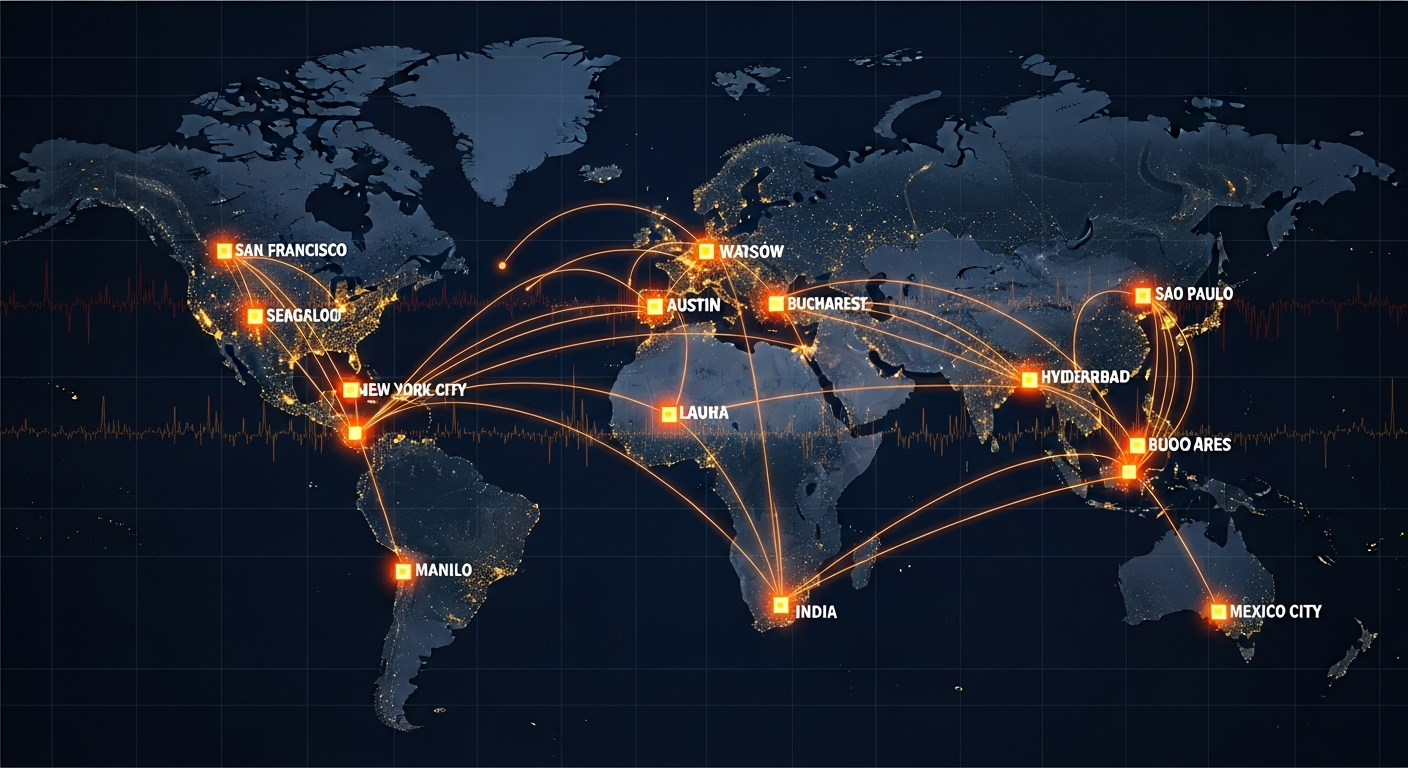
India and Southeast Asia fit best when your project has tight specs, a defined feature backlog, and someone internal who can review code asynchronously. B2B apps, internal tooling, MVP builds. The talent pool is the deepest globally. You can source quickly and replace just as fast if the fit isn’t right. The timezone gap (9 to 12 hours from US) requires deliberate async management. Not hard, but not optional either.
Skip Southeast Asia if your product has no technical lead on the client side and relies on daily real-time collaboration to move forward. You’ll spend the timezone premium in project delays.
Eastern Europe fits best when you’re building a consumer-facing app where architecture decisions compound over 2 to 3 years, or when App Store compliance depth genuinely matters. The quality ceiling is higher. The talent pool has strong SwiftUI maturity and more developers with production App Store submission history per capita than Southeast Asia. The 5 to 7 hour timezone gap from US East allows for 1 to 3 hours of real daily overlap.
Skip Eastern Europe if you’re purely rate-driven and the work is well-defined enough that seniority depth doesn’t differentiate outcomes.
Latin America fits best when your team genuinely needs real-time collaboration: design reviews, App Store submission calls, sprint demos that can’t be async. The 1 to 3 hour gap from US Eastern is the only offshore region where you can run a fully synchronous working model without anyone working unusual hours. The iOS talent pool is smaller, so plan for a longer sourcing runway.
For a view across all developer roles and tech stacks, the developer rates by country guide covers the full regional picture beyond iOS.
What Kore BPO Sees When Clients Run These Numbers
Kore BPO places offshore iOS developers for US companies ranging from early-stage startups to 500-person scale-ups. The pattern on iOS is distinct from what we see on other tech roles.
Most clients come in assuming SwiftUI fluency is table stakes at the senior level. It isn’t. Of the iOS developers we screened in 2025, fewer than 40% had shipped a production SwiftUI app with real users on it. A developer with deep UIKit experience and a working SwiftUI prototype is not the same as someone who has managed SwiftUI state at scale, debugged memory pressure in async view updates, or handled WidgetKit complication edge cases in a live product. That distinction separates a hire that ships confidently in week 6 from one still getting code-reviewed at week 12.
The other pattern: App Store compliance surprises. Privacy manifest requirements, required reason API declarations, ATT disclosure timing, SKAdNetwork attribution, the compliance surface has grown significantly since 2023. A developer who last submitted an app in 2021 may not know any of it exists. We now screen explicitly for App Store submission history and recent rejection experience, not just Swift proficiency. “Have you submitted in the last 12 months?” is one of our first screening questions on iOS candidates.
Kore BPO handles sourcing, technical vetting, and time zone evaluation for iOS developers across Southeast Asia and Eastern Europe. US companies receive a scoped shortlist inside 5 to 7 business days. If you’re building out an iOS hire and want benchmarked rates for your specific role and stack, start on the offshore roles page to see what’s currently available.
Bias noted here: we benefit when this is hard to solve internally. The math backs the offshore case regardless of who you use to source it.
Offshore iOS developer rates in 2026 range from $18 to $75/hr, but the number that matters is your fully-loaded effective rate, not the headline figure. Most mid-to-senior hires land at $43 to $75/hr all-in depending on region. Over three years, that typically saves $210,000 to $340,000 against US in-house hiring at comparable seniority.
Three things worth locking down before you start. First, choose region based on your collaboration model, not just the rate. Second, budget 30 to 40% above the base rate for overhead. Third, screen explicitly for App Store submission history, not just Swift proficiency. That last one catches more bad fits than any other question in the process.
If you want real rate benchmarks scoped to your specific iOS role and timeline, the Kore BPO team can turn that around in 48 hours. Tell us what you’re building and we’ll put real numbers to it.
So how much would a dedicated offshore iOS developer cost per month?
$4,800 to $9,600/month is the realistic range for a mid-to-senior hire working 40 hours per week. India and Southeast Asia land at the lower end; Eastern Europe and Latin America at the upper. That’s all-in, factoring a 30% overhead multiplier on top of base rates. Part-time or project-based iOS contractors typically bill at a 15 to 20% premium over the equivalent full-time rate, because the setup cost is fixed regardless of hours.
India vs. Eastern Europe for iOS: does the quality gap actually matter?
Short answer: it depends on what you’re building. For internal tooling, B2B apps, or MVP builds with tight specs, India typically delivers the same functional result at a 40 to 50% rate discount. For consumer-facing apps where architectural decisions compound over two to three years, Eastern European developers generally bring deeper iOS-specific seniority and more production SwiftUI experience. The honest version: the quality ceiling is higher in Eastern Europe, but most well-defined feature work doesn’t need a higher ceiling. Know your project before you pick the region.
Realistically, how fast can you hire a good offshore iOS developer?
Usually 3 to 5 weeks from first brief to signed contract for Southeast Asia. Eastern Europe runs 4 to 6 weeks. Latin America is longer, 5 to 8 weeks, because the iOS-specific talent pool is smaller and qualified developers move fast. These timelines assume structured vetting with a technical interview. Rushing to hit a 2-week deadline usually means hiring the developer who was immediately available, not the one you actually needed. The extra two weeks of sourcing almost always costs less than 3 months of rework.
Is App Store compliance a real risk with offshore iOS developers?
Yes, and it’s the one most hiring managers underestimate. App Store requirements have changed substantially since 2023: privacy manifests, required reason API documentation, ATT disclosure timing rules, SKAdNetwork attribution changes. A developer who last submitted an app in 2021 may not be current on any of it. Screen for App Store submission history explicitly. “Walk me through your last three App Store submissions and what got rejected” is a better interview question than “do you know Swift.” The rejection cycles alone can add a week or more to your release timeline per submission round.
Do offshore iOS developers actually know SwiftUI, or is it mostly UIKit?
Depends on when they built their core experience. Developers who entered iOS development before 2020 often have deep UIKit foundations and surface-level SwiftUI exposure. Developers who started post-2021 typically lead with SwiftUI but may have thin UIKit depth. For new consumer builds, SwiftUI-native is usually the right call. For existing UIKit codebases, you need someone who can work in both and knows when not to migrate. Always ask for a SwiftUI code sample with real state management and side effects, not a tutorial-level counter app. That single request eliminates a lot of candidates who don’t meet the bar.
Senior vs. mid-level offshore iOS dev: is the rate premium worth it?
$12 to $20/hr is the typical senior premium in Southeast Asia. $18 to $25/hr in Eastern Europe. Whether that pays back depends on your internal supervision capacity. If you have a senior iOS engineer internally who can review and unblock a mid-level hire, the economics often favor mid-level. If your internal team is non-technical or stretched thin, a senior offshore developer who runs independently is almost always the better call. Rework hours and missed App Store submissions cost more than the rate differential in most real cases. I’d rather defend a $45/hr senior hire than explain why the $25/hr junior needed four months of rework.
Rate data sourced from Glassdoor (2026), Lemon.io (2026), Arc.dev (2026), Aalpha (2026), and Second Talent (2026). Overhead percentages and vetting observations reflect Kore BPO’s direct placement experience and are intended as planning estimates, not guaranteed cost outcomes. Individual results vary by project scope, team structure, and contract model.
Related Articles



Ready to Scope Your iOS Developer Hire?
Kore BPO sources vetted offshore iOS developers for US companies. Real candidates, real rates, inside 48 hours.
Contact UsNo commitment required. We’ll benchmark your role before you decide.