India Staffing Agency vs Traditional Staffing


For roles that can tolerate a shifted schedule, an India staffing agency typically lands 40 to 70 percent below a fully loaded US hire, drawing from a tech workforce of nearly six million people. A traditional US agency stays in your time zone by default and skips a second country’s labor law, but it charges 15 to 75 percent in markup on top of US wages. The right call depends on how much of the workday actually needs to overlap.
India Staffing Agency vs Traditional Staffing: The Core Trade-Off
India comes up in nearly every offshore staffing conversation, and it usually gets talked about like one undifferentiated option: cheap developers, big talent pool, done. However, that framing skips the part that actually determines whether the hire works out. An India staffing agency runs on a real time zone gap that has to be managed on purpose, a state-by-state compliance structure most sales calls never mention, and a talent market that looks meaningfully different depending on whether the sourcing happens out of Hyderabad, Bangalore, or somewhere else entirely.
We place India-based hires for US companies across development, data, and back-office roles. In practice, the comparison we get asked to walk through most often isn’t offshore versus nearshore. Instead, it’s an India staffing agency measured directly against the traditional US staffing agency a company already has on retainer. Both models can fill the same seat, yet they get there through completely different mechanics, and the gap between them shows up in cost, speed, and how much schedule engineering the role can absorb.
This guide breaks that comparison down using real numbers, not the generic “40 to 70 percent savings” line every offshore pitch deck leads with. As a result, you can decide which model, an India staffing agency or a traditional US firm, actually fits the role you’re trying to fill.
Why India Specifically, Not Just “Offshore”
India’s tech sector is on track to cross $315 billion in revenue for FY26, a 6.1 percent jump year over year, with direct tech employment closing in on 6 million people according to NASSCOM’s 2026 Strategic Review. That scale, more than a lower hourly rate, is the real differentiator an India staffing agency can offer. In addition, India produces more than 2.5 million STEM graduates a year and carries the world’s second-largest English-speaking professional population, which is why the sourcing pipeline stays deep even for specialized roles that would take months to fill domestically.
Still, none of that means every India staffing agency delivers the same quality. Pricing spans a wide range depending on how the agency screens, and a firm quoting rock-bottom rates for “senior” talent is usually staffing the role with someone earlier in their career than advertised. In short, scale gives you options. It doesn’t replace vetting.
What Each Model Actually Does
A traditional US staffing agency sources, screens, and presents domestic candidates for temporary, contract, or direct-hire roles. Everyone stays inside the same labor market and the same legal system you already operate under, which is exactly why it’s the default most companies start with. However, the trade-off is that every candidate is priced at US wage levels, and availability depends on how deep the local pool actually is for that specific skill.
By contrast, an India staffing agency recruits, vets, and places professionals who function as an extension of your in-house team rather than a detached vendor. They join your daily standups, use your systems, and report to your managers the same way a domestic hire would, while the agency handles India-side recruiting, payroll, and employment compliance in the background. Ultimately, the model exists because most growing companies eventually hit the same wall: they want direct-hire accountability without paying US salary bands for every seat, and a mature India-based pipeline solves that without the multi-month search a thin domestic market forces.
Real Cost Comparison
Cost is where the two models diverge hardest, so it’s worth looking at both fee structures side by side rather than a single blended savings percentage.
Traditional Agency Fee Structure
Traditional US staffing agencies run on a markup model. Direct-hire placements typically cost 15 to 30 percent of the candidate’s first-year base salary, while temporary and contract placements carry an hourly bill rate marked up 30 to 75 percent over what the worker actually earns. That markup covers the agency’s recruiting cost, employment taxes, and margin, layered on top of wages that are already priced at US market rates.
India Staffing Agency Cost Structure
An India staffing agency, meanwhile, runs on a different base entirely. Junior developers there typically earn roughly ₹5 to ₹7 lakh a year, with senior engineers at established firms running well into the ₹15 to ₹25 lakh range. In turn, that converts to fully burdened hourly costs in the $15 to $20 range for junior work, $20 to $35 for mid-level, and $35 to $55 for senior engineers once agency management is included, and realistic loaded cost usually runs 1.4 to 1.8 times the quoted rate once ramp-up and oversight are factored in. On a monthly basis, dedicated developers commonly run $1,500 to $4,000 for junior roles and $5,000 to $8,000 for senior or specialized engineers. Set against a comparable US hire, that puts total cost of a fully loaded India staffing agency placement 40 to 70 percent below the domestic equivalent for most technical and support roles.
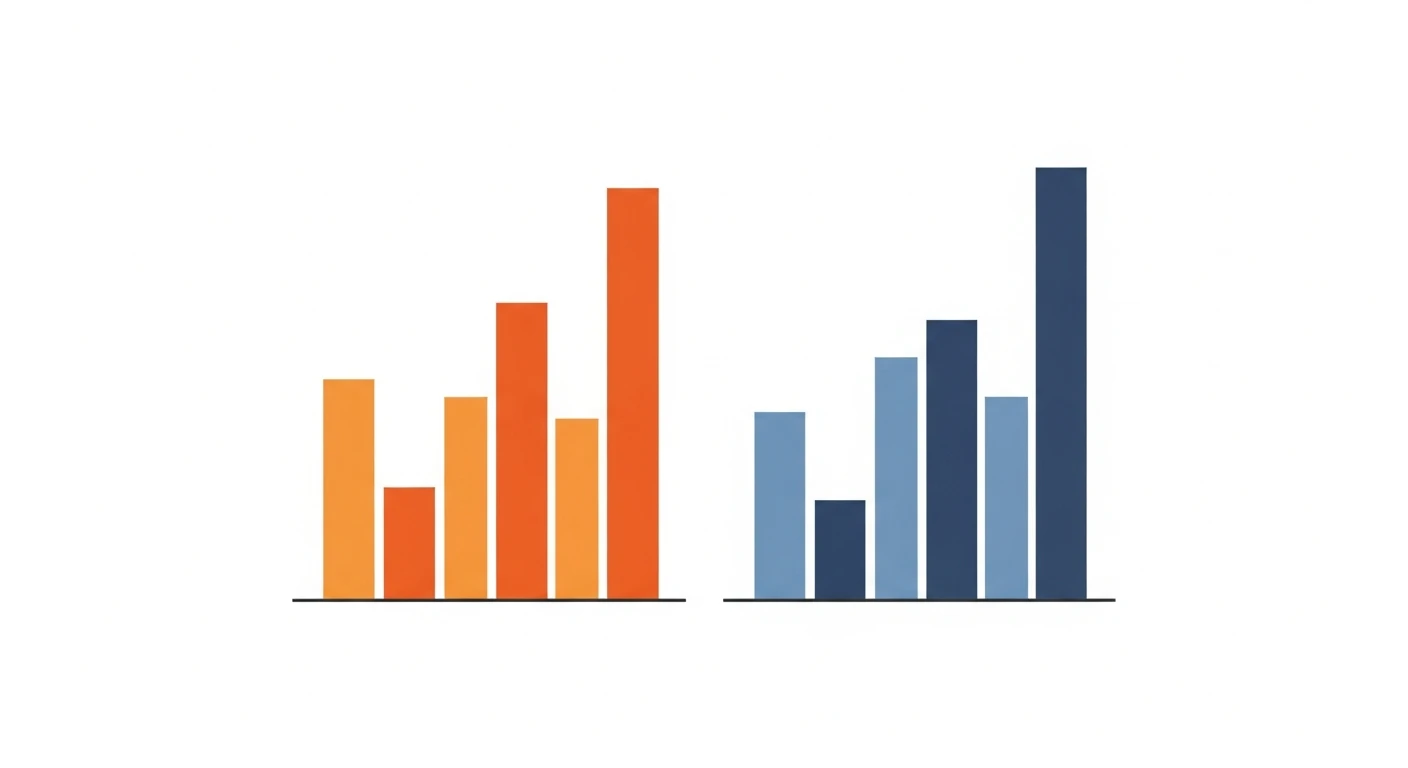 US direct hire, 15 to 30% of first-year salary
US temp markup, 30 to 75% over pay rate
India junior, $15 to $20/hr
India senior, $35 to $55/hr
US direct hire, 15 to 30% of first-year salary
US temp markup, 30 to 75% over pay rate
India junior, $15 to $20/hr
India senior, $35 to $55/hr
Even so, that gap doesn’t make a traditional agency the wrong call outright. For a single urgent, on-site hire where the fee buys you speed and local market knowledge, domestic staffing still wins. Meanwhile, the savings compound most on roles you plan to keep filled for years, where a percentage-point difference in hourly rate turns into real money every single month.
The IST Overlap Problem, Explained Honestly
This is the part most India staffing pitches gloss over, and it deserves a straight answer instead of a workaround buried three paragraphs in. India Standard Time runs 10.5 hours ahead of US Eastern Standard Time, narrowing to 9.5 hours once the US shifts into daylight saving. Left unmanaged, that leaves close to zero natural overlap with a standard 9-to-5 US workday. Specifically, the natural overlap window that does exist sits roughly between 7 and 9 PM IST, which lines up with 8:30 to 10:30 AM US Eastern.
How an India Staffing Agency Solves the Schedule Gap
Established India staffing agencies solve this by setting the hire’s actual working hours to overlap US business hours rather than India’s own daytime, most commonly a shifted schedule running roughly noon to 9 PM IST. As a result, that gives a genuine 3 to 4 hour live overlap with US Eastern mornings without pushing the India-based team member into a permanent night shift. This approach works well for development, data, and support roles where synchronous time can be scheduled deliberately. It works less well, however, for a role that needs someone physically present during a client’s own local hours in real time, which is the scenario where a domestic hire or a nearshore alternative usually fits better by default.
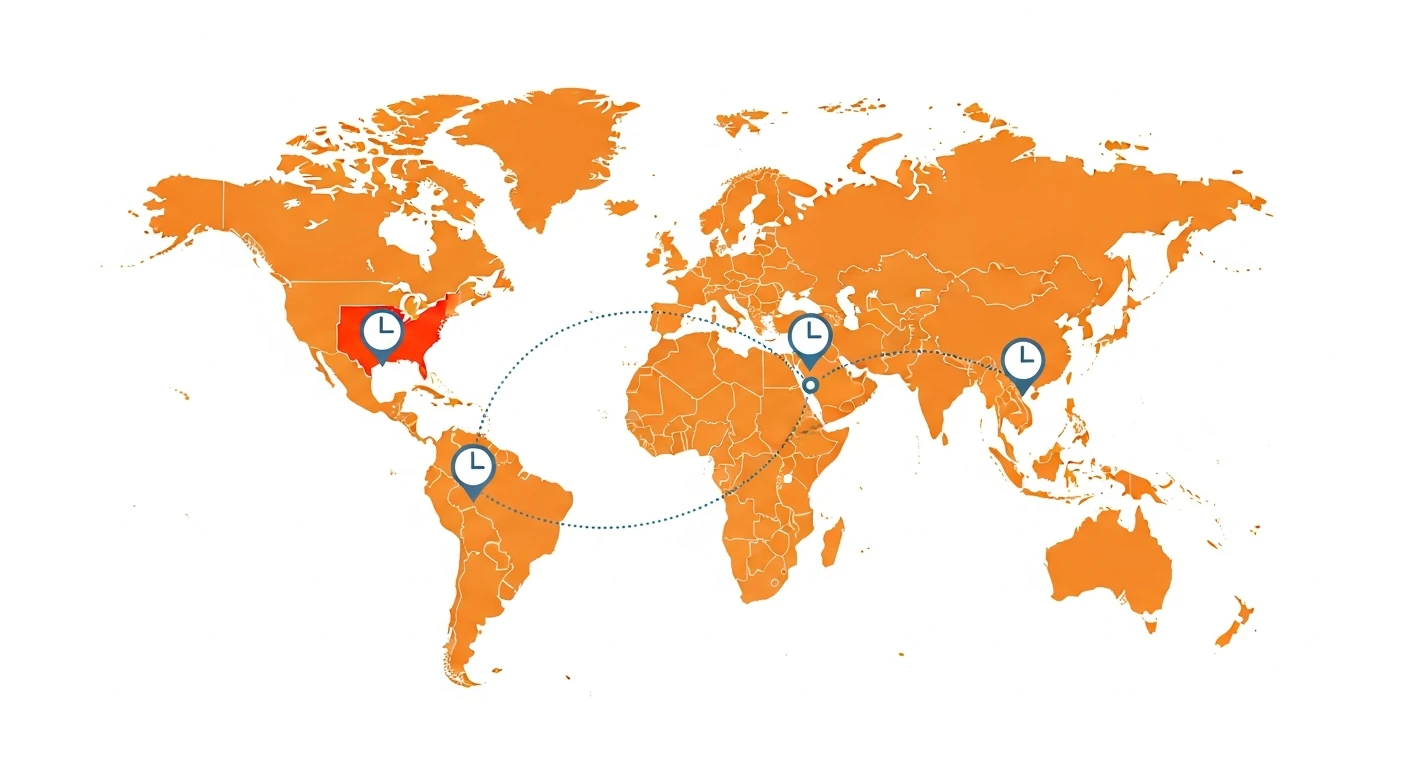 IST is 10.5 hrs ahead of US Eastern (9.5 hrs in DST)
Shifted 12PM to 9PM IST schedule overlaps US morning
IST is 10.5 hrs ahead of US Eastern (9.5 hrs in DST)
Shifted 12PM to 9PM IST schedule overlaps US morning
A traditional staffing agency placement, on the other hand, skips this problem entirely by staying in your own time zone. That’s a real advantage for roles built around live, same-day collaboration. Even so, it’s just not a trade-off you weigh against an India staffing agency directly; rather, it’s the factor that decides whether India, a different offshore market, or a domestic hire is the better starting point.
Hyderabad vs Bangalore, Does the City Matter
India’s tech talent isn’t evenly distributed, and an India staffing agency quoting the same national numbers regardless of which city you ask about usually only has real sourcing depth in one of them.
Bangalore: The Deepest Bench
Bangalore carries the largest bench by a wide margin, home to more than 1.5 million IT professionals in the metro area, with a strong concentration of engineers who have worked at product companies and startups. That depth comes at a price, though: Bangalore’s cost of living and comparable salary levels run higher than most other Indian tech hubs.
Hyderabad: The Cost-Efficient Alternative
Hyderabad, on the other hand, runs a different profile. Its engineering talent pool sits around 700,000 to 800,000 working professionals, smaller than Bangalore’s but still substantial, and it typically prices 15 to 20 percent lower for comparable roles. Furthermore, Karnataka and Telangana together account for well over half of all software exports routed through India’s Software Technology Parks of India network, with Karnataka alone holding more than 40 percent of that share since 2016, which is the government export data behind why both cities keep showing up as the default answer. Hyderabad has built particular depth in enterprise software, data engineering, and global capability center operations, which makes it a strong fit for teams that need a large, cost-efficient bench without needing every hire to come from a startup background specifically.
| City | Talent Pool | What to Watch |
|---|---|---|
| Bangalore | 1.5M+ IT professionals | Deepest bench and strongest product/startup pedigree, also the highest cost |
| Hyderabad | 700K to 800K engineering professionals | 15 to 20% lower cost, strong enterprise and data engineering depth |
 Bangalore, 1.5M+ IT professionals
Hyderabad, 15 to 20% lower cost
Bangalore, 1.5M+ IT professionals
Hyderabad, 15 to 20% lower cost
Before signing, ask any India staffing agency where its actual pipeline sits, rather than assuming it covers every city equally. A firm with real Hyderabad reach can walk you through how sourcing and pricing differ from Bangalore. One without it just repeats the Bangalore numbers no matter which city you ask about.
Compliance in India, What the Agency Should Own
A traditional US staffing agency operates entirely inside US employment law, familiar ground for most HR teams. By contrast, an India staffing agency introduces a second, state-specific compliance system that has to be handled correctly, not glossed over in a sales deck.
What an India Staffing Agency Must Handle
India’s Employees’ Provident Fund requires a 12 percent employer contribution on covered wages, split between the employee’s provident fund savings and the pension scheme, per the Ministry of Labour and Employment’s 2026 EPF notification. In addition, every employer has to register under the state-specific Shops and Establishments Act, which governs working hours, leave entitlements, wage disbursement, and termination process, and most states have moved to an online-first registration model in 2026. Layer state Professional Tax and India’s DPDP Act data-handling obligations on top, and it’s clear the compliance load is real, not a footnote.
Ask any India staffing partner who is the legal employer of record for your hire, how EPF and Shops and Establishments Act registration are handled, and how termination actually works under Indian law. A firm that can’t answer specifically hasn’t priced in its own compliance exposure, let alone yours.
Fortunately, none of that compliance load falls on your company directly when the India staffing agency structures the arrangement correctly, but it’s worth confirming before signing rather than assuming it’s handled.
 EPF, 12% employer contribution
Shops and Establishments Act registration
State Professional Tax
DPDP Act data handling
EPF, 12% employer contribution
Shops and Establishments Act registration
State Professional Tax
DPDP Act data handling
Which Model Fits Your Hiring Need
Ultimately, neither model wins every scenario. Instead, the right call depends on how much of the role genuinely needs live, same-day overlap, how long you expect to keep the seat filled, and how much budget flexibility you’re working with.
See How Kore BPO Structures India Placements
Sourcing across Hyderabad and Bangalore, EPF and Shops and Establishments Act compliance handled end to end, resumes back in 2 to 5 business days.
Choosing the Right India Staffing Agency Partner
The India staffing agencies worth signing with aren’t the ones leading with the biggest talent pool claim. They’re the ones that can walk through a real loaded cost instead of a headline rate, explain exactly how they’ve structured the schedule overlap for your role, and name their EPF and Shops and Establishments Act compliance process without pulling up a document mid-call.
Run the numbers on your specific role, weigh the overlap requirement honestly, and treat any hedge on compliance or replacement terms as a hard stop. If you’d like to see how we structure India staffing at Kore BPO, from Hyderabad and Bangalore sourcing through compliance-aware onboarding, start at korebpo.com/contact.
What Companies Ask Before They Sign With an India Staffing Agency
Cost and Schedule Questions
Is an India staffing agency actually cheaper than a traditional US agency?
Usually, yes, and by a meaningful margin. Specifically, a fully loaded India staffing agency placement typically runs 40 to 70 percent below an equivalent US hire once recruiting, payroll, and compliance are included, against a traditional agency’s 15 to 30 percent direct-hire fee or 30 to 75 percent temp markup layered on top of US wages. However, the number that trips people up isn’t whether India is cheaper. Rather, it’s confirming the quoted rate already includes EPF and other statutory costs rather than just a base figure.
How much of the workday actually overlaps between India and the US?
Natural overlap is thin, roughly 7 to 9 PM IST lining up with 8:30 to 10:30 AM US Eastern. Consequently, established agencies solve this with a shifted schedule, commonly noon to 9 PM IST for the India-based hire, which creates a genuine 3 to 4 hour live overlap with US Eastern mornings without requiring a permanent night shift.
City and Compliance Questions
Should I source out of Hyderabad or Bangalore?
It depends on the role and the budget. Bangalore has the deepest overall bench, over 1.5 million IT professionals, with strong product and startup experience, but it prices higher. By comparison, Hyderabad’s pool runs smaller, around 700,000 to 800,000 engineering professionals, and typically costs 15 to 20 percent less for comparable roles, with real depth in enterprise software and data engineering. Overall, an India staffing agency with genuine multi-city reach should be able to tell you which fits your role, not default to wherever its main office happens to sit.
What compliance does an India staffing agency need to handle?
At minimum, an India staffing agency needs to handle EPF employer contributions at 12 percent of covered wages, state Shops and Establishments Act registration, state Professional Tax where applicable, and DPDP Act data-handling obligations. Ideally, a reliable agency structures the arrangement so it, not your company, is the legal employer of record handling these requirements directly.
Timeline Questions
How fast can an India hire realistically start?
For an India staffing agency with an active, pre-vetted pipeline, expect a shortlist within days and a start date within roughly 5 to 10 business days for standard roles. However, specialized or senior positions, particularly in a tighter market like Bangalore, can take longer given how much competition there is for experienced engineers right now.

Related Articles



Ready to Hire India Talent the Right Way?
Kore BPO handles Hyderabad and Bangalore sourcing, technical and English screening, and India-specific compliance so you’re not gambling on any of the factors in this guide.
Book a Free Consultation