First Time Outsourcing Guide: 7 Things Every SMB CEO Must Know in 2026


- 01What Outsourcing Actually Means for an SMB
- 02Why 30% of First-Time Partnerships Fail
- 03What to Outsource First: A Sequenced Framework
- 04What It Actually Costs: Real 2026 Numbers
- 05How to Choose the Right BPO Partner
- 06How to Structure Your First 90 Days
- 07How to Know It’s Working: 5 KPIs from Day One
- FAQWhat First-Time Outsourcers Actually Ask
Thirty percent of first-time outsourcing partnerships fail within the first year. That figure comes from Outsource Accelerator’s analysis of common BPO failures, and it isn’t about bad vendors. It’s about steps that got skipped before the contract was signed.
If you’re thinking about outsourcing for the first time, the data is actually encouraging. Emapta’s 2026 outsourcing study puts SMB adoption at 54%. More than half of companies your size have already made this move. But adoption doesn’t guarantee success, and the same research shows that most failures trace back to preparation gaps, not vendor problems.
Before evaluating any provider, run through the small business outsourcing checklist. It covers the documentation and readiness work that separates clean handoffs from messy ones. Then come back here.
Seven things. Every first-time outsourcer needs to know them.
What Outsourcing Actually Means for an SMB (And What It Isn’t)
Outsourcing means contracting a third-party provider to run a defined business function on an ongoing basis. The provider supplies the staff, tools, and quality oversight. You define the process, the output standard, and the metrics.
For a 20-person SMB, that usually means handing off accounting, payroll, customer support, or admin work to a managed offshore team while keeping strategy, client relationships, and product decisions internal. The function still gets done. Your team just isn’t the one doing it anymore.
The confusion usually starts with terminology. People conflate outsourcing with staff augmentation, freelancing, and offshoring. They’re not the same.
- Staff augmentation fills a gap in your existing team, usually for a project or defined period. You manage the person directly.
- Freelancing engages an individual for specific deliverables, with no ongoing management structure or backup coverage.
- Business Process Outsourcing (BPO) hands an entire function to a managed provider. Their team runs it end-to-end, with their own quality control and reporting. That’s the model this guide covers.
BPO scales. You’re buying a managed service, not just a person. And one thing worth stating plainly: outsourcing to an offshore team doesn’t mean losing oversight. You define the process and the SLA. The provider handles execution. You review output. That’s the structure.
Why 30% of First-Time Outsourcing Partnerships Fail in Year One
That 30% is a fixable number. Time Doctor’s analysis of 13 first-time outsourcing mistakes puts the same causes in the same order every time. None of them require budget to solve. They require discipline before day one.
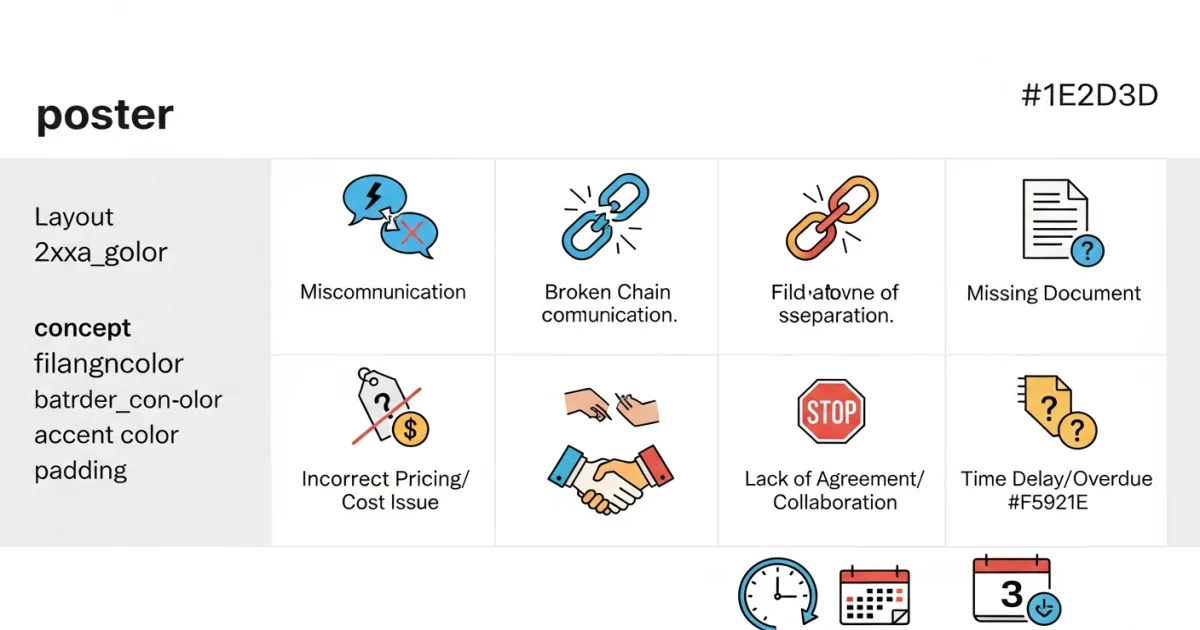
No SLA before day one. A Service Level Agreement defines what “good” looks like. Without one, every party has a different definition. The vendor thinks they’re delivering. You think they’re not. Nobody’s wrong. Nobody agreed on the standard.
Price-first partner selection. A provider quoting 30% below the market rate is cutting somewhere: staff tenure, supervision quality, or response time. Bias disclosed here. Kore BPO benefits when you outsource with us. The math on cheap vendors still holds regardless.
Handing off undocumented processes. If your bookkeeping SOP lives in one person’s memory, no vendor can replicate it reliably. Document first. Hand off second. Every time.
Skipping the pilot. Moving an entire department offshore in month one is a structural mistake. Start with one function, one team, a defined 90-day window. Prove the model before expanding it.
No onboarding period. The first 30 days aren’t about performance. They’re about calibration. Expecting full productivity on day one sets up both sides for disappointment and blame that belongs to the setup, not the vendor.
Zero communication protocol. Who escalates when something goes wrong? How fast? To whom? Write this before it happens. Not during a missed deadline.
What Should You Outsource First? A Sequenced Framework
Start with payroll or bookkeeping. Both are rule-based, fully documentable, and low-impact if quality dips briefly during transition. Once that handoff is running cleanly, add a second function.
According to the SBA’s list of easily outsourced functions, accounting and IT services rank as the most common starting points. But most common isn’t the same as best. Payroll is actually the cleanest first hand-off because it’s rule-based, legally standardized, and generates a natural paper trail you can audit immediately. For a deeper mapping of function type to company stage, see the complete outsourcing guide.
The sequence matters more than most guides acknowledge. Get it wrong and you’re managing vendor problems while your team is still doing the work you thought you’d handed off.
| Function | Hand-off Difficulty | Risk If Quality Dips | Recommended Order |
|---|---|---|---|
| Payroll processing | Low | Medium (compliance) | Start here |
| Accounting / bookkeeping | Low | Medium (accuracy) | Second |
| Data entry and admin | Low | Low | Second or third |
| Customer support | Medium | Medium (CSAT) | Third |
| Marketing execution | Medium | Low | Wave 2 |
| HR administration | Medium | Medium (compliance) | Wave 2 |
| IT helpdesk | Medium | Medium (uptime) | Wave 2 |
| Recruitment (RPO) | High | High | Wave 3 |
Don’t outsource more than two functions simultaneously in your first six months. The overhead of managing two new vendor relationships is real. Add a third and it becomes a part-time job for someone on your team.
The principle driving this order: start where your documentation is cleanest, the process is most repeatable, and a transition hiccup won’t cost you a customer or a compliance fine.
What Does It Actually Cost? Real 2026 Numbers
The conversation about outsourcing cost always starts in the wrong place. CEOs compare the outsourced monthly rate to a salary. That’s not the real comparison.
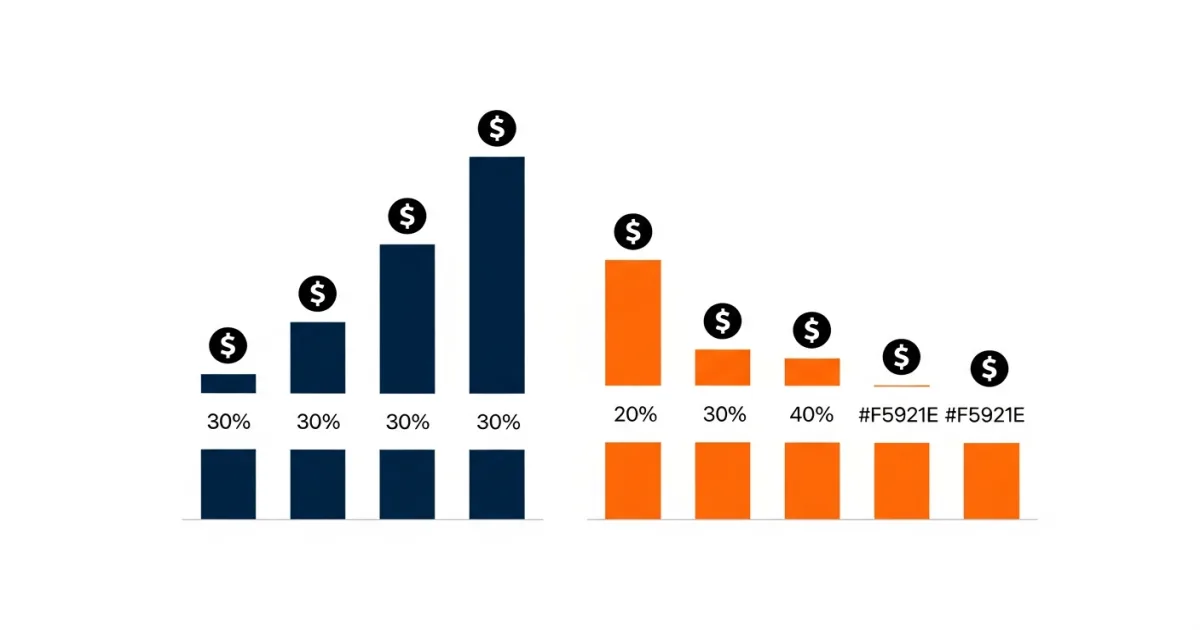
The real number is total cost of employment: salary plus benefits, payroll taxes, PTO accrual, equipment, office overhead, and management time. According to HiringSimplified’s 2026 in-house vs. outsource breakdown, that “$50K hire” lands at $87,500 to $92,500 in real employer cost. A $130K senior role comes in at $227,000 to $240,000. Most CEOs genuinely don’t know this until they run the numbers.
| Role | True In-House Cost (US, Annual) | Outsourced Cost (Annual) | Annual Savings |
|---|---|---|---|
| Bookkeeper | $72,000–$92,000 | $12,000–$24,000 | 67–87% |
| Customer support rep | $58,000–$78,000 | $14,000–$22,000 | 62–82% |
| HR admin coordinator | $62,000–$82,000 | $16,000–$26,000 | 58–79% |
| Marketing coordinator | $68,000–$90,000 | $18,000–$28,000 | 59–80% |
| Data entry specialist | $48,000–$62,000 | $10,000–$18,000 | 63–84% |
Sources: HiringSimplified 2026; Bay Area Accounting Solutions 2026. In-house figures use a 1.25x–1.85x multiplier on base salary.
The savings range is real. But the more compelling number for most CEOs is time recovered, not dollars saved. Outsourcing a bookkeeper typically returns 8 to 15 hours of owner and senior-staff time per week. At $200 per hour internal time value, that’s $83,000 to $156,000 in recovered capacity annually. The ROI calculus changes when you count both sides.
Escalon’s 2025 ROI analysis puts average returns at 200 to 300% within the first year for small businesses outsourcing back-office functions. One case study in the same report showed a 259% ROI, with $2.54 returned for every dollar spent on outsourced accounting.
How to Choose the Right BPO Partner (The Questions No One Tells You to Ask)
Don’t evaluate BPO partners on price and reference lists alone. Ask about staff turnover rate, SLA breach protocol, escalation contacts, data security posture, and exit terms. Most first-timers ask three of those seven questions. The other four are where problems hide.
References and reviews matter. But they answer the wrong question. A vendor with 50 five-star reviews may have earned those from clients with completely different requirements, team sizes, and risk tolerances than yours. For a breakdown of the most common missteps during partner selection, see the guide to BPO partner selection mistakes.
What you need to know is how the vendor behaves when something goes wrong. Here are the seven questions to ask before signing anything.
- What does your SLA look like, and what’s the make-good if you miss it? Every vendor will say they have an SLA. Ask about the breach protocol. That’s where you see how seriously they take it.
- Staff turnover is the hidden variable. Ask for the last 12 months’ figure. A team replacing 40% of its people annually means you’re constantly re-onboarding new staff into your process.
- Who is my escalation contact, and what’s their response SLA? If they can’t name a person, walk away.
- Data security deserves a real conversation, not boilerplate. Ask specifically about access removal when a vendor-side employee leaves, and their SOC 2 status if you’re handling sensitive financial or customer data.
- Vendor-curated reference lists are cherry-picked by definition. Ask for three clients at similar size and function to yours, then actually call them. Not email. Call.
- What’s your pricing model: per-head, per-output, or hybrid? Per-head costs can balloon as needs grow. Know which model you’re agreeing to before month one.
- What’s the exit clause if this isn’t working at 90 days? A vendor that makes it hard to leave after a trial period is not a vendor you want to start with.
Ready to Compare BPO Options?
Kore BPO matches US companies with pre-screened offshore talent across all major functions. Resumes in 2 to 5 days, $0 until you hire.
How to Structure Your First 90 Days (The Pilot Framework)
Don’t hand off a full department on day one. That’s the structural mistake that turns a promising outsourcing relationship into a recovery project.
The better model is a 90-day pilot. One function. Defined scope. Clear milestones. A hard review gate at day 90 before you expand anything.
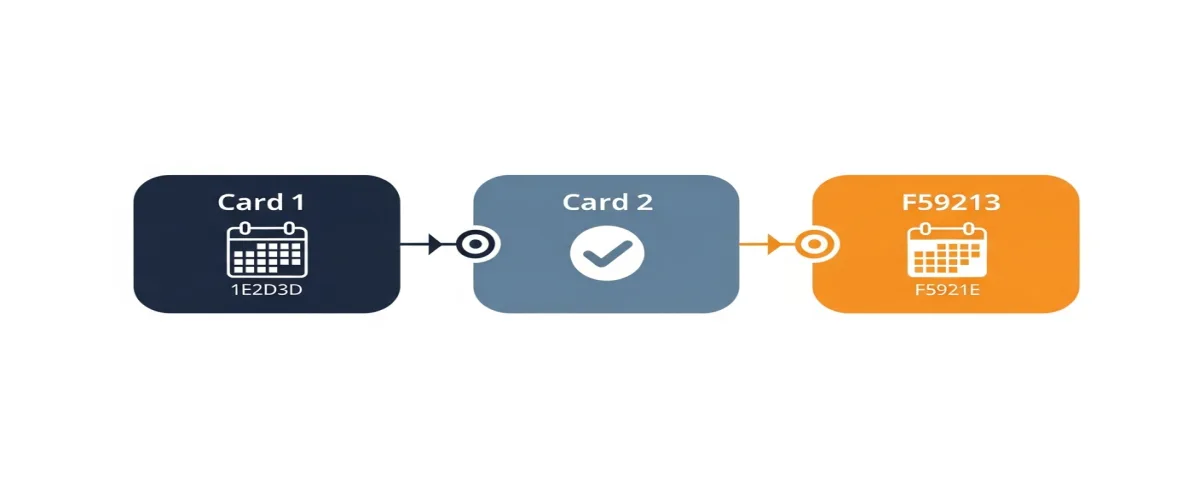
Days 1 to 30: Onboarding. This phase isn’t about output. It’s about transfer. Your team documents the process. The vendor learns it. You set up communication channels, reporting cadence, and escalation contacts. Expect productivity at 60 to 70% of eventual steady state. That’s not underperformance. That’s calibration.
One thing that surprises first-timers: onboarding is work for your team too. Plan for 5 to 10 hours of internal time in the first two weeks, even for a simple function like data entry. Someone has to write the SOP.
Days 31 to 60: Calibration. The vendor runs independently. You’re reviewing output and catching gaps. This is where quality issues surface, and that’s a good sign. Better to find them at day 45 than at month six. Hold a weekly review call. Track error rates. Identify whether gaps come from your process documentation or their execution. Most early issues are the former.
Days 61 to 90: Review Gate. Pull your KPIs. Compare cost-per-output to your in-house benchmark. Review the error rate trend. Survey the internal team that interfaces with the vendor. If the numbers are moving in the right direction, confirm the relationship and plan the next function. If they aren’t, you have a clean exit point. That’s why you didn’t commit to a 12-month contract on day one.
The pilot framework isn’t about deciding whether to trust the vendor. It’s about calibrating the process before you scale it. Those are very different questions.
How Do You Know It’s Working? 5 KPIs to Track from Day One
Track five metrics from day one: task completion rate, error rate, turnaround time, cost per output versus your in-house benchmark, and a monthly team satisfaction score on vendor communication.
Most first-time outsourcers track cost in months one through three and miss the quality signals entirely. By the time quality degradation shows up in customer metrics, it’s already three months old and much harder to fix. These five KPIs catch problems while they’re still at the source.
1. Task completion rate. What percentage of assigned tasks complete on time? Below 90% on a steady-state function is worth investigating. Not panicking over, but investigating.
2. Error rate. Errors per 100 outputs, or per 1,000 records processed. Track it weekly. A rising rate in month two is usually a documentation gap on your side, fixable. A rising rate in month four is a vendor execution problem, harder.
3. Average turnaround time. For customer support, this is first-response time and time-to-resolution. For accounting, it’s close cycle time. Define the right metric for the function you outsourced before day one, not after.
4. Cost per output vs. in-house benchmark. Not just what you’re paying, but what each unit of output costs now versus before. This is your actual ROI metric. It takes about two months of steady-state output data to calculate accurately. Don’t rush it.
5. Team satisfaction score. A simple monthly survey. Your internal staff rates vendor communication on a 1 to 5 scale. This catches friction that task metrics miss. Slow responses, vague status updates, missed handoffs. Low team satisfaction is the leading indicator of a vendor relationship that’s about to break down.
Most first-timers skip that fifth metric entirely. They track cost and error rate. They don’t ask their own team whether the relationship is actually working on a day-to-day level. That gap shows up at month six when the team quietly stops escalating issues because they’ve given up expecting a response. By then you’ve got a vendor problem that started as a communication problem three months earlier.
First-time outsourcing doesn’t have to be a leap of faith. The 30% failure rate isn’t fixed. It’s the result of specific, preventable gaps. Document the process before handing it off. Define the SLA before signing. Run a 90-day pilot before expanding. Track the right KPIs from day one.
The businesses that build durable outsourced operations aren’t doing anything sophisticated. They’re doing the basics, consistently, and they’re patient enough to let the pilot run before scaling.
If you’re ready to run your first function through a pre-screened offshore team, Kore BPO’s offshore staffing services cover accounting, customer support, HR, marketing, admin, and more. Pre-screened candidates in 2 to 5 days, $0 until you hire.
What First-Time Outsourcers Actually Ask
Realistically, how fast can I see results after outsourcing?
90 days for a meaningful read. The first 30 days are mostly onboarding. Expect 60 to 70% productivity at best. Months two and three, the vendor runs independently and you’re catching gaps. By month four you have real cost-per-output data. Payroll and bookkeeping break even fastest, sometimes in the first billing cycle. Customer support and HR admin take longer because quality calibration adds time. Some companies see ROI by month six. A few take nine months. The ones that rush the timeline usually get burned by it.
Should I outsource a whole department or just start with one role?
One role. One function. Always. Scaling from a single function to a full department is straightforward once the handoff model is working. Going the other direction, walking back a full-department outsource that’s underperforming, is genuinely painful and expensive. A 20-person company shouldn’t be managing three new vendor relationships simultaneously in month one. Pick the highest-impact function, prove the model in 90 days, then expand from there.
How do I protect my data when working with an offshore team?
Access controls and audit trails, not trust alone. Start by defining exactly which systems and data sets the vendor team needs to do the work. Give access at the minimum required level. Use role-based permissions in your CRM, accounting platform, and admin tools so each person only sees what’s relevant to their function. Set up automatic offboarding so access is revoked same-day when any team member leaves the vendor’s side. Document all of this in the Master Service Agreement before work starts. Generic NDAs without specific access provisions don’t actually protect you.
What happens if the outsourced team misses a deadline?
That’s what your SLA is for, and why you write it before signing, not after a miss. A solid SLA defines what constitutes a missed deadline, what the notification window is, and what the make-good process looks like. Credit, expedited delivery, or escalation to a senior contact can all work as the remedy. Both sides need to agree on which one in writing before the first miss ever happens. Vague SLAs produce vague accountability. If your draft contract doesn’t answer those three questions, ask for a revision before you sign.
Is outsourcing worth it if I only have 10 employees?
Usually yes, and often with better ROI than larger companies get. At 10 employees, you probably have no dedicated bookkeeper, no HR coordinator, and no full-time admin. Someone is doing all three jobs alongside something else. Outsourcing one or two of those functions costs less than adding a part-time employee and removes real drag from the people who should be focused elsewhere. Kore BPO regularly works with companies in the 5-to-15-person range. The economics work because the alternative is founder time, not specialist time, and founder time costs a lot more than any payroll line suggests.
Related Articles



Ready to Hand Off Your First Function?
Kore BPO places dedicated offshore professionals for US companies across accounting, customer support, HR, marketing, admin, and more.
See BPO Solutions