Offshore Tableau Developers: Certifications and Skills to Verify Before Hiring in 2026


A Tableau Certified Data Analyst badge on a resume tells you the candidate passed a proctored exam. It doesn’t tell you what happens when their dashboard chokes on 40 million rows at 9am on a Monday, or whether they can explain why they picked a FIXED expression over an INCLUDE. That gap between “certified” and “production-ready” is exactly where offshore Tableau hires go wrong.
Most guides to Tableau certification are written for the person getting certified, not the person doing the hiring. They walk through exam cost, prep time, and career ROI. None of that helps you when you’re staring at three resumes, each with a different certification badge, trying to decide who can actually own your reporting stack.
We place offshore BI and data talent for US companies every month, so we see the resume-versus-reality gap up close. Some of the strongest Tableau developers we’ve placed hold no certification at all. Some of the weakest hold two. This guide breaks down what each certification tier actually verifies, what it leaves untested, and how to run a skills check that catches the difference before you sign a contract.
What Tableau Certifications Actually Signal (and What They Don’t)
Tableau’s certification ladder has five rungs, and most hiring managers only know the bottom one.
Tableau Desktop Specialist sits at the entry point. It costs $100, has no prerequisites, and unlike every other Tableau credential, it never expires, according to DataCamp’s 2026 certification guide. The one-hour exam covers connecting to data, building basic charts, and applying filters. A candidate who holds only this one has proven they can operate the software. Nothing more.
Tableau Certified Data Analyst is the credential that actually separates people who’ve used Tableau from people who can build with it. It tests level of detail (LOD) expressions, data modeling, parameters, and dashboard storytelling, the skills a real reporting build depends on, per Tableau’s own certification pages. If you’re hiring one developer to own your dashboards, this is the certification that matters most.
Tableau Desktop Certified Professional requires an active Certified Data Analyst credential first, then a three-hour, committee-graded exam on advanced calculations, multi-source data restructuring, and visual best practices. Because the grading involves multiple human reviewers rather than a multiple-choice scoring engine, this one is genuinely hard to fake or cram for.
Tableau Server / Cloud Certified Associate and Tableau Certified Consultant sit further up the ladder and matter mostly if the role includes server administration, permissions, or client-facing solution design, not just dashboard building.
Here’s the part most certification guides skip. Careery’s 2026 certification breakdown puts it plainly: the certificate alone doesn’t tell you much if the person lacks hands-on experience applying it. A candidate can pass the Desktop Specialist exam in a weekend of studying and never have touched a real business dataset. Treat certification as a floor, not a finish line.

The Skills a Certificate Won’t Prove
Certification exams test whether someone can answer questions about Tableau. Production work tests whether they can make decisions with it. Four gaps show up constantly.
- LOD expression judgment. FIXED, INCLUDE, and EXCLUDE calculations are advanced functionality that separates intermediate users from strong developers. A candidate should be able to describe a real business problem they solved with each type, not recite the textbook definition.
- SQL fluency and how they’d structure joins or blends across multiple data sources, since most Tableau builds pull from more than one system.
- Dashboard performance at scale. Anyone can build a fast dashboard on 500 rows. Ask what they’d do differently on 30 million.
- Data source governance, if the role touches Tableau Server or Cloud permissions, published data sources, or row-level security.
This is also where role clarity matters. A Tableau developer builds and maintains the reporting layer. An offshore data analyst is closer to the business side, pulling insights and answering ad hoc questions, sometimes inside Tableau, sometimes not. The two roles overlap on tooling and diverge on what they’re accountable for. Hiring the wrong one for the job description is a quieter failure than hiring an underqualified one, but it costs you just as much time.
How to Run a Live Skills Test Before You Hire
Certification and portfolio review get you to a shortlist. A live skills test gets you to a decision.
The format that works best is simple. Hand the candidate an anonymized dataset, give them 45 minutes, and ask for two or three views plus one working dashboard. Then, and this is the part people skip, have them walk you through the build afterward. TestGorilla’s guidance on assessing Tableau skills makes the same point: a strong candidate shows you the output and talks through the decisions behind it, rather than just handing over a polished file.
Watch for three things during the walkthrough. Can they explain why they chose one chart type over another for this specific data, not in general? Can they describe what they’d change if the dataset were 50 times larger? Do their answers hold up when you ask a follow-up that wasn’t in the original brief?
Portfolio review still matters as a first filter. According to skills-benchmarking data compiled by JobCopy.AI, a strong indicator of dashboard development ability is a portfolio showing multiple dashboards with load times under 3 seconds on average-sized datasets. Slow, overbuilt dashboards in a portfolio are a real signal, and not a good one.
Need a Vetted Tableau Developer?
Pre-screened offshore BI talent, resumes in 2 to 5 days, $0 until you hire.
Red Flags Specific to Offshore and Remote Hiring
Offshore and remote hiring adds a layer of risk that a certification check won’t catch, because the fraud isn’t about Tableau skill. It’s about who’s actually on the other side of the call.
iProspectCheck’s 2026 guide to identifying fake candidates and HR Executive’s remote-hiring red flag list both point to the same handful of warning signs worth building into every offshore Tableau interview.
- Answers that sound polished but don’t adapt when you push a follow-up question. Real experience flexes under a harder question. Scripted answers tend to get weaker, not stronger.
- Long pauses before simple technical questions, which can point to someone off-screen feeding answers in real time.
- A GitHub or Tableau Public portfolio full of generic, boilerplate-looking projects with no specific business context behind them.
- Contact information, time zone, or location details that shift between the resume, the interview, and onboarding paperwork.
- A certification with no ability to explain the underlying work. If someone holds a Desktop Certified Professional badge but can’t walk through a real LOD use case, something doesn’t add up.
None of these mean automatic disqualification on their own. Together, they’re worth slowing down for. A five-minute follow-up question costs you nothing. A bad Tableau hire costs you a rebuilt dashboard six months from now. The same red flags apply whether you’re vetting a Tableau specialist or any other offshore engineering hire, so it’s worth building this into your standard interview framework, not just this one role.
How Kore BPO Vets Tableau Developers Before They Reach You
We built our own screening around the gap between certified and production-ready, mostly because we kept seeing clients get burned by the difference.
Every candidate we put in front of a client for a Tableau developer role is screened for calculated fields, LOD expression reasoning, dashboard performance under real data volume, and Server or Cloud governance where the role calls for it. Certification is one input, not the deciding factor. A strong portfolio walkthrough and a live build carry more weight than a badge.
On our own placements this year, a mid-level offshore Tableau developer with real production experience runs $4,500 to $6,500 a month fully loaded. Senior developers who also handle Server administration and governance land closer to $6,500 to $9,500. Compare that to the US market, where ZipRecruiter lists Tableau-focused roles in the $46 to $79 an hour range as of 2026, and the offshore math still holds even after you build in a proper vetting process.
Clients typically see resumes within 2 to 5 days of a kickoff call, and every candidate has already been through the skills test and red-flag screening described above before you ever see the name.
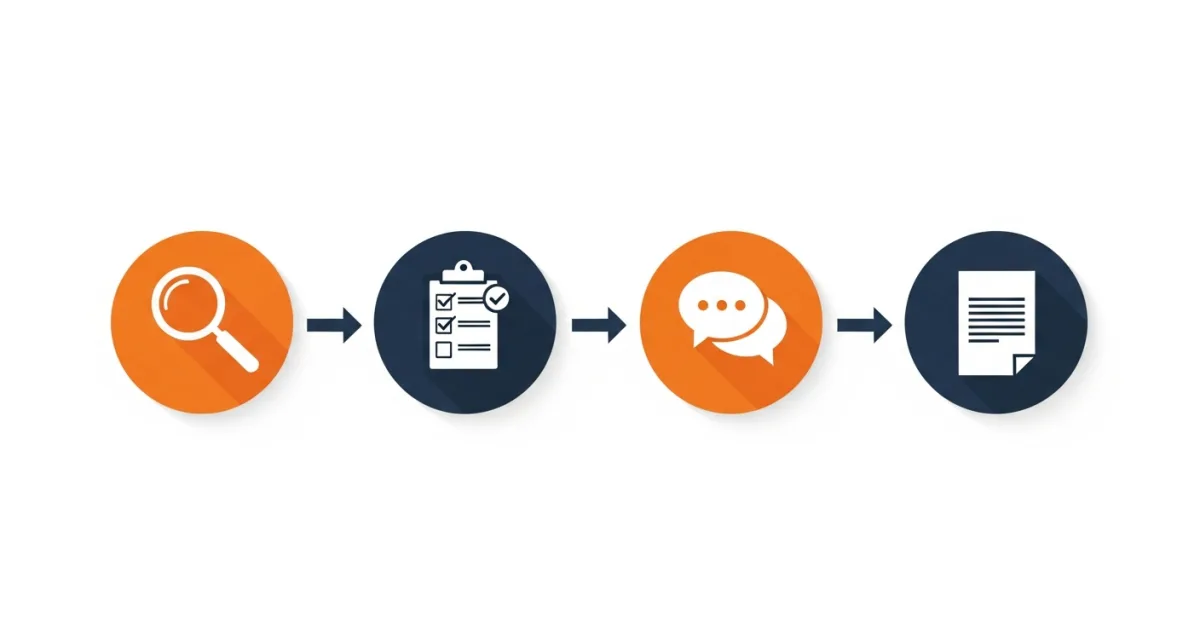
A certification tells you someone studied for a test. It doesn’t tell you whether they can own your reporting stack, explain their own decisions, or hold up under a follow-up question. Check the tier, run the live test, watch for the offshore-specific red flags, and the certificate becomes one data point among several instead of the whole decision.
If you’d rather skip the screening process entirely, see our vetted Tableau developer bench before you commit to running this evaluation yourself.
Questions Hiring Managers Ask About Vetting Offshore Tableau Developers
Is Tableau certification required to hire a good developer?
No. Most job postings that reference Tableau ask for experience with the tool, not a specific certification. A strong Tableau Public portfolio and a solid live skills test can matter just as much as a badge, especially at the senior level. Certification helps most when a candidate has little work history to point to yet.
What’s the difference between Tableau Certified Data Analyst and Desktop Certified Professional?
Certified Data Analyst is the practical, working-developer credential, testing LOD expressions, data modeling, and dashboard storytelling. Desktop Certified Professional sits above it, requires an active Certified Data Analyst credential first, and is graded by a human committee on a three-hour exam covering advanced calculations and multi-source data restructuring. The professional tier is harder to fake, since it isn’t scored by a multiple-choice engine.
How long should a Tableau skills test take?
45 minutes is enough to see real signal. Give the candidate an anonymized dataset, ask for two or three views and one working dashboard, then spend 10 to 15 minutes having them walk through the decisions they made. The walkthrough matters more than the finished file.
What if a candidate has no certification but a strong portfolio?
Weigh the portfolio and live skills test more heavily. Some of the strongest Tableau developers never sit the certification exams, especially senior people who learned on production data rather than a study guide. A portfolio with dashboards that load quickly and reflect real business logic is a stronger signal than a certification with no work history behind it.
How fast can an offshore Tableau developer be vetted and placed?
At Kore BPO, clients typically see vetted resumes within 2 to 5 days of a kickoff call. Every candidate has already been through a live skills test and offshore-specific screening before you see the name, which cuts most of the timeline hiring managers usually spend running their own evaluation from scratch.
Related Articles



Hiring a Tableau Developer?
Kore BPO places pre-vetted offshore Tableau developers for US companies. Resumes in 2 to 5 days.
See Offshore Tableau Developer