Nearshore Software Development Cost in 2026: Rates by Country & What to Budget


A founder asked us last month why a “budget-friendly” nearshore quote for a senior React developer came in at $72 an hour when a competing offshore quote for the same seniority was $38. Both numbers were accurate. Neither was the full story.
Why the Number Changes So Much
Nearshore software development cost isn’t a single figure. It moves with country, seniority, tech stack scarcity, and how the engagement is structured, and it almost never matches the offshore number one tab over, because you’re not buying the same thing. This guide breaks down what US companies actually pay for nearshore developers in 2026, country by country, and what actually moves the price before you get on a vendor call. If you’re still deciding whether nearshore is the right model at all, our onshore vs nearshore vs offshore outsourcing guide is the place to start first.
Prefer to watch it? Here is the video breakdown of nearshore developer rates by seniority, country, and stack.
What Nearshore Software Development Actually Costs in 2026
Nearshore software development costs $25 to $80 an hour in 2026, depending on country and seniority, compared to $150 to $180-plus an hour for a comparable US-based senior engineer. Junior nearshore developers run $20 to $35 an hour. Mid-level engineers land $35 to $60 an hour. Senior specialists in high-demand stacks can reach $80 an hour in Mexico and Colombia’s top tier.
That’s a narrower discount than offshore markets in Asia offer, and that’s the point, not a downside. Nearshore developers in Latin America work 0 to 2 hours off most US time zones, which means real-time standups, same-day code review, and Slack availability during your actual business hours. Offshore in India or the Philippines trades a deeper discount for an 8 to 13 hour gap that turns every code review into a next-day handoff.
Want an Exact Quote for Your Stack?
Kore BPO breaks out rate by seniority, country, and framework, no bundled surprises.
Nearshore Software Development Rates by Country
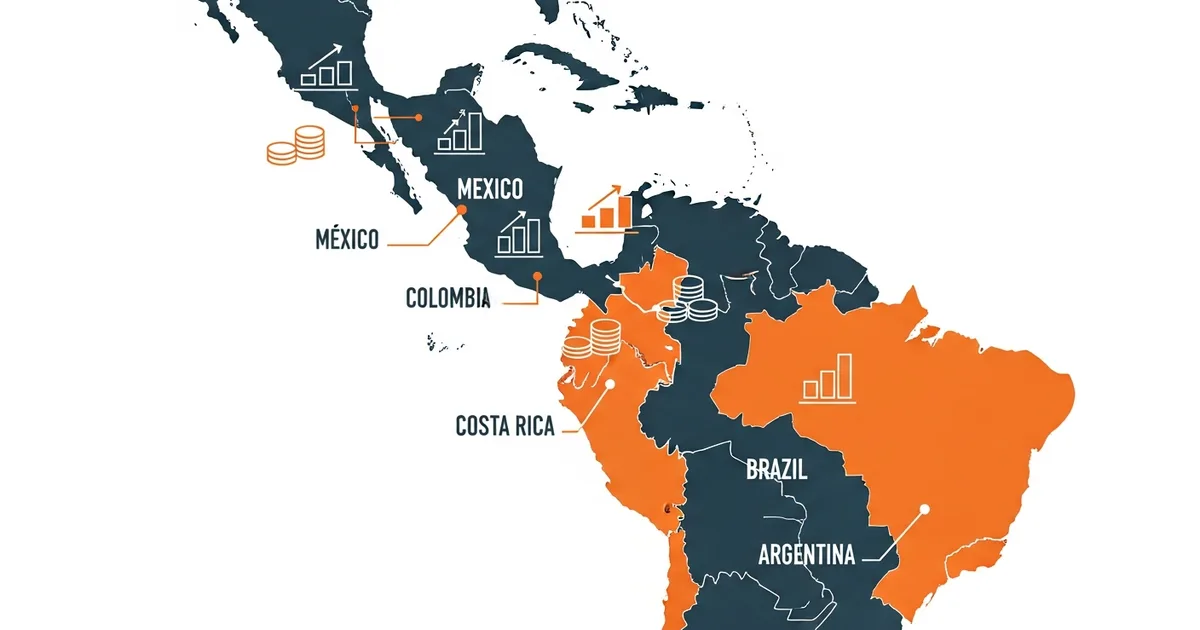
Country drives most of the spread within any given seniority level. Here’s where 2026 rates cluster across the five markets US companies hire from most.
| Country | Junior Dev | Mid-Level Dev | Senior Dev |
|---|---|---|---|
| Mexico | $25-$35/hr | $35-$45/hr | Up to $80/hr |
| Colombia | $25-$40/hr | $40-$60/hr | $60-$199/hr |
| Costa Rica | $20-$41/hr (junior-mid) | $30-$56/hr (median $34) | |
| Argentina | $25k-$35k/yr | $40k-$60k/yr | $60k-$85k/yr |
| Brazil | $20-$28/hr | $28-$35/hr | $40-$60/hr |
| US (baseline) | $55-$70/hr | $75-$100/hr | $150-$180+/hr |
Colombia’s top end looks like an outlier because it is one. A narrow slice of specialized senior engineers there command rates near $199/hr, usually for scarce stacks like AI/ML infrastructure or platform engineering. Ignore that ceiling when budgeting a standard mid-level hire. It skews the average without reflecting what most companies actually pay.
Costa Rica’s senior tier clusters tighter than the others. Contractor rates run $30 to $41/hr with a $34/hr median, and only the strongest senior specialists reach $56/hr, per SalaryExpert’s 2026 Costa Rica compensation data. That $34/hr median runs roughly 48% below North American senior median pay. Kore BPO runs its own delivery hub out of San Jose, Costa Rica, which is why we can place Costa Rican engineers directly rather than through a subcontracted local partner.
Argentina is priced by annual salary more often than hourly rate in developer contracts, which is why it’s the odd one out in the table above. Converting to an hourly-equivalent, mid-to-senior Argentine engineers land close to $25-$32/hr once benefits and a standard work-year are factored in.
For context on the US side of that comparison, the Bureau of Labor Statistics puts the median US software developer salary at $135,980 a year as of the May 2025 release. That’s the number nearshore rates are measured against, and it’s why the savings math holds up even at Colombia’s higher end.
What Actually Drives Nearshore Software Development Cost
Four variables move the number more than region alone.
Seniority. The single biggest lever. A senior engineer typically costs 2 to 2.5 times a mid-level generalist in the same country, and the gap widens further for architects and tech leads carrying system-design responsibility.
Tech stack scarcity. A standard CRUD backend developer in Node.js or PHP prices at the low end of any country’s range. A developer with production AI/ML, Kubernetes, or platform-engineering experience can push 30-50% above the standard rate for the same seniority level, because the supply of that specific skill is thinner everywhere, not just in the US.
Country and city. Guadalajara and Mexico City command higher rates than smaller Mexican tech hubs. Bogotá and Medellín price above the rest of Colombia. The country-level number in the table above is a range, not a flat rate, and the city inside that country moves it.
Engagement model. A dedicated full-time hire who works exclusively for your company, using your systems and reporting to your team, prices differently than a project-based contractor billed hourly through a staffing marketplace. Dedicated hires typically run a flat monthly rate with no per-project markup layered on top. Project-based engagements bill hourly instead, with a vendor margin baked into every hour.
Watch for quotes that look low because they exclude employer taxes, statutory benefits, or a compliance markup that shows up later as a separate line item. Ask whether the quoted rate is genuinely all-in before comparing it against another vendor’s number.
Nearshore vs Offshore vs Onshore Software Development Cost
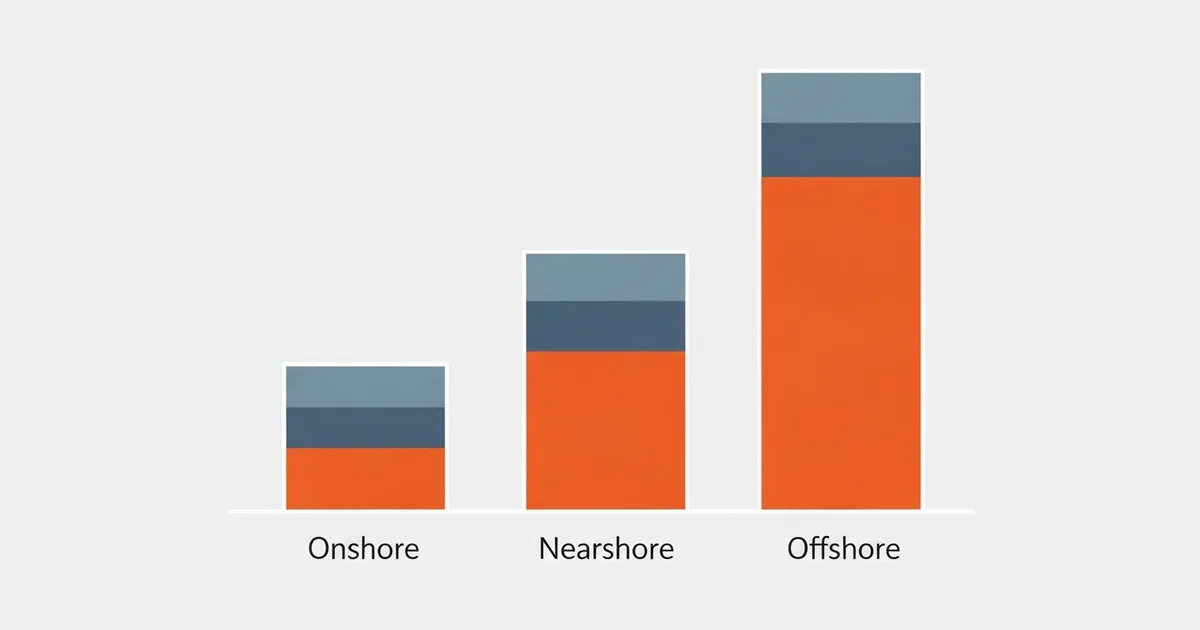
Nearshore sits deliberately in the middle, and that’s the entire value proposition. Offshore in Asia typically saves more against US rates, but the discount comes with a real coordination cost that doesn’t show up on any invoice.
| Model | Typical Savings vs US | Time Zone Overlap | Best For |
|---|---|---|---|
| Onshore (US) | 0% (baseline) | Full | High-touch, compliance-sensitive builds |
| Nearshore (LATAM) | 40-60% | 0-2 hr gap | Real-time standups, product engineering, agile sprints |
| Offshore (Asia) | 50-70% | 8-13 hr gap | Async, well-specified, 24/7-coverage work |
Read that table as a decision matrix, not a ranking. If your team runs daily standups and expects same-day code review, nearshore wins even at a higher hourly rate than offshore, because the async-handoff tax offshore imposes is real money, just never itemized on an invoice. If the work is well-specified and doesn’t need real-time collaboration, like QA regression or overnight monitoring, offshore’s deeper discount is harder to argue against. Our offshore developer cost by country guide breaks down that side of the comparison in full.
Total Cost of Ownership, Not Just the Hourly Rate
The quoted hourly rate is the smallest part of what determines your actual project cost. So why do so many budget conversations stop at the hourly number and never get to the three things that actually erase the gap between a “cheaper” quote and a more expensive outcome?
Turnover. Every replacement hire resets onboarding time, code-context ramp-up, and interview cycles. Nearshore engagements in LATAM report materially lower annual turnover than the lowest-cost offshore tiers, largely because the pay is competitive within the local market rather than at the absolute floor.
Coordination overhead. A team with 0-2 hours of overlap resolves blockers the same day. A team with an 8+ hour gap resolves the same blocker the following business day, every time, which compounds across a sprint. That’s not a soft cost. It’s sprint velocity, measured in calendar time your team is actually waiting.
Rework. Miscommunication from async-only collaboration produces revision cycles that a same-timezone team catches in a same-day Slack thread instead. On knowledge-intensive product work, those revision cycles are where a lower hourly rate quietly disappears.
Run your own numbers against current in-house costs with the outsourcing ROI calculator before committing to a country or engagement model. The hourly rate is half the equation. The other half is how much coordination overhead your team can actually absorb.
How Kore BPO Builds Your Nearshore Development Team
Most companies that reach out have already run the country-rate math above. What they haven’t seen yet is what it looks like to have a developer who shows up to the same standup, in the same time window, week after week, instead of a name rotating through a subcontracted vendor bench.
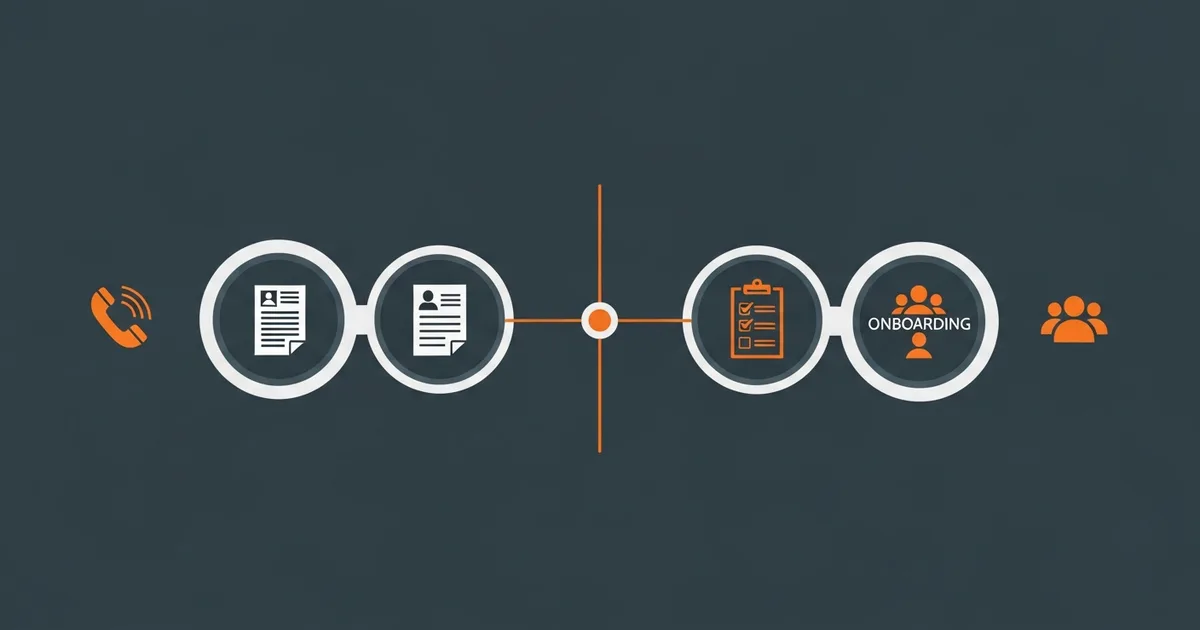
- Tell us what you need. A short intake call covering the stack, seniority, timezone requirements, and timeline. No RFP required.
- Receive pre-screened resumes in 2 to 5 business days. Candidates are screened against your specific stack and seniority bar before you see a single profile.
- Interview and select. You interview and choose. You’re picking your engineer, not accepting whoever a vendor bench assigns to your account.
- Onboard into your existing systems. Your hire integrates into your repos, project management tools, and communication channels. Kore BPO handles the employment and compliance structure on our end.
- Scale from there. Add engineers as scope grows, at the same flat monthly rate structure, with no per-hire markup escalation.
Kore BPO has placed 6,236 hires for 257 clients to date, with candidates delivered in 2 to 5 business days and $0 in upfront fees. We’re US owned and operated, headquartered in Dallas, TX, with delivery centers in San Jose, Costa Rica and Hyderabad, India.
Who This Is For (and Who It Isn’t)
Nearshore isn’t the right model for every engagement, and being direct about that upfront saves everyone a bad-fit conversation later. Real-time standups every day, or a well-specified backlog that can run async for a week at a time? That answer alone points most companies toward the right model before rate even enters the conversation.
Right fit:
- US product teams running agile sprints that need real-time standups and same-day code review
- Companies that tried offshore and lost velocity to timezone handoff delays
- Teams needing senior engineering judgment on system design, not just implementation hours
- Businesses that want a dedicated hire integrated into their team, not a rotating vendor bench
Not the right fit:
- Well-specified, async-friendly work like QA regression or batch data processing, where offshore’s deeper discount is hard to beat
- One-off projects under a few weeks, where a freelance platform may serve better than a full placement relationship
- Teams with zero budget flexibility above the absolute lowest offshore rate tier
Full disclosure. Kore BPO places nearshore and offshore talent for a living, so we benefit when a company decides to hire this way. That’s exactly why the comparison table above includes offshore’s real advantages instead of only nearshore’s.
Questions US Companies Ask About Nearshore Software Development Cost
How much does nearshore software development cost in 2026?
Nearshore software development costs $25 to $80 an hour in 2026 depending on country and seniority, roughly 40 to 60 percent below equivalent US rates of $150 to $180-plus an hour for senior engineers. Junior developers run $20 to $35 an hour. Mid-level engineers land $35 to $60.
Is nearshore software development cheaper than offshore?
No, nearshore usually costs more per hour than offshore. Nearshore saves 40 to 60 percent versus US rates, while offshore in Asia saves 50 to 70 percent. Nearshore’s advantage is time zone overlap and lower coordination overhead, not the lowest sticker price, so the “cheaper” project isn’t always the lower hourly number once rework and handoff delays are counted.
Country and Timeline Questions
Which country has the best nearshore software development rates?
It depends on the tradeoff you want, not a single best answer. Brazil and Costa Rica offer the tightest, most predictable rate bands. Mexico offers the strongest US timezone overlap with Guadalajara and Mexico City’s deep cloud talent. Colombia and Argentina carry the widest senior-tier upside for scarce specializations.
What actually drives nearshore software development cost up or down?
Seniority level, country and city, tech stack scarcity, and engagement model. A senior engineer in a scarce framework like Kubernetes or AI/ML infrastructure can cost double a mid-level generalist in the same country, and a dedicated hire prices differently than an hourly-billed project contractor.
Hiring Speed and Next Steps
How fast can a US company hire a nearshore software developer?
Through Kore BPO, pre-screened resumes typically arrive in 2 to 5 business days, with most placements complete in 2 to 4 weeks from first call to first day of work. Onboarding into existing systems usually adds another 5 to 7 days after selection.
Rate ranges in this post reflect mid-2026 nearshore software development market data for dedicated placements. Freelance platform rates and short-term project quotes may differ. Figures are pre-overhead unless otherwise noted. Kore BPO internal figures refer to aggregate placement outcomes to date.
Related Articles



Ready to Build Your Nearshore Dev Team?
Kore BPO places dedicated nearshore software developers for US companies. Pre-screened resumes in 2 to 5 days. $0 until you hire.
Get Your Nearshore Quote