

- 01US GIS Analyst Salaries in 2026
- 02Nearshore All-In Rates by Experience Level
- 03Rates by Country: Colombia, Costa Rica, Mexico, Argentina
- 04Esri Certification and Skill Premiums
- 05Hidden Costs of US Direct Hiring
- 06What “All-In” Means Through Kore BPO
- 07Currency Risk and USD Structuring
- 08GIS Analyst Salary Questions
Last updated: September 15, 2026
GIS analyst hiring in the US is expensive. It’s also slower than most hiring managers expect. According to the Bureau of Labor Statistics, geospatial information roles are growing faster than the average for all occupations, which means the talent pool hasn’t kept pace with demand. The result is prolonged recruiting cycles, counter-offer wars, and churn within 18 months of hire.
What This Guide Covers
Nearshore GIS staffing from Latin America addresses all three problems. And it does it at rates that tend to surprise CFOs the first time they see them. This guide covers the numbers directly: what US GIS analysts earn in 2026, what nearshore equivalents cost through Kore BPO, how rates break down by country and certification level, and what the hidden costs of domestic hiring actually add up to.
US GIS Analyst Salaries in 2026
The following ranges reflect 2026 base salary benchmarks for GIS analysts hired directly in the United States, sourced from Glassdoor and ZipRecruiter 2026 reports. These are base salaries only. They do not include employer-side benefits load, which typically adds 25 to 35% on top.
| Experience Level | Years of Experience | US Annual Base Salary |
|---|---|---|
| Junior GIS Analyst | 1–3 years | $45,000–$62,000 |
| Mid-Level GIS Analyst | 3–7 years | $62,000–$82,000 |
| Senior GIS Analyst | 7+ years | $82,000–$105,000 |
| GIS Lead / Manager | 10+ years | $105,000–$130,000 |
These numbers represent the salary check you write. They don’t represent what your GIS hire actually costs your business. Once you stack in health insurance, employer FICA contributions, 401(k) matching, paid time off accrual, and the recruiting costs it took to find the person, the fully loaded annual cost of a mid-level GIS analyst in the US lands between $80,000 and $115,000. A senior or lead profile can push past $150,000 fully loaded in competitive markets like the Pacific Northwest, the DC metro corridor, or the Colorado Front Range, where GIS talent is heavily concentrated in defense and energy sectors.

But the base salary table above is the number most hiring managers start with. And it’s the right starting point for comparison, because the nearshore all-in rates below are also annual figures that include everything: the analyst’s compensation, their mandatory local benefits, and Kore BPO’s management fee. There are no additional charges on top.
Nearshore All-In Rates by Experience Level
The rates below are what you pay Kore BPO per year for a nearshore GIS analyst engagement. One number, nothing hidden. This covers the analyst’s salary in their home country, the employer-side cost of their local statutory benefits (social security contributions, mandatory leave, year-end bonus), and our management fee. No separate placement fee, no overtime billing, no currency surcharge.
The savings hold across seniority levels. But there’s an important nuance: the comparison above pits our all-in rate against the US base salary alone. When you account for the full US employment burden, the savings grow to 50 to 65% at every tier. That’s real budget that your team can redeploy, whether that means hiring two nearshore GIS analysts for the cost of one US analyst, or reinvesting the delta into data infrastructure.
Rates by Country: Colombia, Costa Rica, Mexico, Argentina
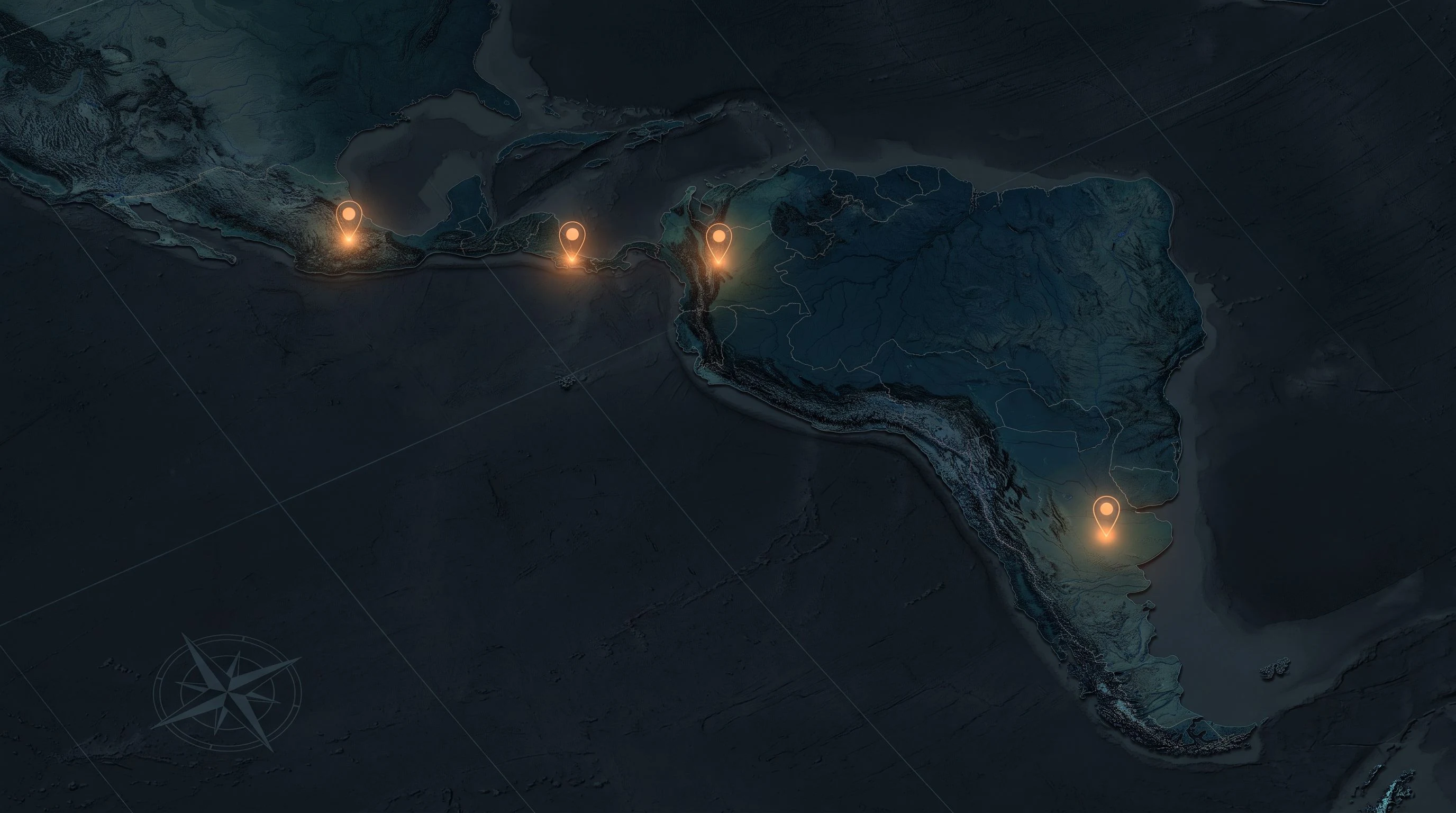
Latin America isn’t a single GIS talent market. Rate levels, English proficiency, and time zone overlap vary meaningfully by country. The table below shows approximate all-in annual rates for a mid-level GIS analyst (3 to 7 years of experience) through Kore BPO, broken out by country. These are representative ranges based on active placements in 2026.
| Country | Mid-Level All-In Rate | Time Zone (US ET) | Key Strengths |
|---|---|---|---|
| Colombia | $34,000–$44,000 | –1 hr (CST equivalent) | Strong Esri ArcGIS ecosystem, growing PostGIS depth |
| Costa Rica | $38,000–$48,000 | –1 hr (fixed, no DST) | Highest English fluency, US enterprise GIS project experience |
| Mexico | $33,000–$43,000 | –1 to –2 hrs (by region) | Large talent pool, strong geospatial academic programs |
| Argentina | $30,000–$42,000 | –3 hrs | Strong analytical depth, competitive rates, Python/open-source GIS |
Country-by-Country Breakdown
Colombia is the most active market for GIS placements in our current book of business. Medellin and Bogota both have established geospatial communities with strong Esri ArcGIS skill sets, and the time zone sits within one hour of US Eastern. English proficiency at the professional level is common among the analyst profiles we source, particularly from candidates who’ve worked with US energy or logistics clients.
Costa Rica commands a modest rate premium, but it’s justified for teams where daily real-time collaboration is non-negotiable. Costa Rica doesn’t observe daylight saving time, so the offset stays fixed year-round at one hour behind US Eastern. The GIS talent pool there is smaller than Colombia’s, but it’s deep in enterprise Esri workflows built through years of US technology company operations in the country.
Mexico offers the largest absolute candidate pool in Latin America and rates that sit slightly below Colombia. Time zones vary by region: Mexico City aligns with US Central, while Monterrey and the northern industrial corridor align more closely with US Central and Mountain time. The geospatial programs at UNAM and several regional universities produce strong pipeline for GIS roles, particularly in urban planning, infrastructure, and energy sector applications.
Argentina is the most cost-competitive market in this group. The rate advantage reflects Argentina’s economic environment, which has made dollar-denominated contracts attractive for local talent. The GIS community there skews toward open-source tooling: QGIS, Python (GeoPandas, Shapely, Fiona), and PostgreSQL/PostGIS. For teams that aren’t tied to an Esri enterprise license and want strong analytical depth at the lowest all-in cost, Argentina is worth serious consideration. The time zone is a real consideration: Buenos Aires runs three hours behind US Eastern, which compresses the real-time collaboration window but doesn’t eliminate it.
Get GIS Analyst Profiles by Country
Tell us your preferred market and skill requirements. Kore BPO delivers pre-screened profiles in 3 to 7 business days.
Esri Certification and Skill Premiums
Not all GIS analyst profiles are priced the same within a given experience tier. Certain credentials and technical depth add meaningfully to cost. The most significant premium in the current market is Esri certification.
| Skill Profile | Base Rate Adjustment | Notes |
|---|---|---|
| Base GIS Analyst (ArcGIS, QGIS, data collection) | Standard rate | Competent in core spatial analysis workflows |
| PostGIS / Python depth (GeoPandas, Shapely) | +8–12% | Can build automated spatial pipelines, not just run manual analysis |
| Esri Certified (Desktop Associate or Professional) | +15–20% | Verified Esri ArcGIS Pro depth, commands premium across all markets |
| Remote Sensing / LiDAR (ENVI, ERDAS, Drone2Map) | +12–18% | Specialized skill set, smaller candidate pool |
| Web GIS / ArcGIS Online / Experience Builder | +6–10% | Increasingly requested for enterprise portal deployments |

The Esri certification premium is the most common adjustment we see in practice. Esri’s Desktop Associate and Desktop Professional certifications represent real differentiation: verified knowledge of ArcGIS Pro, spatial analysis workflows, data management, and cartography at a level that reduces ramp time significantly. For organizations running Esri enterprise licenses, the premium almost always pays for itself in the first 60 days through faster onboarding.
Why the Premium Still Pays Off
And that leads to an important point about GIS analyst ROI. The question isn’t whether a nearshore Esri-certified analyst costs more than a non-certified one. It’s whether they cost more than an Esri-certified US analyst. The answer, consistently, is no. Even at the top of the certified premium range, a mid-level nearshore GIS analyst with Esri Desktop Professional certification comes in well below the US market for the equivalent profile.
Note on certification verification: Kore BPO screens Esri certification status as part of the standard sourcing process. Certifications are verified directly against the Esri training transcript system, not self-reported. Candidates who list Esri certifications but can’t produce a valid transcript are removed from consideration before profiles are delivered to clients.
Hidden Costs of US Direct Hiring
Hiring a GIS analyst directly in the US involves costs that don’t appear on the salary line. These aren’t obscure or theoretical costs. They’re real line items that show up across HR, finance, and operations budgets.
Benefits load. For a US W-2 employee, employer-side benefits typically add 25 to 35% on top of base salary. This includes employer FICA contributions (7.65% on the first $168,600 of wages), health insurance premiums (employer share averages $8,400 per year for single coverage and $20,600 for family coverage in 2026), 401(k) matching, and mandatory PTO accrual. For a mid-level GIS analyst earning $70,000, the total employment cost lands between $87,500 and $94,500 per year before you’ve paid a single recruiting dollar.
Recruiting time and cost. GIS analyst roles carry an average time-to-fill of 45 to 65 days based on hiring manager feedback across our client base. During that gap, spatial analysis work either piles up, gets deprioritized, or gets reassigned to other staff at a productivity cost. Direct recruiting expenses, including job board postings, screening time, and technical assessments, add $3,000 to $8,000 per hire when handled internally. Third-party recruiting fees for specialized GIS talent run 15 to 20% of first-year salary, adding $10,000 to $22,000 to the cost of a mid-to-senior hire.
The Cost of Churn
Churn risk. The US GIS analyst market has a high voluntary turnover rate, particularly at the 18 to 24 month mark as analysts receive competing offers from the defense, energy, and tech sectors that are aggressively competing for geospatial talent. Replacing a mid-level analyst through the full recruiting cycle costs an estimated 50 to 80% of that employee’s annual salary when you account for recruiting fees, onboarding time, and productivity loss during ramp. But that cost is rarely tracked explicitly, which means most organizations dramatically underestimate what turnover is actually costing them.
But the nearshore model isn’t just cheaper upfront. It also produces better retention outcomes in our experience. Nearshore GIS analysts placed through Kore BPO have a retention rate above 85% at the 24-month mark. The combination of competitive local compensation, structured management support, and consistent project engagement reduces the churn-driven cost cycle that plagues US GIS hiring.
What “All-In” Means Through Kore BPO
The term “all-in” gets overused by staffing agencies. Here’s exactly what it means in a Kore BPO engagement for a nearshore GIS analyst placement.
What’s included in the monthly fee:
- The analyst’s base salary in their home country, set at competitive local market rates
- Employer-side contributions to national social security programs (IMSS in Mexico, CCSS in Costa Rica, SENA/EPS in Colombia, ANSES contributions in Argentina)
- Mandatory year-end bonus (Aguinaldo, prima legal, or equivalent by country)
- Paid vacation accrual per local labor law minimums
- Kore BPO management fee, which covers account management, payroll processing, HR compliance, and ongoing retention support
What’s not included and will never be added as a surprise:
- No separate placement fee charged upfront or at any point
- No overtime surcharge for standard monthly engagement hours
- No currency adjustment fee or hedging pass-through
- No technology or tooling fee unless specific licensed tooling is requested as a separate line item
This structure differs from traditional staffing models, where a placement fee (typically one to three months of salary) is charged upfront and the monthly billing covers only the employee cost plus a markup. In the Kore BPO model, the management fee is embedded in the monthly rate at a level that makes the total cost predictable from day one. You can build a 12-month budget with confidence and never face a surprise invoice.
For finance teams comparing options, the right way to compare a Kore BPO all-in rate to a US direct hire is to stack the full US employment cost: base salary plus benefits load plus annualized recruiting cost. Not just the salary line. When you run that comparison, the delta at mid-level is typically $35,000 to $55,000 per year per analyst. That’s the real number.
Currency Risk and USD Structuring
One of the first questions we get from CFOs is whether nearshore GIS engagements expose their company to currency risk. The short answer is no, and the structure is straightforward.
All Kore BPO engagements are invoiced and paid in US dollars. Your company pays a fixed USD monthly fee. You have no direct exposure to peso, colon, or peso argentino fluctuations. Kore BPO absorbs the currency management on our side, which is possible because we have established payroll infrastructure in each country that handles local currency conversion and compliance.
This matters more in some markets than others. Argentina’s economic environment has historically produced significant peso volatility, which can complicate direct-hire models where US companies try to pay local employees in dollars or manage Argentina-based entity payroll. The Kore BPO model bypasses that complexity entirely: you see one USD invoice, and the complexity stays on our side of the engagement.
How Rate Adjustments Work Over Time
Rate adjustments are handled through the annual engagement review. If cost-of-living changes or local labor market shifts require a rate adjustment, we address them at renewal, not mid-contract. Any adjustment proposed at renewal is documented with market data, not applied unilaterally. Standard year-over-year adjustments for established engagements run 3 to 6% depending on the country and the local inflation environment.
For teams building multi-year GIS capacity, this predictability is one of the structural advantages of the nearshore model through an agency versus direct employment. Direct employment in a Latin American country requires establishing a legal entity or using an Employer of Record service, both of which carry their own costs and administrative overhead. The agency model eliminates that overhead while preserving your flexibility to scale the engagement up, down, or to a different country if your project needs shift.
For more on how nearshore staffing works operationally, see our nearshore hiring guide and our overview of nearshore staffing agency services.
GIS Analyst Salary Questions
Rate Benchmarks
What is the average salary for a nearshore GIS analyst from Latin America in 2026?
The average all-in annual cost for a nearshore GIS analyst from Latin America through Kore BPO ranges from $28,000 to $72,000 depending on experience level and country. A mid-level GIS analyst with 3 to 7 years of experience typically runs $36,000 to $46,000 per year all-in. That figure covers the analyst’s compensation, local statutory benefits, and Kore BPO’s management fee. There are no additional placement fees or hidden charges on top of the quoted annual rate.
Does Esri certification significantly increase nearshore GIS analyst rates?
Yes, Esri certification adds 15 to 20% above the base rate for a given experience level. An Esri Desktop Professional-certified mid-level GIS analyst from Colombia, for example, might run $40,000 to $50,000 all-in versus $34,000 to $44,000 for a non-certified equivalent. But even at the top of the certified range, that analyst costs materially less than a comparable US hire. The certification premium is almost always worth paying for organizations running Esri enterprise licenses, because verified Esri depth reduces onboarding time significantly.
Which Latin American country has the most competitive GIS analyst rates?
Argentina currently offers the lowest all-in rates for GIS analysts in Latin America, with mid-level profiles running $30,000 to $42,000 per year. Mexico follows closely at $33,000 to $43,000. Colombia is in the middle of the range at $34,000 to $44,000, and Costa Rica runs slightly higher at $38,000 to $48,000. The rate difference between markets isn’t enormous at any given tier, so the right choice usually comes down to skill profile and time zone fit rather than rate optimization alone.
Cost Comparison
How does the nearshore GIS analyst all-in rate compare to the true fully-loaded US cost?
A mid-level GIS analyst hired directly in the US carries a base salary of $62,000 to $82,000. Add employer benefits load of 25 to 35% and you reach $77,500 to $110,700 in annual employment cost before recruiting expenses. Add annualized recruiting cost of $8,000 to $22,000 for a specialized GIS role, and the fully-loaded first-year cost for a mid-level US GIS analyst runs $85,000 to $130,000. The nearshore equivalent through Kore BPO runs $36,000 to $46,000 all-in. The delta ranges from $49,000 to $84,000 per analyst per year, compounding significantly across a team of two or three.
Payment Structure
Are nearshore GIS analysts paid in USD or local currency?
From your company’s perspective, all payments to Kore BPO are in US dollars. Your invoices are in USD and there’s no currency exposure on your side. Kore BPO handles local currency payroll in each country, including compliance with local payroll tax law, mandatory benefit contributions, and year-end bonus requirements. Your company never interacts directly with local currency or local employment law. This is one of the structural reasons companies prefer the agency model over establishing their own entity in a Latin American country, which requires dealing with local currency payroll, labor law compliance, and banking relationships directly.
Disclosure: Kore BPO is a nearshore and offshore staffing agency. Rates in this guide reflect our active 2026 placement experience across Colombia, Costa Rica, Mexico, and Argentina. Actual rates for your engagement may vary based on specific skill requirements, certification level, and candidate availability at the time of sourcing. US salary data sourced from Glassdoor and ZipRecruiter 2026 reports and the Bureau of Labor Statistics Occupational Outlook Handbook.

Related Articles



Find Your Nearshore GIS Analyst
Kore BPO sources, screens, and places nearshore GIS analysts from Latin America. Profiles in 3 to 7 business days, $0 upfront fees.
Get GIS Analyst Profiles