What Is a Costa Rica Staffing Agency? A 2026 Guide for US Companies


A Costa Rica staffing agency finds, vets, and places Costa Rica-based talent with US companies. It typically works through Latin America staffing models like staff augmentation or an employer of record. A founder I spoke with in July already had a Mexico-based contractor and a Colombia hire on his ops team. He wanted to know why he’d bother adding a third country to that mix. Fair question. The honest pitch isn’t that it’s cheaper than Colombia, because it usually isn’t. Costa Rica trades some of that savings for something else. A lot of hiring managers end up valuing that trade more once the first project actually ships.
The Straightforward Definition of a Costa Rica Staffing Agency
A Costa Rica staffing agency sources, screens, and places Costa Rica-based professionals into US company roles. That typically runs through a staffing partner or an employer of record. The partner handles payroll, tax withholding, and local labor compliance so you don’t have to. Costa Rica earns its own guide separate from the broader region. Its talent pool, legal structure, and time zone behave differently enough from Mexico and Colombia. That difference means a hire needs its own plan.
What follows covers what the staffing model actually includes. It also explains why San Jose keeps showing up on shortlists that used to default to Bogota. Then it breaks down what a Costa Rica hire costs once you count every fee honestly. It also covers the questions worth asking a partner before you sign anything.
What a Costa Rica Staffing Agency Actually Does
Vendors sell three delivery models under the same umbrella term. Mixing them up is how companies end up comparing quotes that were never comparable to begin with. Staff augmentation adds a Costa Rica-based worker to your existing team, embedded in your daily standups. The agency handles sourcing and payroll in the background. An employer of record is narrower. A licensed local entity formally employs the worker on paper. That means you skip registering a business in Costa Rica just to run payroll for one or two hires. A BPO arrangement is broader still. It hands an entire function, like customer support or accounts payable, to a team rather than supplying one seat.
Pricing and compliance conversations blur together on almost every sales call, but separating them yourself saves a headache later. A staffing firm’s monthly rate usually bundles recruiting, payroll administration, and a management fee into one line. An EOR quote sits closer to true employment cost plus a flat service charge. Neither is wrong. Knowing which one a vendor is quoting you matters more than eyeballing two numbers cold. Two vendors rarely price the same thing.
Most of Kore BPO’s Costa Rica placements run through staff augmentation. We source against roles in software engineering, data, and customer operations. The worker reports into your team structure day to day. We handle the sourcing, the vetting, and the administrative layer underneath it.
Why US Companies Are Choosing Costa Rica
Three forces are pulling Costa Rica up the shortlist, and none of them are a recent fad.
Political and economic stability isn’t a marketing line here. People call Costa Rica “the Switzerland of Central America.” It’s earned that nickname through decades of consistency rather than one good year. Costa Rica has had no standing army since 1948, and its democracy is older than most of its neighbors. Its currency hasn’t gone through the kind of volatility that makes a CFO nervous about a two-year staffing contract.
English proficiency is a real, measurable edge. Costa Rica trains professionals for bilingual work as a deliberate national strategy, not an accident of geography. That shows up on client calls, where nobody’s re-explaining a requirement for the third time. That fluency matters more on client-facing roles than a resume ever captures.
 Employer of Record
Staff Augmentation
Direct Hire
Employer of Record
Staff Augmentation
Direct Hire
Then there’s the infrastructure most competitor content skips entirely. Bizlatin Hub’s research on San Jose’s tech sector counts more than 300 multinational companies operating in Costa Rica. That list includes Microsoft, Intel, and Amazon. It runs under a free trade zone regime the government has refined since 1990. Sixteen of the top 100 global IT companies already have a footprint here. That’s not a talent pool a staffing agency is discovering. It’s one the country spent three decades building on purpose.
None of that means Costa Rica wins every comparison. It costs more than Colombia for a comparable developer, and the market is smaller than Mexico’s. What it wins is the combination: stability plus English fluency plus a government infrastructure built for this kind of hiring. That’s a different value proposition than “cheapest option in the region.”
The Real Cost Savings
A Costa Rica hire typically runs 30% to 60% below an equivalent US hire. That’s the real number once you count payroll taxes, benefits, and the staffing partner’s fee. It’s not just the base salary quoted on the first call.
The Bureau of Labor Statistics puts the 2026 median US software developer salary at $133,080. Add the standard 25% to 40% for payroll taxes, benefits, and overhead. A fully loaded US hire then lands between $166,000 and $186,000 a year. ERI’s Costa Rica salary data puts a mid-level Costa Rica software engineer’s base pay in the $36,000 to $60,000 range. Senior talent runs $69,000 to $100,000, before the staffing partner adds any fee.
| Role | US Fully Loaded Cost | Costa Rica Fully Loaded Cost |
|---|---|---|
| Mid-level software developer | $166,000–$186,000/yr | $48,000–$78,000/yr |
| Senior software engineer | $195,000–$225,000/yr | $85,000–$118,000/yr |
| Data analyst | $95,000–$115,000/yr | $38,000–$54,000/yr |
| Customer support rep | $58,000–$72,000/yr | $22,000–$32,000/yr |
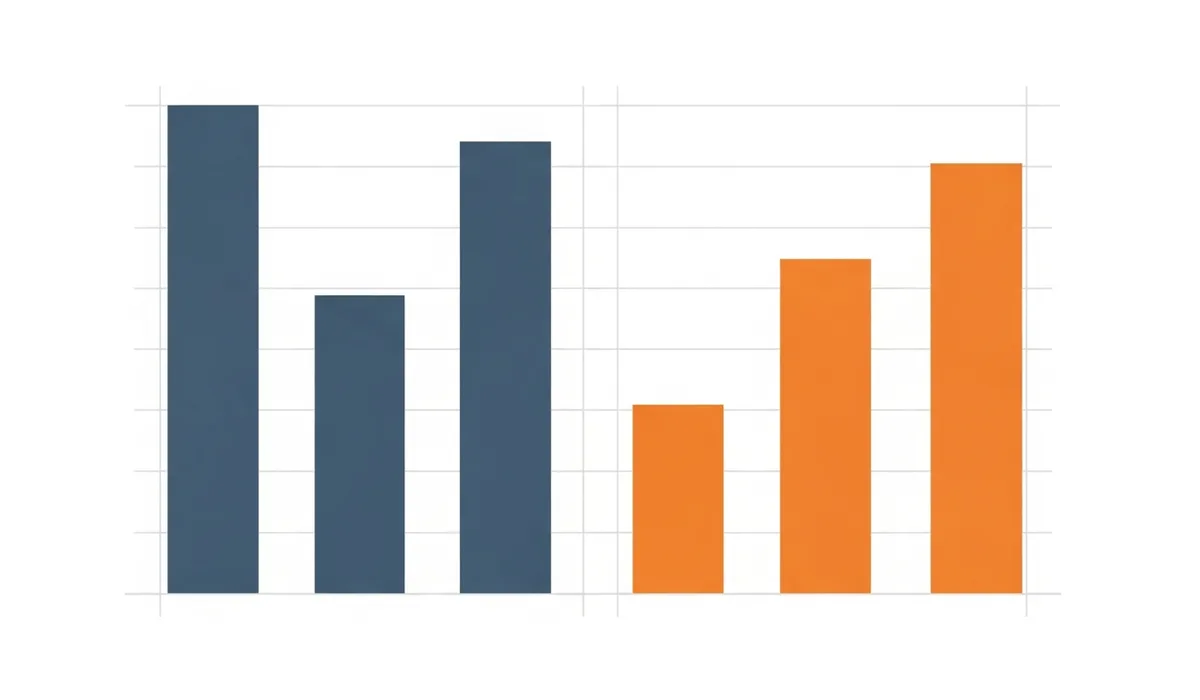 US: $166K–$225K/yr fully loaded
Costa Rica: $48K–$118K/yr fully loaded
Developer · Senior Eng · Data Analyst
30–60% lower cost, role for role
US: $166K–$225K/yr fully loaded
Costa Rica: $48K–$118K/yr fully loaded
Developer · Senior Eng · Data Analyst
30–60% lower cost, role for role
Employer payroll contributions in Costa Rica run around 26.67% on top of base salary. That covers social security, workers’ compensation, and mandatory benefits. A staffing partner’s markup typically adds another 15% to 40% on top of that. That markup pays for sourcing, payroll administration, and compliance work you’d otherwise have to build in-house. It’s a fair cost. A vendor who won’t itemize it usually has a reason not to. Worth saying plainly here, Costa Rica’s savings gap is real, but it’s narrower than Colombia’s. If cost is genuinely the only variable that matters to you, look at Colombia or Mexico instead. Both will beat Costa Rica on paper almost every time.
The Timezone Advantage
Real-time overlap is the piece a cost spreadsheet never captures. It changes how work actually gets done, not just how fast a Slack message travels.
Costa Rica runs on UTC-6 year-round, which is the same offset as US Central Time. A developer in San Jose working a normal 9-to-5 overlaps almost entirely with a product manager in Chicago or Dallas. That developer stays within an hour or two of teams on either coast. Compare that to an offshore arrangement in South or Southeast Asia, where the gap typically runs 10 to 13 hours. A question sent mid-afternoon waits until the next US morning for a reply.
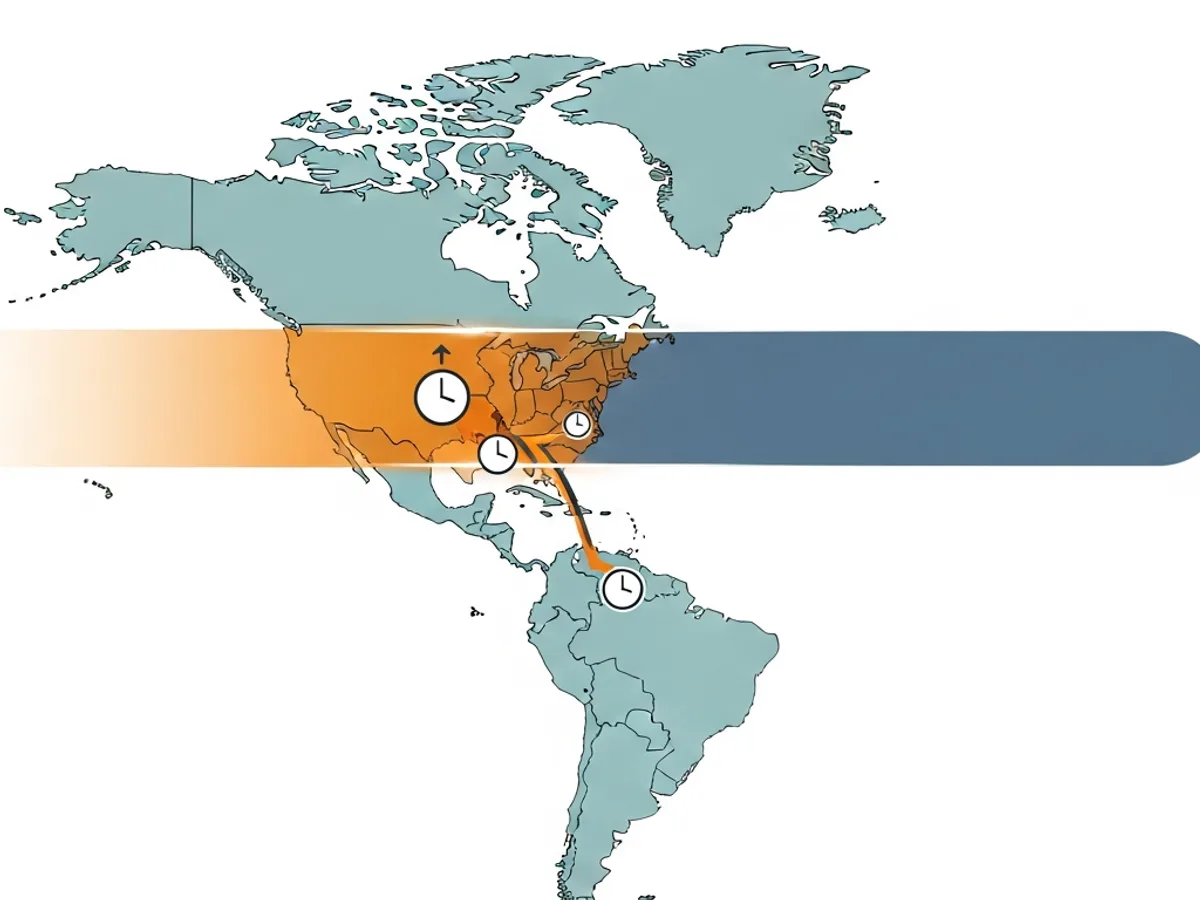 Costa Rica and the US share the same business hours, UTC-6 year-round
San Jose, Costa Rica
Costa Rica and the US share the same business hours, UTC-6 year-round
San Jose, Costa Rica
One nuance worth flagging that most nearshore content glosses over. The United States shifts its clocks for daylight saving across most states, and Costa Rica doesn’t shift at all. So the overlap isn’t a fixed number all year. It’s closer during the winter months and drifts by roughly an hour during the US daylight saving stretch. That stretch runs from March into November. That’s a minor scheduling detail, not a dealbreaker. A good staffing partner should mention it before you build a standup schedule around a single fixed hour.
That overlap matters most on genuinely collaborative work. Think live code review, product decisions made in real time, or a blocked engineer who needs a same-day answer. Skip that overlap and you lose an entire cycle to a time gap instead. Async-friendly work, overnight QA, round-the-clock coverage, none of that needs same-timezone alignment. Cheaper offshore regions still win there on pure cost. For work that depends on people talking to each other during business hours, Costa Rica’s overlap is hard to beat. You’d otherwise have to pay US rates for that kind of alignment.
San Jose and the Free Trade Zones
Unlike Colombia’s split between Bogota and Medellin, Costa Rica’s talent concentrates in one metro area. That concentration is itself part of the pitch.
 100% income tax exemption, first 8 years
50% exemption, 4 more years
Full import duty exemption
Software, call centers & shared services qualify
100% income tax exemption, first 8 years
50% exemption, 4 more years
Full import duty exemption
Software, call centers & shared services qualify
The Greater Metropolitan Area, known locally as the GAM, covers San Jose and its surrounding provinces. Those provinces are Heredia, Cartago, and Alajuela. Roughly 1.5 million of Costa Rica’s 5.1 million residents live in and around the GAM. That gives the tech sector a dense, walkable talent pool instead of one scattered across a continent. Software development, data engineering, and shared services roles cluster here. A university system backs that cluster, feeding graduates into this exact pipeline for over a generation.
The free trade zone regime is the part most competitor guides mention in passing and never actually explain. Companies operating inside an approved FTZ get a full income tax exemption for eight years. That’s followed by a 50% exemption for four more years, an effective 12-year runway. It also comes with exemptions on import duties and local sales tax on qualifying activity. Software development, call centers, and shared service centers all qualify, not just manufacturing. Nearshore Americas has reported that the government has been actively expanding FTZ parks beyond the GAM into secondary cities. That spreads both the benefit and the talent competition further across the country.
Practically, this means a Costa Rica staffing agency operating through an FTZ-registered entity can pass along real cost advantages. Those advantages have nothing to do with underpaying workers. That’s a structural difference, not a discount.
Not Sure If Costa Rica Fits Your Role?
Compare your requirements against Kore BPO’s Costa Rica talent bench in a quick call.
Legal and Compliance
Costa Rica’s labor code carries mandatory obligations a US-style offer letter doesn’t account for. Getting this wrong turns a hire into a liability instead of an asset.
Costa Rican law owes every employee an aguinaldo. That’s a mandatory year-end bonus equal to one-twelfth of the wages earned since the prior December 1. AG Legal’s guide to the aguinaldo notes that employers must pay it between December 1 and 20. Missing that window counts as a serious labor violation, not a minor paperwork lapse. Severance, called cesantia, kicks in when an employer terminates a worker without just cause, and it scales with length of service. Playroll’s compliance summary for Costa Rica covers the accrual schedule in detail. It’s not something a company should try to calculate manually on the first hire.
Standard employer obligations also include enrollment in the Costa Rican Social Security Fund, known as the CCSS. They also include paid vacation after 50 weeks worked, and mandatory notice periods before termination. None of this is negotiable or optional. A partner who glosses over it in a sales call isn’t managing it properly behind the scenes.
An employer of record exists to absorb this complexity without you standing up a legal entity in Costa Rica. It’s the right call for a company’s first several hires in the country. Past roughly 10 to 15 hires, the math starts favoring a direct entity paired with a staffing partner for sourcing. That’s because the per-head EOR fee compounds faster than the one-time cost of registering a company.
Choosing a Costa Rica Staffing Agency Partner
Four questions separate a real staffing partner from a lead-gen operation wearing a staffing label. Skip one and you tend to find out why it mattered later, at a worse time than now.
- How fast can candidates actually reach you? Does that timeline match the sales deck, or run longer once you sign?
- What does the fee structure look like broken down line by line? A vendor unwilling to show the markup is usually protecting a bigger one than they’d admit to.
- Who’s responsible if Costa Rican labor law changes mid-contract, and is that answer written down anywhere?
- What happens if the placed worker leaves in month three? A real replacement guarantee is the clearest signal you’re dealing with a staffing partner, not a resume-forwarding service.
Get a straight answer to all four on the first call, in writing. A partner who hedges on even one of them isn’t worth a second call.
How Kore BPO Works as a Costa Rica Staffing Agency
Kore BPO is a staffing and BPO firm placing data, software, and operations talent with US companies. We’re based in Dallas, Texas, with a Latin America bench built through our own office in San Jose, Costa Rica. A second office in Hyderabad, India, covers offshore roles outside the Americas. We’ve placed 6,236 hires across 257 clients. We put boots on the ground in San Jose instead of staffing it remotely from another country. That’s part of why the Costa Rica bench performs the way it does.
We make money when a company staffs through us instead of building a Costa Rica recruiting pipeline internally from nothing. That reality colors how we talk about the model. A smaller, direct partner often serves a company hiring one role a year in one country better than we can. We built our infrastructure for volume across multiple countries at once, not one-off hires. We’re not the right fit for everyone. Saying that plainly costs us less than a bad reference does six months later.
What we bring is $0 upfront fees and candidate resumes back in 2 to 5 business days. We also disclose our placement fee on request instead of burying it in a markup you have to ask about. Our broader nearshore software development page covers how our engineering bench extends across the region. Our case studies cover real placements, not a composite example built to look good in a deck.
What Clients Usually Ask First
So what exactly does a Costa Rica staffing agency do that a general Latin America agency doesn’t?
Not much structurally. But the country-specific focus matters: the agency builds its bench and compliance knowledge around Costa Rica’s labor code, instead of spreading thin across five countries. Our broader nearshore staffing guide covers the region if Costa Rica ends up being one option among several for you.
Costa Rica vs Colombia, does the cost gap actually matter?
$20,000 to $40,000 a year per role, roughly, depending on seniority. For a single hire that’s real money. For a team of six or more, it’s often worth paying a premium. Costa Rica’s stability and English fluency can reduce churn and re-hiring costs that eat into Colombia’s lower sticker price.
Do I need a legal entity in Costa Rica to hire there?
Not right away. An employer of record can legally employ workers in Costa Rica on your behalf, without you registering a local entity. That usually makes sense for a company’s first several hires. Past roughly 10 to 15 hires, a direct entity plus a staffing partner for sourcing tends to be cheaper long-run.
Practical Questions About Getting Started
Realistically, how fast can a Costa Rica hire actually happen?
Two to five business days for a first round of vetted resumes through Kore BPO. Typically two to four more weeks from first interview to a signed offer. EOR onboarding on top of that adds another one to two weeks before the worker is legally active on payroll.
What Costa Rican labor obligations should I know about before hiring?
Costa Rica owes every employee an aguinaldo, a mandatory year-end bonus equal to one month’s average pay. It’s due between December 1 and 20. Severance, or cesantia, applies to terminations without just cause and scales with tenure. Employer payroll contributions run around 26.67% on top of base salary for social security and mandatory benefits. A staffing partner or EOR should manage all of this without you tracking it manually.
What’s the biggest mistake companies make hiring in Costa Rica?
Treating it like Colombia with better weather. Costa Rica’s value case rests on stability and English fluency, not rock-bottom pricing. A company that shops it purely on cost usually ends up disappointed, and blames the country instead of the mismatch.
The Bottom Line on Costa Rica Staffing
Costa Rica isn’t the cheapest nearshore option, and it was never going to be. What it offers is a stable government and a workforce trained for bilingual client work as a matter of national policy. Add three decades of free trade zone infrastructure that most competitor content still treats as a footnote. Your team may need a Latin America hire who can sit on a client call without a communication gap. If you can absorb a smaller premium over Colombia to get that, Costa Rica earns the shortlist spot. If cost alone is driving the decision, look elsewhere first.
Related Articles



Ready to Staff Your Next Role From Costa Rica?
Kore BPO sources vetted Costa Rica talent for US teams. Pre-screened candidates in 2–5 business days. $0 upfront.
Talk to Our Team