How to Choose Latin America Staffing


The right Latin America staffing partner names its actual vetting pass rate, owns payroll and compliance through a proper EOR or local entity in the specific country you’re hiring in, backs placements with a written replacement window, and shows real tenure data instead of a “great culture fit” line. If a rep talks around any of those four, treat that as your answer.
Ask ten Latin America staffing firms why you should hire through them and you’ll get the same three answers back. Real-time overlap with your team. Lower cost than a US hire. Strong English and cultural fit. All three are usually true. None of them tell you which specific firm actually delivers on the placement once the contract is signed.
What Actually Separates a Real Partner From a Reseller
The part that separates a real staffing partner from a lead-gen operation reselling someone else’s candidate list rarely shows up on the homepage. It’s in who legally employs the person doing the work, what the actual candidate rejection rate looks like, and what happens the week a hire gives notice. Instead, this guide walks through the criteria worth checking before you sign anything, the red flags that should end a call early, and what a Latin America hire actually costs going into 2026.
Why US Companies Are Turning to Latin America for Staffing
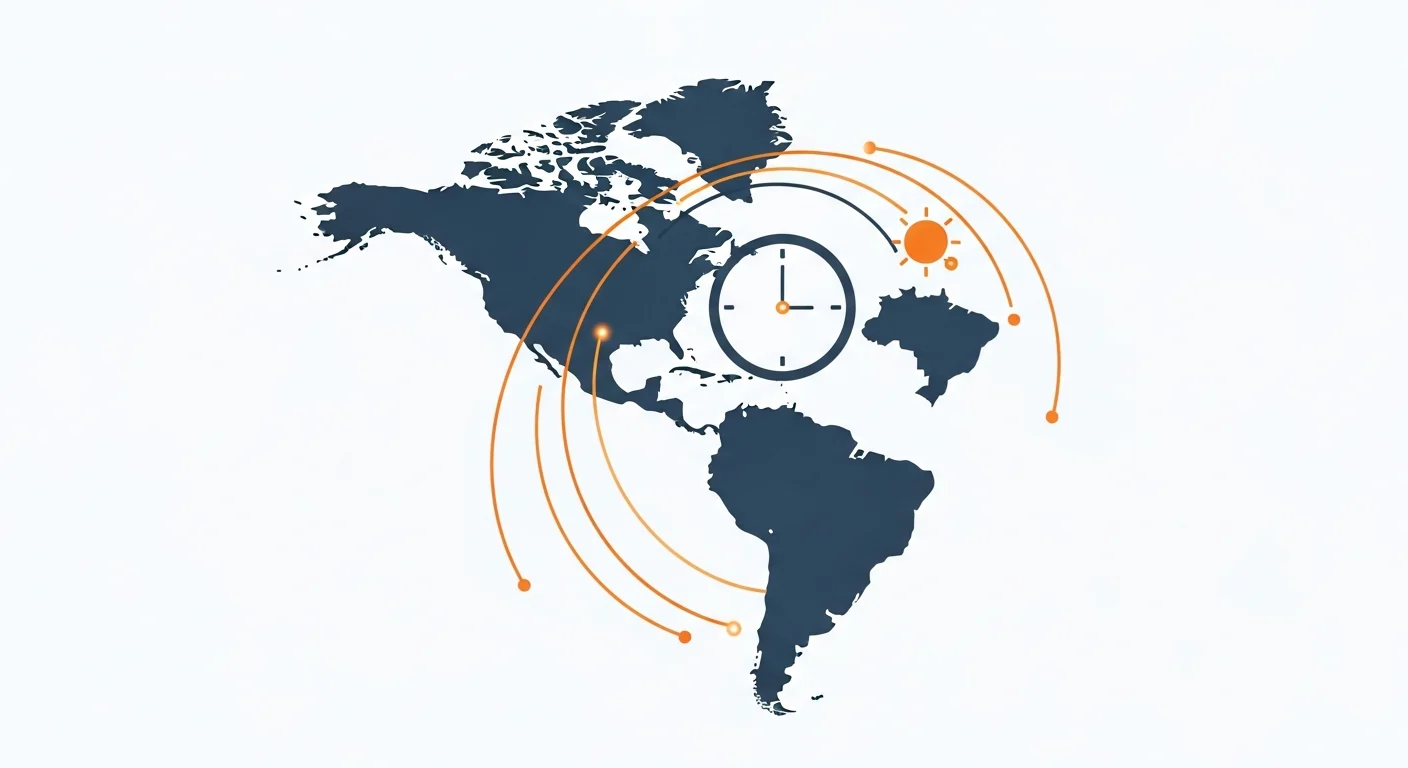
The pitch for Latin America staffing has moved well past “it’s cheaper than hiring locally.” Timezone overlap is the structural advantage that keeps showing up in the data. Most professionals across Mexico, Colombia, Costa Rica, Brazil, and Argentina work within one to three hours of US business hours, which means a standup, a live client call, or a same-day code review actually happens same-day, not a full cycle later the way it often does with a 10 to 14 hour offshore gap.
That overlap shows up directly in operating metrics. Deloitte reports that same-timezone operations reduce resolution times for escalated customer issues by roughly 35% compared with offshore alternatives, and that regionalized delivery can improve time-to-market by up to 20%. Those aren’t small margins, therefore, when a support ticket or a shipped feature is what the client actually sees.
What the Talent Shortage Data Shows
The demand side backs this up too. ManpowerGroup’s 2026 Global Talent Shortage Survey, covering 39,000 employers across 41 countries, found 72% still report difficulty filling open roles, and in the US specifically, operations, logistics, and technical capacity remain some of the hardest seats to fill through the local market alone. As a result, Latin America has become the region companies turn to first when the local search stalls out, precisely because the working hours actually line up.
6 Criteria for Evaluating a Latin America Staffing Partner
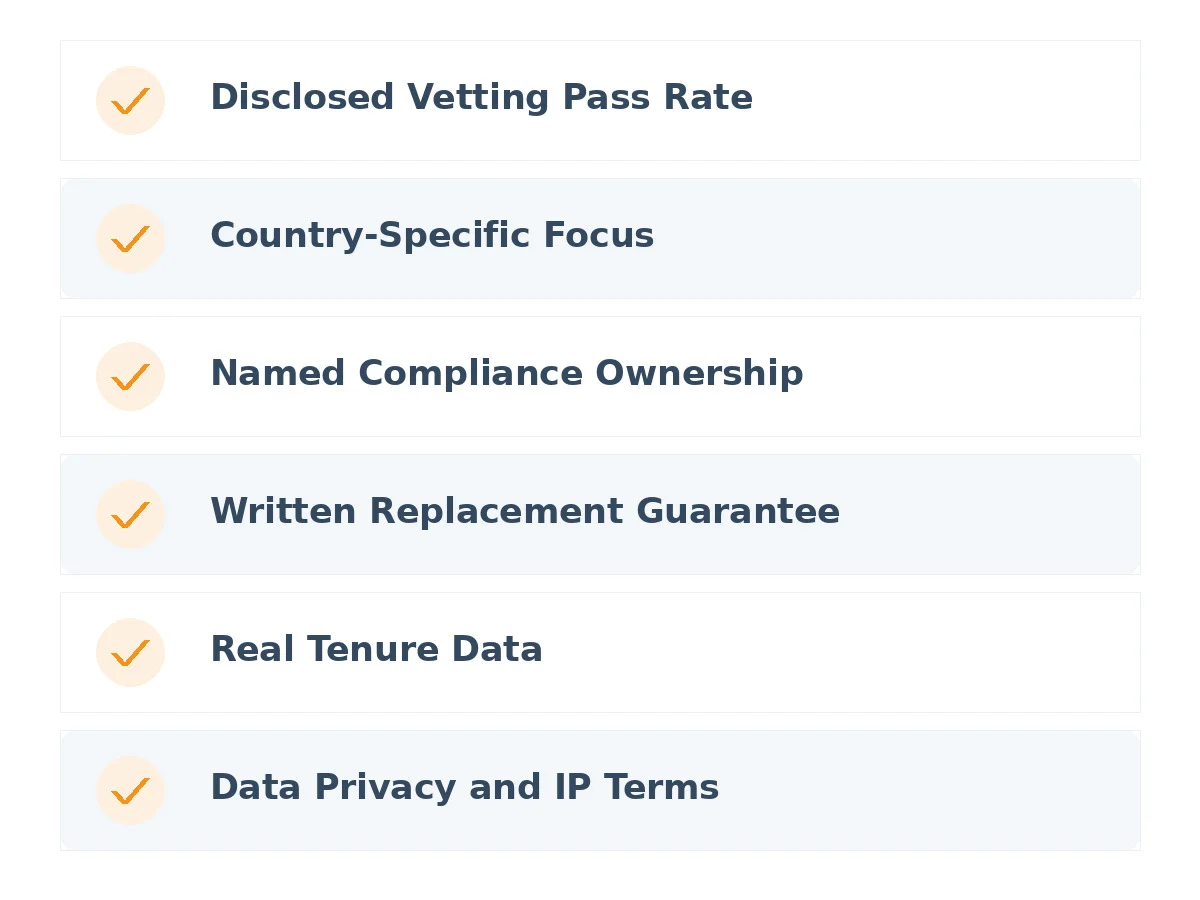
Run every firm you’re considering through these six filters before a contract gets anywhere near a signature. Skip one, and you’re betting on the part you didn’t check.
Two More Criteria That Get Overlooked
Where the Talent Actually Is
Latin America isn’t one talent market. Each country has its own strengths, and treating the region as interchangeable is how buyers end up disappointed with a placement that was never the right fit for the role in the first place.
Brazil carries the deepest bench by sheer market weight. StartupBlink’s Global Startup Ecosystem Index ranks Brazil first in Latin America for the seventh consecutive year, with over 5,175 tracked startups and more than $1.16 billion in startup funding, and São Paulo alone ranks 24th globally with over $760 million of that funding. That density translates into engineering, data, and fintech talent that’s used to working at scale, though hiring there also means navigating Brazil’s LGPD data protection law and its CLT labor code, both of which carry real compliance weight.
Mexico’s proximity and manufacturing history give it one of the region’s largest developer pools and the shortest logistical distance to US operations, particularly for companies already running Mexico-based supply chains. Colombia has built a reputation around cloud and platform engineering talent concentrated in Bogotá and Medellín. Argentina consistently ranks among the region’s strongest for English proficiency and technical depth, even as its economic volatility makes payroll structuring through a proper EOR more important than in most other markets.
Matching Country to Role
None of that means one country is simply “better.” It means the right staffing partner should be able to tell you, specifically, why a given country fits your role, not default to whichever market happens to be their easiest hire.
| Country | Known For | What to Watch |
|---|---|---|
| Brazil | Largest tech and fintech talent base in the region | LGPD data law, CLT labor code complexity |
| Mexico | Large developer pool, shortest US proximity | Federal labor law reform, regional wage variance |
| Colombia | Strong cloud and platform engineering talent | Growing demand is tightening senior-level supply |
| Argentina | High English proficiency, strong technical depth | Currency volatility makes EOR payroll structuring essential |
Red Flags That Mean Walk Away
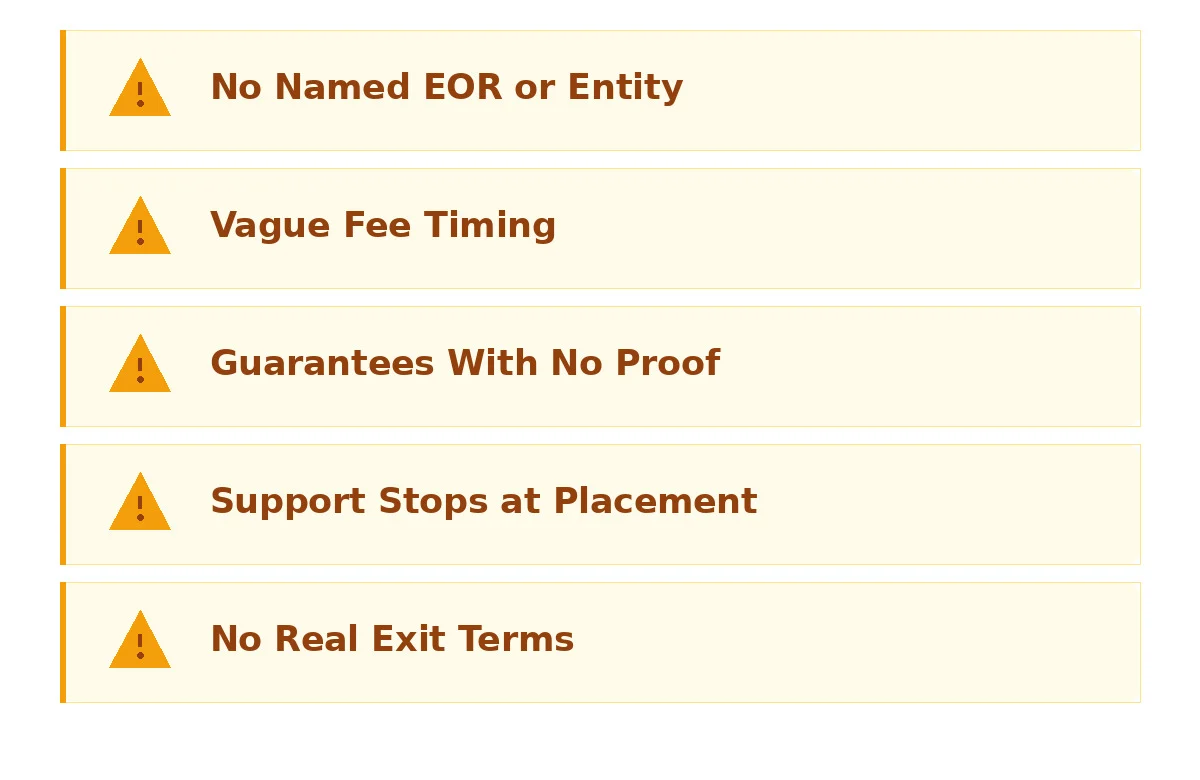
Most bad Latin America placements were avoidable. The warning signs almost always surface before the contract, not after.
Questions to Ask on the Sales Call
Bring this list to the first real conversation. A specific, confident answer to each one tells you more than anything on the firm’s website.
- Out of 100 applicants for this role, how many make it to my shortlist?
- Who legally employs the candidate, you, an EOR, or your own local entity, in this specific country?
- What’s the replacement window if this placement doesn’t work out, in writing?
- What’s your average placement tenure past 12 months, broken out by role type?
- How is candidate and client data handled under this country’s privacy law?
- Can I speak to a current client hiring a similar role in the same country?
That last one is the tiebreaker. A case study gets polished before it’s published. A live reference call doesn’t.
See How Kore BPO Vets Latin America Talent
Sourcing, screening, and compliance handled end to end, with resumes back in 2 to 5 business days.
What Latin America Staffing Actually Costs in 2026
Rates move by role, seniority, and country as much as by “Latin America” as a region. Treat any single flat number with suspicion.
| Role Type | Typical Monthly Cost | US-Based Equivalent |
|---|---|---|
| Virtual assistant / support agent | $1,200 to $2,200 | $3,500 to $5,500 |
| Mid-level software developer | $3,000 to $5,500 | $8,000 to $12,000 |
| Senior software developer | $5,500 to $9,000 | $8,000 to $18,000 |
Deloitte’s nearshoring research points to real, sustained cost advantages for companies regionalizing delivery into Mexico and the broader Latin America corridor, though the gap is narrower than what offshore Asia typically offers. That trade-off is the whole decision. Latin America costs somewhat more than offshore Asia in most role categories, and buys back the real-time overlap that async offshore work can’t.
Worth saying plainly, since we’re a staffing provider ourselves. Cost savings are real, but they’re rarely the reason a Latin America engagement succeeds or fails a year in. The vetting rigor, the compliance structure, and the replacement terms are what determine that. Cost opens the conversation. It’s not what closes it.
For a closer look at how this model compares to running staffing entirely offshore, see our guide to choosing an offshore staffing agency, and for the broader tradeoffs across all three hiring models, our nearshore staffing pricing breakdown covers the full cost picture by market.
Putting the Criteria Into Practice
The firms worth signing with are rarely the ones with the smoothest deck. They’re the ones that answer the uncomfortable questions, vetting rate, tenure, fee timing, compliance ownership, without reaching for a talking point.
Run every partner you’re evaluating through the six criteria above, ask the six sales-call questions, and treat any hedge on compliance or replacement terms as a hard stop. Most bad Latin America placements were preventable at the contract stage, not the onboarding stage.
If you want to see how Kore BPO structures Latin America staffing, from vetting through compliance, start at korebpo.com/contact.
What People Ask Before They Sign With a Latin America Staffing Partner
What’s the real difference between Latin America staffing and offshore staffing in Asia?
Timezone overlap is the core difference. Latin America talent typically works one to three hours off US business hours, which supports real-time collaboration, live meetings, and same-day decisions. Offshore Asia staffing usually runs 8 to 14 hours off, which works well for async, well-documented work but adds friction for anything needing live back-and-forth. Cost tends to favor offshore Asia slightly more, but the overlap gap is the bigger structural tradeoff.
Should I hire through a staffing partner or set up an employer of record directly?
It depends on volume and how much sourcing help you need. A staffing partner sources, screens, and often manages payroll through its own EOR relationship, useful if you don’t yet have a pipeline of qualified candidates. Going directly to an EOR makes more sense once you already know who you want to hire and just need the legal employment structure handled. Most companies start with a staffing partner and shift toward direct EOR relationships as headcount in a country grows.
Timelines and Compliance
How fast can a Latin America hire realistically start?
For a firm with an active, pre-vetted pipeline, expect a shortlist within days and a start date inside two to three weeks for most standard roles. Specialized or senior positions in high-demand markets like Colombian cloud engineering or Brazilian fintech can run longer simply because the qualified pool is thinner. If a standard mid-level role is quoted at six weeks or more with no clear reason, ask why before assuming it’s thoroughness.
Do I need to worry about data privacy law when hiring in Latin America?
Yes, and it varies meaningfully by country. Brazil’s LGPD is one of the more comprehensive data protection frameworks in the region, closely modeled on the EU’s approach, and it applies to how candidate and client data is collected, stored, and shared regardless of where your company is based. Mexico, Argentina, Colombia, and Chile each have their own frameworks as well. Confirm your contract addresses this specifically rather than relying on a generic confidentiality clause.
Fit for Smaller Teams
Can a small company with one or two hires justify using a Latin America staffing partner?
Usually yes, and sometimes with a stronger case than a larger company has. A single bad in-house hire can cost a small team months of runway and momentum it can’t easily recover. Spreading that risk across a partner’s vetting process, even for a single seat, often pays for itself the first time it prevents a mis-hire. The math shifts as headcount grows, but it doesn’t disqualify a small team from using the model early.
Related Articles



Ready to Hire Latin America Talent the Right Way?
Kore BPO handles sourcing, vetting, and compliance for Latin America hires, so you’re not gambling on any of the six criteria in this guide.
Book a Free Consultation