Latin America Staffing vs Traditional Staffing Agencies, What Actually Changes


- 01What a Traditional Staffing Agency Actually Bills You
- 02Why Latin America Specifically, Not Just “Nearshore”
- 03The Talent Hub Breakdown by Country
- 04What the Agency Pitch Leaves Out
- 05The Compliance Risk Nobody Mentions on the Sales Call
- 06When a Traditional Agency Still Wins
- 07The Dedicated Latin America Team Model
- 08What Hiring Managers Actually Ask
A traditional staffing agency marks up pay 30 to 75% plus a conversion fee. Latin America staffing runs 60 to 65% cheaper with near-identical work hours, but adds country-specific compliance requirements a domestic agency never touches.
Every hiring manager who has priced out a traditional staffing agency for a full year already knows the number stings more than the sales call let on. The bill rate looked fine in month one. By month six, the invoice includes fees nobody mentioned, and the developer you actually like is about to trigger a conversion charge on top of everything already paid.
Why This Comparison Goes Country by Country
Latin America gets pitched as the fix. Sometimes it genuinely is. Sometimes it’s the nearshore version of the same markup problem, just with better weather. So which is it, really, for a company staffing a full engineering team rather than one contractor?
This isn’t the generic offshore-versus-agency argument Kore BPO already covers in the nearshore staffing agency comparison. This one narrows to a specific region. Colombia, Mexico, Argentina, and Brazil each behave differently on cost, timezone, and legal exposure, and lumping them into one “nearshore” bucket is exactly how companies end up surprised six months in.
 Traditional Agency$209K–$268K/yr
Latin America Team$53K–$88K/yr
Traditional Agency$209K–$268K/yr
Latin America Team$53K–$88K/yr
Annual cost per developer, traditional US staffing agency contract-to-hire vs a dedicated Latin America staffing team, mid-level role.
What Does a Traditional Staffing Agency Actually Bill You?
A staffing agency’s invoice bundles three numbers into one line item. The contractor’s real pay. The employer costs of putting someone on a W2. And the agency’s margin, which you never see broken out unless you ask directly.
For IT roles, that markup lands between 30 and 75%, most commonly 35 to 50%, according to Top Echelon’s recruiting industry fee-structure data. A direct-hire placement fee runs a separate 15 to 25% of first-year salary, sometimes climbing to 35% for specialized or executive-adjacent roles, per altLINE’s staffing markup breakdown. On a $130,000 role, that conversion fee alone runs $19,500 to $32,500, due the moment you decide to keep someone you were already paying to have around.
Add it up. Bill rate markup plus conversion fee plus the internal time spent vetting submissions, and a contract-to-hire developer through a traditional agency runs $209,000 to $268,000 in year one. That number isn’t a guess. It’s the same math that shows up on every agency invoice once you actually itemize it.
| Cost Category | Low Estimate | High Estimate |
|---|---|---|
| Contractor bill rate (mid-level, annualized) | $187,000 | $229,000 |
| Agency markup embedded in bill rate | (30% of above) | (75% of above) |
| Conversion fee if hired full time | $19,500 | $32,500 |
| Internal time spent vetting agency submissions | $3,000 | $6,000 |
| Total first-year cost, contract-to-hire | $209,500 | $267,500 |
A dedicated Latin America hire, fully loaded with tooling and coordination overhead, lands at $53,000 to $88,000 a year. No conversion event. No second invoice waiting six months out. The gap doesn’t close as headcount grows either, it compounds, because every additional agency contractor drags the same markup and conversion math behind it.
Why Latin America Specifically, Not Just “Nearshore”
“Nearshore” gets used as a catch-all, and that’s where a lot of hiring plans go sideways. Argentina and Chile sit an hour ahead of US Eastern. Colombia overlaps Eastern and Central almost exactly. Mexico runs Central to Mountain depending on the state. None of that is interchangeable, and a company that plans a 9am standup assuming “Latin America equals my timezone” finds out otherwise on day one.
The region holds roughly 2 million software developers, per market coverage tracking the space, and hiring volume into the region grew 161% between 2023 and now, a trend that hasn’t slowed. Staffing Industry Analysts put the total Latin American staffing market at $11.5 billion, which tells you this isn’t a fringe hiring channel anymore. It’s a real, tracked labor market with its own pricing dynamics.
Mexico is the one country in the region where USMCA gives US companies an actual trade-agreement advantage on cross-border business terms, not just a marketing line. That doesn’t apply to Colombia, Argentina, or Brazil the same way. Country matters more than region here, which is the whole point of not treating this like one homogenous “nearshore” decision.
| Country | Time Zone Overlap With US | Notable Strength |
|---|---|---|
| Colombia | Aligns with ET/CT nearly exactly | Deep tech and BPO talent hub, strong English proficiency |
| Mexico | CT/MT depending on state | USMCA trade terms, largest tech workforce in the region |
| Argentina | ET+1 | Senior engineering talent, strong software culture |
| Brazil | ET+1 to ET+2 depending on region | Largest overall developer population in Latin America |
See What a Latin America Team Would Cost You
Kore BPO builds dedicated Latin America staffing teams for US companies. Pre-screened resumes in 2 to 5 days. $0 until you hire.
The Talent Hub Breakdown by Country
Roughly 84% of Latin America placements at US companies land at mid-level or senior seniority, not entry level. That matters because a lot of buyers assume nearshore means junior and cheap. It doesn’t. It means experienced and still cheaper than domestic.
Argentina, Colombia, and Brazil consistently surface as the deepest talent hubs for software and data roles, each for a different reason. Argentina built its software reputation on a strong university pipeline and years of outsourcing work for European clients before the US market caught on. Colombia benefited from years of BPO investment that built adjacent technical infrastructure and English-language training programs. Brazil simply has the numbers, the largest developer population in the region by a wide margin.
Timezone overlap here isn’t a nice-to-have. It’s the difference between a genuine daily standup and an async handoff dressed up as one. Companies chasing pure lowest cost sometimes drift toward less proven talent hubs in the region and pay for it in ramp time later. Not a great trade, most of the time.
 ColombiaET/CT aligned
MexicoCT/MT
ArgentinaET+1
BrazilET+1 to ET+2
ColombiaET/CT aligned
MexicoCT/MT
ArgentinaET+1
BrazilET+1 to ET+2
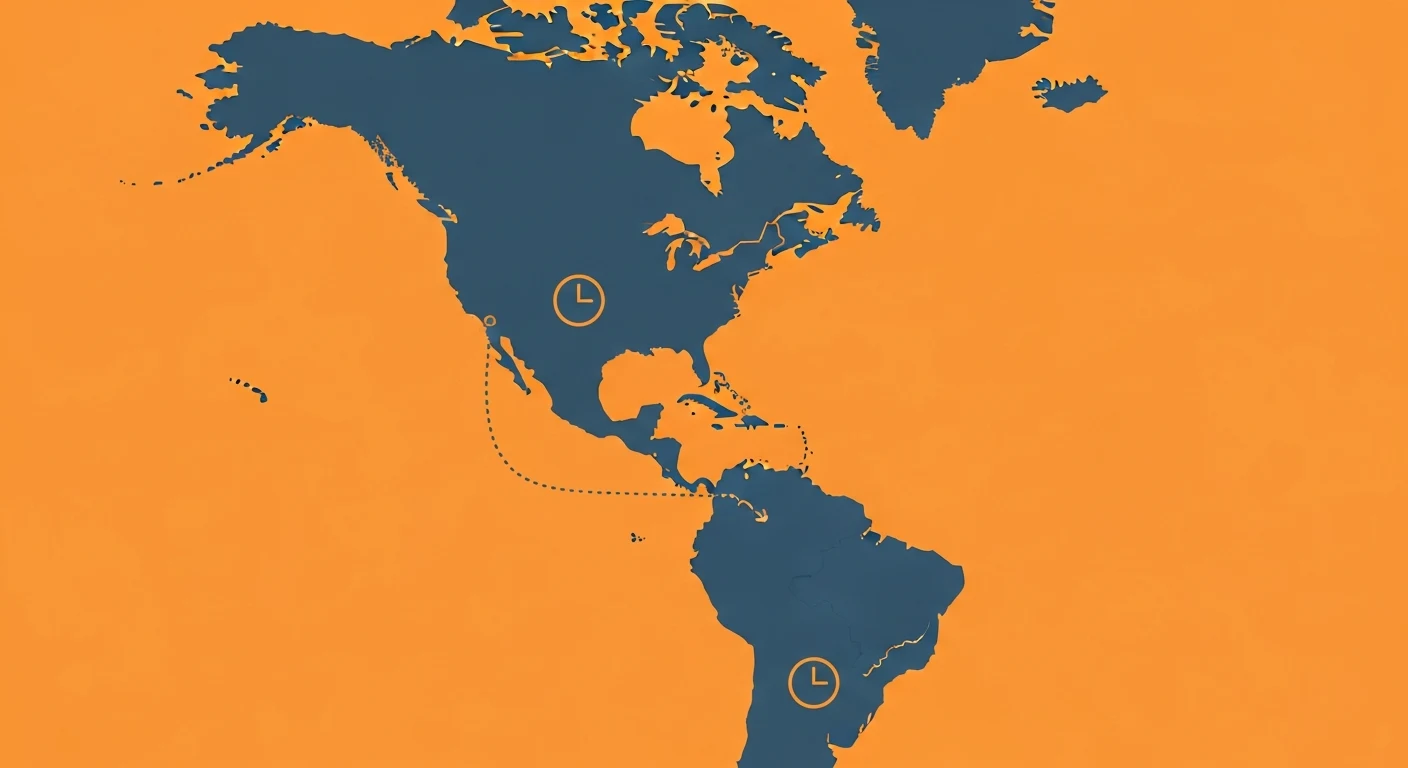
Working-hour overlap between the continental US and the four largest Latin America talent hubs.
What the Agency Pitch Leaves Out
Two things a staffing agency’s sales deck almost never covers.
Bill rates aren’t as fixed as they’re presented. Agencies frame the number as market-driven. Part of it is. A meaningful chunk is margin protection dressed up as market data. Push back, and some of it moves. Most buyers never push, because nobody on the client side knows exactly where the real cost ends and the margin begins.
The conversion fee flips your incentives, not just your budget. Six months into a good engagement, the instinct is to convert fast before the person leaves. That’s precisely when the fee bites hardest. Full markup for six months, then a five-figure conversion charge, for someone who was already delivering the work. The agency gets paid twice on the same relationship.
Bias disclosed. Kore BPO places Latin America staffing talent, so we’re not a neutral party in this comparison. The markup figures above come from third-party recruiting industry data, not our own sales material. Pull your own agency’s invoices and run the math yourself before deciding either way.
The Compliance Risk Nobody Mentions on the Sales Call
Here’s the part the Latin America pitch tends to skip, the same way the agency pitch skips conversion fees. Building a team in the region isn’t compliance-free just because the cost looks better.
Mexico and Brazil both carry real contractor misclassification exposure. Treat someone as an independent contractor when local law says they’re functionally an employee, and the penalties land on the hiring company, not just the worker. Colombia and Argentina both require a 13th-salary payment, often called aguinaldo, on top of base compensation, and that’s not optional or negotiable the way a US bonus structure might be.
This is where the “do you already have the candidate or not” question actually matters. If a company sources its own candidate and just needs compliant employment infrastructure, an employer-of-record model fits. If the company needs both the search and the employment handled, a staffing partner with in-country legal expertise fits better. Getting this backwards is how companies end up with a fine, not just a bad hire.
A client Kore BPO worked with tried structuring a Colombia hire as a straight contractor relationship to skip the paperwork. Six weeks in, local counsel flagged it as a misclassification risk waiting to happen. Restructuring the engagement cost more time than doing it correctly from day one would have.
Misclassifying a Latin America hire as a contractor when local law treats them as an employee can trigger back-pay, benefits, and tax penalties directly on the hiring company. This risk doesn’t exist with a traditional domestic staffing agency, and it’s the tradeoff that gets left out of most cost-savings pitches.
When a Traditional Agency Still Wins
Not every hiring situation should skip the agency model just because the Latin America math looks better on paper. Cheaper on a spreadsheet and right for the actual role, are those even the same question here?
- The role requires physical office presence, a specific US visa status, or a security clearance tied to domestic residency.
- The engagement is genuinely short, under 90 days, where compliance setup time in another country never pays for itself.
- Contractual or regulatory terms require the worker to be a US taxpayer.
- You’re filling one narrow, highly specialized role where an existing agency relationship with a specific candidate outweighs cost.
- You’re building for sustained, ongoing capacity, not a short gap. The markup-and-conversion math only worsens the longer an agency contractor stays.
- Real-time collaboration matters, and a near-identical working day beats an async handoff.
- Cost per hire is a genuine constraint on how many people you can field this year.
- You have (or can get) the in-country legal support to handle compliance correctly, not just cheaply.
If a company only brings in a contractor twice a year for a short stretch, the domestic agency route probably still makes more sense. Everything in this comparison assumes sustained, ongoing headcount, which is a different problem entirely.
 Sustained, ongoing capacity
Real-time collaboration needed
Cost per hire is the constraint
US-based role or clearance required
Sustained, ongoing capacity
Real-time collaboration needed
Cost per hire is the constraint
US-based role or clearance required
Quick decision checklist, traditional staffing agency vs a dedicated Latin America staffing team.
The Dedicated Latin America Team Model
Kore BPO is a US-owned offshore and nearshore hiring partner based in Dallas, TX, with a delivery office in San Jose, Costa Rica, alongside Hyderabad, India. The company builds dedicated Latin America staffing teams for US businesses across software development, data roles, and technical support, one client per team, not a shared bench.
The structural difference from a domestic agency is easy to state and easy to miss in a sales pitch. An agency’s model depends on margin layered over pay, plus a second payday if you convert. A Latin America staffing partner’s model depends on the hire staying productive and the client staying satisfied, because there’s no conversion event manufacturing a separate fee. Both sides are pointed the same direction from week one.
Kore BPO has placed over 6,236 hires across 257 clients, with pre-screened resumes delivered in 2 to 5 business days and nothing owed until a client actually hires. No retainer. No markup buried inside a number you never get to see broken out.
US software developer demand isn’t cooling off either. The Bureau of Labor Statistics projects 15% growth in software developer roles from 2024 to 2034, adding around 129,200 openings a year. CompTIA’s 2026 workforce report puts net tech employment growth at 1.9% this year, roughly 185,499 new jobs, pushing the domestic tech labor force to 9.8 million. That’s growth, but it’s not growth fast enough to loosen a domestic hiring market this tight. Which is exactly why Deloitte’s research on nearshoring notes the driver has shifted from pure cost-cutting toward talent access and delivery speed. The math still favors Latin America. The reason companies make the move has just gotten more honest about it.
What This Means for Your Hiring Plan
Three things worth carrying out of this comparison.
The savings are real, and they’re bigger than a single “60% cheaper” headline suggests once conversion fees and embedded markup get counted against the agency side. Country choice inside Latin America matters more than the region label. Colombia, Mexico, Argentina, and Brazil aren’t interchangeable on timezone, talent depth, or trade terms, and treating them as one bucket is where hiring plans go wrong.
Compliance isn’t optional just because the cost story is good. Misclassification risk in Mexico and Brazil is real, and it lands on the hiring company. Match the model, agency or Latin America team, to the actual shape of the need. Short and domestic-bound, the agency still wins. Sustained and cost-constrained, the region does.
What Hiring Managers Actually Ask Before They Switch
So is Latin America staffing actually cheaper once everything is counted?
Yes, usually by a wide margin. A dedicated Latin America hire runs $53,000 to $88,000 a year all-in, against $209,500 to $267,500 for a comparable traditional agency contract-to-hire engagement over 12 months. It gets closer on short engagements under 90 days, where compliance setup time eats into the advantage.
Does the timezone overlap actually hold up, or is that just a sales line?
It holds up, country by country. Colombia lines up with Eastern and Central almost exactly. Argentina and Chile run an hour ahead. Mexico spans Central to Mountain. None of that is identical to “your” timezone automatically, so confirm the specific country before assuming a 9am meeting works for everyone.
Compliance and Delivery Speed
What’s the actual misclassification risk in Mexico or Brazil?
Real, and it lands on the company doing the hiring, not the worker. Treating someone as an independent contractor when local labor law treats them as an employee can trigger back pay, mandatory benefits, and tax penalties. Work with a partner that has actual in-country legal expertise, not just a sales team that says “compliant” on a slide.
How fast can a Latin America staffing partner actually deliver candidates?
2 to 5 business days for pre-screened resumes is standard for a partner with an active bench in the country you’re targeting. Onboarding to first day typically lands within 4 to 6 weeks of a signed engagement. Slower than an agency’s same-week bench claim, but without the conversion fee waiting at the other end.
Traditional staffing agency vs Latin America, does the gap ever actually close?
Mostly no, for sustained roles. It narrows for short, specialized, or compliance-bound engagements where an agency’s speed and US-based structure outweigh the cost difference. Run both models to a full 12 months before deciding. The comparison changes shape once conversion fees enter the math.
Picking a Country and Weighing the Tradeoffs
Which Latin America country should a company start with?
Depends on the need. Colombia for the tightest US timezone overlap and strong BPO-adjacent infrastructure. Mexico for USMCA trade terms and proximity. Argentina and Brazil for the deepest senior engineering talent pools, accepting a one to two hour timezone offset. There isn’t a single right answer, only the right fit for the role.
Disclosure. Kore BPO is a Latin America and offshore staffing company. Cost and market figures in this post are sourced from third-party research, including the Bureau of Labor Statistics, CompTIA, Deloitte, Staffing Industry Analysts, Top Echelon, and altLINE. Internal figures reflect Kore BPO’s aggregated placement data.
Related Articles



Ready to Build in Latin America?
Kore BPO places dedicated Latin America staffing teams for US companies. Tell us the role and country fit. We’ll send pre-screened resumes in 2 to 5 days.
Contact Us