How to Choose a Nearshore Staffing Agency


The right nearshore staffing agency proves its vetting rate, handles compliance through an EOR, backs placements with a real replacement guarantee, and shows retention data instead of vague promises. If a rep can’t answer those four things clearly, keep looking.
Every nearshore staffing pitch sounds the same after the third call. Same-time-zone talent. Cost savings. Culturally aligned engineers who feel like an extension of your team. Fine. Nobody disagrees with any of that.
What the pitch never covers is what happens when the placement doesn’t work out three weeks in. Or when the invoice includes a fee nobody mentioned during the sales call. Choosing a nearshore staffing partner isn’t really a talent decision. It’s a due diligence decision wearing a talent decision’s clothes.
This guide covers what actually separates a real nearshore partner from a reseller with a nice website: the criteria that matter, the red flags that should end the conversation, and the specific questions to ask before anyone signs anything.
What Does a Nearshore Staffing Agency Actually Do?
A nearshore staffing agency recruits, screens, and places talent from a nearby country, usually Latin America for US companies, so the team works inside overlapping business hours instead of on the other side of the planet. Most agencies own the sourcing and vetting; an employer of record or in-house legal entity handles the actual employment contract, payroll, and tax compliance underneath it.
That split matters more than most buyers realize going in. The agency finds and filters candidates. The EOR (or the agency’s own legal entity, if they operate one) is who actually employs the worker on paper. Confuse the two and you’ll end up asking the wrong party to fix a compliance problem later.
The Inter-American Development Bank estimates nearshoring could add $78 billion in annual exports across Latin America and the Caribbean, a number that tells you the region’s talent supply is scaling, not shrinking. Good news for buyers. It also means the number of agencies chasing that demand has grown fast, and not all of them built real vetting infrastructure to match.
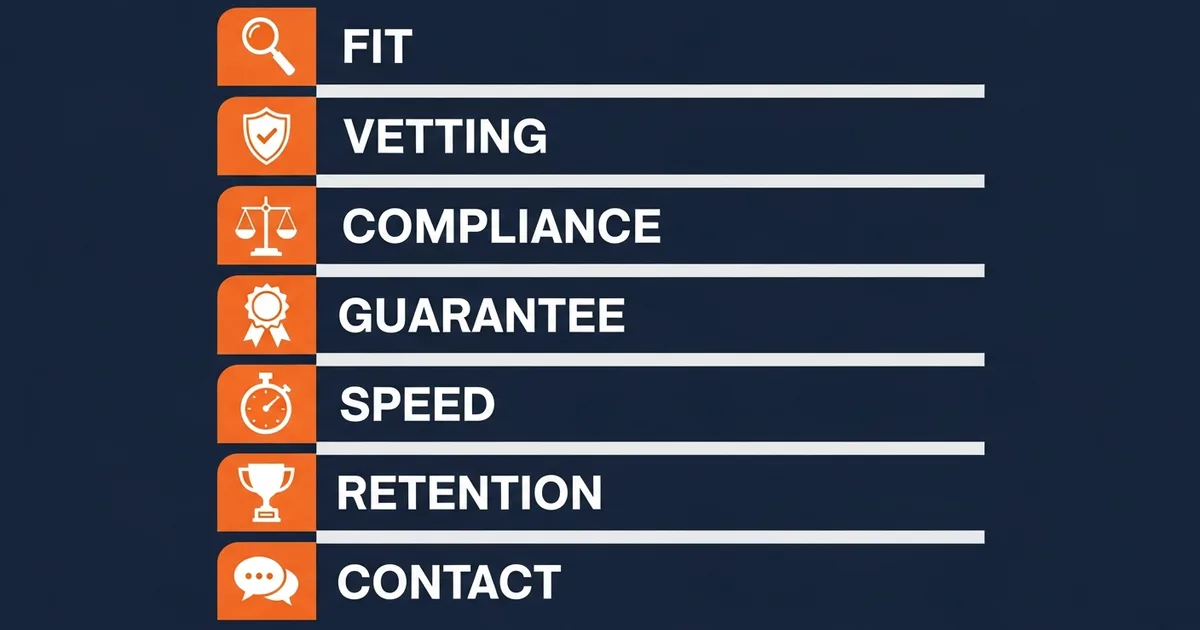
7 Criteria for Evaluating a Nearshore Staffing Agency
Run every agency through these seven filters before a contract gets anywhere near a signature. Skip one and you’re gambling on the parts you didn’t check.
Nearshore vs. Offshore Staffing: When Nearshore Actually Wins
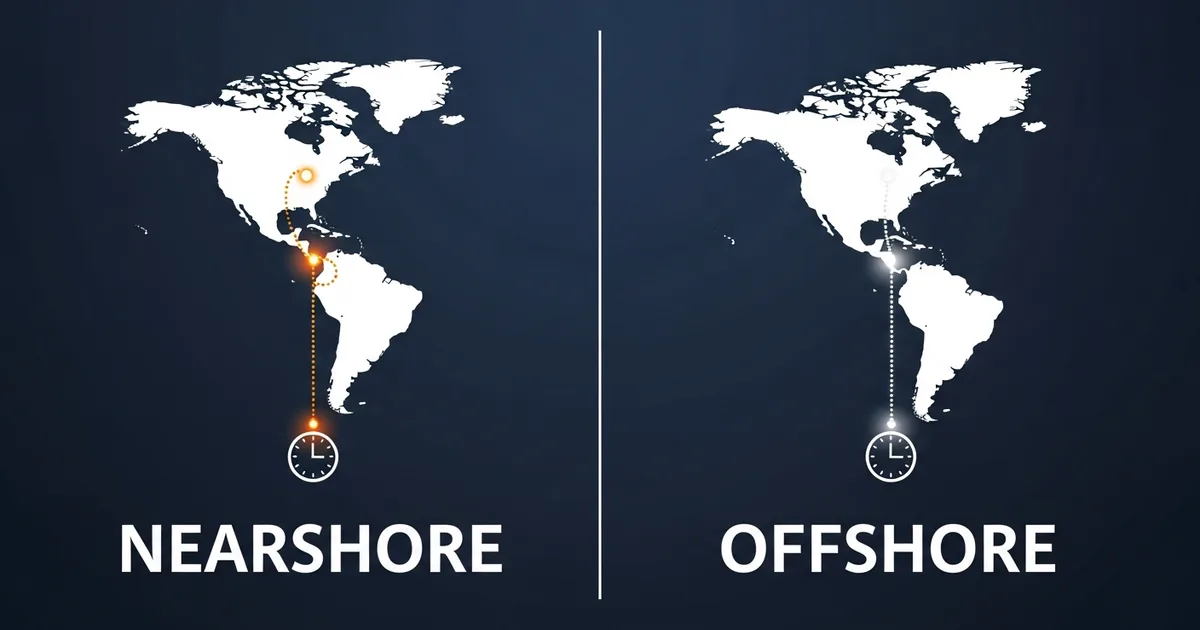
Nearshore and offshore aren’t competing for the same job. Nearshore teams in Latin America typically overlap with US hours by 1 to 3 hours. Offshore teams in Asia run 8 to 14 hours apart. That gap decides which model fits which kind of work, full stop.
Offshore wins on raw cost and 24/7 coverage for well-specified, async-friendly work: maintenance windows, QA passes, after-hours support tickets. Nearshore wins whenever the work requires real-time back-and-forth: product engineering, agile sprints, anything where a single Slack message shouldn’t take until tomorrow to get answered. For a deeper breakdown of where each model fits, see our full onshore vs. nearshore vs. offshore comparison.
| Factor | Nearshore (LatAm) | Offshore (Asia) |
|---|---|---|
| Time zone overlap | 1 to 3 hours | 8 to 14 hours |
| Typical hourly cost, senior engineer | $60 to $74 | Often lower still |
| Best fit | Real-time, collaborative work | Async, well-defined tasks |
| Annual attrition benchmark | Under 15% | Frequently 40%+ |
| English proficiency (typical) | High, often near-native | Varies widely by market |
Neither model is universally “better.” A support team running tickets overnight probably belongs offshore. A product squad shipping features every sprint probably doesn’t. We’ve watched clients try to force offshore async workflows onto a real-time engineering problem, and the friction shows up within a month, missed standups, decisions stalling for a full business day, momentum that never quite builds.
Red Flags That Mean Walk Away
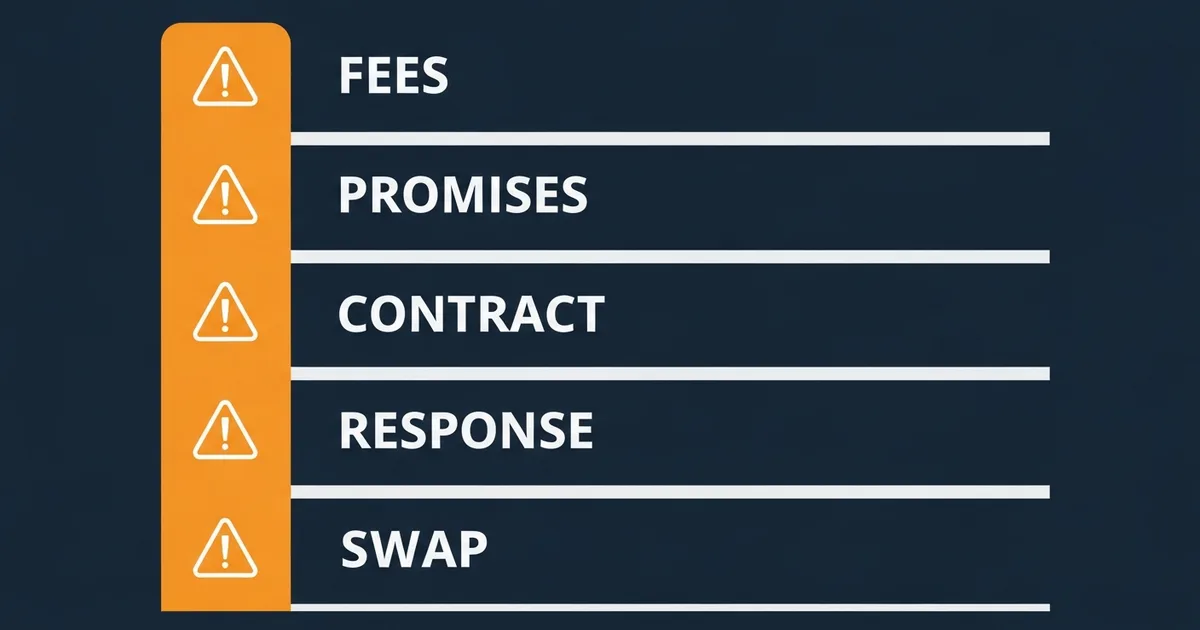
Most bad nearshore engagements were avoidable. The warning signs usually show up before the contract, not after.
Questions to Ask on the Sales Call
Bring this list to the first real conversation. A confident, specific answer to each one tells you more than any case study on their website.
- Out of 100 applicants for this role type, how many make it to my shortlist?
- Who legally employs the candidate, you, an EOR, or a local entity you own?
- What’s the replacement window if this placement doesn’t work out, in writing?
- What’s your average placement tenure past 12 months?
- Who is my named point of contact, and what are their working hours relative to mine?
- Can I speak to a current client in a similar role category?
That last one is the tiebreaker. Case studies get edited. A reference call doesn’t.
See Kore BPO’s Nearshore Model
Vetted nearshore talent across Latin America, with the sourcing, screening, and compliance handled end to end.
What Nearshore Staffing Actually Costs in 2026
Nearshore rates in Latin America move by seniority and country as much as by role. Expect a range, not a fixed number.
| Seniority | Typical Hourly Rate | US-Based Equivalent |
|---|---|---|
| Mid-level | $35 to $50 | $85 to $120 |
| Senior | $60 to $74 | $150 to $180+ |
| Staff / lead | $75 to $95 | $190 to $230+ |
For context on the US side of that comparison, the Bureau of Labor Statistics puts the median annual wage for US software developers at roughly $135,980, before benefits, payroll tax, and overhead are added on top. Fully loaded, that US hire often runs 1.5 to 1.85 times the base salary. Nearshore doesn’t erase that gap entirely. It narrows it while keeping the overlap hours that offshore can’t offer.
Worth naming directly: outsourcing firms, including us, benefit when a company can’t fully solve a hiring problem alone. That’s not a reason to distrust every agency pitch. It’s a reason to verify the specific claims instead of taking the pitch at face value. Deloitte’s Global Outsourcing Survey found cost reduction is still the top-cited reason companies outsource at all, which tracks. It’s just not the only variable that decides whether a specific engagement works.
For the full pricing breakdown, including hidden fees and how to convert any quote into a real 12-month total, see our nearshore staffing agency pricing guide.
The agencies worth signing with are rarely the loudest ones on the sales call. They’re the ones that answer the uncomfortable questions, vetting rate, retention, fee timing, without flinching or reaching for a vague talking point.
Run every agency you’re evaluating through the seven criteria above, ask the six sales-call questions, and treat any hedge on compliance or replacement terms as a hard stop. Most bad nearshore engagements were preventable at the contract stage, not the onboarding stage.
If you want to see how Kore BPO structures nearshore hiring, from vetting through compliance, start at korebpo.com/nearshore-bpo. You can also compare specific nearshore role types we place if you already know which seat you’re filling.
What People Ask Before They Sign With a Nearshore Agency
So what exactly does a nearshore staffing agency do that a regular recruiter doesn’t?
A regular recruiter finds candidates and hands off. A nearshore staffing agency typically owns sourcing, technical and language vetting, compliance structuring through an EOR or local entity, and ongoing account management for as long as the placement lasts. Some also handle payroll directly if they operate their own legal entity in-country. The difference shows up after the hire, not during it.
Realistically, how fast can a nearshore hire actually start?
2 to 3 weeks for most standard roles at a mature agency, sometimes faster. A 72-hour shortlist is a reasonable benchmark to ask for upfront. Specialized or senior roles can run longer simply because the qualified pool is smaller. If a “standard” mid-level role is quoted at 6 weeks or more with no explanation, ask why before assuming it’s just thoroughness.
Is nearshore actually worth paying more for than offshore?
Depends entirely on the work. If the role needs constant back-and-forth, product decisions, sprint planning, live troubleshooting, the 1 to 3 hour overlap nearshore offers usually pays for itself in avoided delay. If the work is well-documented and async by nature, offshore’s deeper discount is harder to argue against. The mistake is picking one model for every role instead of matching the model to the task.
What’s actually in an EOR contract that I should read closely?
IP assignment language, termination and severance terms under local law, and exactly who is responsible for tax withholding and social security contributions. These vary meaningfully by country. Colombia’s severance rules aren’t Mexico’s. Have legal counsel review the indemnification clause specifically rather than assuming boilerplate language covers your situation, which is standard SHRM guidance for any staffing relationship, not just nearshore.
Can a small company with just a few hires actually justify a nearshore agency?
Usually, yes, and sometimes with a stronger case than a larger company. A single bad in-house hire costs a small team months of runway and momentum. Spreading that risk across an agency’s vetting process, even for one or two seats, often pays for itself the first time it prevents a mis-hire. The math changes at scale, but it doesn’t disqualify small teams from using it.
Related Articles



Ready to Hire Nearshore the Right Way?
Kore BPO handles sourcing, vetting, and compliance for nearshore hires across Latin America, so you’re not gambling on any of the seven criteria in this guide.
See Our Nearshore Staffing Agency