How to Choose Offshore Software Development: A 6-Point Framework


Choose an offshore software development partner by evaluating six factors: technical stack depth, communication overlap hours, code ownership terms, pricing transparency, developer retention, and security compliance, not just hourly rate. Skip the lowest bid, insist on a named engineer before you sign, and get IP assignment in writing.
Why Rate Isn’t the Right Starting Point
Most companies start this search with a spreadsheet of hourly rates. That’s backwards. In fact, rate is the easiest number to compare and the least useful one for predicting whether a project ships on time.
We’ve sat on both sides of this table long enough to know where offshore engagements actually break. It’s rarely the code. It’s the stuff nobody puts in the sales deck. Who owns the IP the day someone gets hit by a bus. Whether your 9am stand-up lands at someone else’s 9pm. Whether the engineer on the discovery call is the one who shows up in week three. Get those wrong, and as a result, the hourly rate stops mattering. This guide walks through the offshore roles Kore BPO places every month and the framework we use internally to vet a fit before a resume ever reaches a client.
We’ll cover the six criteria that actually predict a good outcome, how the three pricing models compare, the red flags that should end a conversation immediately, and what a realistic first 30 days looks like once you’ve signed.
What Does Offshore Software Development Actually Mean?
Offshore software development means hiring engineers based in a distant country, usually several time zones removed, to build or maintain your software under your direction. It’s not staff augmentation with extra steps, and it’s not the same thing as nearshore, where the country sits close enough to share most of your workday.
People mix these up constantly. Offshore usually means India, Vietnam, or the Philippines relative to a US buyer. Nearshore means Latin America or Eastern Europe for that same buyer, where three or four hours of overlap replace the redeye async handoff. However, neither is universally better; they solve different problems.
In fact, three of our last five client intake calls started with the client asking for “outsourcing” when what they actually wanted was a dedicated offshore software engineer who reports into their existing team, not a black-box vendor delivering a finished feature. That distinction changes everything downstream, from the contract to how you run stand-ups.
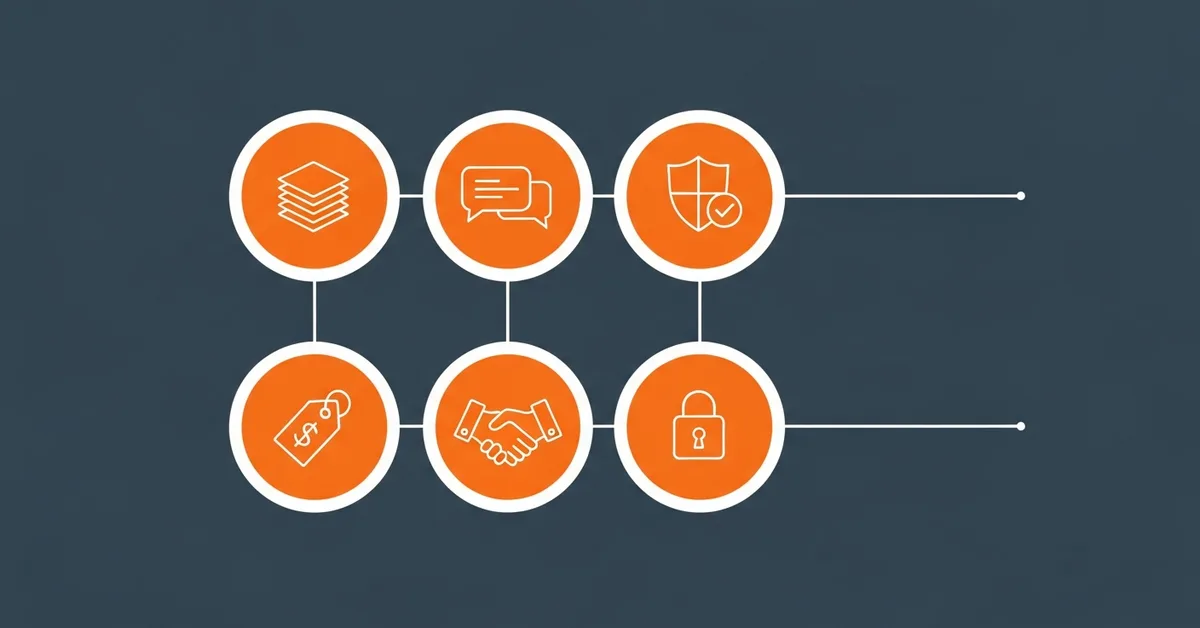
The 6-Point Evaluation Framework
Here’s the framework we walk clients through before we place anyone. Pricing is fourth on this list, not first. In other words, fit comes before cost, every time.
Weighing the Operational Factors
Pricing Models Compared: Fixed Price vs. Time and Materials vs. Dedicated Team
Offshore software development rates run $25 to $50 an hour depending on region and seniority, versus $80 to $150-plus for onshore talent, per recent market research. However, the hourly number only tells part of the story. So which one actually protects your budget, the low quoted rate or the model that keeps scope from quietly ballooning?
| Model | Best For | Typical Range | Main Risk |
|---|---|---|---|
| Fixed Price | Well-defined scope, short projects | Quoted total + 10–20% vendor buffer | Scope disputes. Change orders can add 15–25% to the original contract |
| Time and Materials | Evolving scope, ongoing product work | $25–$50/hr offshore | Costs scale with hours. Requires active oversight |
| Dedicated Team | Long-term engagements, 6+ months | $3,000–$5,500/developer/month | Requires enough work to keep the team fully utilized |
Fixed price feels safest on paper; however, it isn’t, if your requirements are still moving. We’ve watched clients pay 20% over a “fixed” quote in change orders because nobody flagged that the scope was still soft when the contract was signed. Meanwhile, dedicated team pricing wins on predictability once a project has enough steady-state work to justify a full-time engineer, which is most of what we place through our total cost of ownership breakdown.
Red Flags That Mean Walk Away
Some of these are obvious once you’ve been burned once. Most people, however, haven’t been burned yet.
None of these alone is disqualifying, but two or three together, and you’re not hiring a partner. You’re hiring a liability with a nice logo. How many of these would your current shortlist survive?

Offshore vs. Nearshore vs. In-House: Which Fits Your Project
This isn’t a competition with one universal winner. It’s a fit question tied to your budget, your timeline sensitivity, and how much real-time collaboration the work actually needs.
- Choose offshore when the budget gap matters more than same-day overlap and the work is well enough documented to hand off async.
- Choose nearshore when your team needs to jump on a call mid-afternoon without anyone staying up late.
- Choose in-house when the role touches sensitive IP you’re not ready to hand outside the building, or culture fit outweighs cost.
Our own in-house vs. offshore comparison breaks down the three-year cost delta in more detail, and it’s worth reading before you assume in-house is automatically safer. In practice, it’s usually just more expensive, not less risky.
See How Kore BPO Answers These Questions
Offshore software engineers with transparent rates, named engineers before you sign, and real retention data.
Vetting Questions to Ask Before You Sign
Ask these on the first call, not after the contract’s already on the table.
- What’s your engineer acceptance rate, and how do you test for it?
- Who specifically will work on this, and can I talk to them before signing?
- What happens, in writing, when the scope changes mid-project?
- Who owns the code and IP, and at what point does ownership transfer?
- What’s your average engineer tenure on active client accounts?
- What does offboarding and access revocation look like when an engineer rolls off?
If a vendor answers all six without reaching for a slide deck, that’s a good sign. If they answer with “it depends” to every one of them, it depends on whether you’re comfortable finding out the hard way. For a structured version of this, our guide on how to vet offshore engineers goes deeper on the technical screening side specifically.
What Good Onboarding Looks Like in the First 30 Days
The first two to four weeks set the trajectory for the whole engagement, and a rough start compounds. Look for a partner who handles environment setup on day one, not day five. A new engineer should clone the repo and run the app locally before lunch, not by the end of the week.
Week one is architecture walkthroughs and access provisioning. Weeks two and three run slower than you’d like, and that’s normal, not a warning sign, as long as velocity trends up and the questions coming back get sharper instead of staying basic. Flat productivity by week four is the actual signal to worry about. A clear developer job brief written before day one shortens this ramp more than almost anything else you can do.
Kore BPO’s own placement data backs this up in practice, not just in theory. Across 6,236 hires placed for 257 clients, the accounts with a documented onboarding brief in place before day one hit full productivity roughly a week faster than the ones improvising it. That’s not a huge number. Still, it’s also not nothing when you’re paying for a ramp period either way.

Kore BPO places offshore software developers and data specialists for US companies that need to move faster than their local hiring pipeline allows, with resumes delivered in 2–5 business days and zero upfront fees. We’re not the right fit for every team. If you only need one contractor for a three-week project, a marketplace hire is probably faster and cheaper than going through a staffing partner at all. Where we earn our fee is the six-month-plus engagements where retention and governance actually matter.
Things People Ask Before Hiring Offshore
So what’s actually different between offshore software development and plain staff augmentation?
Staff augmentation is one lever inside offshore development, not a separate category. It means adding individual offshore engineers into your existing team and process. In contrast, offshore development can also mean handing an entire project to a vendor team running its own process. Our staff augmentation vs. outsourcing breakdown covers which one fits which situation.
Realistically, how much does this cost in 2026?
$25 to $50 an hour for most offshore markets, or $3,000 to $5,500 a month per developer under a dedicated team model. Senior specialists in data or cloud roles run higher. In the end, the number that actually matters is total cost after rework, not the quoted rate.
What actually kills most offshore projects?
Governance gaps, not skill gaps. No named accountability, no documented communication cadence, no clear IP terms. In fact, the technical work is rarely the failure point. We’ve seen technically excellent engineers fail on projects with no clear owner on the client side just as often as the reverse.
Three weeks, three months, longer. Which is it for onboarding?
Two to four weeks to full productivity for most roles, assuming environment access and a documented brief are ready on day one. Add another two to three weeks if the codebase is undocumented or the client side is slow to provision access. That part’s on you, not the vendor.
Is handing sensitive data to an offshore team actually safe?
It can be, with the right controls in place. Encrypted repos, VPN-gated access, background-checked engineers, and a written offboarding process. However, it’s not automatically safe just because a vendor says “we take security seriously.” Ask them to describe their access control process in one paragraph. If they can’t, that’s your answer.
The Bottom Line
The partners worth signing with aren’t the ones with the slickest deck. They’re the ones who answer the uncomfortable questions, acceptance rate, retention, IP terms, without reaching for a vague talking point.
Run every offshore software development partner you’re evaluating through the six criteria above, ask the six vetting questions, and treat any hedge on IP, retention, or security as a hard stop. Ultimately, most bad offshore engagements were preventable at the contract stage, not the onboarding stage.
If you want to see how Kore BPO structures offshore engineering, from vetting through delivery, review how similar engagements played out for other clients, then start at korebpo.com/offshore-roles.
Related Articles



Ready to Hire Offshore the Right Way?
Kore BPO answers every question in this guide directly, named engineers, transparent rates, no vague pitch language.
See Offshore Roles