Nearshore Recruiting Cost: What US Companies Actually Pay to Hire in 2026


A founder we spoke with last quarter had already burned two months and roughly $9,000 in agency fees trying to fill an operations analyst role in the US. No offer accepted. He switched to a nearshore search in Colombia and had three qualified finalists in front of him twelve days later, at a fraction of the spend. That gap is the actual story behind nearshore recruiting cost, and it rarely shows up in the headline rate people quote each other.
Most of what gets written about nearshore hiring focuses on the ongoing staffing rate, what you pay per hour once someone’s on the job. That’s a different number from what it costs to actually find, vet, and place that person in the first place. This guide covers the recruiting cost specifically: fee models, US-versus-nearshore benchmarks, and the line items that don’t make it into the first quote. For the ongoing rates once someone’s hired, see our breakdown of nearshore staffing agency pricing. If you’re still deciding whether a nearshore staffing agency is the right fit at all, that page is the place to start first.
What Does Nearshore Recruiting Actually Cost?
Nearshore recruiting cost splits into two very different buckets depending on how the partner charges. Flat-fee nearshore recruiters, the most common model for support, admin, and mid-level roles, typically charge $800 to $3,000 per placement. Technical or specialized searches, think a senior data analyst or a bilingual accountant, run $5,000 to $12,000 depending on the difficulty of the search and how niche the skill set is.
Compare that to domestic US recruiting. The average cost per hire in the US runs $15,000 to $25,000 once you count agency commission, job board spend, background checks, and the hours an internal recruiter or hiring manager spends on the search, according to Pin’s 2026 cost-per-hire benchmark data. Executive-level US hires push well past that, with some benchmarking data putting the average nearer $35,000 once every internal and external cost is rolled in.
Time is the other half of the math. US time-to-fill averages roughly 44 days according to management.org’s 2026 time-to-hire benchmarks, and that number climbs for specialized or senior roles. A nearshore recruiting partner with an existing candidate pipeline in Latin America typically fills the same role in 2 to 3 weeks. Every extra week a seat sits open has a real cost attached to it, even when nobody puts it on the invoice.
Want an Itemized Recruiting Quote?
Kore BPO breaks out search fees, timelines, and placement terms before you commit to anything.
Recruiting Fee Models: Flat Fee, Contingency, Retainer, and Zero-Fee
Four fee structures cover most of the nearshore recruiting market, and they behave differently once you run the math over a full year, not just on the first invoice.
Flat fee
A fixed dollar amount per placement, regardless of the candidate’s salary. This is the dominant model for nearshore recruiting specifically, because it doesn’t punish a lower LATAM salary with a proportionally shrinking service. A $2,000 flat fee on a $28,000 salary role is a very different math problem than a 25% contingency fee on that same salary.
Contingency
Common in US recruiting, contingency charges 15 to 30 percent of first-year base salary, paid only when a placement is confirmed. It travels to nearshore recruiting too, but it’s a worse fit there. Since LATAM salaries run lower than US equivalents, a percentage-based fee often ends up disproportionately small relative to the actual search effort, which can push agencies toward lower-effort sourcing.
Retainer
A recurring monthly fee, commonly $2,500 to $12,000 a month, covering ongoing recruiting capacity rather than one search. This fits companies hiring nearshore on a rolling basis, several roles a quarter, rather than a single one-off placement.
Zero-fee / rate-inclusive
The recruiting cost gets folded into the ongoing staffing rate instead of billed separately. No standalone invoice for the search itself. Worth asking directly what that means for replacement terms if the placement doesn’t work out in the first 90 days, since “zero fee” recruiting sometimes comes with thinner guarantees than a paid search.
None of these four is universally “best.” A one-off support hire probably wants flat fee. A company filling five nearshore roles a year probably wants a retainer. Get the model wrong for your hiring pattern and you’ll overpay even if the headline rate looked fair on day one.

Left to right: flat fee, contingency, monthly retainer, zero-fee / rate-inclusive
Nearshore vs US Domestic Recruiting Cost
Put side by side, the gap isn’t subtle. It’s the difference between a search that costs less than a month of the role’s own salary and one that can cost more than that.
| Recruiting Cost Factor | US Domestic | Nearshore (LATAM) |
|---|---|---|
| Average cost per hire | $15,000-$25,000 | $800-$12,000 |
| Executive-level cost per hire | $30,000-$36,000+ | $5,000-$15,000 |
| Average time-to-fill | 44 days | 2-3 weeks |
| Common fee model | Contingency (15-30%) | Flat fee / retainer |
Two things drive that gap. First, LATAM recruiting partners tend to maintain a warmer, pre-vetted candidate pipeline for common roles, which cuts sourcing time dramatically. Second, flat-fee pricing structurally can’t balloon the way a percentage-based US contingency fee can on a higher-salary search. Both effects compound, so the total-cost gap ends up wider than either factor alone would suggest.
None of this means a US search is always the wrong call. A highly specialized executive search, or a role that legally must be filled by a US-based candidate, isn’t a fair nearshore comparison. But for the roles nearshore recruiting was built for, ops, support, bilingual, technical mid-level, the cost gap is real and it’s consistent across the placements we’ve run.
Nearshore vs Offshore Recruiting Cost
Offshore recruiting, largely out of the Philippines and South Asia, typically undercuts nearshore recruiting fees further, often landing 10 to 30 percent cheaper on the search itself. That’s a real gap, and it’s worth acknowledging plainly rather than waving away.
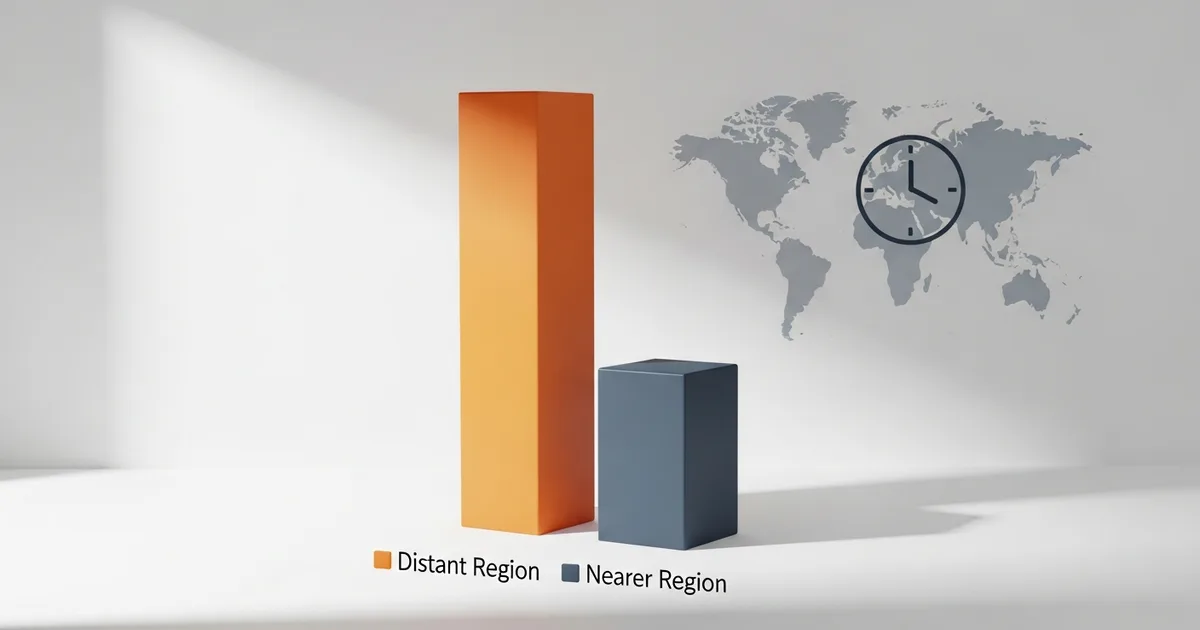
Where the math shifts is candidate quality signal and speed of vetting for time-zone-dependent roles. A nearshore recruiter working in a 0 to 2 hour time overlap with US business hours can run live interviews and reference checks in real time. Offshore recruiting across an 8 to 13 hour gap often means asynchronous vetting, which stretches the search timeline even when the recruiting fee itself is lower. If the role needs daily overlap with a US team once hired, that same time-zone gap doesn’t go away after onboarding, it becomes a permanent coordination cost. For a full breakdown of when each model fits, see our comparison of onshore vs nearshore vs offshore outsourcing.
Read the offshore discount as a real tradeoff, not a strictly better deal. Cheaper search cost, slower or more asynchronous vetting, and a permanent time-zone gap once the role is filled. Nearshore trades a slightly higher recruiting fee for a faster search and a workforce that overlaps with US hours from day one.
Hidden Costs to Budget For Before You Sign
The recruiting fee is rarely the whole bill. Four costs tend to surface after the contract is signed, not before.
Employer-of-record fees. If your recruiting partner doesn’t handle payroll and compliance directly, you’ll need an EOR to legally employ someone in another country, and that’s a separate monthly cost, not part of the recruiting fee itself.
Misclassification risk. Treating a nearshore hire as an independent contractor when local labor law says they’re an employee can trigger penalties and back-pay obligations. This is one of the largest hidden liabilities in DIY international hiring, and it has nothing to do with the recruiter’s skill, it’s a compliance gap most companies don’t know to ask about.
Buyout fees. Some recruiting partners charge a conversion fee, often 15 to 25 percent of first-year salary, if you want to bring a placed contractor on as a direct hire later. Ask this before signing, not after you’ve found someone worth keeping long-term.
Currency and payment friction. Recurring payments in local currency can shift 3 to 8 percent a year with exchange rate swings. Ask upfront which side of that swing you’re absorbing.
Ask specifically whether the quoted recruiting fee is genuinely all-in, or a starting number with compliance, EOR, and buyout costs layered on separately once you’re already committed.
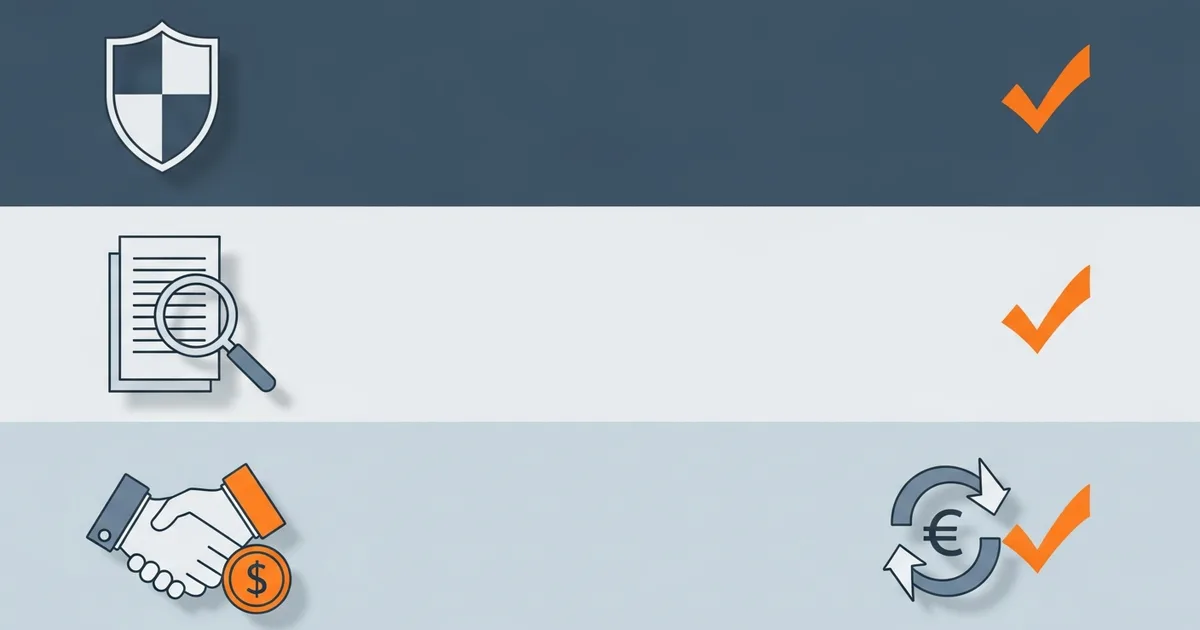
Top to bottom: employer-of-record and compliance fees, misclassification risk, buyout fees, currency conversion risk
How to Evaluate a Nearshore Recruiting Partner’s Pricing
Convert every quote to a single number before comparing across partners: total cost for a completed placement, including the search fee, any EOR or compliance pass-through, and the buyout term if you’ll eventually want to convert the hire. A $1,200 flat fee that hides a $4,000 buyout clause isn’t actually cheaper than a $2,500 flat fee with no buyout at all.
Ask three questions on the first call, out loud, before you get a written proposal. What’s the replacement guarantee if the hire doesn’t work out in the first 90 days? Is compliance and EOR handled directly or passed through to a third party? And does the fee scale with salary, or is it fixed regardless of what the role pays? A partner that answers all three without hedging is usually one worth trusting with the search. Our guide to choosing a nearshore staffing agency covers the rest of the vetting checklist beyond pricing specifically.
Disclosed plainly: we place nearshore talent for a living, so we have a stake in companies choosing this route. That said, a single short-term contract role probably doesn’t justify a full recruiting engagement, a freelance platform might serve that need better. Nearshore recruiting earns its cost advantage on ongoing or recurring roles, not one-off gigs measured in weeks.
Kore BPO is a US-owned staffing partner that has placed more than 6,200 hires for 257 clients across accounting, tech, marketing, and operations. We quote search fees separately from ongoing staffing rates, because a client who can see where each dollar goes trusts the number more than one asked to take it on faith. Our guide to what a nearshore staffing agency actually does covers the engagement models behind that number.
Questions US Companies Ask About Nearshore Recruiting Cost
How much does nearshore recruiting actually cost per hire?
Anywhere from $800 to $12,000 or more per hire in 2026, depending on the fee model. Flat-fee nearshore recruiters typically charge $800 to $3,000 per placement for support and admin roles, and $5,000 to $12,000 for technical or specialized roles. Contingency-based nearshore recruiters charge 15 to 30 percent of first-year salary, similar to US agencies, just against a lower base salary.
Is nearshore recruiting cheaper than hiring a US recruiter?
Yes, usually significantly. US recruiting fees average $15,000 to $25,000 per hire once agency commissions, job board spend, and internal recruiter time are counted. Nearshore recruiting partners typically land in the $800 to $12,000 range per hire, and time-to-fill runs closer to 2 to 3 weeks versus roughly 44 days domestically.
What’s the difference between a flat fee, contingency, and retainer for nearshore recruiting?
A flat fee is a fixed dollar amount per placement regardless of the candidate’s salary, common with nearshore staffing partners. Contingency charges a percentage of first-year salary, paid only when a placement is confirmed, and gets more expensive as salaries rise. A retainer is a recurring monthly fee, often $2,500 to $12,000 a month, that covers ongoing recruiting capacity rather than a single search. Nearshore recruiting tends to favor flat-fee and retainer models because they don’t punish lower LATAM salaries with a shrinking effective service.
What hidden costs show up in nearshore recruiting that aren’t in the headline price?
Employer-of-record fees for payroll and compliance if the recruiting partner doesn’t handle employment directly, misclassification risk if a contractor is treated as an employee under local labor law, buyout fees if you want to convert a placed contractor to a direct hire, and currency conversion costs on recurring payments. None of these show up in the initial recruiting quote unless you ask directly, in writing, before signing.
How fast can a nearshore recruiter fill a role compared to a US search?
Nearshore recruiting partners with an existing talent pipeline in Latin America typically fill a role in 2 to 3 weeks. A comparable US search through a traditional agency or internal recruiter averages roughly 44 days from requisition to accepted offer, and can stretch past 60 days for specialized or senior roles.
Cost and timeline figures in this post reflect mid-2026 nearshore recruiting market data for dedicated placements. Fee structures vary by agency and role complexity, and figures are pre-overhead unless otherwise noted. Kore BPO internal placement figures refer to aggregate outcomes from 2024-2025.
Related Articles



Ready to See What a Nearshore Search Actually Costs?
Kore BPO gives you an itemized nearshore recruiting quote, search fee, timeline, and terms broken out separately.
Get an Itemized Quote