What Is a Brazil Staffing Agency? A 2026 Guide for US Companies


- 01What a Brazil Staffing Agency Actually Does
- 02Why US Companies Are Staffing From Brazil Now
- 03The Real Cost Savings
- 04The Timezone Edge
- 05The Real Currency Risk Nobody Mentions in the Pitch
- 06Legal and Compliance Considerations
- 07Best Cities to Staff From
- 08How to Choose a Brazil Staffing Partner
- 09How Kore BPO Staffs Brazil Differently
- 10Common Questions
A client asked us in July why their Brazil hiring quote looked so much higher than the Mexico quote they’d gotten the week before. It was supposed to be a comparable mid-level developer role. It wasn’t a pricing error, though. Brazil’s labor law adds more to the base salary than almost anywhere else in Latin America. A partner who quotes you a number without walking through why is either padding the markup or hoping you won’t ask. Once we broke it down line by line, the Brazil hire still came out well ahead of a US hire. It just wasn’t the flat 60% discount the marketing copy implies.
The Largest Talent Pool in the Region, With a Cost Structure Worth Understanding First
A Brazil staffing agency is a firm that recruits, vets, and places Brazil-based workers into roles for US companies. That typically happens through staff augmentation, an employer of record arrangement, or a full BPO engagement, depending on how much of the legal and payroll load you want handed off. That’s the same three-model split behind every Latin America staffing conversation. What sets Brazil apart, though, is scale on one side of the ledger and complexity on the other. It has by far the biggest developer population in the region, and a labor code, the CLT, that adds real cost most comparison articles gloss over.
This guide covers what a Brazil staffing agency actually does, and what the country’s talent and cost picture look like heading into 2026. It also covers the currency and compliance load most sales pitches skip past, and how to tell a partner who’s built for that complexity from one who’s just hoping the topic doesn’t come up.
What a Brazil Staffing Agency Actually Does
Three service models get sold under the same “Brazil staffing” label, and they solve different problems. Staff augmentation places a Brazil-based worker inside your existing team structure, embedded day to day, while the agency handles recruiting, payroll, and CLT compliance in the background. Employer of record, however, is narrower by design. A licensed EOR entity becomes the legal employer of record in Brazil, so your company never has to register a local entity just to hire one or two people. Onboarding typically runs 1 to 2 weeks. A full BPO arrangement goes further still, handing an entire function like data engineering or back-office operations to the partner rather than just supplying headcount.
Where the Real Markup Hides
The pricing conversation and the compliance conversation get blurred together constantly, and that’s usually where the real markup hides. A staff augmentation quote typically bundles recruiting, payroll, and a management fee into one monthly number. An EOR quote, by contrast, is closer to true employment cost plus a flat per-head service fee. Neither structure is wrong on its own. Still, a partner who can’t walk you through which one you’re actually paying for, line by line, is worth a second question before you sign. If you want the regional overview this country-specific breakdown sits inside, our guide to Latin America staffing covers the full picture across countries.
Most of Kore BPO’s Brazil placements run through staff augmentation, sourced against roles in software development, data engineering, and technical leadership, since that’s where the country’s talent bench runs deepest.
Why US Companies Are Staffing From Brazil Now
Three things line up at once, and none of them are a short-term blip.
Start with sheer scale. Brazil is home to Latin America’s largest developer population, and it’s the top source country for software engineer placements in the region. Even so, Brasscom projects a shortfall of roughly 400,000 technology professionals by the end of 2026, with the ICT sector adding around 33,000 new formal jobs this year alone. That gap matters for a US company hiring from outside the country. A shortage inside Brazil doesn’t shrink the talent pool available to you. It just means local companies are competing harder for the same people, which is exactly where a staffing partner with existing sourcing relationships earns its fee.
A Consistent Top-Three Nearshore Destination, With One Real Tradeoff
Second, Brazil already carries real weight in nearshore hiring, not a theoretical one. It consistently ranks as one of the top three nearshore hiring destinations for US companies. In fact, it’s regularly the strongest of the group specifically for senior engineers, data, AI, and technical leadership roles. The tradeoff is language. Brazil’s primary language is Portuguese, not Spanish. While English proficiency in the country’s tech workforce is improving, we don’t position it as an edge over Mexico or Colombia. On the 2025 EF English Proficiency Index, Brazil and Colombia score within a point of each other. Brazil’s advantage is talent depth and seniority, not a language head start.
Third, the country’s startup and venture ecosystem kept growing through 2026. That matters because it’s a leading indicator of where experienced technical talent is being trained and retained, not just where it’s cheapest to hire. That growth is regional, too, not confined to São Paulo, which shows up directly in where the best staffing options are, covered later in this guide.
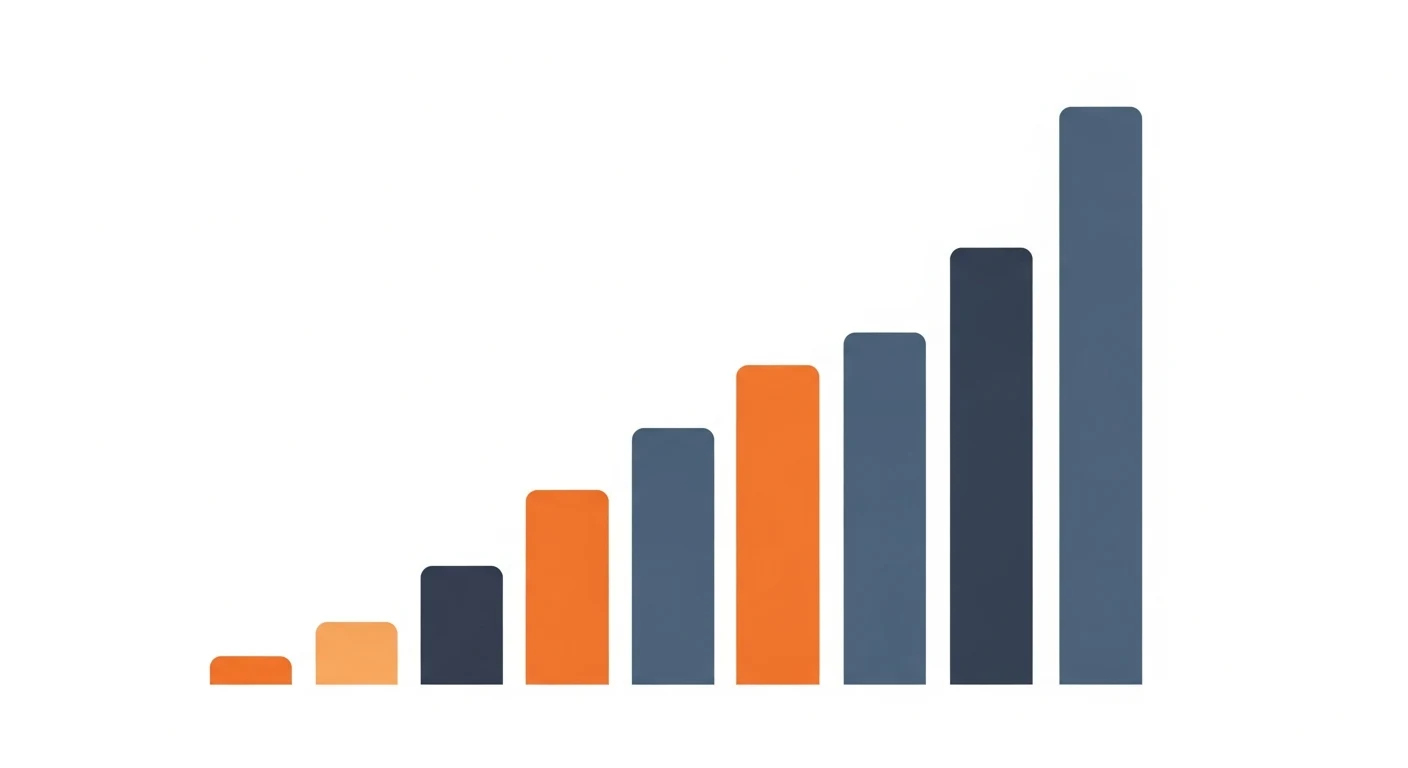 2026, ~400K talent shortfall
Brazil, largest LatAm developer pool
2026, ~400K talent shortfall
Brazil, largest LatAm developer pool
The Real Cost Savings
Brazil developers run well below equivalent US salaries once every mandatory employer cost gets added back in. That said, the gap is narrower than some of the region’s other markets, because Brazil’s employer contributions run higher. That’s not the number a recruiter quotes on the first call. It’s the number after FGTS, the 13th salary, the constitutional vacation bonus, and the staffing partner’s own fee all land on top of base pay.
ERI SalaryExpert puts Brazilian senior software engineer pay at a level that runs a median of roughly $42 an hour in 2026 once converted. That’s about 38% below the US senior median of $68 an hour. On a fully loaded, all-in annual basis, Brazil software developer compensation runs from around $30,000 for junior hires to $78,000 for senior engineers. Most mid-to-senior roles land between $42,000 and $78,000.
| Role | US Fully Loaded Cost | Brazil All-In Cost |
|---|---|---|
| Junior software developer | $89,000–$100,000/yr | $30,000–$38,000/yr |
| Mid-level software developer | $166,000–$186,000/yr | $42,000–$58,000/yr |
| Senior software developer | $256,000–$287,000/yr | $58,000–$78,000/yr |
| Data analyst | $95,000–$115,000/yr | $34,000–$48,000/yr |
Multiply that per-role gap across a full engineering team and the number stops being a talking point in a sales deck. It starts showing up as real budget headroom finance actually notices at quarter close.
Where the Savings Can Erode Fast
None of that gap shows up automatically, either. Brazil’s CLT labor code, covered in more detail below, adds meaningfully more to base pay than Mexico’s or Colombia’s employment frameworks do. That’s exactly why compliance missteps can erode the savings fast if a partner isn’t handling it correctly. A staffing partner’s markup typically runs 25% to 40% on top of base compensation for staff augmentation, or 15% to 25% for an EOR arrangement. Either way, ask for the breakdown in writing before you sign.
The Timezone Edge
Brasília time stays on UTC-3 year-round, with no daylight saving shift since Brazil discontinued the practice in 2019. That simplifies recurring meetings in a way that countries with seasonal clock changes can’t match. In US standard time, Brasília sits 2 hours behind Eastern. A 9am call in São Paulo, in other words, lands at 11am in New York, well inside the same working day on both ends.
 US business day
Brazil, ~6 hrs overlap, no DST
US business day
Brazil, ~6 hrs overlap, no DST
That overlap matters most in the moments a fully async setup handles worst. A blocked pull request, a scope question that needs a real answer, a demo that has to happen live for a stakeholder who’s only free at 10am Eastern. A Brazil-based engineer can sit in on that call without staying up past midnight to do it, and a US product manager doesn’t have to wait until tomorrow to unblock someone.
That doesn’t make offshore staffing the wrong call for every workload. Overnight QA runs, 24-hour support coverage, and genuinely async work all play to offshore regions’ strengths in ways same-timezone staffing can’t match on cost. But for iterative, collaborative work, where a team is actively building something together in real time, Brazil’s year-round overlap is one of the more dependable in the region. It never shifts with the seasons the way US-Mexico or US-Colombia overlap can.
The Real Currency Risk Nobody Mentions in the Pitch
Here’s the part most Brazil staffing content skips entirely, and it’s worth asking about before anything else. 2026 is a Brazilian election year. Historically, the Brazilian real has moved on political risk premium as much as on economic fundamentals during election cycles. 2026 bank consensus forecasts for the real cluster around 5.70 to 5.90 per US dollar by year-end, with real downside risk toward 6.20 or weaker if fiscal or political headlines turn sour. That’s not a reason to avoid staffing in Brazil, though. Instead, it’s a reason to ask how the contract is structured before signing one.
The workaround the market settled on years ago is simple, and it’s the same one Kore BPO uses. Specifically, price and pay compensation in US dollars, not reais, and let the local employer of record or staffing entity handle the real-denominated employer contributions on the back end. That way, the worker still gets paid predictably. Meanwhile, your budget doesn’t move every time the exchange rate does. By contrast, a partner who quotes you a real-denominated rate for a role you’re paying for in dollars is passing currency risk straight to you without saying so.
Ask any Brazil staffing partner directly whether compensation is quoted and paid in USD, and who absorbs real volatility on the employer-contribution side. If the answer is vague, that vagueness is the actual risk, not the exchange rate itself.
Legal and Compliance Considerations
Brazil’s CLT labor code carries mandatory obligations well beyond a US-style offer letter. This, in fact, is the single biggest reason Brazil hiring costs more per headcount than Mexico or Colombia once everything is added up.
What the CLT Actually Adds to Base Pay
FGTS, Brazil’s mandatory severance fund administered through the national social security system, requires an 8% monthly deposit on top of base salary. Employer social security contributions, INSS, typically run 20% to 28.8% depending on the company’s risk classification. Every formal employee is entitled to a 13th salary, paid in two installments across the year. On top of that, a constitutional vacation bonus equal to one third of a month’s pay kicks in after 12 months of employment. Add work accident insurance and third-party education and social program contributions on top of all that, and statutory employer costs alone typically run 30% to 36% above base salary. Once standard customary benefits are included, total cost of employment commonly reaches 65% to 80% above base.
 FGTS, 8% monthly
INSS, 20–28.8%
13th salary, 2 installments a year
Total cost of employment, +65–80%
FGTS, 8% monthly
INSS, 20–28.8%
13th salary, 2 installments a year
Total cost of employment, +65–80%
An EOR is the right structure for the first several hires in Brazil, before volume justifies standing up a local entity. Past that point, most companies shift toward a direct entity paired with a staffing partner for sourcing, since the per-head EOR fee starts costing more than the entity itself. Either way, this is the layer where a staffing partner earns its fee. Getting CLT wrong isn’t a paperwork problem, it’s a liability problem, and it’s the reason we don’t recommend trying to manage Brazil compliance without a partner who does it daily.
Not Sure If Brazil Is the Right Fit for Your Team?
Compare your role requirements against Kore BPO’s Brazil talent bench in a quick call.
Best Cities to Staff From
São Paulo carries the deepest overall bench and the most senior fintech and enterprise engineering talent in the country, which makes it the default pick for complex product work. That said, three other hubs are worth knowing about specifically because they solve a different problem than São Paulo’s scale and cost.
Three Alternatives Worth Knowing Beyond São Paulo
Florianópolis earned formal recognition as Brazil’s “Startup Capital” under federal law in 2024, and it now hosts more than 600 technology companies generating roughly $780 million in annual revenue. Overall, it’s a strong fit for product and engineering roles where team culture and retention matter as much as raw headcount.
Recife, home to the Porto Digital innovation district, houses roughly 350 tech entities built around university partnerships and public incentives, with particular strength in software and digital product design. In general, it tends to run more cost-effective than São Paulo without a meaningful drop in talent depth.
Belo Horizonte’s “San Pedro Valley” ecosystem grew organically out of a startup community rather than top-down government planning, with its surrounding state of Minas Gerais now home to more than 780 startups. It’s worth a look for healthtech, fintech, and adtech-adjacent roles specifically.
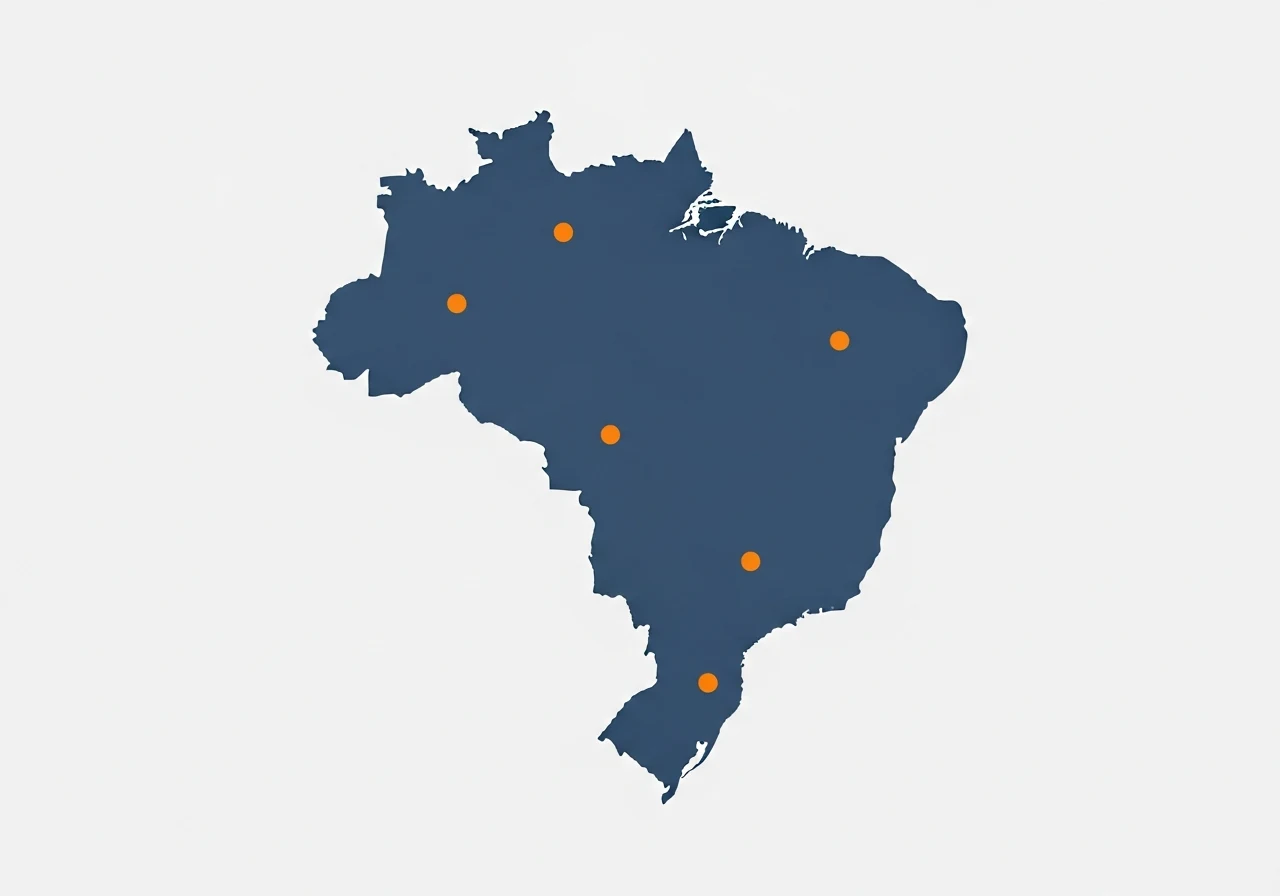 Recife
Belo Horizonte
Sao Paulo
Florianopolis
Recife
Belo Horizonte
Sao Paulo
Florianopolis
Picking a lower-cost hub purely to save another 10% to 15% on rate, for a role that actually needs São Paulo’s fintech-specific depth, is a common way to end up re-sourcing three months later. Match the city to the skill depth the role needs, not just the number on the rate card.
How to Choose a Brazil Staffing Partner
Ask four questions before signing anything. If you skip one, you’ll likely find out why it mattered later, at a worse time than now.
- Is compensation quoted and paid in US dollars, and who specifically absorbs real volatility on the employer-contribution side?
- Break down the CLT-related employer cost line by line. A partner who won’t show FGTS, INSS, 13th salary, and vacation bonus separately is usually hiding markup inside a bundled number.
- Who owns compliance if a misclassification or CLT dispute surfaces mid-contract? That answer needs to be in the contract, not a verbal assurance.
- What happens if the placed worker leaves in month four? A real replacement guarantee separates an actual staffing partner from a lead-gen operation wearing a staffing label.
A partner who answers the CLT and currency questions specifically, in writing, on the first call, is worth a second call. One who changes the subject isn’t.
How Kore BPO Staffs Brazil Differently
Kore BPO is a staffing and BPO firm placing data, software, and operations talent with US companies. We run out of Dallas, Texas, with a Latin America bench built through our office in San Jose, Costa Rica. We also keep a second office in Hyderabad, India, for offshore roles outside the Americas. We’ve placed 6,236 hires across 257 clients so far. Every Brazil placement we run is priced and paid in USD from day one, with CLT compliance handled by our local partner network, not treated as a footnote we add after the contract is signed.
If you’re hiring one role a year in Brazil, a direct local staffing partner probably makes more sense than paying for the multi-country infrastructure we’ve built. We’re not the right fit for everyone. Saying that up front, honestly, costs less than a bad reference six months in. What we do bring is $0 upfront fees, candidate resumes back in 2 to 5 business days, and a fee structure you can see the moment you ask for it. If you want to see how that’s worked out for other companies, our case studies cover real placements, not composite examples built to look good in a deck.
Questions Worth Asking Before You Sign
Is Brazil more expensive to staff than Mexico or Colombia?
Per headcount, yes, somewhat. Brazil’s CLT labor code adds more in mandatory employer contributions than Mexico’s or Colombia’s frameworks, typically 65% to 80% above base salary on a total cost basis. Even so, Brazil still runs well below US hiring costs. The gap is just narrower than some neighboring markets, which is exactly why the savings need to be calculated correctly rather than assumed from a generic LatAm percentage.
How much cheaper is a Brazil developer than a US one, realistically?
Roughly 30% to 70% less on a fully loaded basis depending on seniority and role, with average savings landing between $35,000 and $64,000 per hire. A senior Brazilian developer runs around $42 an hour against roughly $68 for an equivalent US hire, before any staffing partner fee.
Do I need a legal entity in Brazil to hire there?
Not right away. An employer of record can legally employ Brazil-based workers on your behalf without you registering a local entity, which typically covers the first several hires. After that, though, a direct entity paired with a staffing partner for sourcing usually costs less than continuing to pay per-head EOR fees.
What’s the timezone difference between Brazil and the US?
Brasília time runs 2 hours behind US Eastern in standard time, year-round, since Brazil doesn’t observe daylight saving. That gives teams roughly 6 hours of overlapping business hours every day, without the seasonal shift that affects some other Latin America pairings.
Does Brazil have an English proficiency advantage over Mexico or Colombia?
No, not meaningfully. Brazil’s English proficiency scores sit close to Colombia’s on the current EF English Proficiency Index, essentially tied. Brazil’s real edge is talent depth and seniority in software, data, and AI roles, not a language head start over its neighbors.
Which Brazilian city should I staff from?
São Paulo for complex fintech or enterprise product work, since it holds the deepest senior bench in the country. Florianópolis, Recife, or Belo Horizonte for roles that don’t need that specific depth, where cost efficiency and strong regional talent pools matter more than access to São Paulo’s density.
Related Articles



Ready to Staff Your Next Role From Brazil?
Kore BPO sources vetted Brazil talent for US teams, priced and paid in USD from day one. Pre-screened candidates in 2–5 business days. $0 upfront.
Talk to Our Team