Live Chat Outsourcing: What It Is and Why E-Commerce Brands Are Switching to It in 2026

A shopper lands on a product page at 9 p.m., has one question about sizing or a return policy, and gets no answer for four minutes. Most of the time, that shopper doesn’t wait. They close the tab, and the cart goes with them. That single moment, repeated thousands of times a month across a growing store, is the real reason live chat outsourcing has moved from a nice-to-have to a standard line item in e-commerce operating budgets in 2026.
We build outsourced support teams for US e-commerce brands through our BPO solutions, and the question we hear most from founders and CX leads is not whether live chat helps conversion. Every store owner already knows it does. The real question is whether it’s realistic to staff that chat window well without adding a full department. This article breaks down what live chat outsourcing actually is, what it costs against building the function in-house, and why so many e-commerce brands are making the switch this year.
What Is Live Chat Outsourcing
Live chat outsourcing is the practice of routing your website’s chat widget, in-app messaging, and social DMs to a third-party team of trained agents instead of hiring and managing that function internally. The chat window on your site looks the same to the customer. What changes is who sits behind it, how many hours a day someone is actually watching it, and what it costs your business to keep it staffed.
A dedicated outsourced setup is different from a shared call-center queue answering chats for a dozen unrelated brands at once. A dedicated model assigns agents who are trained specifically on your product catalog, your return policy, your shipping carriers, and your brand tone, and who work inside your existing tools: Gorgias, Zendesk, Shopify Inbox, Intercom, or whatever help desk your store already runs on. The agents show up in your team roster and your reporting dashboards. They just aren’t on your local payroll.
This is distinct from AI chatbots, which answer routine questions automatically but hand off anything nuanced. Most e-commerce brands running outsourced live chat in 2026 use a hybrid setup: a chatbot resolves simple order-status and FAQ questions, and human agents pick up everything involving judgment, an unhappy customer, or a policy exception. The outsourcing decision is about who staffs that human layer.
Why E-Commerce Brands Are Switching in 2026
Three forces are pushing more e-commerce operators toward outsourced live chat this year, and none of them are new trends so much as pressure that finally hit a breaking point.
Response speed has become a conversion metric
Live chat has consistently shown among the highest satisfaction ratings of any support channel, and the reason is simple: it answers a purchase-blocking question in the moment a customer is still deciding to buy. Shoppers who engage with live chat before checkout convert at meaningfully higher rates than those who don’t, and the effect compounds when the reply lands in under a minute. A slow chat window doesn’t just fail to help, it actively costs the sale it was supposed to save.
Coverage windows no longer match a 9-to-5 team
E-commerce traffic doesn’t clock out at 5 p.m. Evening and weekend browsing, driven by mobile shopping and time-zone-spread customer bases, now accounts for a large share of total site visits for most direct-to-consumer brands. Staffing that coverage with local, full-time hires means paying for shift differentials, overnight staffing, and weekend rotations, or simply accepting that a third of your traffic gets no live support at all.
Seasonal volume makes fixed headcount the wrong shape
Q4 chat volume for most e-commerce brands runs several times higher than an average month. A team sized for November and December sits underused the rest of the year. A team sized for the average month gets overwhelmed during Black Friday and the holiday rush, right when a slow response costs the most revenue. Outsourced teams scale up and down with volume instead of locking a business into one fixed headcount number year-round.
Build a Dedicated Live Chat Team
Trained agents on your tools, your policies, and your brand voice.
How Outsourced Live Chat Actually Works
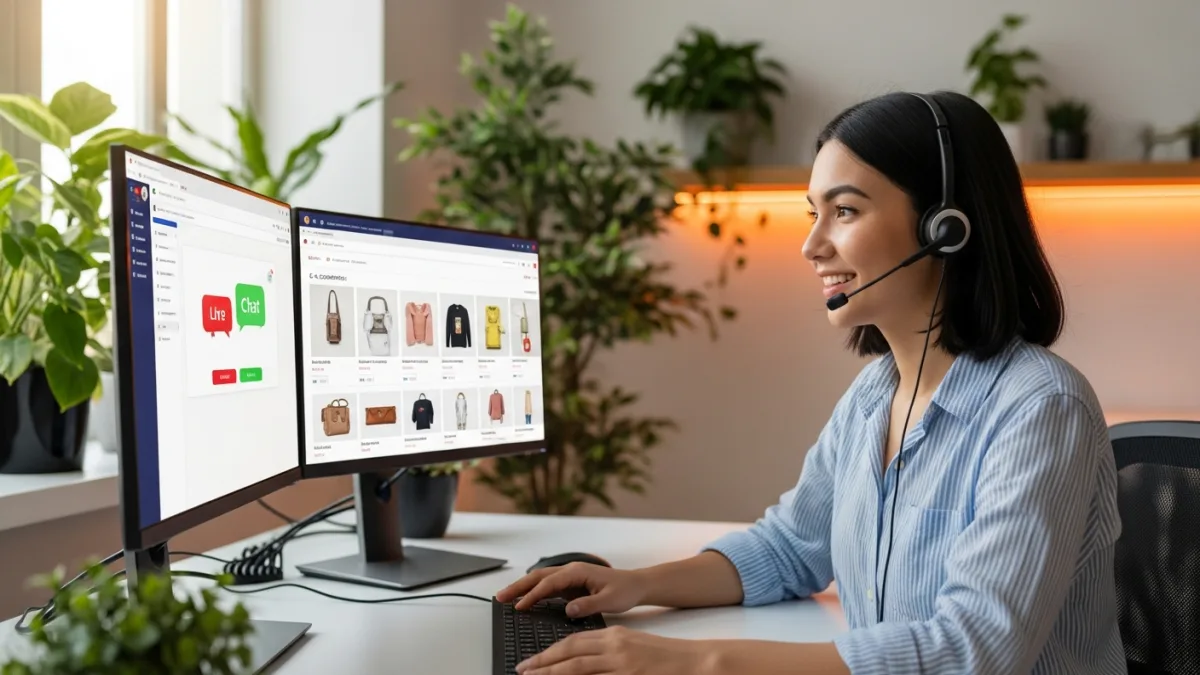
The mechanics are more straightforward than most first-time buyers expect. A partner assigns dedicated agents to your account, trains them on your product catalog, policies, and tone using your existing documentation, and connects them to whatever help desk platform you already run. Nothing about your customer-facing tooling changes.
Onboarding typically runs two to four weeks: agent selection, a knowledge-base handoff, shadowing your current team or a training script, then a soft launch where a supervisor reviews transcripts before agents go fully live. From there, most partners report on the same metrics an in-house team would track: first response time, resolution time, CSAT score, and chat-to-conversion rate where that data is available.
The best setups keep a named point of contact and a small, consistent agent pool rather than rotating through a large anonymous pool. Consistency matters more in live chat than in almost any other outsourced function, because customers can tell within one exchange whether the person on the other end actually knows the brand.
What It Costs vs an In-House Team
| Factor | In-House Hire | Outsourced Live Chat |
|---|---|---|
| Typical fully loaded cost | $45,000 to $65,000/yr per agent | 60-70% below in-house |
| Coverage hours | Usually 9-to-5, one time zone | 24/7 achievable with shift coverage |
| Hiring and onboarding time | 4 to 8 weeks to fill a role | 2 to 5 business days for resumes |
| Scaling for Q4 volume | Requires new hires or overtime | Flexes with volume, no new headcount |
| Turnover risk | Full rehire and retrain cycle | Managed by partner, still a factor |
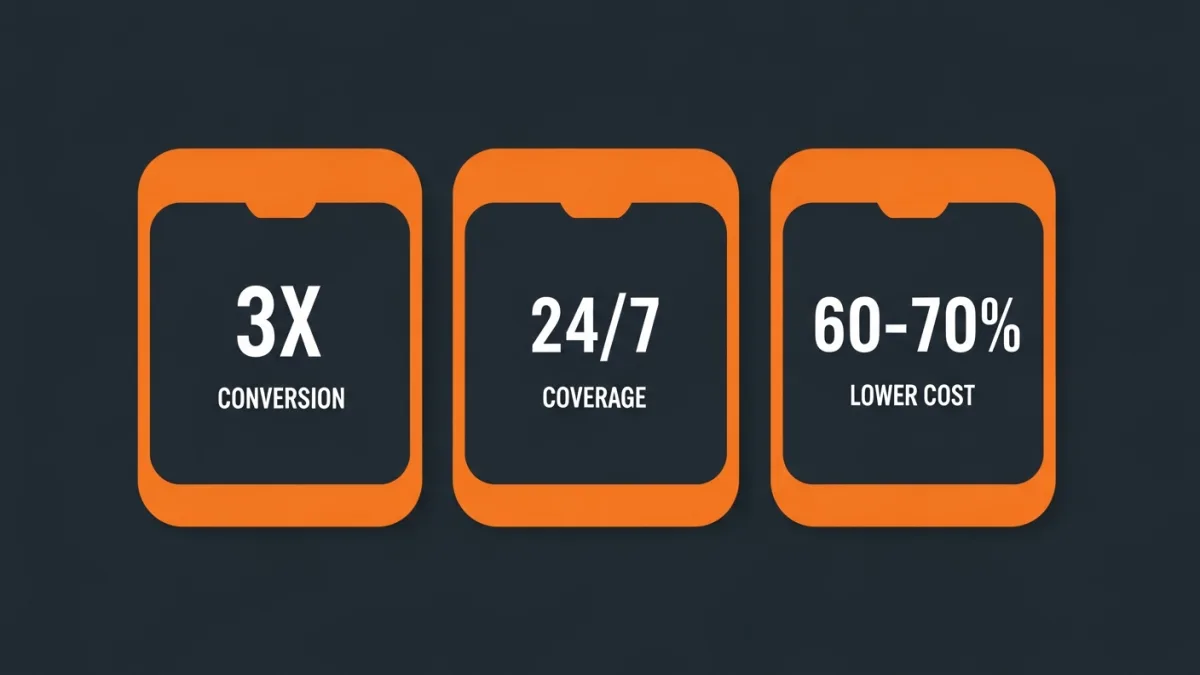
The cost gap is the headline, but it’s not the only reason brands switch. A fully loaded local live chat agent, once payroll taxes, benefits, software seats, and management overhead are counted, commonly runs $45,000 to $65,000 a year in most US metros. A dedicated outsourced agent handling the same workload typically comes in at 60 to 70% less, largely because of geographic wage differences rather than any cut in training or tooling quality.
What surprises most first-time buyers is not the savings percentage, it’s how much of that gap comes from avoided overhead rather than lower quality. A well-vetted outsourced agent working inside Gorgias or Zendesk, trained on the same macros and tone guide a local hire would use, produces comparable resolution quality at a fraction of the fully loaded cost.
What to Look for in a Live Chat Outsourcing Partner
- Dedicated agents, not a shared pool. Ask directly whether your account gets named agents who only work your brand, or agents rotating across multiple unrelated clients.
- E-commerce platform experience. A partner who has trained agents on Shopify, Gorgias, and Klaviyo ramps faster than one starting from zero on your stack.
- Transparent reporting. First response time, resolution time, and CSAT should be visible to you in real time, not summarized once a month.
- A real onboarding process. A partner who can start agents the same week they’re hired without a documented training plan is a red flag, not a selling point.
- Escalation clarity. Know in advance exactly which situations get escalated back to your internal team versus resolved independently.
Mistakes That Undermine the Switch
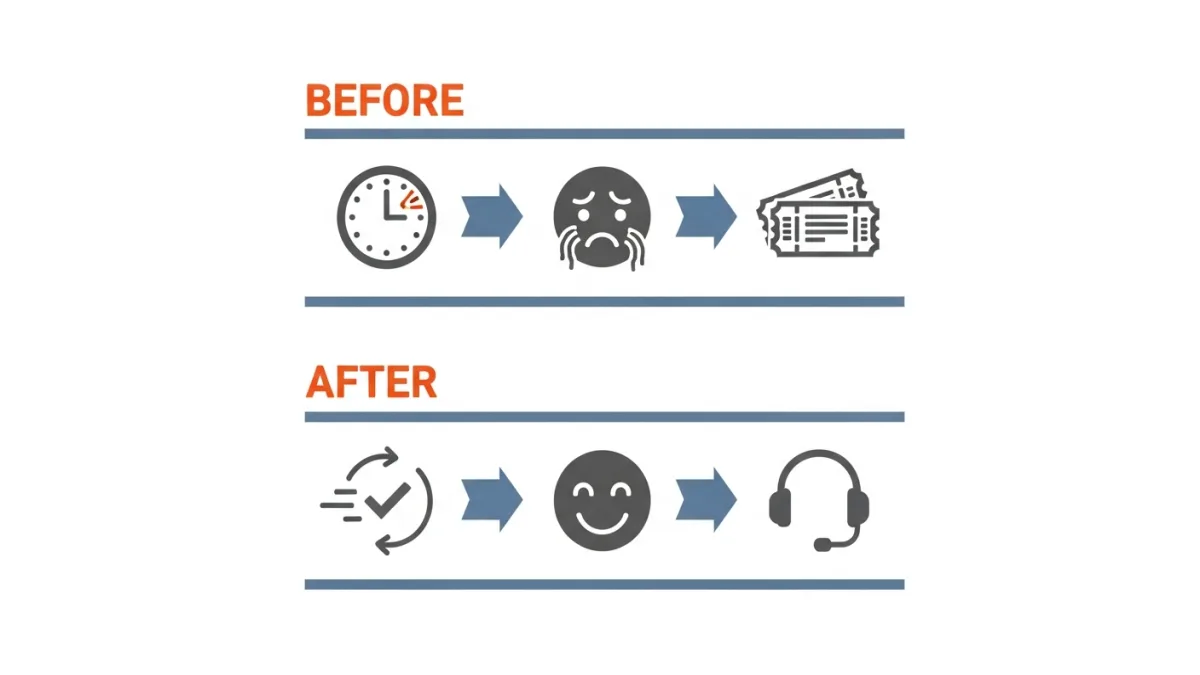
The brands that get disappointing results from live chat outsourcing almost always make one of the same three mistakes. First, they hand over a thin or outdated knowledge base and expect agents to fill the gaps by guessing, which produces inconsistent answers fast. Second, they treat the partner as a one-time setup instead of an ongoing relationship, skipping the regular transcript reviews and macro updates that keep quality high as the catalog and policies change. Third, they pick a generalist call-center vendor over one with direct e-commerce experience, then wonder why agents don’t understand chargebacks, return windows, or platform-specific quirks.
None of these are arguments against outsourcing live chat. They are arguments for choosing a partner built for e-commerce specifically, and for treating onboarding as a real process rather than a formality. For a broader look at how outsourced support affects customer loyalty over time, see our analysis of how outsourced customer service improves retention for e-commerce brands. And if you’re comparing specific vendors rather than the model itself, our roundup of the best BPO companies for live chat support in 2026 breaks down pricing and response times by provider.
FAQ
What is live chat outsourcing in simple terms?
Live chat outsourcing means a third-party team of trained agents answers your website chat instead of your own employees. The chat widget looks identical to customers. The agents work inside your existing help desk tools and follow your policies, but they’re managed and staffed by an outside partner rather than sitting on your payroll.
How can a business economically outsource live chat without losing quality?
The economical path is a dedicated agent model rather than a shared call-center queue. Dedicated agents trained specifically on your catalog and tone cost far less than local hires while still producing consistent quality, because the savings come from geographic wage differences, not from cutting training or reducing agent attention.
What are the main live chat BPO benefits for a growing e-commerce brand?
The core benefits are faster response times that protect conversion, 24/7 coverage without overnight shift premiums, flexible staffing that scales up for Q4 without new permanent headcount, and a cost typically 60 to 70% below a fully loaded local hire for comparable resolution quality.
Is outsourced live chat as good as an in-house team?
Quality depends far more on training and partner selection than on whether the agent is in-house or outsourced. A dedicated, well-trained outsourced agent working inside your actual help desk tools typically performs comparably to a local hire. Quality gaps usually trace back to a shared-pool vendor or a thin knowledge base, not the outsourcing model itself.
How long does it take to launch an outsourced live chat team?
Most e-commerce brands go from initial resumes to a live, trained agent in two to four weeks. Kore BPO typically delivers shortlisted candidate resumes within 2 to 5 business days, with onboarding and a supervised soft launch following before agents handle chats independently.
Cost and benchmark figures in this article are drawn from aggregated e-commerce customer support industry data and Kore BPO client engagements as of 2026. Actual results vary by catalog complexity, chat volume, and platform.
Related Articles



Ready to Staff Your Live Chat?
Get vetted, dedicated live chat agents trained on your tools and your brand, resumes in 2 to 5 business days.
Contact Us