AI Chatbots vs Live Chat Outsourcing: Which Reduces Support Costs More in 2026?

Every CFO asking this question already has a chatbot vendor’s slide deck in their inbox promising 70% cost reduction. What they don’t have is the other side of that math, the recontact rate, the churn from customers who hang up on a bot, the hidden labor cost of babysitting a model that confidently gives wrong answers. We’ve run both models for clients, and the honest answer is neither one wins alone.
This isn’t a “chatbots are dead” piece, and it isn’t a “humans are obsolete” piece either. It’s a cost breakdown, with real per-interaction numbers, that tells you where each model actually pulls ahead and where it quietly costs you more than the invoice shows. If you’re deciding how to staff support for 2026, Kore BPO’s customer service outsourcing solutions page is a useful companion to this breakdown once you know which mix you need.
The Real Cost Math: What Each Channel Actually Costs Per Interaction
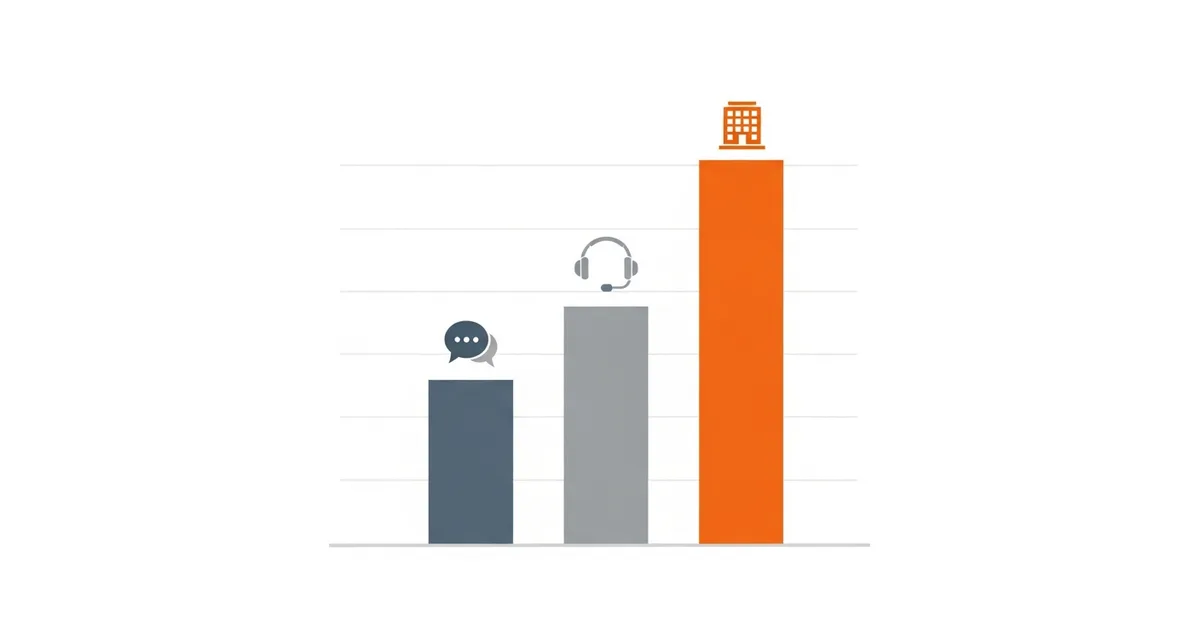
Start with the number everyone quotes and rarely explains. An AI chatbot resolving a routine ticket costs somewhere between $0.50 and $0.70 per interaction once you amortize platform licensing, prompt engineering, and monitoring. Some lighter-weight bots run closer to $0.20 to $0.50, though those tend to be the ones that escalate more often, which quietly pushes cost back onto whichever human catches the overflow.
A fully loaded US-based human agent runs $20 to $25 per interaction in most estimates, sometimes higher once you count benefits, management overhead, and idle time between tickets. IBM’s research on AI customer service costs, drawn from a study of 412 enterprises, found the average cost per interaction dropped from $4.60 to $1.45 after deploying AI for tier-1 handling, a 68% reduction. That’s the number chatbot vendors lead with, and it’s real, but it’s an average across a whole ticket mix, not a universal per-ticket price.
Live chat outsourcing sits in the middle, and the model you pick changes the math a lot. Offshore live chat runs $0.40 to $0.90 per chat on volume pricing, or $8 to $15 an hour, translating to roughly $1,200 to $3,500 a month per dedicated seat. Nearshore lands at $15 to $22 an hour. Onshore US-based live chat climbs to $25 to $35 an hour, or $6,000 to $8,000 a month per in-house seat once benefits and management are baked in.
| Channel | Cost Per Interaction | Monthly Per Seat | Resolution Ceiling |
|---|---|---|---|
| AI Chatbot | $0.50 – $0.70 | Platform fee, not per-seat | ~41.2% median tier-1 |
| Offshore Live Chat | $0.40 – $0.90 | $1,200 – $3,500 | Near total, human judgment |
| Nearshore Live Chat | $0.60 – $1.20 (est.) | $2,000 – $4,000 | Near total, human judgment |
| Onshore Live Chat | $1.50 – $2.80 (est.) | $6,000 – $8,000 | Near total, human judgment |
Notice something in that table. Offshore live chat’s per-interaction cost overlaps almost entirely with chatbot pricing at the low end. That surprises most people walking into this decision assuming AI is automatically the cheaper lane. It isn’t, once you’re comparing it against offshore rather than onshore human labor.
Here’s the nuance that gets buried in vendor pitches. Gartner projects conversational AI will cut contact center labor costs by $80 billion in 2026, a genuinely large number. But Gartner also predicts that by 2030, the cost per resolution for generative AI will actually exceed the cost of an offshore human agent, north of $3 per resolved ticket, as model costs, guardrails, and human review layers stack up. AI gets more expensive to run well over time. Offshore labor, historically, does not scale costs the same way.
Where Chatbots Win: High Volume, Routine, Tier 1
Chatbots earn their keep on volume. Password resets. Order status. Shipping windows. “What’s my account balance.” Questions with one right answer that never changes based on context. Feed a well-trained bot 10,000 of those a month and it will outperform any human team on cost, speed, and consistency, every time. Not most of the time. Every time.
The number that matters here is deflection rate, the share of tickets a bot resolves without a human touching them. Zendesk’s CX Trends research and Salesforce’s State of Service data both land on a median tier-1 deflection rate of 41.2%. Top-quartile deployments, the ones with genuinely good training data and tight scope, hit 58.7%. That gap between median and top quartile is almost entirely a function of how disciplined the team was about keeping the bot’s job narrow. Bots that try to do everything deflect less than bots that do three things extremely well.
Speed compounds the savings. A chatbot answers in under a second, 24 hours a day, with zero queue time regardless of how many customers hit it at once. Try scaling a human team to absorb a flash sale traffic spike without either overstaffing for the other 350 days a year or making customers wait. You can’t, not economically. This is the honest case for AI in support, and it’s a strong one within its lane.
Where Live Chat Outsourcing Still Wins
Outside that lane, the math flips fast. Complex billing disputes. Anything involving a customer who’s already upset. Retention conversations where a wrong answer costs you the account. High-value sales chat where a live agent closing a deal is worth ten times what a bot deflecting a ticket saves you. None of that is a bot’s job, and pretending otherwise is how companies end up with a Reddit thread about their broken support experience.
There’s a quality gap that rarely makes the vendor slide deck. AI-resolved tickets carry an 11.3% recontact rate within 72 hours, meaning the customer comes back because the first answer didn’t actually fix it. Human-resolved tickets recontact at 8.7%. That 2.6-point gap sounds small until you multiply it across ticket volume and realize every recontact is a second cost the chatbot’s per-interaction price never showed you.
Offshore live chat outsourcing gives you human judgment at a price that still beats onshore by 40 to 70%, which is the whole reason the model exists. For companies weighing whether outsourced or in-house is the smarter call for their support function, Kore BPO’s guide to the best US customer support outsourcing firms breaks down how to evaluate providers on more than just price per seat. And if live chat specifically, rather than full omnichannel support, is the gap you’re trying to fill, this comparison of the top BPO live chat providers is worth a look before you sign anything.
The AI Frustration Problem 2026 Data Actually Shows
Now the part chatbot vendors leave out of the deck entirely. A Forbes Business Council piece drawing on Qualtrics research found AI-driven customer service failure rates run roughly four times higher than AI’s general use failure rate across other business functions. Support is a harder problem for AI than most people assume, because it’s not really about answering questions. It’s about reading a frustrated human correctly on the first try.
Somewhere between 79% and 85% of Americans still say they prefer a human for customer service overall. Narrow that to complaints specifically and it jumps to 85% wanting a person, no bot in the loop at all. Flip it around to routine inquiries and preference for chatbots actually rises to 75 to 82%, which tells you the preference isn’t anti-AI, it’s context-dependent. People want efficiency for simple stuff and a human the moment something goes wrong.
The frustration number is the one that should worry anyone betting the whole support strategy on AI. Somewhere around 29 to 31% of customers say they’d hang up or abandon the interaction entirely if connected to an AI agent instead of a human, and reported frustration with AI support has climbed from roughly 54% to 59% year over year. That’s not a rounding error. That’s a trend line pointing the wrong direction for anyone deploying AI without a fast, visible path to a human.
None of this means chatbots don’t work. It means chatbots deployed without an obvious, low-friction escalation path are quietly training your customers to distrust your brand, one bad interaction at a time.
Build the Right Support Mix
Kore BPO places dedicated offshore live chat and support agents to run alongside your AI stack, not instead of it.
The Hybrid Model That’s Actually Winning in 2026
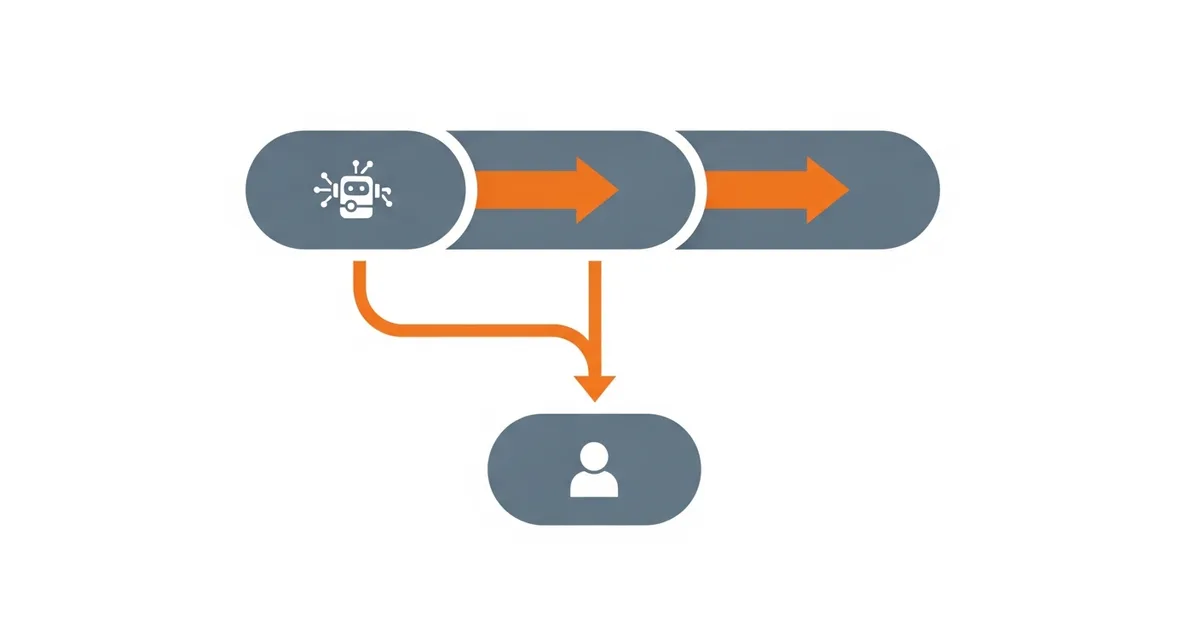
Here’s what the data keeps pointing toward, and it’s not a compromise, it’s a genuinely better architecture. In the highest-performing setups we’ve seen, AI handles roughly 80% of routine volume, and human agents take the remaining 20% that actually needs judgment, empathy, or authority to bend a policy. Structured this way, hybrid support delivers 35% higher customer satisfaction than a chatbot-only deployment, and 67% of high-performing service organizations now run this model instead of picking one lane and staying in it.
The mechanics matter more than the ratio. AI triages every incoming ticket, resolves what it can resolve confidently, and hands off anything with rising sentiment risk, ambiguous intent, or a customer who’s already typed “this is the third time I’ve asked” before a human ever sees it. Done well, the customer barely notices the handoff. Done badly, they type their whole problem twice to two different systems that don’t share context, which is worse than either channel running alone.
This is also where custom AI tooling earns its cost, rather than a generic off-the-shelf bot. A model trained specifically on your product, your policies, and your actual ticket history triages more accurately and escalates less unnecessarily than a stock chatbot bolted onto your helpdesk. Kore BPO’s breakdown of custom GPTs in outsourcing covers how purpose-built AI models are changing what “AI-assisted support” actually means, well past the generic chatbot most people picture when they hear the phrase.
Decision Framework: Which One Should You Actually Pick?
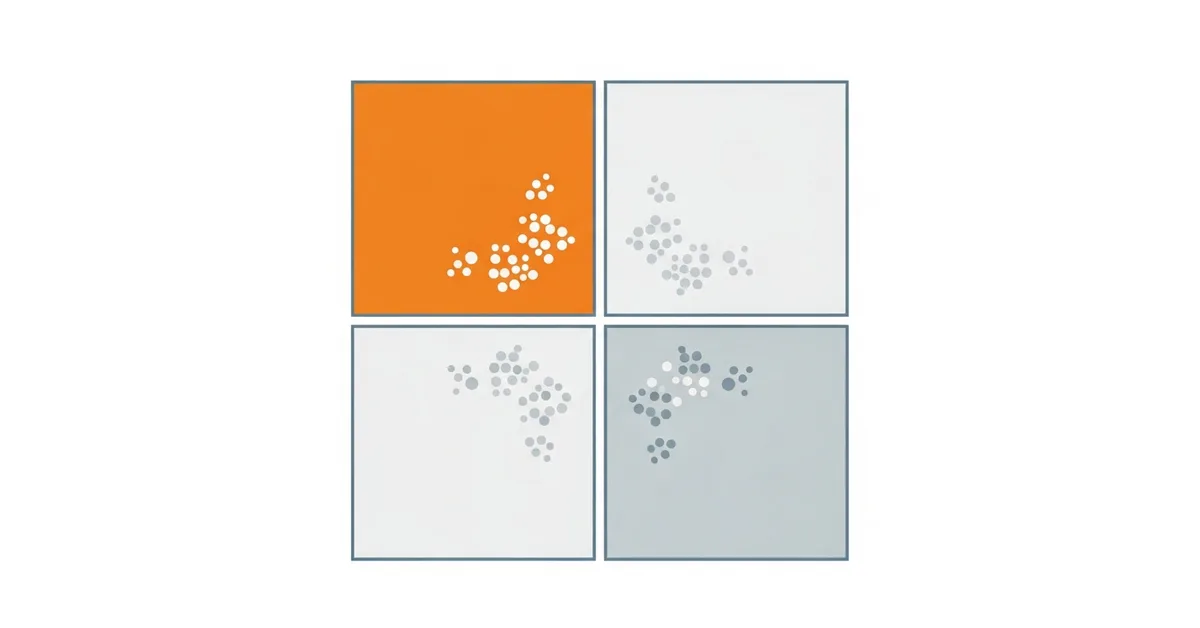
Skip the theory and run your own numbers through this. It comes down to two variables, ticket volume and ticket complexity, and most companies overweight one and ignore the other.
There’s a threshold that doesn’t get talked about enough, and it’s the most useful number in this whole piece. Below roughly 200 chats a day, a dedicated offshore live chat seat, running $5,000 to $10,000 a month fully staffed, is usually cheaper than licensing a feature-rich AI platform once you count setup, training data curation, and ongoing prompt maintenance. Above 200 chats a day, AI starts winning on cost and consistency, because the fixed cost of running the platform spreads across enough volume to beat per-seat human pricing.
- Under 200 chats/day, high complexity mix: Go offshore live chat outsourcing. The AI platform overhead won’t pencil out at that volume.
- Under 200 chats/day, mostly routine: Still consider a lean dedicated agent over AI licensing. You may not have enough volume to justify the platform spend either way.
- Over 200 chats/day, mostly routine: AI chatbot as the front line, small human team for the deflection gap and escalations.
- Over 200 chats/day, high complexity or high customer value: Hybrid model, AI triage plus a dedicated offshore or nearshore human team sized to the roughly 20% that needs judgment.
Run your actual numbers against this before signing anything. A vendor demo will always show you their best-case deflection rate, not your ticket mix’s real one. Pull three months of your own ticket data, tag it by complexity, and you’ll know within an afternoon which quadrant you’re actually in.
Common Questions About AI Chatbots vs Live Chat Outsourcing
Is an AI chatbot actually cheaper than live chat outsourcing?
Per interaction, usually yes, chatbots run $0.50 to $0.70 versus $0.40 to $0.90 for offshore live chat, which is closer than most people expect. Once you factor in the 41.2% median deflection rate and the recontact cost of tickets AI resolves incorrectly, the real gap narrows further, and above a certain volume threshold live chat outsourcing can end up cheaper on a per-resolved-ticket basis.
What percentage of support tickets can AI actually handle on its own?
The median tier-1 deflection rate sits at 41.2%, per Zendesk CX Trends and Salesforce State of Service benchmarks, with top-quartile deployments reaching 58.7%. The gap between median and top performers usually comes down to how narrowly the bot’s scope is defined, not the underlying technology.
Do customers actually prefer talking to a human over a chatbot?
For complaints and anything emotionally charged, yes, roughly 85% want a human. For routine questions like order status or account balances, preference flips toward chatbots at 75 to 82%. The pattern is context-dependent, not a blanket rejection of AI in support.
What is the hybrid AI and human support model everyone’s talking about?
It’s a setup where AI handles the roughly 80% of tickets that are routine and repeatable, and a human team, often offshore or nearshore, takes the remaining 20% that needs judgment or empathy. It delivers about 35% higher customer satisfaction than an AI-only deployment, and 67% of high-performing service organizations already run it.
At what ticket volume does AI start beating live chat outsourcing on cost?
Roughly 200 chats a day is the rough threshold. Below that, a dedicated offshore live chat seat, typically $5,000 to $10,000 a month fully staffed, tends to be cheaper than licensing and maintaining a full AI platform. Above it, AI’s fixed platform cost spreads across enough volume to win on cost and consistency.
Will AI eventually replace offshore live chat outsourcing entirely?
Unlikely in the near term. Gartner’s own projections show generative AI’s cost per resolution rising past offshore human agent cost by 2030 as model and oversight costs stack up, while offshore labor pricing has historically stayed comparatively stable. The realistic trajectory is hybrid, not full replacement.
What Clients Say About Building the Right Support Mix
We were running AI-only support and our CSAT was quietly bleeding out. Kore BPO helped us build a small offshore team to catch what the bot couldn’t, and our recontact rate dropped almost immediately.
The offshore live chat team Kore BPO placed for us handles everything our chatbot escalates. Customers can’t tell the handoff happened, which was the entire point.
Neither channel is the villain here, and neither is a silver bullet. Chatbots earn their cost advantage on volume and routine tickets. Live chat outsourcing earns its keep on everything that actually needs a person paying attention. The companies getting this right in 2026 aren’t the ones that picked a side. They’re the ones that built the triage layer connecting both, and sized each piece to their real ticket mix instead of a vendor’s best-case slide.
If you’re trying to figure out where your own support function should land on that spectrum, Kore BPO’s customer service outsourcing solutions page is a good next stop for building the human side of that mix without guessing at headcount.
Related Articles



Ready to Build Your Support Mix?
Kore BPO places dedicated offshore live chat and customer support professionals for US businesses. Pre-screened resumes in 2 to 5 days.
See Support Solutions