Omnichannel Customer Service vs Single-Channel Outsourcing: What the 2026 Data Shows

A customer calls your support line about a shipping delay. Two days later, they email the same question because nobody followed up. Then they message you on Instagram, frustrated, and have to explain the whole thing a third time.
That’s not a staffing problem. It’s a channel problem. And it’s exactly the gap that outsourced customer service teams are supposed to close, whether you’re running a single support inbox or five channels at once.
The question we hear most from growing companies isn’t whether to outsource support. It’s whether to outsource it as one unified omnichannel operation or keep it simple with a single channel, usually phone or email, and add more later. Both are legitimate strategies. The 2026 data just makes clear which one fits which stage of company, and where the tradeoffs actually sit.
Omnichannel vs Single-Channel Outsourcing, Defined
These two terms get used loosely, so it’s worth being precise before comparing costs or outcomes.
Single-channel outsourcing means a BPO partner handles one specific channel, most commonly phone support or email support, as a standalone operation. The agents on that channel don’t see what happened on any other channel. If a customer also emails after calling, that’s a second, disconnected interaction.
Omnichannel outsourcing means phone, email, live chat, social messaging, and SMS all route through one platform with a shared customer history. An agent picking up a chat can see that the same customer called yesterday, what was discussed, and what’s still unresolved. The channel is different. The context isn’t lost.
This is different from multichannel, a term that gets confused with omnichannel constantly. Multichannel just means you offer several channels, each running its own separate queue and history. You can be multichannel and still make customers repeat themselves every time they switch. Omnichannel is specifically about the shared context, not the number of channels available.
That distinction matters because the cost of getting it wrong is measurable. According to the Zendesk CX Trends Report, 60% of customers say they’ve had to repeat information to a new agent because the previous one didn’t have it. That’s not a minor annoyance. It’s one of the top reasons customers describe a brand’s support as frustrating, regardless of how fast any individual response was.
What the 2026 Data Actually Shows About Omnichannel vs Single-Channel Performance
Set the marketing claims aside for a second. Here’s what the named research actually says when you compare the two models directly.
Customers expect channel continuity, and most companies don’t deliver it. Salesforce’s State of Service research puts the figure at 71 to 73% of customers who expect to switch channels mid-conversation without repeating themselves. Single-channel setups can’t offer that by definition. There’s only one channel to switch within.
Retention gaps between the two models are real, though the most-cited number needs context. Aberdeen Group’s widely referenced research found companies with strong omnichannel engagement retain 89% of customers on average, compared to 33% for companies with weak omnichannel practices. That statistic gets recycled constantly because it’s dramatic, and it’s worth treating as directional rather than a guarantee. Retention depends on far more than channel architecture. But the direction, more integrated support correlating with better retention, holds up across every newer study we reviewed.
Channel mix has shifted since single-channel strategies were designed. Live chat and in-app messaging now account for roughly 45% of customer service interactions, according to Zendesk’s broader statistics roundup, ahead of phone at 18% and email at 5%, with self-service handling the rest. A single-channel phone operation built five years ago is now covering a shrinking share of how customers actually prefer to reach out.
AI-assisted resolution has become a real differentiator, and it works better with unified data. Salesforce reports that AI and automation now resolve 60 to 75% of inbound contacts end-to-end in mature omnichannel setups, up sharply from around 22% just a few years earlier. That lift depends on the AI having access to full conversation history across channels. A single-channel operation with no shared data can’t get the same benefit from the same automation tools.
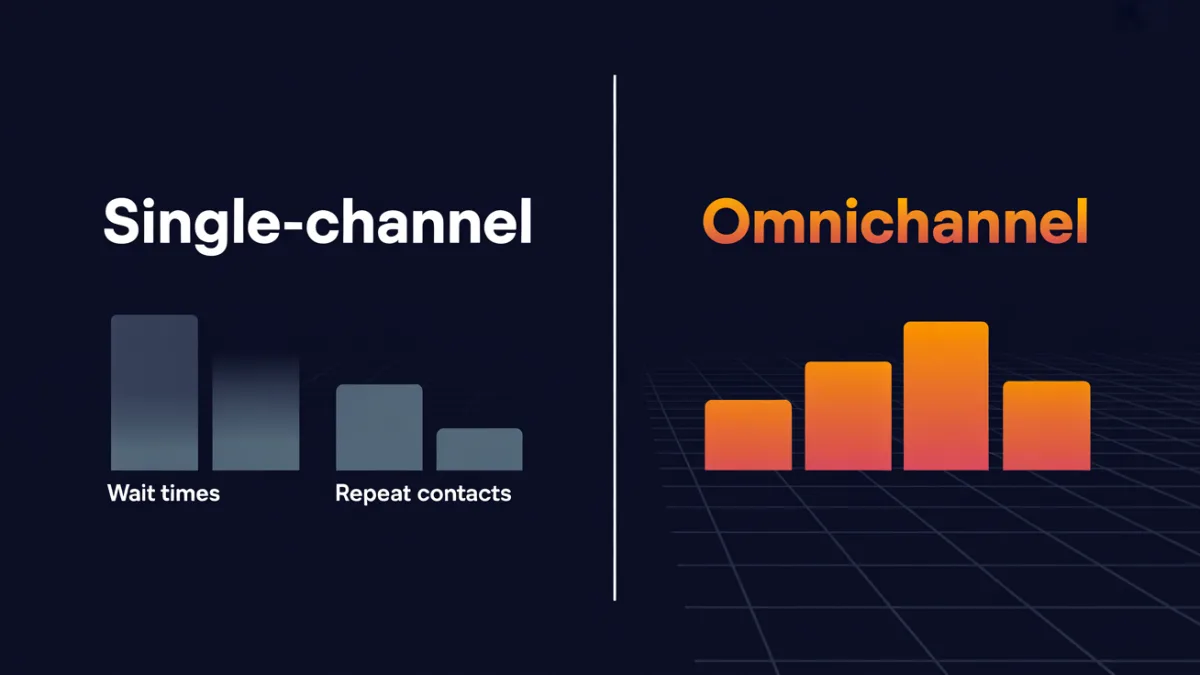
Single-channel (left) vs. omnichannel (right): directional comparison across wait times, repeat contacts, and retention, based on the Zendesk, Salesforce, and Aberdeen figures cited above.
None of this means single-channel outsourcing is obsolete. It means the performance gap is real and growing, and companies should decide with that gap in view, not against a vague sense that “more channels is better.”
Does Omnichannel Customer Service Actually Cost More to Outsource?
Yes, upfront. That’s the honest answer, and it’s the part most vendor content skips. Standing up phone, chat, email, and social with a shared platform costs more than staffing a single queue. The real question isn’t whether omnichannel costs more on day one. It’s what happens after that.
McKinsey‘s research on integrated customer operations found that companies running unified omnichannel service see service delivery costs drop by up to 35% once the model matures, largely because fewer repeat contacts and better channel-shifting reduce the total volume of work agents have to handle. A customer who gets resolved on chat in one pass never generates a follow-up call. A customer who has to repeat themselves generates two or three interactions for what should have been one.
Per-contact costs vary sharply by channel, and this is where the real savings opportunity sits. Voice remains the most expensive channel to staff and run. Chat and messaging cost a fraction of that. Self-service, when it actually resolves the issue, costs almost nothing per interaction.
| Channel | Typical Cost Per Contact | Best Fit For |
|---|---|---|
| Phone / Voice | $6 to $12 | Complex issues, high emotion, sales-adjacent calls |
| Live Chat / Messaging | $2 to $5 | Quick questions, order status, mid-complexity issues |
| $3 to $6 | Non-urgent, documentation-heavy requests | |
| Self-Service / Knowledge Base | ~$0.10 | Repetitive, high-volume, low-complexity questions |
Blended nearshore omnichannel outsourcing pricing typically lands at $12 to $18 per agent-hour, depending on the country, coverage hours, and how many channels a single agent is trained across. That’s a market benchmark, not a fixed rate, and it moves with volume and complexity. What it tells you directly is that the labor cost of running omnichannel isn’t dramatically higher than single-channel per hour. The savings show up in fewer total contacts needed to resolve the same issue.
Not Sure Which Model Fits Your Volume?
Kore BPO builds both single-channel and full omnichannel support teams, sized to where your business actually is.
Most companies see cost-neutral or better economics within about nine months of a full omnichannel rollout. The first one to three months usually cost more than they save, because of platform setup, agent cross-training, and process documentation. That upfront investment is real. It just isn’t permanent.
When Is Single-Channel Outsourcing Still the Right Call?
Every piece of vendor content on this topic pushes omnichannel as the obviously correct answer. It usually isn’t, at least not yet, for a meaningful share of companies. Here’s when staying single-channel, or phasing in channels slowly, is the better business decision.
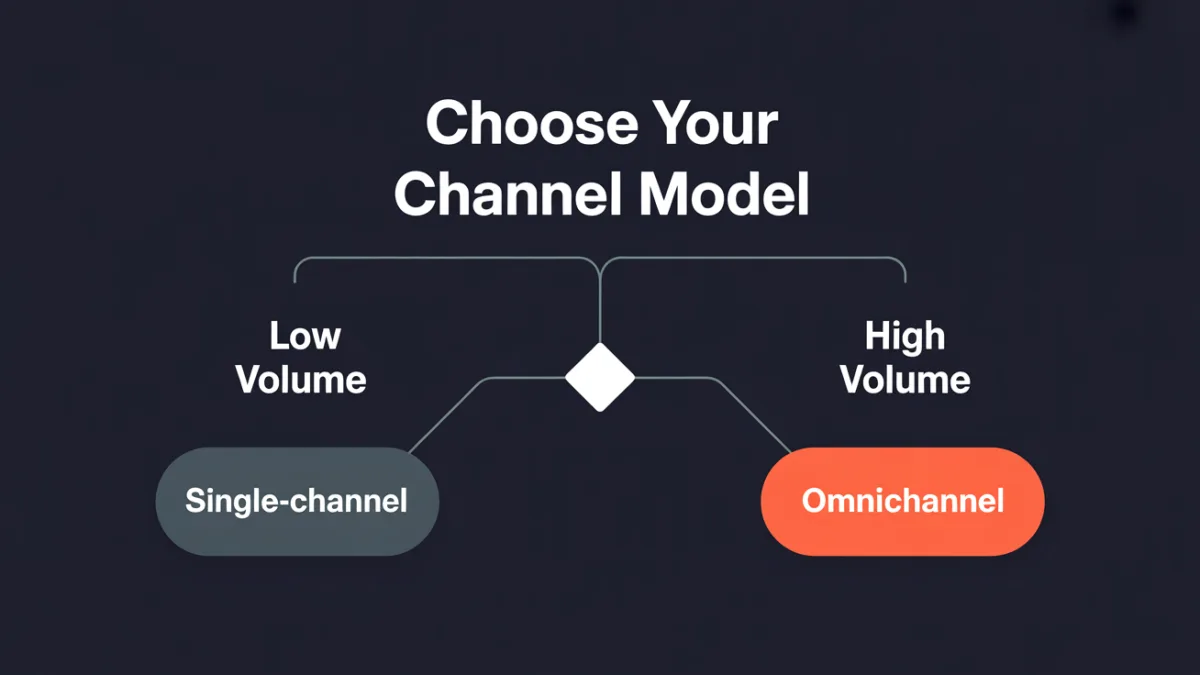
Decision framework: route to single-channel or omnichannel based on ticket volume, channel concentration, process maturity, and cash position.
None of these are permanent conditions. They’re stages. The right move for most growing companies is starting single-channel or dual-channel, proving the process is documented and stable, then expanding into a unified omnichannel setup once volume and cash flow support it.
Which Channels Should SMBs Outsource First?
When a company is ready to move past a single channel, the sequence matters more than trying to launch everything at once.
| Wave | Channels | Why This Order |
|---|---|---|
| Wave 1 | Phone, email, live chat | Cover the highest-volume channels and the widest range of issue complexity first |
| Wave 2 | SMS | Add once volume and repeat-contact patterns justify a dedicated queue |
| Wave 3 | Social messaging | Bring on once brand presence and inbound social volume make it worth staffing |
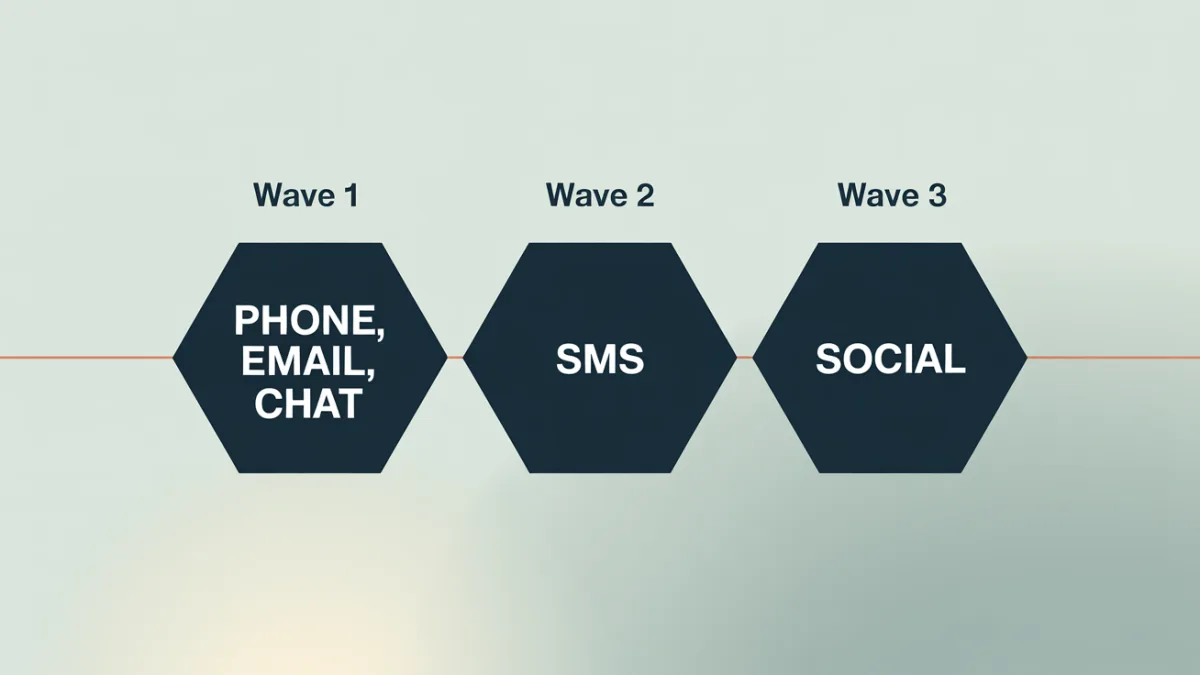
Phased channel rollout: phone, email, and chat first, then SMS, then social messaging as volume justifies each addition.
Ecommerce companies tend to move through this sequence faster than service businesses, since order status and shipping questions generate volume across chat and social almost immediately. A Shopify store outsourcing customer support, for example, often sees chat overtake email within the first few months simply because that’s where shoppers already are.
The mistake to avoid is launching all channels simultaneously before any single one is stable. A phone queue that’s still working through its scripts and escalation paths shouldn’t be cloned across four more channels at the same time. Get one channel right, then extend the same standards to the next.
How Do You Know Your Current Setup Is Already Losing You Customers?
Some of these signs are obvious once you’re looking for them. Most companies aren’t, because the cost shows up as quiet churn rather than a single visible failure.
If customers are contacting you more than once for the same issue, that’s not a volume problem. It’s a context problem, and it’s the exact gap omnichannel outsourcing is built to close.
- Agents regularly ask customers to “remind me what this is about” on a second or third contact
- Your average handle time keeps climbing even though ticket complexity hasn’t changed
- Support tickets and social messages about the same issue never get linked together
- Customers are switching to a different channel specifically because a previous one didn’t work
- CSAT scores are strong on your primary channel but you have no visibility into satisfaction on the others
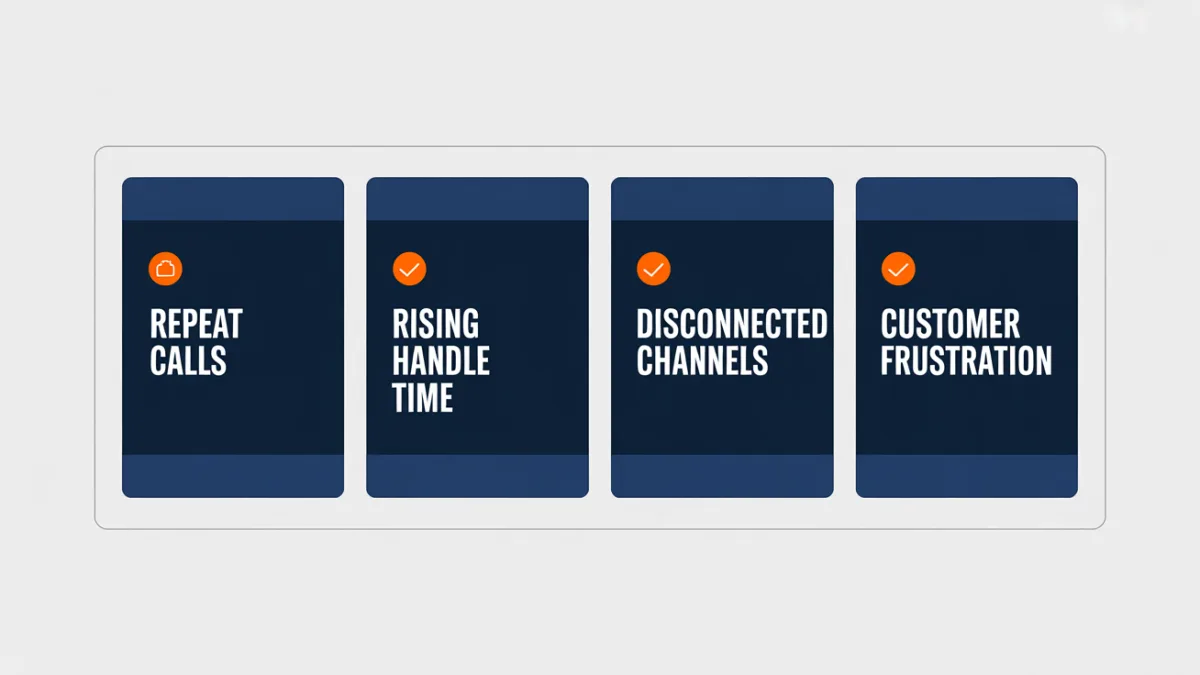
Four warning signs: repeat calls, rising handle time, disconnected channels, and rising customer frustration.
If two or more of these sound familiar, the gap probably isn’t staffing. It’s the lack of shared context between channels, and it’s worth pricing out what an experienced outsourcing partner would charge to fix it against what the repeat contacts are already costing you.
Omnichannel and single-channel outsourcing aren’t competing philosophies. They’re two stages of the same maturity curve. Companies with low, predictable volume on one channel are usually better off staying lean. Companies watching customers repeat themselves across email, chat, and social are past the point where a single channel serves them well, and the 2026 data backs that up with real cost and retention numbers, not just vendor talking points.
The decision that matters isn’t omnichannel versus single-channel in the abstract. It’s whether your current setup matches where your ticket volume, channel mix, and customer expectations actually sit today.
Common Questions About Omnichannel and Single-Channel Outsourcing
Is omnichannel customer support more expensive than single-channel support?
Upfront, yes. Standing up a shared platform across phone, chat, email, and social costs more than running one channel. Most companies see that investment turn cost-neutral or better within about nine months, once fewer repeat contacts and channel-shifting bring total service costs down. The first one to three months typically cost more than they save because of setup and agent cross-training.
Does omnichannel customer service actually reduce costs?
Yes, once it matures. McKinsey’s research on integrated customer operations found service delivery costs drop by up to 35% for companies running mature omnichannel support, largely because customers get resolved faster and generate fewer repeat contacts. The savings come from reduced total contact volume, not from omnichannel being cheaper to staff hour for hour.
What channels should a small business outsource first?
Phone, email, and live chat first, since together they cover the highest volume and the widest range of issue complexity. SMS and social messaging make sense as a second wave once the first three channels are stable and volume justifies dedicated coverage. Launching every channel at once before any one of them is running smoothly usually creates more problems than it solves.
How much does omnichannel customer support outsourcing cost per agent?
Blended nearshore omnichannel outsourcing typically runs $12 to $18 per agent-hour, depending on the country, coverage hours, and number of channels an agent is trained across. Per-contact costs vary more by channel than by the omnichannel setup itself: voice runs $6 to $12 per contact, chat and messaging run $2 to $5, and self-service resolutions cost closer to $0.10.
What’s the difference between omnichannel and multichannel outsourcing?
Multichannel means a company offers several separate channels, each with its own queue and history that don’t talk to each other. Omnichannel means those channels share one platform and one customer history, so an agent on any channel can see what happened everywhere else. The difference shows up directly in the data: 60% of customers say they’ve had to repeat themselves to a new agent because that shared context was missing, according to Zendesk’s 2026 CX Trends Report.
Related Articles



Not Sure Which Channel Strategy Fits?
Kore BPO builds right-sized customer service teams for US companies, whether that’s one channel done well or a full omnichannel operation.
See Customer Service Solutions