What Is an India Staffing Agency?


An India staffing agency recruits, screens, and places India-based talent with US companies, then handles the local employment relationship, statutory contributions, and compliance, either directly or through a partnered employer of record. Its real draw is scale. Bangalore and Hyderabad alone hold millions of engineers, and mid-level developers typically run $1,500 to $3,500 a month all in versus $8,000 to $12,000 in the US. The tradeoff is a 9.5 to 10.5 hour timezone gap that leaves only one realistic daily overlap window, which changes how a team needs to work rather than whether it’s worth doing.
Why This India Staffing Agency Guide Exists
Type “India staffing agency” into a search bar and the results blur together fast. Every listing promises the same thing, deep talent, low cost, fast turnaround. None of them tell you what actually happens between the sales call and your first standup with someone in Bangalore, or why that 9:30pm message from your new hire lands at 9:30pm his time and not yours.
India is the largest, deepest, and most mature market in Kore BPO’s offshore staffing lineup, and also the one with the biggest honest tradeoff. This guide covers what an India staffing agency actually does, what the real numbers look like, and where this market earns its reputation versus where the pitch runs ahead of reality.
What an India Staffing Agency Actually Does
Peel back the pitch deck and an India staffing agency is running three separate jobs. Knowing which one you’re paying for changes what you should expect from the relationship.
What an India Staffing Agency Recruits For
Recruiting comes first: sourcing, screening for the specific technical stack or role, and running interviews before a candidate ever reaches your team. As a result, the quality of that early screening step tends to predict most of what happens later in the relationship.
Employment and Compliance Come Next
Employment comes second. A US company generally can’t put an India-based worker directly on its own payroll, so the agency, or a partnered employer of record, becomes the legal local employer and handles the labor contract, payroll, and statutory benefits under Indian law. Compliance, meanwhile, is the third job, and it runs continuously. In practice, that means staying current on Employees’ Provident Fund (EPF) contributions, Employees’ State Insurance (ESI) where it applies, gratuity accrual, and, increasingly, data protection obligations under India’s Digital Personal Data Protection Act.
In short, some firms only handle recruiting and pass the rest to a separate EOR, while others run all three functions themselves. Neither approach is automatically better. However, an agency that can’t clearly explain which one it is has usually skipped the harder question of what happens when something goes wrong six months in.
Why US Companies Use One
Two things set India apart from every other market in the offshore conversation, and neither is the generic cost pitch every country makes.
Scale: Why an India Staffing Agency Wins on Talent
Scale is the first, and it isn’t close. Bangalore alone holds roughly 2.1 million tech professionals across more than 700 global capability centers, per 2026 GCC location research from Plugscale, and carries around half the country’s AI and machine learning talent. Meanwhile, Hyderabad has built a genuinely deep second hub: over 500,000 tech professionals with 18% year-over-year growth and lower attrition than Bangalore, according to the same research. Between them, India’s broader GCC and IT-BPM workforce runs into the millions, a bench no other offshore market in this series comes close to matching for specialized engineering, data, or AI roles.
 Bangalore, ~2.1M tech professionals
Hyderabad, 500K+, 18% YoY growth
Bangalore, ~2.1M tech professionals
Hyderabad, 500K+, 18% YoY growth
Cost: Real Savings, With a Rising Floor
Cost is the second, and it still holds even as wages climb. Mid-level developers typically run $1,500 to $3,500 a month all in, against $8,000 to $12,000 for a comparable US hire, and senior India-based engineers run $42 to $78 an hour versus $150 to $180-plus for equivalent US talent. As a result, companies commonly report 40% to 70% savings on fully loaded labor cost. That said, the floor is creeping upward each year as wages rise, which is exactly why a multi-year staffing plan should model 4% to 8% annual wage escalation instead of freezing the first quote in place.
The Honest Timezone Tradeoff
Here’s the part most India staffing pitches gloss over, and it deserves more airtime than a single caveat buried near the bottom of a sales page.
The Real Gap, Hour by Hour
India runs on Indian Standard Time, UTC+5:30, a single timezone for the entire country with no daylight saving adjustment. US Eastern time, on the other hand, shifts between UTC-5 and UTC-4 depending on the season, which puts the real gap between 9.5 and 10.5 hours. In practice, that leaves exactly one comfortable overlap window each day: roughly 8am to 10am US Eastern lines up with 5:30pm to 7:30pm in India. Everything outside that window is therefore asynchronous by default, not a scheduling inconvenience to work around occasionally.
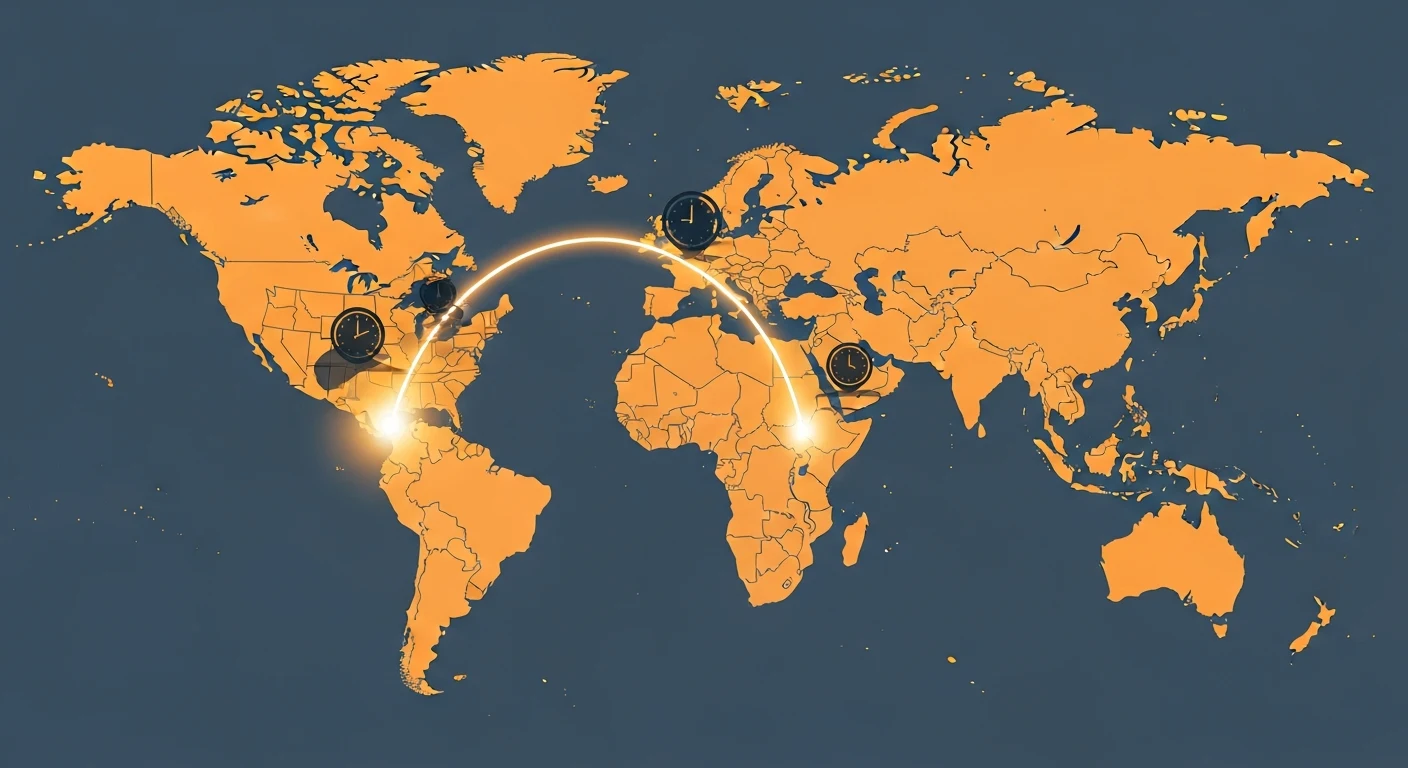 US Eastern morning, 8am-10am ET
India evening, 5:30pm-7:30pm IST
US Eastern morning, 8am-10am ET
India evening, 5:30pm-7:30pm IST
How India Compares to Other Markets
Compare that to the rest of Kore BPO’s offshore and nearshore map. Costa Rica and Mexico run one to two hours behind US Eastern, while the Dominican Republic matches Eastern Daylight Time almost exactly. India, by contrast, is the outlier by a wide margin, which is precisely why it tends to work best for teams that can genuinely operate async, or for roles like overnight support, batch processing, and QA where a live handoff every day isn’t the point. Teams that need constant real-time pairing with US engineers should therefore weigh that gap honestly before signing anything.
What It Actually Costs
A quoted hourly rate is only the starting number. The real cost includes base pay plus the statutory employer load India requires on top of it, and a staffing agency that skips this line in the first proposal is showing you an incomplete quote.
India Staffing Agency Costs: The Statutory Load
Employers contribute 12% of basic salary and dearness allowance to the Employees’ Provident Fund (EPF), though this can be capped near ₹1,800 a month once basic pay exceeds ₹15,000, depending on how the employer structures contributions. In addition, Employees’ State Insurance (ESI) adds roughly 3.25% of gross salary for employees earning ₹21,000 or below, and gratuity, a statutory end-of-service benefit payable after five years of continuous service, accrues at about 4.81% of basic pay. Taken together, India social security guidance from professional services firm Nexdigm puts the combined statutory load at roughly 13% to 17% on top of gross salary, before any agency margin or management fee.
| Cost Component | Rate | Notes |
|---|---|---|
| EPF (employer) | 12% of basic + DA | May cap near ₹1,800/mo above ₹15,000 basic |
| ESI (employer) | ~3.25% of gross | Applies where gross is ₹21,000 or below |
| Gratuity accrual | ~4.81% of basic | Payable after 5 years of continuous service |
| Combined statutory load | 13% – 17% of gross | Before agency margin or management fee |
 Base pay
+ EPF, ESI, gratuity
Total loaded cost
Base pay
+ EPF, ESI, gratuity
Total loaded cost
Why the Labour Codes Matter Now
India’s Labour Codes, phased in through 2026, also require basic pay to equal at least 50% of total cost to company (CTC), which raises the base that EPF and gratuity are calculated against for many compensation structures. Consequently, an agency still pricing off the old wage-definition rules is quoting numbers that won’t hold up once the new structure fully applies.
Staffing Agency vs EOR vs Your Own Entity
Three paths lead to the same destination, an India-based team working for a US company, and they carry very different tradeoffs.
A staffing agency recruits and often employs the worker on your behalf, bundling sourcing, screening, and compliance into one relationship. By comparison, an employer of record (EOR) usually skips recruiting and focuses purely on legal employment, payroll, and compliance for a hire you’ve already found. Setting up your own India entity, meanwhile, gives full control and is worth it past a certain headcount, but it means registering a company, running local payroll, and owning every compliance filing directly, a heavier lift than most companies need for a first hire or two.
| Model | Best For | What You Own |
|---|---|---|
| Staffing Agency | First hires, ongoing recruiting need | Little, agency handles sourcing and employment |
| Employer of Record | A specific hire you already sourced | Recruiting, EOR handles employment only |
| Own Entity | Larger, long-term teams | Everything, full control, full compliance load |
In general, most companies start with a staffing agency because it collapses recruiting and employment into a single point of accountability, then reassess once headcount in India grows past 15 to 20 people, where the math on a dedicated entity starts to shift.
See How Kore BPO Staffs India-Based Teams
Sourcing, screening, and EPF/ESI/gratuity compliance handled end to end, with resumes back in 2 to 5 business days.
Where India Isn’t the Right Fit
Here’s where the pitch runs ahead of what the market can actually deliver.
Real-Time Collaboration Needs
Real-time, fast-turnaround collaboration is the clearest mismatch. A single daily overlap window works for structured handoffs, async development, and clearly scoped projects, but it breaks down for roles that need constant live pairing with a US-based team, like a fast-moving product squad iterating hour to hour.
English Proficiency, By Candidate Not By Country
English proficiency also needs an honest number attached rather than a vague claim. For instance, India scored 484 on the 2025 EF English Proficiency Index, in the “Low” band for the general population, which is why screening the specific candidate matters far more than trusting the country’s broad reputation for English-language business.
Small Teams Below Five or Six People
Finally, for a team smaller than five or six people, the overhead of managing across a near-11-hour gap, and the compliance layer around EPF, ESI, and gratuity, can outweigh the savings unless the agency is doing real work to absorb that complexity.
What to Look For Before You Sign
India Staffing Agency Checklist: Model, Cost, Pipeline
Overlap, Screening, and Data Security
Data Security Before You Sign
 Clear employment model
Real cost load, not just a rate
City-specific pipeline honesty
Realistic overlap and handoff plan
Real screening, not assumed
DPDP and data security awareness
Clear employment model
Real cost load, not just a rate
City-specific pipeline honesty
Realistic overlap and handoff plan
Real screening, not assumed
DPDP and data security awareness
For the broader picture on how India compares across cost and delivery model, see our guides to choosing an offshore staffing agency and offshore staffing agency pricing, and for the engineering side of the market specifically, our offshore software development page breaks down role-by-role rates.
In the end, an India staffing agency worth using is straightforward about what it actually is, a recruiter, an employer of record, or both, with a real statutory cost load and an honest read on what a 9.5 to 10.5 hour timezone gap means for how your team will actually work together. The scale and cost advantage are real. So is knowing, going in, that India plays a different role in a hiring plan than a nearshore market built around live overlap.
Overall, if you’d like to see how Kore BPO structures India staffing, from screening through EPF, ESI, and gratuity compliance, start at korebpo.com/contact.
What Companies Ask Before Hiring Through an India Staffing Agency
What is an India staffing agency, in plain terms?
In short, it’s a firm that recruits and screens India-based talent for US companies, then handles the local employment relationship, payroll, and statutory compliance, either directly as the legal employer or through a partnered employer of record. That said, some agencies only handle recruiting and hand off the employment piece separately, so it’s worth confirming which model a specific firm actually runs.
Is India better for software engineering or back-office and BPO work?
Both, at real scale. India carries the deepest technical bench of any market in Kore BPO’s offshore coverage, especially in Bangalore and Hyderabad, and also runs one of the world’s largest BPO and back-office sectors. As a result, few other countries offer that combination at the same volume.
How does the timezone actually work for a US-based team?
India runs on IST, UTC+5:30, with no daylight saving changes, putting it 9.5 to 10.5 hours ahead of US Eastern depending on the season. As a result, the one realistic daily overlap window is roughly 8am to 10am US Eastern against 5:30pm to 7:30pm in India. Everything outside that window needs to run asynchronously by design, not by accident.
India Staffing Costs and Choosing a Hub
What does an India hire actually cost once everything is included?
Beyond base pay, budget for EPF employer contributions of 12% of basic salary (subject to a cap in some structures), ESI at roughly 3.25% of gross where applicable, and gratuity accrual near 4.81% of basic. Combined, statutory employer costs typically add 13% to 17% on top of gross salary before any agency fee. In short, a quote that skips these numbers isn’t showing the real cost yet.
Which City and Which Model
Should I choose Bangalore or Hyderabad for my hire?
Bangalore carries the largest overall tech talent pool and the deepest AI and machine learning bench. Meanwhile, Hyderabad has closed much of that gap with faster year-over-year growth and lower attrition, and often runs at a lower cost base. Either way, a staffing agency with real reach in both should be able to speak to each city specifically rather than defaulting to one set of national numbers.
Choosing Your Entry Model
Staffing agency, EOR, or setting up my own entity, which is right for a first India hire?
A staffing agency is usually the right starting point because it bundles recruiting and employment into one relationship. Alternatively, an EOR fits better if you’ve already sourced the candidate yourself and only need the employment and compliance side handled. Your own entity, on the other hand, generally only makes sense once India headcount grows past 15 to 20 people, where the cost of running a dedicated setup starts to pay for itself.
Related Articles



Ready to Hire in India the Right Way?
Kore BPO handles sourcing, screening, and EPF/ESI/gratuity compliance, so you’re not gambling on any of the criteria in this guide.
Book a Free Consultation