What Is a Dominican Republic Staffing Agency?


A Dominican Republic staffing agency recruits, screens, and places bilingual talent based in the Dominican Republic with US companies, then handles the local employment side, payroll, statutory contributions, and free zone or labor code compliance, either directly or as an employer of record. The country’s real draw is Atlantic Standard Time (UTC-4 year-round), which lines up with US Eastern hours almost every week of the year, plus a workforce that leans heavily toward bilingual customer support, sales, and back-office roles rather than deep specialized engineering.
Beyond the Brochure Pitch
Search “Dominican Republic staffing agency” and most of what comes back reads like the same brochure with the flag swapped. Beaches, bilingual talent, big savings. None of that tells you what the agency you’re actually talking to on a Tuesday afternoon call does with your money, your candidate’s employment contract, or your compliance exposure if a free zone audit turns something up.
The Dominican Republic sits in a slightly different lane than the rest of the Latin America staffing map. It’s not trying to be the region’s software engineering hub the way Argentina or Colombia are. Its strength is bilingual customer support, sales development, and back-office work, running on a clock that matches the US East Coast almost exactly. This guide covers what a Dominican Republic staffing agency actually does, what the real numbers look like, and where this market is a genuinely strong fit versus where it isn’t.
What a Dominican Republic Staffing Agency Actually Does
Strip away the marketing and a Dominican Republic staffing agency is doing three jobs at once, so it’s worth knowing which one you’re actually paying for.
Recruiting and Screening
The first job is recruiting: sourcing candidates, screening for the role and for English fluency specifically, and running the interview process before anyone reaches your team. Because English screening quality varies more by candidate than by nationwide reputation, this step carries more weight than buyers usually assume.
Local Employment and Ongoing Compliance
The second job is the employment side. Since a foreign company generally can’t just put a Dominican worker on its own US payroll, the agency, or a partnered employer of record, becomes the legal local employer, handling the labor contract, payroll, and mandatory benefits under Dominican law. Meanwhile, the third job is ongoing compliance: staying current on TSS social security contributions, INFOTEP training levies, and the mandatory 13th-month salary. If the role sits inside a free zone, that also means tracking sector-specific wage and workforce rules that don’t apply to standard hires.
Some firms only do the first job and hand you off to a separate EOR for the rest. Others run all three under one roof. Neither model is automatically better, but a firm that’s vague about which one it is usually hasn’t thought through the handoff points. As a result, that’s where problems tend to surface months in, not on the sales call.
Why the Dominican Republic Specifically
Three things separate the Dominican Republic from its Latin American neighbors, and none of them are the generic “cost savings” pitch every market makes.
Timezone Alignment with US Eastern Hours
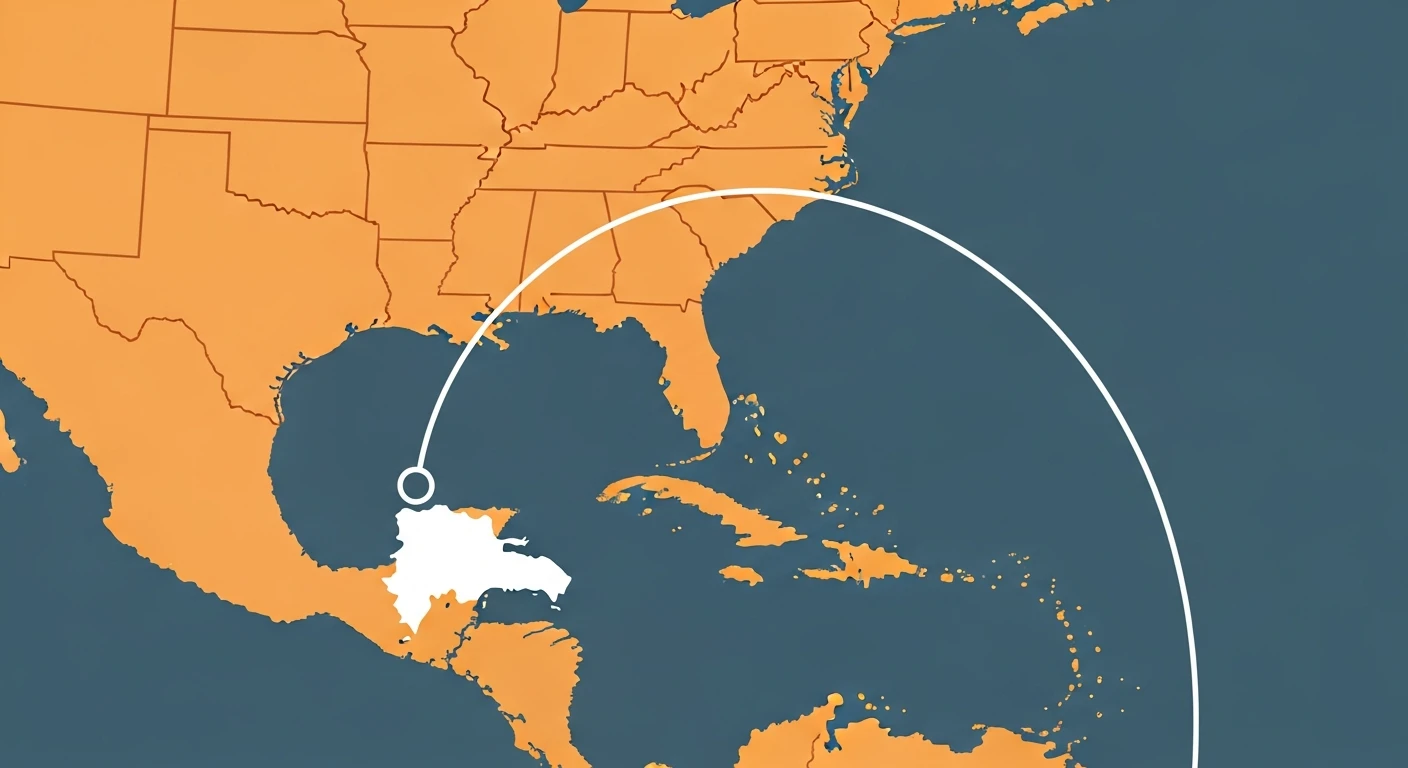
Timezone alignment is the strongest one. Specifically, the Dominican Republic runs on Atlantic Standard Time, UTC-4, all year, with no daylight saving adjustment. Because US Eastern time shifts between UTC-5 and UTC-4 depending on the season, the Dominican Republic matches US Eastern Daylight Time exactly for most of the year and sits only one hour ahead during Eastern Standard Time in winter. So a 9am standup in New York or Miami never lands before, or long after, the Dominican team’s own 9am. By comparison, Costa Rica’s Central time runs a steady one to two hours behind Eastern year-round.
 UTC-4 year-round, no daylight saving changes
Matches US Eastern Daylight Time exactly
UTC-4 year-round, no daylight saving changes
Matches US Eastern Daylight Time exactly
English Proficiency, By the Numbers
English proficiency is the second factor, and it needs an honest number attached instead of a vague claim. According to the 2025 EF English Proficiency Index, the Dominican Republic ranked 63rd, scoring 503, 15 points above the 488 global average and comfortably ahead of Brazil (75th, 482) and roughly tied with Colombia. That’s a real, moderate advantage, not a dominant one, which is exactly why the market has built its reputation on customer-facing bilingual roles rather than trying to out-recruit Colombia or Argentina on senior engineering talent.
Free Zone Workforce Depth
The third factor is workforce depth in one specific lane. Here, the Consejo Nacional de Zonas Francas de Exportación (CNZFE), the government body overseeing the country’s free zone sector, reported free zone exports of USD 2.8 billion for January through April 2026. Notably, it also found that service-exporting free zone companies alone account for roughly 38,000 jobs and more than a billion dollars in exports, a segment built almost entirely on contact center, back-office, and BPO work rather than software development.
What It Actually Costs
Pricing conversations in this market tend to stop at a quoted hourly rate, which is only ever part of the real number. Instead, a full picture needs the base compensation and the mandatory employer load layered on top.
Base Pay by Role
Base pay for bilingual customer support and back-office roles typically runs well below US equivalents. Glassdoor’s country-level data for call center and support roles puts Dominican Republic bilingual agents in a range consistent with the rest of the Caribbean and Central American nearshore market. Meanwhile, software development and specialized IT roles also exist in the market, tracked on Glassdoor’s developer salary pages, though the bench is genuinely shallower here than in Mexico or Colombia. That gap matters more for a senior or highly specialized search than for a support role.
Statutory Employer Costs
On top of base pay, employers are on the hook for mandatory statutory contributions. Under rates set by the Tesorería de la Seguridad Social (TSS), employers contribute 7.10% to the pension fund (AFP), 7.09% to health insurance (SFS), and between 1.10% and 1.30% to occupational risk insurance (SRL). Together that’s a combined TSS load of roughly 15.29% to 15.49% of gross salary, plus a separate 1% INFOTEP training levy required under Law 116-80. Add the mandatory 13th-month Christmas salary, equal to one-twelfth of annual pay, and the real employer cost load lands close to 20% above base once everything is accounted for, not the 10% a quoted “payroll fee” sometimes implies.
| Cost Component | Rate | Notes |
|---|---|---|
| TSS employer contributions | 15.29% – 15.49% of gross | AFP 7.10% + SFS 7.09% + SRL 1.10-1.30% |
| INFOTEP training levy | 1% of gross | Mandatory under Law 116-80 |
| 13th-month salary | 1/12 of annual pay | Paid by December 20 each year |
| Free zone minimum wage | RD$20,875/month | Effective June 1, 2026, second phase of a 25% increase |
 INFOTEP 1% training levy
TSS 15.29-15.49% of gross salary
13th-month salary, 1/12 of annual pay
INFOTEP 1% training levy
TSS 15.29-15.49% of gross salary
13th-month salary, 1/12 of annual pay
Free Zone Rules and Compliance
A meaningful share of Dominican Republic outsourcing activity runs through the country’s free zone system, and it comes with rules that don’t apply to a standard local hire. Free zone companies get real incentives, exemptions from corporate income tax, import duties, and municipal taxes on qualifying operations, but in exchange they operate under sector-specific labor terms.
Wage Increases and Workforce Rules
The free zone minimum wage jumped 25% in two phases this cycle: a 13% increase effective June 1, 2025, and a further 12% effective June 1, 2026, bringing the monthly floor to RD$20,875, according to a legal alert from Dominican law firm Ulises Cabrera tracking the Comité Nacional de Salarios resolution. That’s a bigger jump than most buyers have priced into a multi-year staffing contract signed before the increase was announced, and it’s exactly the kind of detail a staffing partner should be flagging proactively rather than leaving you to discover on an invoice.
Free zone companies are also subject to a workforce composition requirement tied to the sector’s incentive structure. Ask any agency operating inside a free zone how that requirement affects staffing flexibility for your specific role before assuming it’s a non-issue.
Standard Workweek and Reporting
Additionally, the standard workweek is capped at 44 hours, with mandatory overtime pay for anything beyond that. Electronic payroll reporting is also required for any company with 10 or more workers. None of this is unusual by regional standards, but it’s exactly the kind of detail that separates a staffing partner who’s actually run payroll in this market from one reading a labor law summary off a template built for a different country.
Santo Domingo vs Santiago, Does the City Matter
The Dominican Republic’s outsourcing talent isn’t spread evenly across the country, and a firm quoting the exact same numbers regardless of city usually only has real depth in one of them.
Santo Domingo is the established center. Parque Cibernético de Santo Domingo (PCSD), a public-private technology park that’s operated for more than a decade, describes itself as the “Silicon Valley of the Caribbean” and has trained over 30,000 students and young professionals, with around 18 resident companies employing roughly 2,000 people directly on-site. That’s the country’s deepest concentration of formal tech and BPO infrastructure, and it’s where most established staffing agencies run their primary operations.
Santiago de los Caballeros, the country’s second city, has built a smaller but genuinely distinct BPO and back-office presence in the Cibao Valley, generally running at lower operating costs than the capital. It’s a reasonable option for roles that don’t need Santo Domingo’s scale, but ask specifically about a firm’s Santiago pipeline before assuming coverage there matches its Santo Domingo numbers.
| City | Known For | What to Watch |
|---|---|---|
| Santo Domingo | PCSD tech park, ~2,000 employed on-site, 30K+ trained | Deepest bench, capital-city cost premium |
| Santiago de los Caballeros | Cibao Valley BPO hub, lower operating costs | Smaller pipeline, verify role-specific depth |
 Santo Domingo, PCSD tech park hub
Santiago, Cibao Valley BPO hub
Santo Domingo, PCSD tech park hub
Santiago, Cibao Valley BPO hub
See How Kore BPO Staffs the Dominican Republic
Bilingual sourcing, screening, and free zone compliance handled end to end, with resumes back in 2 to 5 business days.
Where the Dominican Republic Isn’t the Right Fit
Here’s where this market genuinely falls short of the pitch. The senior technical bench is real but shallower than Mexico or Colombia. Specifically, if the search is for a principal-level backend engineer or a niche data specialty, the Dominican Republic’s strength in bilingual CX and back-office roles doesn’t translate the same way, and a firm claiming equal depth across both is overselling.
Flight time from the West Coast also runs long, closer to six or seven hours to Santo Domingo. As a result, the timezone advantage that makes this market strong for an East Coast team matters less for a company based in Seattle or Los Angeles.
Finally, because the market is smaller and less internationally saturated than Mexico or Colombia, published salary benchmarks (including the Glassdoor figures cited above) carry a wider margin of error than in more heavily tracked markets. That’s worth confirming directly with any shortlisted agency rather than taking a single online estimate at face value.
What to Look For Before You Sign
 Clear employment model, named upfront
Real cost load, not just a rate
Actual English screening, not assumed
City-specific pipeline honesty
Clear employment model, named upfront
Real cost load, not just a rate
Actual English screening, not assumed
City-specific pipeline honesty
Related Comparisons
For the broader regional picture, see our guide to choosing a nearshore staffing agency. Also, if you’re weighing the Dominican Republic against another market, our Costa Rica staffing agency breakdown and full Latin America staffing pricing guide cover cost and talent differences by country.
In short, a Dominican Republic staffing agency worth using is straightforward about what it actually is, a recruiter, an employer of record, or both, with a real cost load and a specific, honest read on where its own talent pipeline is strongest. The Eastern Time overlap and bilingual customer-facing talent are genuine advantages. So is knowing, going in, that this market plays a different role than Mexico or Colombia rather than competing with them on the same terms.
If you’d like to see how Kore BPO structures Dominican Republic staffing, from screening through free zone and TSS compliance, start at korebpo.com/contact.
What Companies Ask Before Hiring Through a Dominican Republic Staffing Agency
What is a Dominican Republic staffing agency, in plain terms?
It’s a firm that recruits and screens Dominican-based talent for US companies, then handles the local employment relationship, payroll, and statutory compliance, either directly as the legal employer or through a partnered employer of record. Some agencies only handle recruiting and hand off the employment piece separately, so it’s worth confirming which model a specific firm actually runs.
Is the Dominican Republic good for software development, or mainly customer service?
Both exist in the market, but the country’s real strength is bilingual customer support, sales development, and back-office work rather than deep specialized engineering. Mexico and Colombia carry a broader and deeper technical bench. A staffing agency that positions the Dominican Republic as an engineering-first market the same way it would Colombia is stretching the pitch.
How does the timezone actually compare to hiring in the US?
The Dominican Republic runs on Atlantic Standard Time, UTC-4, year-round with no daylight saving changes. That matches US Eastern Daylight Time exactly for most of the year and sits only an hour ahead during Eastern Standard Time in winter, which is tighter overlap than Costa Rica’s Central time offers against the same US East Coast teams.
Cost and Location Questions
What does a Dominican Republic hire actually cost once everything is included?
Beyond base pay, budget for TSS employer contributions of roughly 15.29% to 15.49% of gross salary, a 1% INFOTEP training levy, and a mandatory 13th-month salary equal to one-twelfth of annual pay. Free zone roles also carry a minimum wage floor that rose to RD$20,875 a month as of June 1, 2026. A quote that skips any of these isn’t showing the real number yet.
City Selection Question
Should I choose Santo Domingo or Santiago for my hire?
Santo Domingo carries the deepest talent pool and the most established BPO and tech infrastructure, anchored by the Parque Cibernético de Santo Domingo. Santiago offers a smaller but genuine pipeline at lower operating costs, mainly for back-office and support roles. A staffing agency with real reach in both should be able to speak to each specifically rather than defaulting to capital-city numbers for the whole country.
Related Articles



Ready to Hire in the Dominican Republic the Right Way?
Kore BPO handles bilingual sourcing, screening, and free zone/TSS compliance, so you’re not gambling on any of the criteria in this guide.
Book a Free Consultation