What Is a Nearshore Staffing Agency?


A client asked us last quarter why their nearshore developer could join a 9am standup without anyone rearranging their schedule, while the offshore contractor they’d tried the year before was always half asleep on calls or answering messages the next morning. The honest answer is geography. Nothing more complicated than that.
A nearshore staffing agency exists to make that geography work in your favor. Instead of hiring someone eight or fourteen time zones away, you’re hiring someone one to three hours off your own clock, usually in Mexico, Colombia, Brazil, or Argentina if you’re a US company. The agency handles the part most businesses don’t want to learn from scratch: finding the person, checking they can actually do the job, and running payroll and compliance in a country you’ve probably never registered a business in. You get a team member who shows up to your meetings live. They get a stable job with a company that isn’t a stranger to their labor laws.
This guide covers how that arrangement actually works, what it costs in 2026, how it stacks up against offshore and onshore staffing, and how to tell whether it’s the right move for your business right now. If you’re evaluating nearshore BPO services for the first time, start here before you start comparing vendors.
How a Nearshore Staffing Agency Works
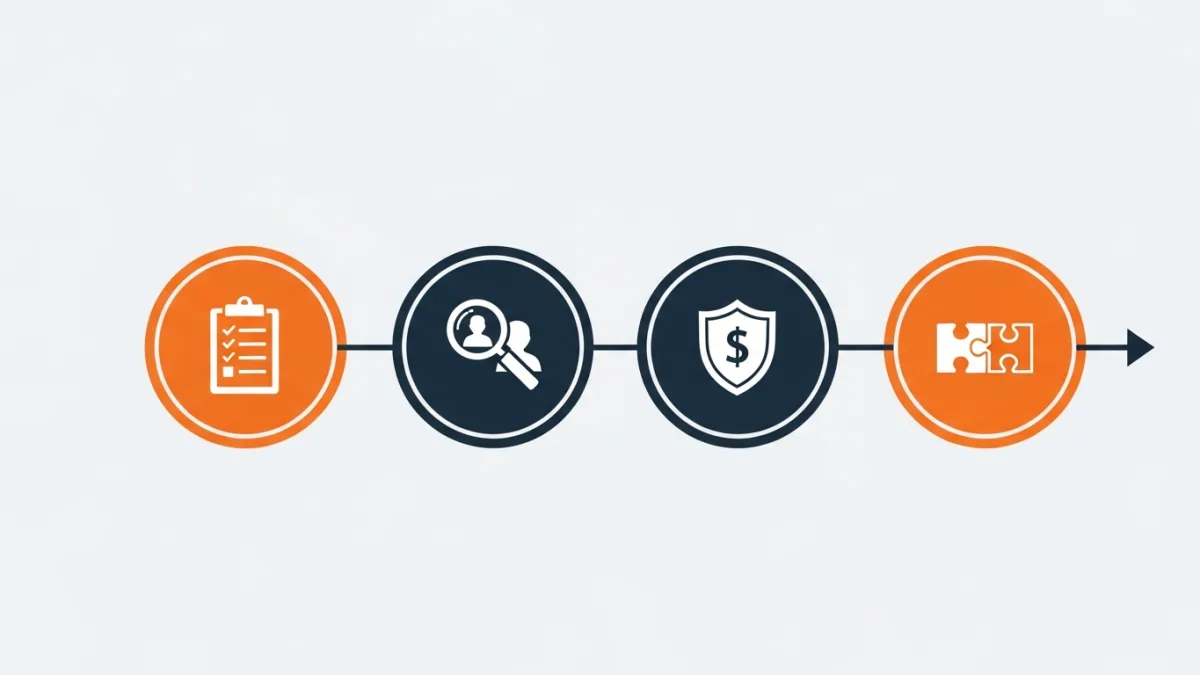
The mechanics are simpler than most first-time buyers expect, but skipping any of the four steps below is usually where things go wrong later.
Requirements definition. A good agency starts by pinning down the actual job, not just the job title. What tools does this person need to know on day one versus what can they learn. What does a typical week look like. Who do they report to and in what time zone. Vague requirements produce vague candidates, and that mismatch shows up three weeks into the engagement, not during the interview.
Sourcing and vetting. The agency draws from its own talent pool or an active recruiting pipeline in the target country, screens for the specific skill set, and runs whatever technical or language evaluation the role calls for. This is the step that separates a real staffing partner from a job board with a fee attached. Anyone can forward you resumes. The value is in who gets filtered out before you ever see them.
Payroll, compliance, and EOR. This is the part most US companies genuinely cannot do themselves without significant legal risk. Employment law, tax withholding, and benefits requirements vary by country, and getting them wrong exposes you to fines or misclassification claims. A nearshore agency either employs the worker directly through its own local entity or partners with an Employer of Record (EOR) that does, so you’re not the one filing payroll taxes in Bogota.
Integration into your team. The best agencies treat placement as the start of the relationship, not the end of it. That means onboarding support, a point of contact if something needs to change, and enough oversight that a hire who isn’t working out gets addressed in weeks, not months. This is also where nearshore talent roles get matched to your existing workflow instead of forcing your team to adapt around the new hire.
Nearshore vs. Offshore vs. Onshore Staffing
These three terms get used loosely, and the differences matter more than most comparisons let on. Here’s the practical breakdown.
| Factor | Onshore | Nearshore | Offshore |
|---|---|---|---|
| Time zone overlap | Full overlap | 1 to 3 hours off | 8 to 14 hours off |
| Typical cost vs US hire | Full US rate | 40 to 70% lower | 50 to 80% lower |
| Real-time communication | Easiest | Strong, same working day | Limited, async by default |
| Cultural and language alignment | Highest | High, especially LatAm-US | Variable by region |
| Best use case | Highly regulated or client-facing roles | Collaborative, iterative work | Async, well-specified work |
Onshore staffing keeps everything domestic, which removes time zone and cultural friction entirely but comes at full US labor cost. Offshore staffing, typically in Asia or Eastern Europe for US companies, delivers the deepest cost savings but forces async workflows because a 9am call in Dallas is a 9pm or later call for the other person. Nearshore sits in the middle, delivering real cost savings without giving up a shared working day.
Neither offshore nor nearshore is universally better. Offshore tends to win on pure cost-per-hour for well-documented, self-contained work. Nearshore tends to win when the role requires back-and-forth: product engineering, design reviews, sales calls, live customer support. If your team spends its day in Slack threads and quick huddles rather than long async tickets, the time zone gap offshore introduces becomes a real tax on how fast work moves, not just an inconvenience.
See Nearshore Talent Roles
Pre-screened nearshore professionals across engineering, support, and operations. Resumes in 2 to 5 days.
What a Nearshore Staffing Agency Actually Costs
Pricing in this space follows two common models, and the gap between what an agency quotes and what you actually pay is where deals go sideways if you don’t ask the right questions up front.
Flat monthly rate. A dedicated team member for a flat all-in fee, often around $2,500 a month depending on role and seniority. This model is easiest to budget against since you know the number every month regardless of hours worked, and it usually bundles in the agency’s recruiting and compliance overhead.
Hourly billing. Common for roles with variable workload. General support and admin roles typically run $7 to $15 an hour. IT specialists, depending on seniority and specialization, run $25 to $90 an hour. Hourly makes sense when the workload genuinely fluctuates, but it also makes total monthly cost harder to predict until you have a few billing cycles of history.
Whichever model you’re quoted, the number on the pricing page is rarely the full story. Watch for three specific hidden costs before signing anything.
Conversion or buyout fees. Some agencies charge a penalty, often 20 to 25% of the hire’s first-year salary, if you want to convert a placed contractor to a direct employee later. Ask about this before you start, not when you want to make the switch.
Setup fees for onboarding a new hire and per-replacement fees if a placement doesn’t work out are the other two to confirm in writing. A quote that looks 15% cheaper than a competitor’s often isn’t once these are added back in. The only way to compare honestly is to ask every agency for a 12-month total cost projection, not a monthly rate. For a full country-by-country rate breakdown and a deeper look at what’s really inside the bill rate, see our nearshore staffing agency pricing guide.
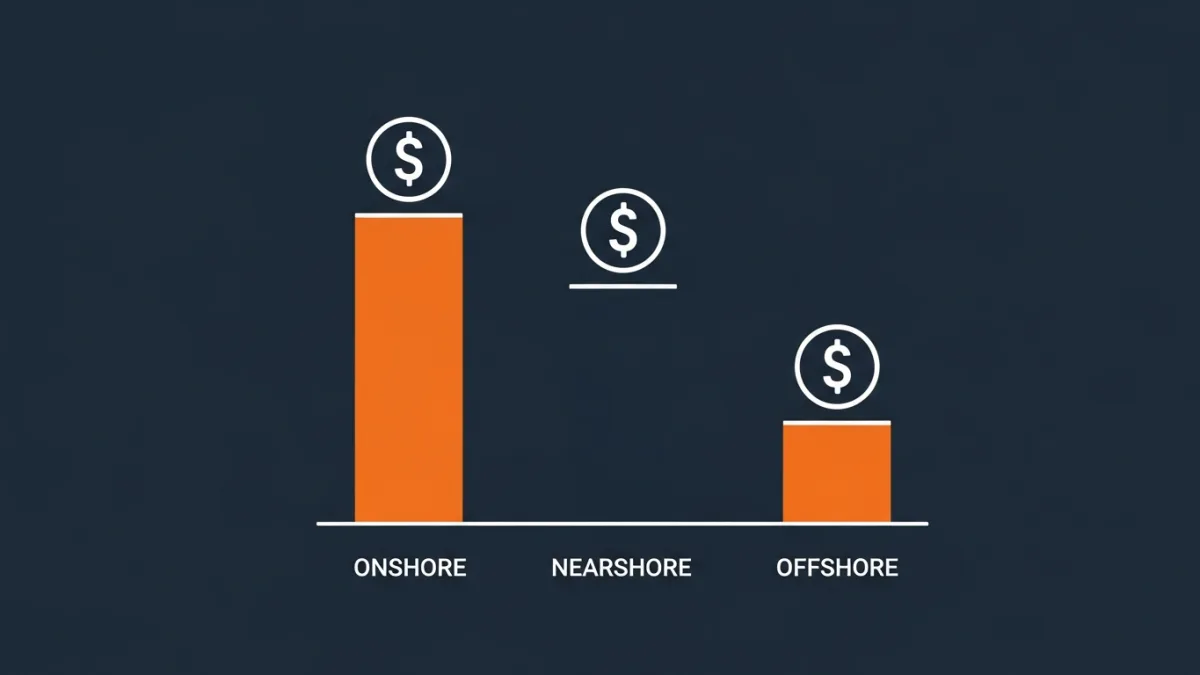
Even after fees, most US companies report saving $35,000 to $80,000 a year per hire compared to an equivalent domestic role, with the exact figure depending heavily on role and seniority. That range holds up because it’s driven by real wage differences, not a discount that evaporates once you read the fine print.
Key Benefits of Nearshore Staffing for US Businesses
Cost is the headline, but it’s rarely the only reason companies choose nearshore once they’ve tried it.
- Cost savings without the offshore tradeoff. 40 to 70% lower cost than an equivalent US hire, while keeping enough working-hour overlap that the savings don’t come at the expense of collaboration speed.
- Time zone overlap. A 1 to 3 hour gap means daily standups, live client calls, and same-day problem solving all stay possible, which matters far more than it sounds like until you’ve worked around a 12-hour gap.
- Cultural and language alignment. Shared business norms, strong English proficiency across much of Latin America’s professional workforce, and overlapping holiday calendars reduce the friction that trips up a lot of offshore engagements in year one.
- Faster time-to-hire. A staffing agency with an active local pipeline can typically get qualified candidates in front of you inside days, not the weeks a from-scratch domestic search often takes.
- Scalability. Once the first hire proves out, adding a second or third nearshore team member through the same agency is usually far faster than repeating a full domestic hiring cycle each time.
When Nearshore Staffing Makes Sense (and When It Doesn’t)
We’d be doing you a disservice if we only told you the upside. Nearshore staffing solves specific problems well and doesn’t solve others at all, and knowing the difference before you sign a contract will save you a bad first engagement.
It makes the most sense when the role is genuinely collaborative. Product and software engineering, design, customer-facing support, and sales development all benefit from real-time back-and-forth, and nearshore is built for exactly that kind of work. It also makes sense when you’ve already tried offshore for a role that needed tighter collaboration and felt the friction firsthand. That’s usually the moment companies come looking for nearshore specifically, not as a first choice but as a correction.
It makes less sense in a few situations worth naming honestly. If the work is entirely async and well-documented, offshore rates are often meaningfully lower for the same output, and the time zone gap that hurts collaborative work barely matters for a ticket queue. If you need someone physically on-site, obviously neither nearshore nor offshore solves that. And if your business can’t yet support a remote hire with clear documentation and a real onboarding process, adding a nearshore team member won’t fix a management gap that exists regardless of where the hire is located. The agency can vet and place the right person. It can’t build your internal process for you.
Here’s the honest middle ground. Nearshore staffing works best as a deliberate choice for roles where speed of communication has real dollar value, not as a default because it sounds like a compromise between offshore and onshore. Match the model to the actual job, not to whichever term sounds safest.
How to Choose a Nearshore Staffing Agency
Once you’ve decided nearshore is the right model, the agency you pick matters as much as the decision itself. Run every candidate through this checklist before signing.
| Evaluation Area | What to Ask |
|---|---|
| Compliance and EOR coverage | Do they employ locally or partner with a registered EOR in the candidate’s country? |
| Cost transparency | Will they give you a full 12-month total cost, including setup and any conversion fees, in writing? |
| Retention and replacement support | What happens, and what does it cost you, if a placement doesn’t work out in the first 90 days? |
| Pilot-first approach | Can you start with one hire before committing to a larger engagement? |
| Vertical recruiting expertise | Have they placed this specific role type before, or is your req a first for them? |
An agency that answers all five clearly, without hedging on the compliance and fee questions, is worth a real conversation. One that gets vague about buyout fees or can’t tell you who legally employs the worker is a flag worth taking seriously before you sign anything.
How Kore BPO Approaches Nearshore Staffing
We built our nearshore process around the two things clients ask about most: who is actually vetting candidates, and what happens if the first hire isn’t the right fit. Every nearshore placement goes through the same requirements, sourcing, and compliance structure outlined above, with a named point of contact on our side for the life of the engagement, not just through onboarding.
We also don’t push clients into a large commitment on the first hire. Most engagements start with one role, prove out over the first few weeks, and expand from there once the fit is clear. If you want to see what that looks like for your specific role, our nearshore staffing agency page walks through the full engagement model, and our contact page is the fastest way to start a conversation about a specific role you’re trying to fill.
For more context on how nearshore compares against the other two staffing models in practice, our onshore vs nearshore vs offshore outsourcing guide goes deeper on the tradeoffs, and our roundup of staffing companies for US businesses is a useful reference if you’re evaluating multiple providers side by side.
Nearshore Staffing Agency FAQ
What is a nearshore staffing agency?
A nearshore staffing agency sources, vets, and manages remote employees from a nearby region, primarily Latin America for US companies, handling recruiting, compliance, and payroll so the client receives an integrated team member without setting up international payroll themselves.
How is nearshore staffing different from offshore staffing?
Nearshore staffing keeps the time zone gap to roughly 1 to 3 hours from US headquarters, while offshore staffing, typically in Asia or Eastern Europe, usually means an 8 to 14 hour gap. Nearshore supports real-time collaboration during a shared working day. Offshore is better suited to async, well-documented work where live overlap matters less.
How much does nearshore staffing cost?
Pricing runs on flat monthly rates, often around $2,500 a month for a dedicated team member, or hourly rates from roughly $7 to $15 an hour for general roles and $25 to $90 an hour for IT specialists by seniority. Most US companies save $35,000 to $80,000 a year per hire compared to an equivalent domestic role, though it’s worth confirming there are no hidden setup or conversion fees before signing.
What countries are considered nearshore for US businesses?
Mexico, Colombia, Brazil, and Argentina are the leading nearshore destinations for US companies, based on time zone proximity and talent supply. Colombia has recently overtaken Argentina as the top nearshore destination specifically for engineering talent.
How long does it take to onboard a nearshore hire?
With an agency that has an active local pipeline, qualified candidates are often ready for interviews within days rather than the weeks a domestic search from scratch typically takes. Full onboarding, including compliance setup, usually adds another one to two weeks before the hire is fully integrated into your team’s workflow.
Is nearshore staffing right for a small business?
Often, yes, particularly for roles that need real-time collaboration but don’t justify a full US salary. Starting with a single pilot hire before expanding is the lowest-risk way for a small business to test whether nearshore staffing fits its workflow before committing to a larger engagement.
Related Articles



Ready to Build a Nearshore Team?
Kore BPO places pre-screened nearshore professionals for US businesses across engineering, support, and operations. Resumes in 2 to 5 days.
See Nearshore BPO Services