How to Choose an Argentina Staffing Agency


The right Argentina staffing agency can explain exactly how it’s adapting to the 2026 labor reform, tests English directly instead of assuming it, shares real time-to-fill and tenure numbers, and puts a replacement window in writing. A hedge on any of those four points is your answer.
Every Argentina staffing agency pitch hits the same three notes by the second call. Best English in the region. Working hours that line up with the US. A deep bench in Buenos Aires. All three are usually true. None of them say whether the specific firm on the call actually screens candidates well, keeps up with a labor system that just went through its biggest overhaul in decades, or sticks around once the invoice clears.
Argentina isn’t a smaller, English-heavy version of Latin America staffing in general, and treating it that way is how buyers end up with a hire who never really fit the role. This guide covers what to check before signing, what changed in Argentina’s labor rules heading into the back half of 2026, and the exact questions worth asking before a contract lands anywhere near a signature.
Why Argentina Specifically, Not Just “Latin America”
Argentina sits at GMT-3 and doesn’t observe daylight saving time, which means the overlap with the US shifts a little through the year instead of staying fixed. Against US Eastern time that’s a 1 to 2 hour gap depending on the season, close enough that a 9am standup rarely needs anyone to log in before sunrise. For teams working with the West Coast, the gap runs wider, but it’s still a same-day working window rather than the overnight handoff you’d get sourcing out of Asia.
The English fluency argument, unlike a lot of nearshore marketing copy, actually holds up. Argentina ranked 26th of 123 economies in the 2025 EF English Proficiency Index, the strongest score in Latin America and a “High Proficiency” classification alongside countries well ahead of most of the region on this measure alone. That’s a genuine differentiator, not a talking point stretched past what the data supports.
The talent base backs it up. CESSI figures reported by Enfasys put Argentina’s IT workforce past 150,000 specialists, with roughly 27,000 STEM graduates entering the market every year and knowledge-based service exports topping USD 9.6 billion in 2025. Software sector employment grew 67.3% between 2015 and 2025, against just 1.2% for total private employment nationally. That’s not a country still trying to prove it can staff technical roles at scale. It already does, and the sector is still expanding while a lot of the broader economy isn’t.
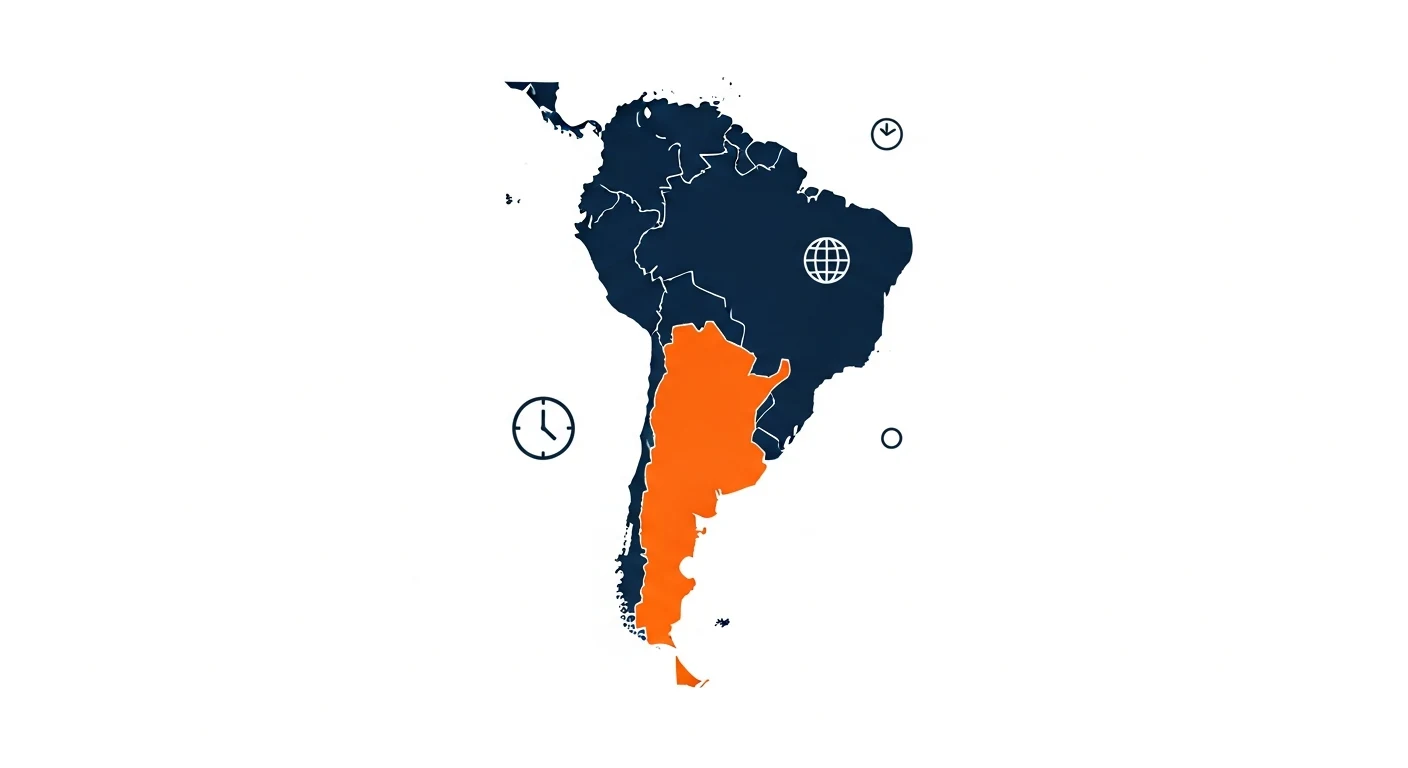 GMT-3, no daylight saving, same-day US overlap
#1 in Latin America on the 2025 EF EPI
GMT-3, no daylight saving, same-day US overlap
#1 in Latin America on the 2025 EF EPI
What an Argentina Staffing Agency Actually Does
The term “staffing agency” covers a few genuinely different setups in Argentina, and the gap between them matters more than the marketing language suggests.
Some firms only source and screen. They send you candidates, you make the offer, and you handle payroll and compliance yourself, usually through your own Argentine entity or a separate employer of record. Other firms operate as a registered temporary staffing agency, known locally as an Empresa de Servicios Eventuales, sourcing the talent and legally supplying the labor under their own registration. A smaller group runs its own entity in Argentina outright, meaning the firm that vetted the candidate is the same one running payroll, statutory benefits, and termination under Argentine labor law.
None of the three models is automatically wrong. A pure sourcing firm can work fine if you’ve already got a compliance structure in place. But a firm that can’t clearly say which of these three it runs, or dodges the question with something vague about “full-service support,” is telling you it hasn’t had to answer that question honestly before, especially with the rules having just changed.
The 2026 Labor Reform You’re Hiring Into
Argentina’s staffing rules didn’t just get a minor update this year. Congress enacted the Labor Modernization Bill, Law 27,802, on March 6, 2026, introducing the widest set of changes to Argentina’s labor framework in years. A few months later, Executive Order 407/2026 was published on June 1, 2026, laying out the actual regulations for how the new law applies to temporary staffing agencies specifically. For a topic that’s usually stable for years at a time, that’s two major changes inside a single quarter.
The practical shift worth understanding before a contract call. A staffing agency now has to define, in writing, whether a worker is engaged on what the law calls a permanent non-continuous contract, for people placed with a client company, or a permanent continuous contract, for people working out of the agency’s own premises. Gap periods between assignments are capped too, generally 45 consecutive calendar days, extendable to 60 by agreement, or 90 alternating days across an anniversary year. An agency that’s still describing staffing arrangements in the old, looser terms hasn’t updated its own paperwork to match the law it’s operating under.
Liability shifted as well, though not in the direction some pitches imply. Staffing agencies are no longer required to handle certain Social Security withholdings directly on a worker’s behalf, but if the agency falls short on its obligations, the hiring company still shares responsibility. That single point is worth asking about directly, because “the agency handles all the compliance” is a weaker guarantee under the new rules than it was a year ago.
If an Argentina staffing agency can’t explain how Law 27,802 and Executive Order 407/2026 changed its own contract structure, that’s not a minor knowledge gap. It means the paperwork you’d be signing may already be out of date.
 Law 27,802 enacted March 6, 2026
Executive Order 407/2026, TSA rules, June 1
Law 27,802 enacted March 6, 2026
Executive Order 407/2026, TSA rules, June 1
The 6-Point Framework for Vetting an Argentina Staffing Agency
Run every firm you’re considering through these six checks before a contract gets close to a signature. Skip one, and you’re betting on the part you didn’t verify.
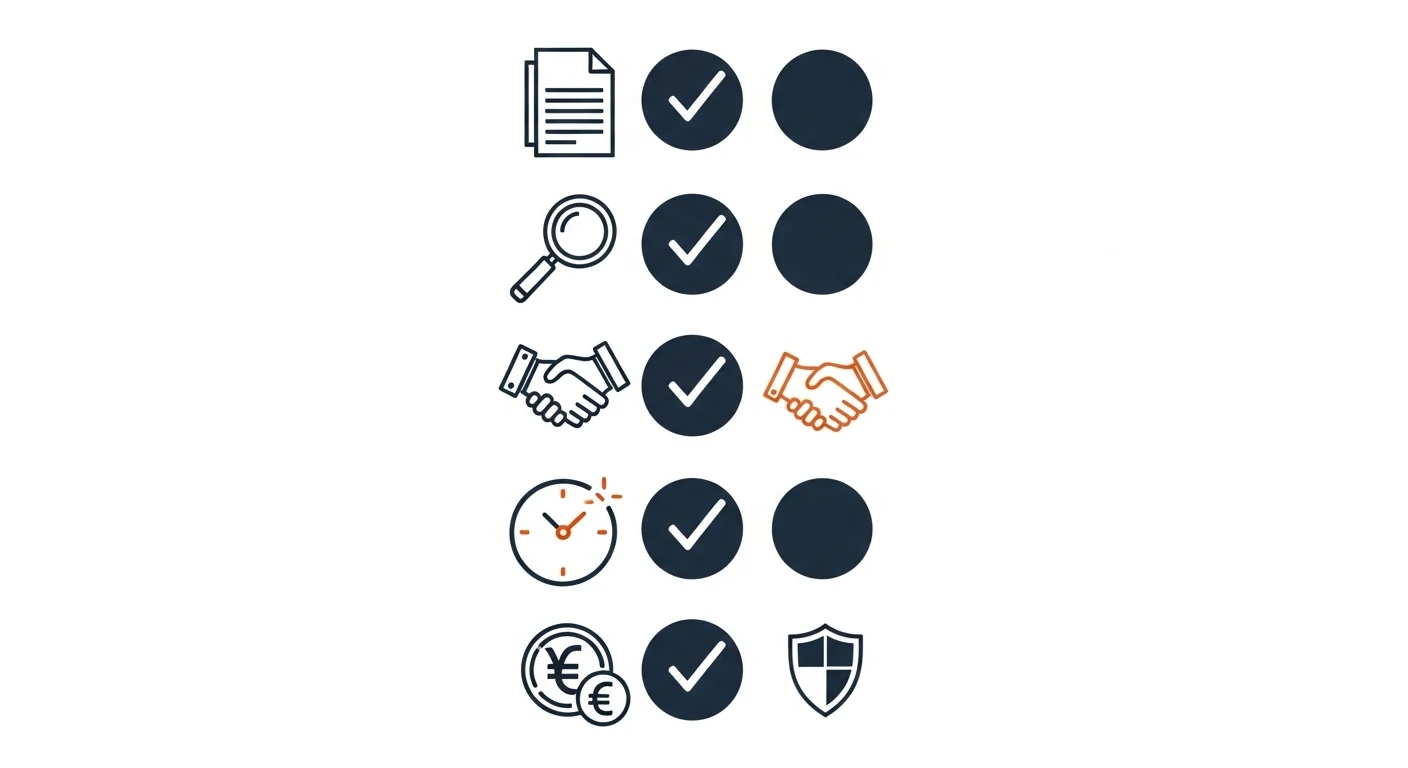 Clear on 2026 labor reform contract types
Real English and technical screening
Fee tied to placement
Time-to-fill and tenure disclosed
Compensation built for peso volatility
IP and data terms in writing
Clear on 2026 labor reform contract types
Real English and technical screening
Fee tied to placement
Time-to-fill and tenure disclosed
Compensation built for peso volatility
IP and data terms in writing
Buenos Aires vs Córdoba vs Rosario, Does the City Matter
Argentina’s talent isn’t spread evenly, and a firm that treats every city the same usually only has real reach in one of them. Buenos Aires carries the deepest bench by far, holding more than 70% of the country’s IT workforce across fintech, e-commerce, and enterprise software. That concentration cuts both ways. It means the largest talent pool in the country, and it also means the sharpest competition for senior, English-fluent candidates, since every international company sourcing in Argentina is fishing in the same pond.
Córdoba has built a real secondary hub, anchored by strong universities and a growing base of engineering and QA talent at a lower cost of living than the capital. Rosario runs smaller still but has been drawing attention for fintech and data roles, helped by proximity to Buenos Aires without the capital’s price tag. Neither city matches Buenos Aires on raw depth, but both give a staffing agency with genuine multi-city reach a real alternative when the capital’s senior bench is stretched thin.
The retention numbers are the part most pitches skip. Argentina’s own tech sector has reported that more than 40% of local companies lost key professionals in the past year, mostly to remote roles paying in USD or outright relocation abroad. That’s not a reason to avoid Argentine talent. It’s a reason to ask any agency how it structures compensation and retention to compete with the same remote-USD offers pulling talent away from local firms.
| City | Known For | What to Watch |
|---|---|---|
| Buenos Aires | Largest bench, 70%+ of national IT workforce | Senior, English-fluent talent in the highest demand |
| Córdoba | Engineering and QA talent, lower cost of living | Smaller senior bench than the capital |
| Rosario | Fintech and data roles, proximity to Buenos Aires | Newer hub, still building depth at scale |
 Buenos Aires, 70%+ of IT workforce
Córdoba, engineering and QA depth
Rosario, growing fintech and data hub
Buenos Aires, 70%+ of IT workforce
Córdoba, engineering and QA depth
Rosario, growing fintech and data hub
Ask any Argentina staffing agency where its actual candidate pipeline sits, not where its sales office happens to be. A firm with real depth in a given city can tell you how sourcing differs there. One without it just repeats the same national numbers no matter which city you ask about.
See How Kore BPO Vets Argentina Talent
Sourcing, English and technical screening, and compliance aligned to the 2026 labor reform, handled end to end, with resumes back in 2 to 5 business days.
Questions to Ask on the Sales Call
Bring this list to the first real conversation. A specific, confident answer to each one tells you more than anything on the agency’s homepage.
- How did Law 27,802 and Executive Order 407/2026 change how you structure placements?
- What does your English and technical screening process actually look like, step by step?
- What’s the replacement window if this placement doesn’t work out, in writing?
- What’s your average time-to-fill and 12-month tenure for a role like this one?
- How is compensation structured against peso volatility, and how often is it reviewed?
- Can I speak with a current client hiring a similar role in Argentina right now?
That last one is the tiebreaker. A polished case study gets edited before it’s published. A live reference call doesn’t.
Red Flags That Should End the Call
Most bad Argentina placements were avoidable, and the warning signs almost always show up before the contract, not after the new hire’s first rough week.
For the broader picture across the region, see our guide to choosing a Latin America staffing partner, our breakdown of Latin America staffing pricing by role and country, and what to expect from a nearshore staffing agency more broadly.
The Argentina staffing agencies worth signing with aren’t the ones with the smoothest deck. They’re the ones that can explain the 2026 labor reform without hesitating, test English instead of assuming it, and share real time-to-fill and tenure numbers instead of a line about culture fit.
Run every firm you’re considering through the six-point framework above, ask the sales-call questions, and treat any hedge on compliance or replacement terms as a hard stop. If you’d like to see how we structure Argentina staffing at Kore BPO, from screening through 2026 reform-aligned compliance, start at korebpo.com/contact.
What Companies Ask Before They Sign With an Argentina Staffing Agency
What makes Argentina different from other Latin America staffing options?
English fluency and senior-level depth, mostly. Argentina ranked 26th of 123 economies in the 2025 EF English Proficiency Index, the strongest score in Latin America, and its IT workforce runs past 150,000 specialists concentrated heavily in Buenos Aires. Mexico edges out Argentina on raw talent volume and physical proximity to the US, but nothing in the region matches Argentina’s combination of English proficiency and senior technical experience.
What actually changed with Argentina’s 2026 labor reform?
Two things, close together. Congress enacted the Labor Modernization Bill, Law 27,802, on March 6, 2026, and Executive Order 407/2026 followed on June 1, 2026, spelling out how the new law applies specifically to temporary staffing agencies. Staffing firms now have to classify placements as permanent continuous or permanent non-continuous in writing, and gap periods between assignments are capped at 45 to 60 days, or 90 alternating days a year. An agency still describing its contracts in pre-2026 terms hasn’t updated its own paperwork.
Is peso volatility something I actually need to plan for?
Yes, more directly than most pitches admit. Currency instability is a real driver behind Argentina’s talent flight, with more than 40% of local tech companies reporting they lost key professionals in the past year, largely to remote roles paying in USD. Ask any staffing agency how compensation is structured and reviewed, because a peso-pegged offer with no adjustment plan is a retention risk you’ll eventually inherit.
Should I hire out of Buenos Aires, Córdoba, or Rosario specifically?
Depends more on the role than the skyline. Buenos Aires carries the largest overall bench, holding more than 70% of the national IT workforce, but that also means the sharpest competition for senior, English-fluent talent. Córdoba offers solid engineering and QA depth at a lower cost of living, while Rosario is a smaller, newer hub building out fintech and data talent. A staffing agency with genuine multi-city reach should be able to explain which fits your role, not just default to wherever its office happens to be.
How fast can an Argentina hire realistically start?
For a firm with an active, pre-vetted pipeline, expect a shortlist within days and a start date inside two to three weeks for most standard roles. Specialized senior roles can run longer given how competitive the Buenos Aires senior bench has gotten as international demand keeps rising. A standard mid-level role quoted at six weeks or more deserves a follow-up question before you assume it’s just thoroughness.
Related Articles



Ready to Hire Argentina Talent the Right Way?
Kore BPO handles sourcing, English and technical screening, and 2026 reform-aligned compliance for Argentina hires, so you’re not gambling on any of the six criteria in this guide.
Book a Free Consultation