Argentina Staffing Agency vs Traditional Staffing Agency, What Actually Changes


- 01What a Traditional Staffing Agency Actually Bills You
- 02Why Argentina Specifically, Not Just “Nearshore”
- 03The Real Cost Breakdown, Fully Loaded
- 04The Compliance Risk Nobody Mentions on the Sales Call
- 05Real-Time Collaboration vs Other Nearshore Options
- 06When a Traditional Agency Still Wins
- 07The Dedicated Argentina Team Model
- 08Before You Move Off a Traditional Agency
An Argentina staffing agency sources, vets, and manages talent based in Argentina for US companies at a flat monthly rate, absorbing local payroll compliance, while a traditional staffing agency sources domestic US talent and charges a percentage-based markup or placement fee.
The Real Gap Between an Argentina Staffing Agency and a Traditional Agency
Here’s the number that should bother you if you’re still running every open role through a domestic staffing desk: a mid-level engineer placed through a traditional agency at a 40% hourly markup costs you roughly $145,000 to $165,000 a year once payroll taxes and the agency’s cut are baked in. By comparison, the same seniority level, built through an Argentina staffing model, lands closer to $55,000 to $75,000 fully loaded. In fact, that gap doesn’t come from cutting corners. Instead, it comes from where the person lives and what the local cost structure actually is.
Still, Argentina isn’t a generic “LATAM” placeholder either. It’s a specific bet with specific upside and specific risk, and conflating it with Mexico or Colombia will get your budget wrong in both directions. With this in mind, this post breaks down what changes when you move from a traditional staffing agency to an Argentina staffing agency model, where the real costs sit, and where a traditional agency is still the better call.
If you haven’t already, it’s worth reading our broader Latin America staffing overview first. Either way, this post assumes you already know nearshore is on the table and want the Argentina-specific math.
What a Traditional Staffing Agency Actually Bills You
Generally, a traditional US staffing agency charges one of two ways: a direct-hire placement fee of 15 to 25% of first-year base salary, or an hourly markup of 30 to 75% on top of the worker’s pay for contract and temp-to-hire roles.
That markup isn’t hidden exactly, it’s just rarely explained in a way that shows how it compounds. For example, executive search runs 25 to 35%, while straight W-2 contract markups sit at 25 to 50%. Actually, the number on the invoice looks reasonable on its own. Stack it against a raise cycle two years out, though, and the math gets uglier.
In the domestic engineering searches we see clients run through traditional agencies, 60-plus days to fill and a markup north of 45% is a common outcome, not an outlier. Of course, that’s not a knock on the recruiters doing the work. Instead, domestic talent pools for senior engineering and data roles are simply thin, and thin pools push markups up regardless of who’s staffing the search.
And here’s the part that never makes the sales deck: the markup isn’t flat. Instead, it compounds every time the underlying salary grows, because it’s a percentage, not a fixed number.
Why Argentina Specifically, Not Just “Nearshore”
Argentina’s software sector employed 162,598 people as of the first quarter of 2026, according to CESSI’s OPSSI industry observatory, the country’s official software industry chamber. Indeed, that’s not a scraped LinkedIn estimate. It’s the trade body’s own headcount, and it’s grown faster than almost any other private-sector activity in the country over the last decade.
 Software Sector162,598 jobs (CESSI, Q1 2026)
Buenos Aires Metro85%+ of talent
Software Sector162,598 jobs (CESSI, Q1 2026)
Buenos Aires Metro85%+ of talent
Argentina’s software talent concentration, Buenos Aires, Córdoba, and Rosario.
More than 85% of that talent concentrates in and around Buenos Aires, with smaller but real clusters building out in Córdoba and Rosario. As a result, Argentina consistently ranks among the strongest LATAM countries for senior technical depth, not just raw headcount, particularly in backend, data engineering, and fintech-adjacent roles. Specifically, that depth comes from a local industry, MercadoLibre, Globant, and a deep local fintech scene, that has been training engineers against real production problems for years.
Overall, English proficiency runs high relative to the rest of the region. Combine that with GMT-3 (no daylight saving shifts), and you get a team that’s 1 to 2 hours ahead of US Eastern, close enough for a daily standup without anyone waking up at 5am.
Still, not every country in the region gives you that. Argentina does.
See What an Argentina Team Would Cost You
Specifically, Kore BPO builds dedicated Argentina and Latin America staffing teams for US companies. Pre-screened resumes in 2 to 5 days. $0 until you hire.
The Real Cost Breakdown, Fully Loaded
Cheaper is the headline. Still, it’s not the whole story.
Argentina’s statutory employer load runs roughly 26 to 30% on top of gross salary for social security and union-managed health contributions, plus the aguinaldo, a mandatory 13th-month payment split between June and December, per employer benefits analysis of the market. In sum, that pushes total employer cost to somewhere around 45 to 55% above base salary once aguinaldo, workers’ comp (ART), and union contributions are folded in.
Argentina’s Labor Modernization Law (Law 27,802), enacted March 6, 2026, actually cuts that load for qualifying new hires. Employer payroll contributions on new formal employment drop from roughly 19.5% to 5% under the incentive built into the reform, according to coverage from Lexology’s employment law desk and the Natural Law Review. In fact, that’s a meaningful shift, and it’s recent enough that a lot of comparison content out there hasn’t caught up to it yet.
 Traditional Agency$145K–$165K/yr
Argentina Model$55K–$75K/yr
Traditional Agency$145K–$165K/yr
Argentina Model$55K–$75K/yr
Fully loaded annual cost, traditional US staffing agency vs Argentina staffing model, mid-level engineer role.
| Cost Component | Traditional US Staffing Agency | Argentina Staffing Model |
|---|---|---|
| Base annual cost, mid-level engineer | $95,000–$115,000 | $40,000–$60,000 |
| Agency markup or model fee | 30–75% hourly markup | Flat monthly rate |
| Compliance and payroll admin | Included in domestic payroll | Absorbed by staffing partner (AFIP, aguinaldo, ART) |
| Total fully loaded, mid-level role | $145,000–$165,000 | $55,000–$75,000 |
The Peso Risk Your Argentina Staffing Agency Partner Should Own
However, here’s the wrinkle Mexico and Costa Rica hires don’t carry the same way: the peso. Argentina’s 2026 inflation outlook sits near 29 to 32%, according to Rio Times’ coverage of the REM survey, while the IMF projects a gradual decline toward 25% by year-end in its 2026 Article IV consultation. In practice, that means salaries denominated for local staff need revisiting more than once a year, sometimes quarterly, to keep pace. A staffing partner that already handles this for dozens of hires absorbs that friction, while a company trying to manage it alone, through a single contractor relationship, usually doesn’t notice the problem until turnover shows up.
In short, that’s the actual tradeoff: lower cost, real compliance complexity, and a currency that moves.
The Compliance Risk Nobody Mentions on the Sales Call
Misclassifying an Argentina-based worker as a contractor when the relationship functions like employment exposes you to back-pay claims, mandatory severance, and union contribution shortfalls, sometimes going back years.
In general, Argentina’s labor courts lean toward the worker in ambiguous cases. Set hours, exclusive engagement, and company-provided equipment are all signals a court will read as disguised employment, regardless of what the contract says.
Also, the March 2026 reform changed how severance itself gets calculated. Specifically, severance is now based only on regular monthly remuneration and excludes aguinaldo, vacation pay, and one-time bonuses, a real reduction in the payout base compared to the old formula, per L&E Global’s termination law summary. Additionally, the reform created a new Employment Assistance Fund, with employers contributing 1% of payroll for large companies and 2.5% for SMEs starting mid-2026, meant to pre-fund severance obligations rather than replace them outright.
Namely, five compliance obligations a staffing partner with an in-country entity should already own.
None of that is a reason to avoid Argentina. Rather, it’s a reason not to manage it yourself unless you’ve got in-country legal counsel on retainer. That’s why a staffing partner with an actual Argentina entity matters: they carry that liability so you don’t have to learn AFIP filing requirements from a fine.
Real-Time Collaboration vs Other Nearshore Options
Certainly, Argentina isn’t the closest LATAM country to US business hours. Still, it’s not the farthest either.
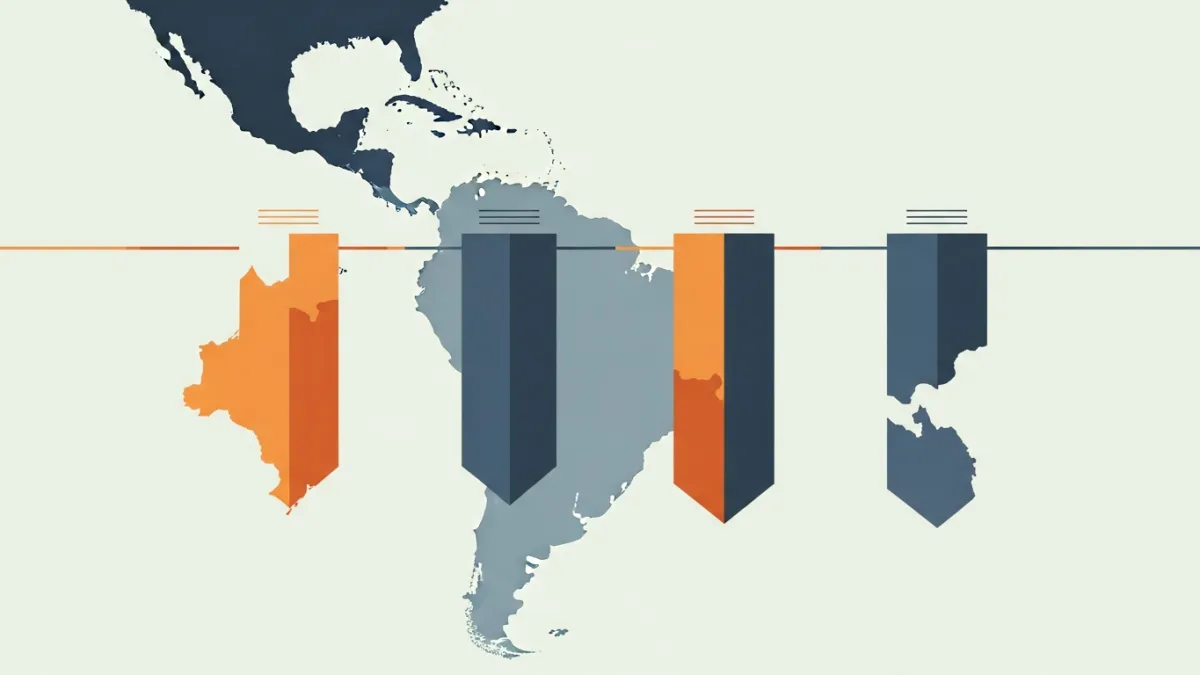 Mexico0–2 hr offset, 6–8 hr overlap
Colombia0–1 hr offset, 7–8 hr overlap
Costa Rica1–2 hr offset, 6–7 hr overlap
Argentina1–2 hr offset, 5–6 hr overlap
Mexico0–2 hr offset, 6–8 hr overlap
Colombia0–1 hr offset, 7–8 hr overlap
Costa Rica1–2 hr offset, 6–7 hr overlap
Argentina1–2 hr offset, 5–6 hr overlap
Specifically, working-hour overlap between the continental US and four Latin America hiring markets.
| Country | Typical Offset from US Eastern | Real-Time Overlap |
|---|---|---|
| Mexico | 0–2 hours | 6–8 hours |
| Colombia | 0–1 hour | 7–8 hours |
| Costa Rica | 1–2 hours | 6–7 hours |
| Argentina | 1–2 hours | 5–6 hours |
Of course, Mexico and Colombia edge out Argentina slightly on raw overlap hours. Even so, what Argentina trades back is talent depth in specific senior technical roles and, for a lot of hiring managers, a stronger cultural fit with US-style product and engineering process. Specifically, that fit is a product of years of Globant, Mercado Libre, and a dense local outsourcing industry training people against the same delivery models US teams already run.
If your priority is squeezing out every last hour of daily overlap, Colombia wins that specific fight. On the other hand, if your priority is finding a senior backend or data engineer who’s done this exact kind of work before, Argentina’s bench is deep.
For a side-by-side on how this compares to a US-based nearshore staffing agency specifically, the nearshore staffing agency vs traditional staffing agency breakdown covers the model differences in more depth than we can here.
When a Traditional Agency Still Wins
Actually, I’m not going to pretend Argentina is the right call for everything. It isn’t.
A single urgent local hire, someone who needs to be in a Dallas office three days a week starting next Monday, isn’t a nearshore problem. In cases like that, traditional agencies still win on true one-off local urgency, and on roles where in-person presence is a hard requirement, not a nice-to-have.
- Specifically, you need someone in a chair by next Monday and can’t wait through even a compressed nearshore onboarding cycle.
- Similarly, the role requires a niche certification or clearance that narrows the candidate pool to a handful of people, period.
- Likewise, it’s a real short-term bridge, not a temporary role that’s about to quietly become permanent for the next three years.
- Finally, local, in-person presence is a hard requirement of the job itself, not a nice-to-have.
- You’re hiring more than one or two roles a year in Argentina or across Latin America, not a one-off.
- Also, you need senior backend, data, or fintech-adjacent depth Argentina’s talent pool consistently delivers.
- Additionally, compliance risk needs to sit with the staffing partner, not on your own books.
- Finally, cost per hire is a genuine constraint on how many people you can field this year.
If you’re hiring one person, once, and speed matters more than cost, the overhead of setting up an Argentina relationship probably isn’t worth it. That said, this model earns its keep on repeat hiring, not a single req.
The Dedicated Argentina Team Model
This is where Kore BPO’s structure differs from both a traditional agency and a bare-bones EOR platform. Rather, we don’t just process payroll and hand you a name.
Specifically, we source, vet for technical and language fit, and manage the ongoing relationship, the same way an in-house recruiting function would, minus the headcount. Resumes typically land in 2 to 5 business days, and there’s $0 upfront before you see candidates. To date, we’ve placed 6,236 hires for 257 US companies, and Argentina-based roles are part of that mix as more clients ask for senior backend and data talent specifically.
I’ll say the quiet part too: we make money when you can’t or won’t build this sourcing muscle internally. If you’re hiring one Argentina-based engineer a year, you probably don’t need a managed partner; you need a good recruiter and a solid EOR instead. Ultimately, this model earns its cost on repeat, ongoing hiring.
Bottom line. Argentina isn’t cheaper because the talent is worse. Instead, it’s cheaper because the cost structure is different, and that difference comes with real compliance obligations and a currency that won’t sit still. Handle both correctly, and the math works in your favor for years, not just the first invoice.
Ready to see what an Argentina team would actually cost for your open roles? So, get a free estimate and we’ll build the number against your actual req, not a generic average.
Before You Move Off a Traditional Agency
Is an Argentina staffing model actually cheaper, or does it just look that way on paper?
It’s cheaper, but not by accident. A fully loaded mid-level engineer through a traditional US agency runs $145,000 to $165,000 a year. By comparison, the same role through an Argentina staffing model lands around $55,000 to $75,000. Still, the gap holds even after you account for the statutory employer load and the flat monthly service fee.
How fast can an Argentina-based hire actually start?
Generally, two to three weeks for most standard technical roles once you’ve approved a candidate, assuming a mature staffing partner with an existing Argentina bench. Specialized senior roles, particularly in AI or ML, can run longer simply because the pool of qualified people is small and in demand globally.
Compliance and Currency Risk
Who’s on the hook if a worker gets misclassified?
Specifically, whoever the AFIP filing names as the employer. That’s exactly why using a partner with a real Argentina entity matters, they carry that legal exposure instead of you learning about it through a labor claim.
Does the peso volatility actually affect me if I’m paying in USD?
Indirectly, yes. Even USD-denominated contracts get pressured over time because the worker’s local purchasing power erodes with inflation, and a good staffing partner adjusts compensation proactively to avoid losing people to turnover. Otherwise, you’ll eventually lose your best hires within 12 to 18 months.
Picking Argentina and Weighing the Tradeoffs
5 to 6 hours of overlap versus Mexico’s 6 to 8, does that gap matter day to day?
Generally, not much for most product and engineering teams. Still, you lose maybe an hour of live standup flexibility. What you gain in exchange is access to a deeper senior technical bench, particularly for backend, data, and fintech-adjacent roles.
What size company is this actually built for?
Generally, companies hiring 3 or more technical roles a year get the most out of a managed Argentina model. In that case, the fixed relationship overhead isn’t worth it; a single well-chosen contractor or a straight EOR arrangement will do the job just as well.
Can a traditional staffing agency place Argentina-based workers too?
Some claim to, but very few actually carry an in-country entity or AFIP registration, which means they’re subcontracting the compliance piece to someone else and marking it up again. Instead, ask directly whether they employ the worker locally or route through a third party, the answer changes your actual risk exposure.
One Last Thing Before You Decide
Disclosure. Kore BPO is a Latin America and offshore staffing company. Generally, cost and market figures in this post are sourced from third-party research, including CESSI/OPSSI, Lexology, the Natural Law Review, L&E Global, Rio Times, and the IMF. Additionally, internal figures reflect Kore BPO’s aggregated placement data.
Related Articles



Ready to Build in Argentina?
Kore BPO places dedicated Argentina staffing teams for US companies. Tell us the role. We’ll send pre-screened resumes in 2 to 5 days.
Contact Us