Brazil Staffing Agency vs Traditional Staffing, What Actually Changes


- 01What a Traditional Staffing Agency Actually Bills You
- 02Why Brazil Specifically
- 03The Real Cost Breakdown, Fully Loaded
- 04The CLT Compliance Risk Nobody Mentions
- 05Real-Time Overlap vs Other Nearshore Options
- 06When a Traditional Agency Still Wins
- 07The Dedicated Brazil Team Model
- 08What Hiring Managers Actually Ask
A Brazil staffing agency differs from a traditional US agency in cost and compliance ownership, running a flat monthly rate against CLT-covered employment instead of a 30% to 75% markup, and it draws from the deepest tech talent pool in Latin America with near-full US Eastern timezone overlap.
What Actually Changes When You Switch Models
Ask a traditional staffing agency to break down their invoice line by line and watch how fast the conversation changes direction. Somewhere between 30 cents and 75 cents of every dollar above the worker’s actual pay is agency margin, and it’s rarely the first thing a sales rep volunteers. A Brazil staffing agency restructures that math from the ground up, building on the broader Latin America staffing model. Brazil specifically sharpens it further, because the country pairs the largest tech workforce in the region with a time zone that lines up with the US almost the entire year.
Where a Traditional Agency Still Fits
None of this makes traditional staffing agencies useless. Some hiring situations genuinely call for one. But if you’re weighing a Brazil-based hiring model against a traditional US staffing agency for anything past a short-term gap fill, the cost structure, the compliance exposure, and the actual overlap in your workday all point somewhere the sales deck usually skips. Here’s what changes, where the old model still holds up, and what to ask before signing anything.
What a Traditional Staffing Agency Actually Bills You
Traditional staffing agencies mark up temporary and contract placements 30% to 75% over the worker’s pay rate, and permanent placement fees typically run 10% to 20% of the hire’s first-year salary, according to altLINE.
Run the numbers on an actual seat. A US backend developer costing $70 an hour on the books can land on an agency invoice at $91 to $122 an hour once the markup gets added. Stretch that across a year and you’re looking at roughly $189,000 versus $254,000 for the same role, filled the same way, by someone with a similar resume. The agency isn’t hiding the number. It’s just not on the first slide.
What a Traditional Agency Charges to Convert a Hire
Permanent placement runs the same play from a different angle. Convert a $110,000 contractor to a full-time hire and a conversion fee of $11,000 to $22,000 lands on the invoice the moment you do it, which is exactly why some companies never convert at all and just keep paying the markup year after year. That’s not an oversight on the agency’s part, but rather the revenue model working as intended. The average cost per hire for a non-executive role in the US now sits at $5,475, according to SHRM’s latest benchmarking data, before any agency markup even enters the picture.
Why Brazil Specifically
Brazil’s technology sector faced demand for roughly 797,000 tech professionals between 2021 and 2025, with an annual shortfall of about 106,000 unfilled roles a year, according to Brasscom, the Brazilian association of technology and telecommunications companies. That gap says something counterintuitive. Brazil isn’t short on talent so much as it’s short on graduates keeping pace with a market that keeps growing into its own workforce.
“Nearshore” gets treated as one category, but the countries inside it aren’t interchangeable. Brazil earns its own line item for reasons that don’t transfer cleanly to Mexico or Colombia or Costa Rica.
Where the Brazil Staffing Agency Talent Pool Actually Lives
Start with scale. Brazil runs the largest developer population in Latin America, with hubs well beyond São Paulo. For example, Florianópolis has built a real reputation as the country’s most concentrated tech cluster, Recife’s Porto Digital innovation district anchors a growing Northeast scene, and Belo Horizonte has quietly become a serious source of engineering and data talent. That spread matters for a staffing partner, because it means sourcing doesn’t dead-end the moment São Paulo’s market tightens.
| What Changes | Traditional Staffing Agency | Brazil Staffing Model |
|---|---|---|
| Talent depth | Domestic-only pool | Largest tech workforce in Latin America, hubs beyond São Paulo |
| Talent gap | Not applicable | ~106,000 unfilled tech roles a year, Brasscom |
| Time zone | Full overlap, if US-based | Near-full overlap, UTC-3 year-round |
See What a Brazil Team Would Cost You
Kore BPO builds dedicated Brazil and Latin America staffing teams for US companies. Pre-screened resumes in 2 to 5 days. $0 until you hire.
The Real Cost Breakdown, Fully Loaded
Traditional staffing markup adds 30% to 75% on top of a role’s base cost, while a dedicated Brazil staffing model typically runs 40% to 60% below the fully loaded cost of an equivalent US hire, once salary, payroll tax, benefits, and overhead are counted in.
 Traditional Agency$189K–$254K/yr
Brazil Staffing Model$55K–$80K/yr
Traditional Agency$189K–$254K/yr
Brazil Staffing Model$55K–$80K/yr
Fully loaded annual cost, traditional US staffing agency vs Brazil staffing model, mid-level engineer role.
The Brazil side of that number isn’t free of its own load. Brazil’s CLT labor code adds INSS social security contributions of roughly 20%, an 8% FGTS deposit, a mandatory 13th salary equal to 8.33% of annual pay, and a constitutional vacation bonus of 2.78%, which together typically bring total employer cost to 1.7 to 2 times gross salary, according to AgileHRO. That’s a real number, not a rounding error, and it’s exactly the kind of line item a dedicated staffing partner absorbs into a flat rate instead of leaving a client to calculate from scratch.
| Cost Component | Traditional US Staffing Agency | Brazil Staffing Model |
|---|---|---|
| Base annual cost, mid-level engineer | $135,000 to $170,000 | $55,000 to $80,000 |
| Agency markup or model fee | 30% to 75% on top | Flat, all-in monthly rate |
| CLT employer load (FGTS, 13th salary, INSS) | Not applicable | 1.7x to 2x gross salary, built into the rate |
| Conversion fee to bring on permanently | 10% to 20% of first-year salary | Not applicable in most dedicated-team models |
The full breakdown by role and seniority lives in the Latin America staffing pricing guide, if a single blended range isn’t specific enough for the budget conversation you’re having.
Why a Brazil Staffing Agency Rate Doesn’t Compound
Here’s the part that matters over a multi-year engagement, not just the first quote. A traditional agency’s markup is a percentage, so it grows every time the base salary grows. By contrast, a flat Brazil staffing rate doesn’t compound the same way, and that gap widens year over year in a way a single side-by-side comparison never quite captures.
The CLT Compliance Risk Nobody Mentions
Under Brazil’s CLT, an employment relationship, known as vínculo empregatício, exists the moment a worker provides personal, ongoing service under the employer’s direction and gets paid for it, regardless of what the contract calls the arrangement, according to D&Q Lawyers. Hiring a Brazil-based worker as a CNPJ contractor, sometimes called pejotização in local practice, doesn’t sidestep that test just because the invoice reads like a business-to-business arrangement.
Fixed hours, ongoing exclusivity, day-to-day direction from the client, all of it points toward employee, no matter how the paperwork is labeled. If a labor court reclassifies the relationship, the retroactive bill includes back FGTS deposits, unpaid 13th salaries, vacation pay, and social contributions the company never budgeted for, stretched across however long the misclassified relationship actually ran.
This isn’t a Brazil-only problem dressed up in local language. Instead, domestic misclassification enforcement carries its own weight. For instance, the US Department of Labor’s Wage and Hour Division recovered more than $1 billion in back wages and damages for over 615,000 workers between January 2021 and September 2024, much of it tied to worker misclassification. Add the local labor law exposure of misclassifying a foreign worker on top of that, and the risk compounds fast.
Who Actually Carries the Risk
A staffing agency that hands you a contractor arrangement rarely spells out who’s on the hook if a Brazilian labor court decides to look closer. Usually it’s you, not them. A dedicated Brazil staffing partner that registers as the employer of record under CLT takes that question off the table entirely, because the compliance obligation sits with them.
 CNPJ ContractorLooks Like B2B
Labor Court TestVínculo Empregatício
ReclassificationRetroactive FGTS + 13th
CNPJ ContractorLooks Like B2B
Labor Court TestVínculo Empregatício
ReclassificationRetroactive FGTS + 13th
How a CNPJ contractor arrangement can unwind into retroactive CLT employer costs.
The misclassification exposure here is real whether or not a company ever talks to a staffing partner about it, and it’s a much cheaper conversation to have before a labor claim shows up than after.
Real-Time Overlap vs Other Nearshore Options
Brasília Time sits at UTC-3 year-round, and Brazil abolished daylight saving time in 2019, according to Worldometers. That leaves Brazil 1 to 2 hours ahead of US Eastern depending on the US clock, closer to a full overlapping workday than the offset alone suggests.
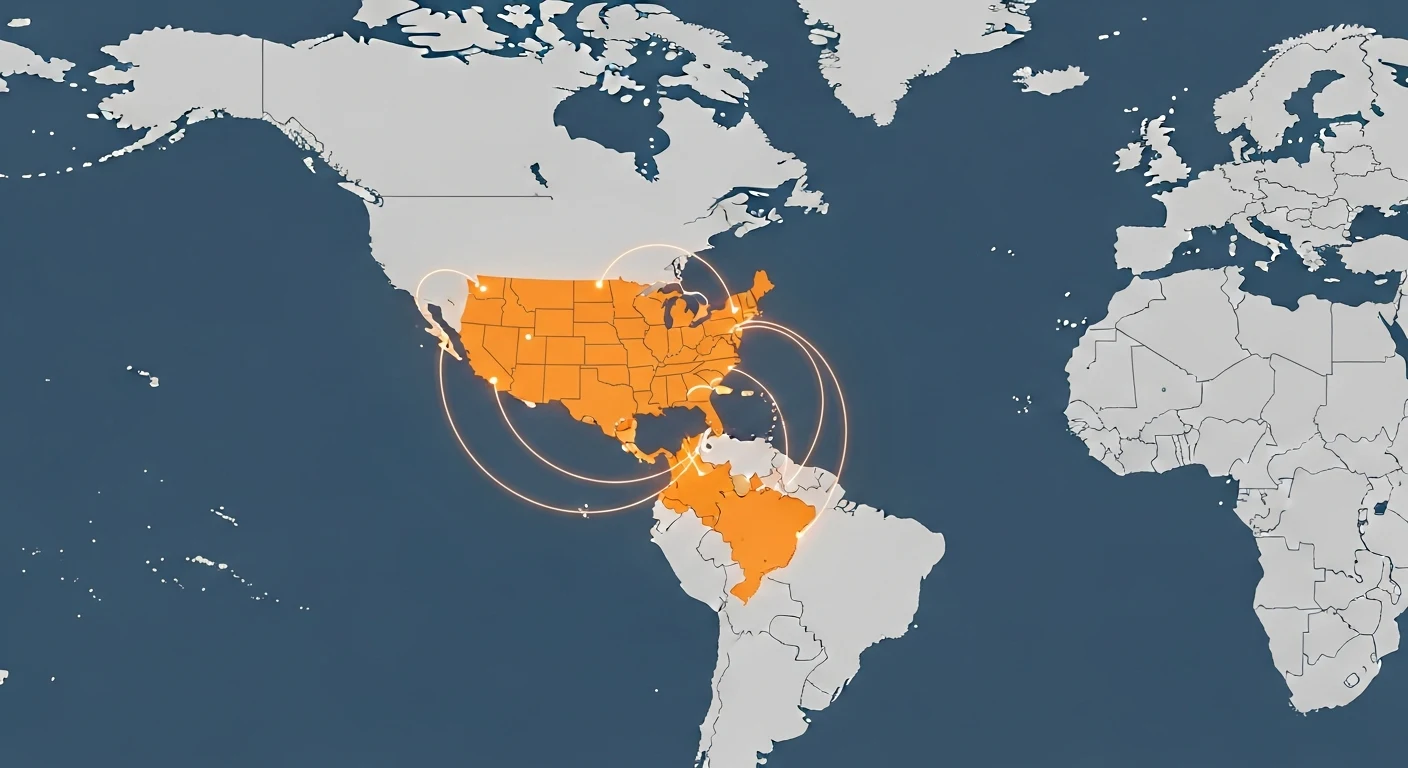 Brazil7–8 hrs overlap
Mexico6–8 hrs overlap
Colombia7–8 hrs overlap
Costa Rica6–7 hrs overlap
Brazil7–8 hrs overlap
Mexico6–8 hrs overlap
Colombia7–8 hrs overlap
Costa Rica6–7 hrs overlap
Working-hour overlap between the continental US and four Latin America hiring markets.
| Country | Typical Offset from US Eastern | Real-Time Overlap |
|---|---|---|
| Brazil | 1 to 2 hours | 7 to 8 hours, no daylight saving shift |
| Mexico | 0 to 2 hours | 6 to 8 hours, spans all 4 US time zones |
| Colombia | 0 to 1 hour | 7 to 8 hours |
| Costa Rica | 1 to 2 hours | 6 to 7 hours, no daylight saving shift |
Why the Extra Hours of Overlap Matter
Seven or eight hours of overlap versus three doesn’t sound like a big swing on paper. It becomes one the moment a sprint slips and someone needs an answer today, not tomorrow morning. As a result, standups run tighter, code reviews close faster, and blockers get unstuck same-day when both teams are actually awake at the same time, not because the offshore side is any less capable, but because live back-and-forth just moves faster than a Slack thread spanning two workdays. Meanwhile, Brazil’s flight distance from most of São Paulo’s hiring pool to the US East Coast is longer than Mexico’s, which matters if in-person visits are part of the plan, but it rarely shows up in day-to-day collaboration.
For a closer look at how this stacks up against a US-based nearshore staffing agency specifically, the nearshore staffing agency vs traditional staffing agency comparison covers the model differences in more depth than fits here.
When a Traditional Agency Still Wins
A traditional staffing agency still makes sense for a single urgent hire you need in a seat within two weeks, a highly specialized skill set with almost no regional talent depth to draw from, or a genuine short-term gap under 90 days where setup overhead outweighs any savings.
- You need someone in a chair by next week and can’t wait through even a compressed nearshore onboarding cycle.
- The role calls for a niche certification or clearance that narrows the candidate pool to a handful of people.
- It’s a genuine 60-day bridge, not a temp role quietly on track to become permanent over the next three years.
- Local, in-person presence is a hard requirement of the job itself, not a nice-to-have.
- You’re hiring more than one or two roles a year in Brazil or across Latin America, not a one-off need.
- Real-time collaboration matters, and near-full working-day overlap beats an async handoff.
- Compliance risk needs to sit with the staffing partner, not on your own books.
- Cost per hire is a genuine constraint on how many people you can field this year.
How Often You’re Hiring Decides the Model
If you’re only hiring once or twice a year, a dedicated Brazil staffing partnership probably isn’t worth setting up yet. The overhead doesn’t pencil out for occasional, one-off needs. In short, that’s a straight answer, not a hedge.
 2+ roles a year
Real-time collaboration needed
Compliance risk owned by partner
Under 90-day bridge
2+ roles a year
Real-time collaboration needed
Compliance risk owned by partner
Under 90-day bridge
Quick decision checklist, traditional agency vs a dedicated Brazil staffing model.
The Dedicated Brazil Team Model
A dedicated Brazil staffing model pairs a US company with vetted, full-time talent based in Brazil under a single flat rate, with the staffing partner handling recruiting, CLT registration, payroll, and local labor-law compliance so the client manages the work, not the paperwork behind it.
Kore BPO runs this model as part of its nearshore staffing agency practice, covering Brazil and the wider Latin America region for data, engineering, and operations roles. We’ve placed 6,236 hires for 257 US companies since founding, and the structure comes down to three things a contractor arrangement can’t offer, direct day-to-day management of the hire’s work, a resume turnaround of 2 to 5 business days, and zero upfront fees before candidates ever land in your inbox.
Where a Brazil Staffing Agency Model Breaks Down
Where this breaks down is a company that treats it like a staffing agency and expects a warm body by Thursday. Wrong expectation, wrong model. Vetting takes longer than a contractor placement, because the entire point is finding someone who’s still on the team in three years, not three weeks.
The Takeaway
Two things worth carrying out of this comparison.
The markup math on a traditional agency compounds every year the base salary climbs, while a flat Brazil staffing rate doesn’t. Compliance isn’t a footnote just because the cost story looks favorable. Misclassification risk under Brazil’s CLT and the vínculo empregatício test is real, and it lands on the hiring company, not the worker, so match the model, agency or dedicated Brazil team, to the actual shape of the need in front of you.
What Hiring Managers Actually Ask Before They Switch
Is a Brazil staffing agency actually cheaper, or does it just look that way at first?
It holds up over the life of the engagement, not just on the opening invoice. A flat, all-in rate doesn’t carry the compounding markup a percentage-based agency fee does as salaries climb year over year, even after CLT employer costs are factored into that rate.
Realistically, how fast can a Brazil-based hire start?
2 to 5 business days for an initial candidate slate with a dedicated staffing partner, though the full vetting-to-start timeline usually runs longer than a same-week contractor placement. Speed and fit trade off against each other here.
Compliance and Delivery Speed
Who’s liable if a Brazil-based worker is misclassified?
Usually the hiring company, unless a staffing or employer-of-record partner has formally assumed that role. A labor court reclassification under CLT can trigger retroactive FGTS, 13th salary, and vacation pay, so it’s not a small detail to skip past.
Is CLT employment more expensive than just paying a contractor rate?
On paper, yes, roughly 1.7x to 2x gross salary once FGTS, the 13th salary, and social contributions are added in. In practice, a dedicated staffing partner builds that load into one flat rate, so it stops being a separate line item you have to track yourself.
Picking Brazil and Weighing the Tradeoffs
Does Brazil’s timezone actually beat Mexico or Colombia for real-time work?
It’s close. Brazil, Colombia, and Mexico all land in a similar 6 to 8 hour overlap band with the US workday. The bigger differentiator for Brazil is talent depth, not the clock.
What size company is this actually built for?
Companies hiring more than one or two roles a year in Brazil or across Latin America get the most out of a dedicated model. Under that, a traditional agency’s per-placement structure is probably the simpler call.
Can a traditional staffing agency also place Brazil-based workers?
Some do, usually through a contractor or CNPJ-style arrangement rather than direct CLT employment. That’s exactly where the misclassification risk covered above tends to originate.
Disclosure. Kore BPO is a Latin America and offshore staffing company. Cost and market figures in this post are sourced from third-party research, including Brasscom, AgileHRO, altLINE, SHRM, D&Q Lawyers, the US Department of Labor, and Worldometers. Internal figures reflect Kore BPO’s aggregated placement data.
Related Articles



Ready to Build in Brazil?
Kore BPO places dedicated Brazil staffing teams for US companies. Tell us the role. We’ll send pre-screened resumes in 2 to 5 days.
Contact Us