Mexico Staffing Agency Pricing: What US Companies Actually Pay in 2026


A client called us in July with two quotes for the same mid-level backend role in Guadalajara, both from agencies she trusted, sitting $16 an hour apart. Neither number was wrong. One agency folded Mexico’s mandatory employer costs into the hourly figure. The other listed them three pages deep in the contract, under a line item labeled “statutory add-ons” that most people skim right past.
Why Mexico Staffing Quotes Rarely Land on the Same Number
In short, that gap is really the whole story behind Mexico staffing agency pricing this year. The country’s labor law sets a floor nobody can quote below. Above that floor, everything comes down to how the agency chose to structure its fee, and that choice moves the number more than most buyers assume walking into the conversation. Specifically, this guide breaks down what Mexico staffing agencies actually charge by role in 2026, what’s baked into that rate, how Mexico stacks up against Colombia, Argentina, and Brazil, and where the costs that never make it onto the headline quote tend to hide.
What Mexico Staffing Agencies Charge in 2026
Mexico staffing agencies bill $7 to $13 an hour for support, admin, and customer service roles, and $24 to $58 an hour for software developers, with talent in Mexico City and Monterrey running roughly a quarter above the national average. A full-time virtual assistant placed through a full-service agency commonly runs $1,800 to $2,600 a month, all-in. Developer rates spread wider than any single number captures, and seniority still moves the price more than which city the hire sits in.
Mexico’s own pull as a nearshore market has less to do with any one rate and more to do with proximity. Most of the country runs on Central Time, the same clock as Dallas, Chicago, and most of the Midwest, and within roughly an hour of the East Coast. Mexico climbed from 25th to 19th place in Kearney’s 2026 Foreign Direct Investment Confidence Index, one of the largest single-year jumps globally, and closed 2025 with a record $40.87 billion in foreign direct investment. A Deloitte study found 62% of American companies are either considering or already relocating part of their production to Mexico, and while most of that headline is manufacturing, the same overlap in time zone and infrastructure is exactly what’s pulling US companies toward Mexico for ongoing tech and support roles too.
However, none of that tells you your real twelve-month cost. Rather, the number that actually matters is the total, and the total depends far more on which pricing structure the agency runs than on the country you picked.
Want a Mexico-Specific Quote?
Kore BPO breaks out base pay, employer costs, and markup separately, no bundled guesswork.
Mexico Rates by Role and Seniority
Generally, country sets the range, while seniority decides where inside it you land, and in Mexico that spread runs wide. For instance, entry-level developers with one to three years of experience earn roughly $31,600 a year, according to ERI SalaryExpert’s 2026 Mexico data, converted from local currency at current exchange rates. Mid-level talent averages closer to $36,200, and senior developers with eight or more years land around $51,500. If you convert those to a standard work year, the direct-pay hourly figures run roughly $15 to $25 an hour before any agency costs touch the number.
| Role | Direct Pay (hourly equiv.) | Typical Agency Bill Rate |
|---|---|---|
| Support / Admin | $4-$7/hr | $7-$13/hr |
| Junior Developer | $12-$18/hr | $24-$38/hr |
| Mid-Level Developer | $17-$25/hr | $38-$55/hr |
| Senior Developer | $25-$35/hr | $55/hr and up |
Mexico City and Monterrey carry a real premium here. ERI’s data puts Monterrey salaries about 24% above the national average and Mexico City runs close behind it, which lines up with what we see in actual placements. Guadalajara trends a step under both on raw pay but has built a strong reputation of its own, often called Mexico’s tech hub, with a dense concentration of software companies and a talent pool that skews younger and increasingly specialized.
Mexico’s overall tech workforce backs that up at scale. The country counts more than 560,000 software engineers and produces roughly 124,000 STEM graduates a year, and English proficiency runs strongest in exactly the three cities driving most of the hiring activity, Mexico City, Guadalajara, and Monterrey.
 Support / Admin$7-$13/hr
Junior Dev$24-$38/hr
Mid-Level$38-$55/hr
Senior$55/hr+
Support / Admin$7-$13/hr
Junior Dev$24-$38/hr
Mid-Level$38-$55/hr
Senior$55/hr+
What’s Really Inside a Mexico Staffing Rate
Essentially, the number on the quote is a bundle, not a base price. Three layers stack on top of each other to build it, and skipping any one of them is how two honest agencies end up quoting numbers that look nothing alike.
Base pay is what the worker actually takes home, and it’s the figure most quotes lead with because it’s the smallest-looking number on the page.
Employer Costs and Agency Markup Add Up Fast
Mandatory employer costs come next, and Mexico’s structure has more moving parts than most US buyers expect. Employers contribute to the Mexican Social Security Institute, commonly called IMSS, across several branches covering disability, retirement, and severance, plus 5% of the wage base to INFONAVIT, the national housing fund, according to PwC’s Worldwide Tax Summaries for Mexico. Layer on a state-level payroll tax, Mexico City charges 4%, and other states run 1% to 5%, plus statutory benefits like the year-end aguinaldo bonus, a vacation premium, and profit sharing where it applies. Add it up and total employer-side costs commonly land between 30% and 45% of gross salary before any agency margin touches the figure.
Agency markup sits on top of both of those. Staffing markups average 25% to 71% above base pay depending on skill level and contract length, per IBISWorld’s 2026 office staffing and temp agency industry analysis, the same industry-wide range that holds across most Latin American nearshore markets, Mexico included.
What the Full Stack Looks Like in Practice
For example, run the arithmetic on a mid-level developer earning $20 an hour in direct pay. First, add Mexico’s roughly 35% employer-cost load and you land near $27 an hour before the agency has taken a cent. Then, add a 35% markup on top of that loaded figure and the bill rate comes out close to $36 an hour. As a result, two agencies quoting the same worker can present that as “$20/hr” and “$36/hr” and both be telling the truth, just about different layers of the same stack.
Mexico’s general minimum wage rose 13% for 2026, to 315.04 pesos a day, roughly $549 a month at current exchange rates, marking the ninth consecutive year of a double-digit increase, per Littler’s 2026 employment law update. The Northern Border Free Zone runs higher still, at 440.87 pesos a day. Worth asking any vendor quoting off an older rate card whether the number has actually been refreshed for the year.
 Agency Markup+35%
Employer Costs+35%
Base Pay$20/hr
Bill Rate$36/hr
Agency Markup+35%
Employer Costs+35%
Base Pay$20/hr
Bill Rate$36/hr
Staffing Models Compared for Mexico Hires
Generally, three pricing structures cover most Mexico engagements, and the model you pick changes your total cost more than the country does once you run it out over a year.
- Staff augmentation bills an hourly or monthly rate that bundles base pay, employer costs, and agency margin into one number. It flexes with hours worked, which suits project-based or part-time engagements where headcount might shift.
- An employer of record, or EOR, charges a flat fee per worker per month on top of actual salary, commonly $400 to $800, to handle Mexican payroll, IMSS filings, and legal compliance. You direct the work day to day. The EOR is the legal employer on paper.
- Direct placement charges one fee, usually 15% to 25% of first-year salary, paid once the hire closes. No ongoing markup after that, but you take on full Mexican employer obligations yourself unless you already operate an entity there.
The trap is comparing headline numbers across models like they’re the same kind of number. For instance, a $35/hr staff augmentation rate and a $600/month EOR fee stacked on a $45,000 salary can land close to the same annual total, but they behave completely differently if the engagement scales up or winds down mid-year. Instead, pick based on how confident you are in headcount twelve months out, not just which figure looks smaller on the page in front of you.
Mexico Vs Colombia, Argentina, and Brazil
Mexico sits close to the middle of the region on price, not at either edge. Colombia prices within a few dollars of Mexico across most roles, according to our Colombia staffing agency pricing breakdown. Argentina trends higher at the senior tier, partly on strong English fluency and a deep bench of experienced engineers, though peso volatility there means most serious contracts still get priced and paid in USD regardless. Brazil tends to run lowest for comparable software roles, which reflects the size of its talent pool more than any gap in quality. For the full country-by-country breakdown across the region, see our guide to Latin America staffing pricing, or start with what Latin America staffing actually means if you’re still deciding whether the region fits your hiring plan at all.
What Mexico brings that a pure price table won’t show is the combination that’s made it the busiest nearshore market for US companies two years running. Mexico became the United States’ top trading partner in 2023 and has held that spot since, with bilateral trade now exceeding $800 billion a year. Full time zone overlap with US business hours across nearly the whole country. A developer pool north of half a million, concentrated in three cities that already speak the language of a US engineering org. And a market mature enough that background checks, technical assessments, and vetting infrastructure exist at a level some smaller nearshore markets are still building toward.
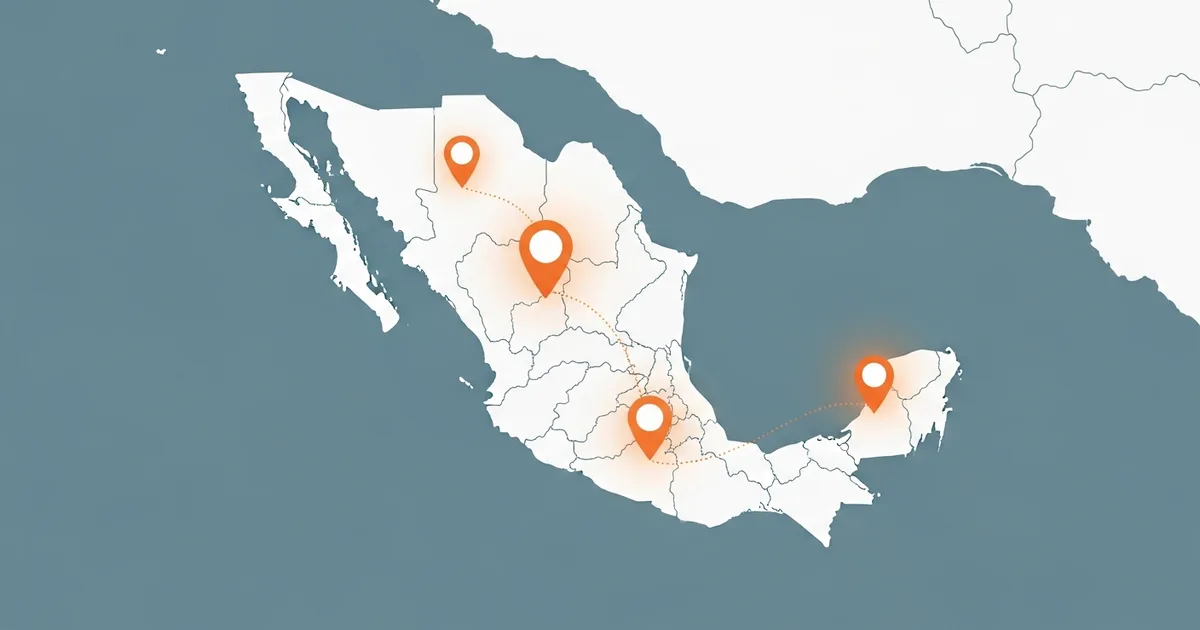 Monterrey
Guadalajara
Mexico City
560,000+ EngineersCentral Time Zone
Monterrey
Guadalajara
Mexico City
560,000+ EngineersCentral Time Zone
Mexico Staffing Vs Traditional US Staffing Agencies
A traditional US staffing agency filling a backend developer role typically bills $75 to $150 an hour once markup is included, benchmarked against the median US software developer salary of $133,080 that the Bureau of Labor Statistics reported in its most recent Occupational Outlook Handbook release, roughly $64 an hour in direct pay before any agency involvement. A comparable Mexico hire through a staffing agency runs $38 to $58 an hour for mid-to-senior talent. The savings case holds up before time zone overlap even enters the conversation.
Why the Cheapest Quote Isn’t Always the Right Call
So why doesn’t every company just chase the lowest number on the sheet? Coordination cost is the part that never shows up on an invoice. A developer working Central Time joins the same standups and ships on the same sprint cycle as a Dallas-based team. A hire eight or more time zones out doesn’t, and that gap turns into async handoffs and delayed reviews that quietly eat into whatever the hourly rate saved. We’ll disclose the bias plainly here, since placing this kind of talent is our business and we benefit when a company decides Mexico staffing fits their roadmap.
That said, the math still holds regardless of who’s telling you about it. If you’re filling one part-time role for a three-month stretch, a freelance platform will likely serve you better than a full agency relationship. Mexico staffing earns its cost advantage on ongoing, collaborative roles, not one-off gigs. For the broader comparison across pricing models, see our guides to nearshore staffing agency pricing and offshore staffing agency pricing.
 Mexico Staffing$38-$58/hr
US Staffing Agency$75-$150/hr
Mexico Staffing$38-$58/hr
US Staffing Agency$75-$150/hr
Hidden Costs and How to Budget for Mexico Staffing
Generally, the headline rate is never the whole number, since a handful of things routinely get left off it.
Onboarding time. A new hire, however strong on paper, takes two to six weeks to reach full productivity depending on role complexity. Budget that ramp as a real cost, not a rounding error.
Attrition and replacement. Turnover happens even with strong vendors. A rushed replacement search can cost more than the original placement did, especially if the seat sat empty for weeks. Ask upfront what a vendor’s replacement guarantee actually covers and for how long.
Equipment and setup. Laptops, secure VPN access, and compliance tooling get billed separately by some agencies and folded into the base rate by others. Neither approach is wrong on its own. Not knowing which one you signed up for is the problem, and it’s a five-minute question that saves a surprise invoice later.
Peso exposure. Contracts priced in Mexican pesos but invoiced in USD move with the exchange rate, and the peso has swung from above 18 to near 17.35 against the dollar over the course of 2026 alone. Ask which side of the contract absorbs that swing before you sign, not after the first renewal notice.
Watch for automatic renewal escalators buried in the fine print, typically 5% to 8% a year. They’re legal, common, and almost never mentioned out loud during the sales conversation.
How to Budget With Margin for Error
To budget with some margin for error, take the country’s published rate, add roughly 30% to 45% to account for Mexico’s mandatory employer costs, then layer the agency’s stated markup on top of that loaded figure rather than on the bare base pay. Admittedly, that won’t be exact to the dollar. Still, it’ll be close enough to avoid the sticker shock that hits companies who budgeted off the headline number alone.
Kore BPO is a US-owned staffing partner that has placed more than 6,200 hires for 257 clients across accounting, tech, marketing, and operations, with resumes typically delivered in two to five business days and no upfront fees. We break out base pay, statutory costs, and markup separately on every Mexico quote. Explore our guide to choosing a Latin America staffing partner for vetting criteria beyond price, or see how the full cluster compares in Latin America staffing vs traditional staffing agencies.
Questions US Companies Ask About Mexico Staffing Pricing
How much does a Mexico staffing agency actually charge per hour?
Roughly $7 to $13 an hour for support and admin roles, and $24 to $58 an hour for software developers in 2026. Mexico City and Monterrey run about a quarter above the national average, and seniority moves the number more than location does.
Is hiring through a Mexico staffing agency cheaper than a US hire?
Yes, by a wide margin. The Bureau of Labor Statistics puts the median US software developer salary at $133,080 a year, which works out to roughly $64 an hour before a traditional staffing agency’s markup pushes the bill rate to $75 to $150 an hour. A mid-to-senior Mexico hire through a staffing agency typically runs $38 to $58 an hour.
What’s the difference between staff augmentation, EOR, and direct placement pricing in Mexico?
Staff augmentation bills an hourly or monthly rate bundling base pay, employer costs, and margin into one number, and it flexes with hours worked. An employer of record charges a flat monthly fee per worker, commonly $400 to $800, on top of salary to handle Mexican payroll and compliance. Direct placement charges a one-time fee, typically 15% to 25% of first-year salary, with no ongoing markup after that. Choose based on how certain your headcount plans are a year out, not which number looks smallest today.
More Questions About Mexico Staffing Costs
What’s really inside a Mexico staffing agency’s bill rate?
Three layers. Base pay, which is what the worker actually earns. Mandatory Mexican employer costs, commonly 30% to 45% of gross salary once IMSS, INFONAVIT, state payroll tax, and statutory benefits are included. And agency markup on top of that loaded figure, averaging 25% to 71% depending on skill and contract length. A quote that won’t separate those three is bundling something you can’t verify.
What hidden costs should I budget for beyond the quoted rate?
Onboarding ramp time, typically two to six weeks before a new hire reaches full productivity. Attrition and replacement costs if someone leaves. Equipment and compliance tooling, which some agencies bill separately. And peso-to-dollar exposure, since contracts priced in pesos but invoiced in USD move with the exchange rate. Ask which side of the contract absorbs that swing before signing.
Comparing Quotes the Right Way
How do I compare Mexico staffing agency quotes fairly?
Convert every quote to a 12-month total, not a per-hour number. Then, ask each vendor to itemize base pay, Mexican employer costs, agency markup, and any setup fees separately, in writing. Generally, an agency that won’t break a quote down into those pieces is usually the one with the most reason not to show you the math.
Rate ranges in this post reflect mid-2026 Mexico staffing market data for dedicated placements. Freelance platform rates and short-term project quotes may differ. Figures are pre-overhead unless otherwise noted and do not include client-side management time. Peso-to-dollar conversions use exchange rates current as of August 2026 and will shift over time. Kore BPO internal figures refer to aggregate placement outcomes from 2024-2025.
Related Articles



Ready to See What Mexico Talent Actually Costs?
Kore BPO gives you an itemized quote for Mexico hires, base pay, employer costs, and markup broken out separately.
Get an Itemized Quote