In-House vs. Outsourced Order Management and Fulfillment Support: Which Model Fits Your Business?
Keeping order management in-house and outsourcing it are not interchangeable paths to the same result. Here is a factual, line-by-line comparison of cost, scalability, accuracy, and control so you can see which model actually fits where your business stands today.
Weighing in house vs outsourced order management outsourcing services comes down to real numbers, not a gut preference. Running order management in-house typically costs $8 to $15 per order once you count labor, software, and warehouse overhead, plus $5,000 to $50,000 a year in order management software alone. Outsourced order management and fulfillment support usually runs lower per-order once volume is steady, and it adds staff or seasonal capacity in days instead of months. The tradeoff is direct daily control, which stays higher with an in-house team. See our full order management and fulfillment support outsourcing breakdown for the complete model.
Why This Decision Is Not Obvious
Teams researching in house vs outsourced order management outsourcing services usually start from the wrong question. A growing ecommerce or wholesale operation hits the same wall eventually. Order volume climbs past what two or three people can hand-pack in a back room, the software tracking inventory starts disagreeing with what is actually on the shelf, and a holiday spike turns a minor staffing gap into missed ship dates. The instinct is to treat this as all-or-nothing: either build a full warehouse operation in-house, or hand the entire function to a stranger. That framing skips the real question most growing businesses actually face.
The real decision is narrower and more specific: does your current order volume, SKU complexity, and seasonal swing justify the fixed cost of an in-house team and warehouse, or does order management and fulfillment support outsourcing get you the same accuracy and speed at a lower, more flexible cost? Answering that honestly takes real numbers, not a general preference for keeping operations close.
In-House Order Management: What You Actually Get
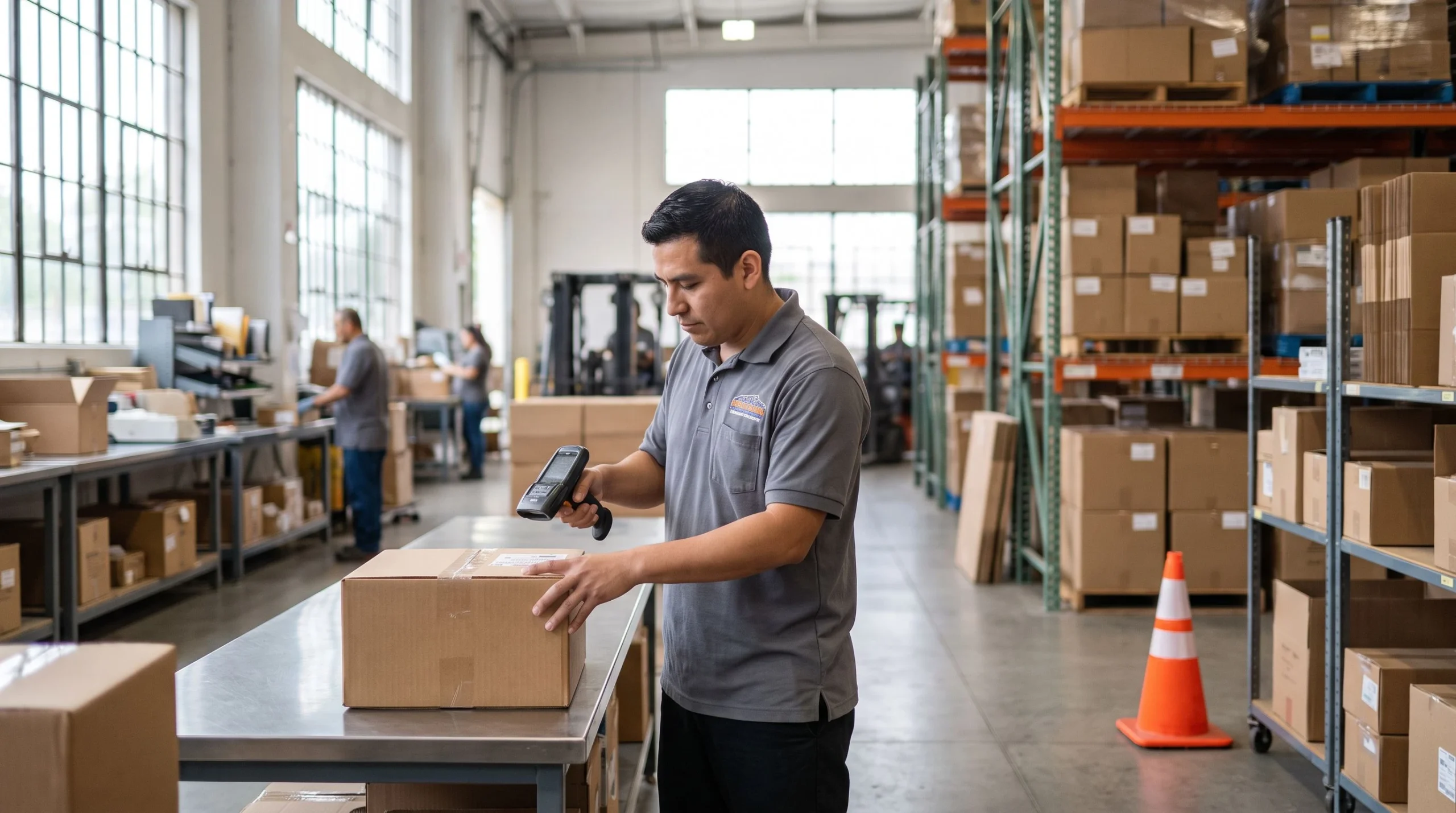
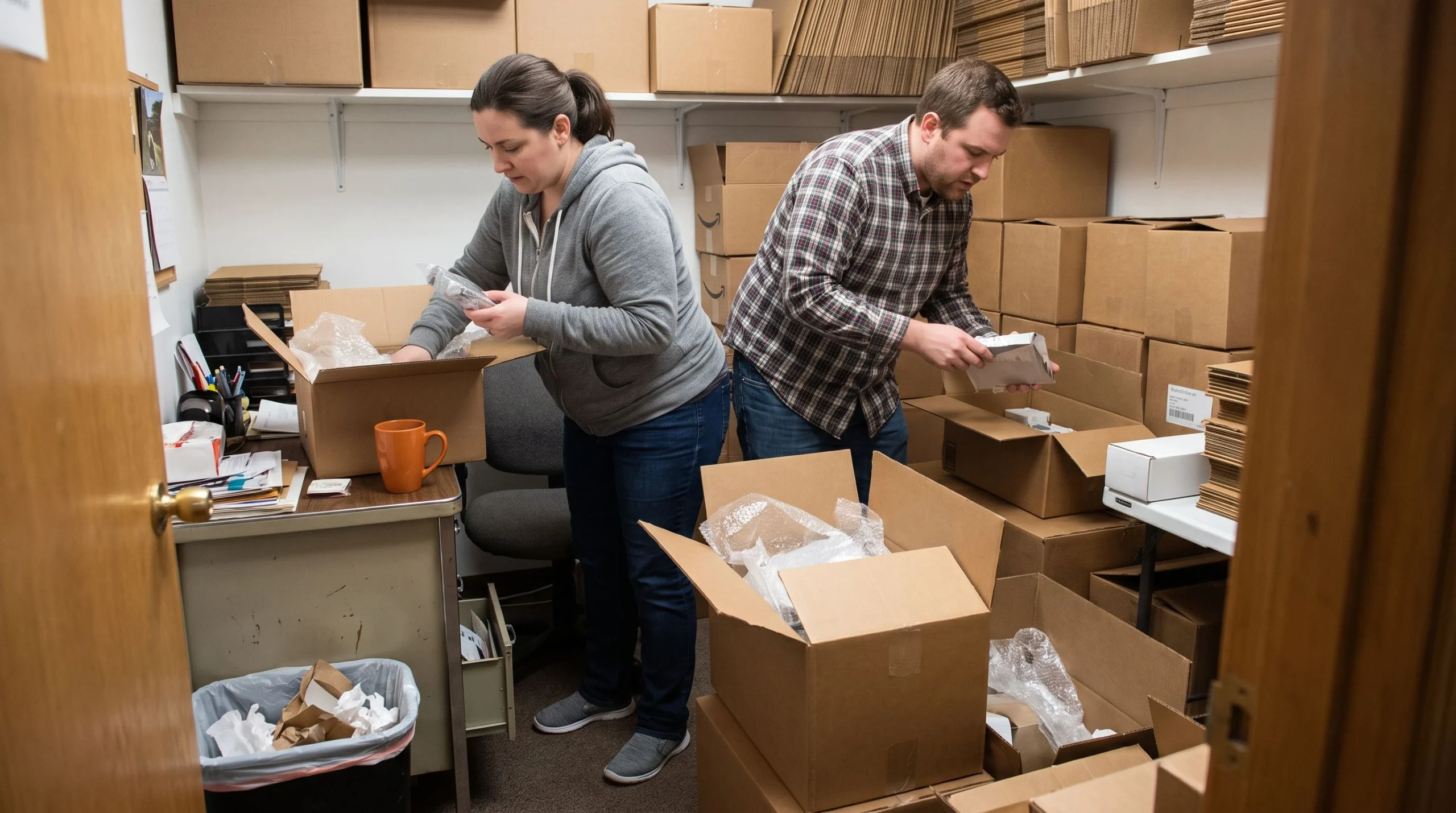
Keeping order management and fulfillment in-house means your own staff pick, pack, and ship every order out of space you control, using software your team configures and owns. Where in-house works well: low-SKU catalogs, products needing special handling or custom kitting, and businesses where same-day, on-site visibility into every order matters more than per-unit cost.
Where in-house hits limits: order volume that swings hard with seasonality forces a choice between overstaffing for slow months or scrambling to hire during peak. Warehouse lease terms, software licenses, and full-time payroll do not flex down the way outsourced capacity does, so a slow quarter still carries the same fixed cost as a busy one.
Outsourced Order Management and Fulfillment Support: What You Actually Get
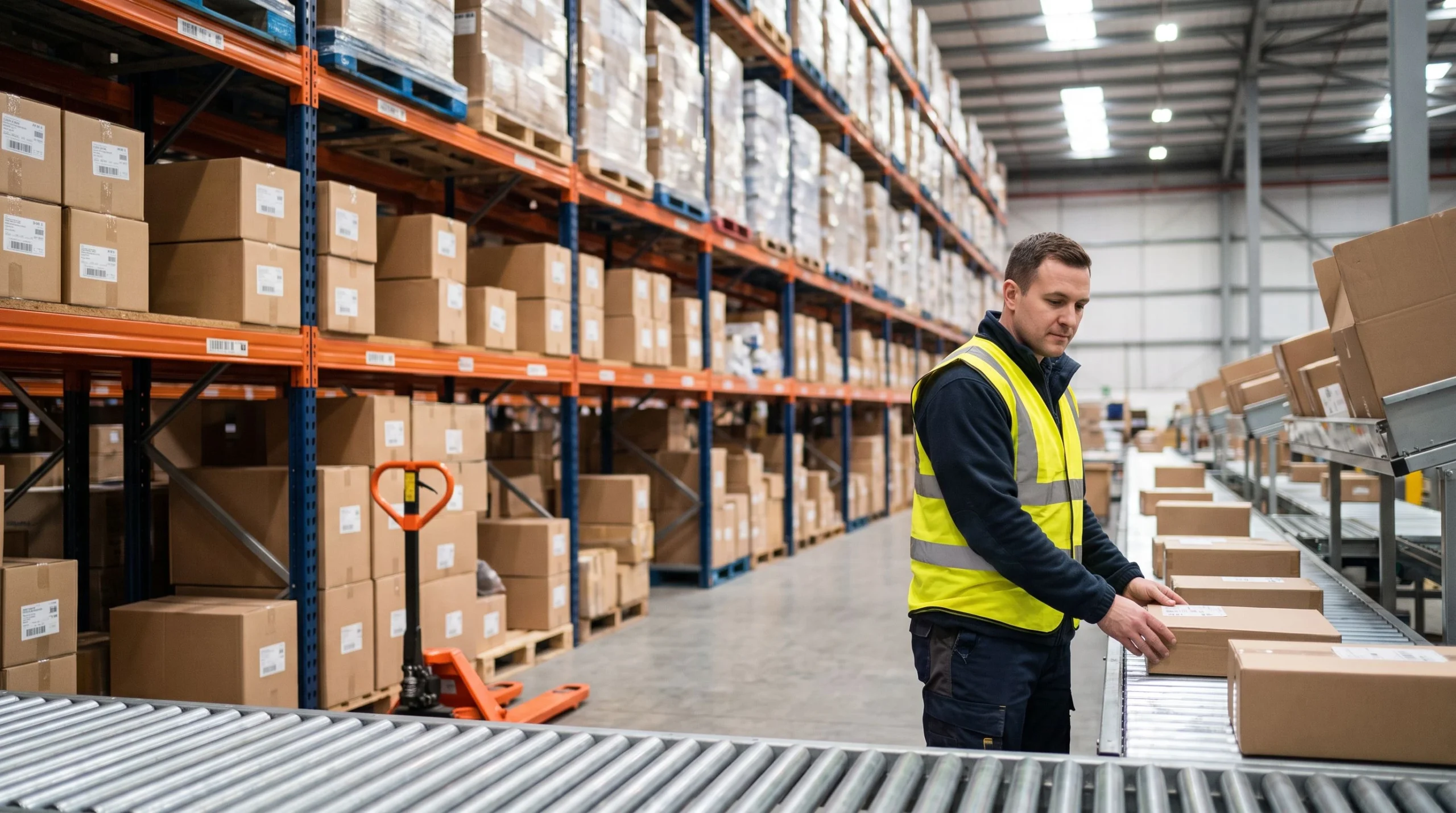
An outsourced order management and fulfillment partner runs picking, packing, shipping, and returns processing out of its own facility, plugged into your storefront and inventory systems through API or EDI integrations your team does not have to build from scratch. Where outsourcing works well: seasonal or fast-growing order volume, multi-channel selling across several storefronts, and businesses that would rather pay per order than carry warehouse fixed costs year-round.
Where outsourcing has limits: highly specialized kitting, fragile or regulated products, and businesses that need same-day physical access to inventory are harder to hand off cleanly. And the model still needs someone on your side who owns the relationship, reviews SLA performance, and catches problems before they become customer complaints.
Side-by-Side Comparison
| Category | In-House | Outsourced |
|---|---|---|
| All-in cost per order (domestic) | $8-$15, plus fixed overhead year-round | Often lower once volume stabilizes, billed per order |
| Order management software | $5,000-$50,000/yr, your team configures it | Included or bundled with the partner’s platform |
| Time to add peak-season capacity | Weeks to hire and train seasonal staff | Days, using the partner’s existing bench |
| Warehouse space | Leased or owned by your company | Owned and staffed by the partner |
| Order accuracy ownership | Fully yours to build and monitor | Governed by a contracted SLA |
| Day-to-day physical access to inventory | Yes, on-site | Remote, through reporting and integrations |
| Cost during a slow season | Fixed, regardless of order volume | Scales down with order volume |
Cost: The Real Numbers
Pick-and-pack labor is the single largest line item in any fulfillment operation, running $2.75 to $4.25 per order and making up 40 to 55% of total cost per order, according to fulfill.com’s 2026 3PL pricing benchmarks. Layer in packaging materials and outbound shipping, and the all-in domestic order cost commonly lands between $8 and $15, a figure confirmed across multiple 2026 fulfillment cost breakdowns, including eightx’s vertical-by-vertical fulfillment cost analysis.
Warehouse wages are rising, not flat. Bureau of Labor Statistics figures put average warehousing and storage pay at $25.88 an hour in March 2026, up 5.1% year-over-year, with preliminary August 2026 figures closer to $26.74. That wage line sits on top of benefits, payroll tax, and turnover cost that an in-house team carries regardless of order volume that month.
On the software side, warehouse management system pricing guides put small-business WMS cost at $100 to $300 per user per month, with first-year total cost, software plus implementation plus scanners, landing between $5,000 and $50,000. An outsourced order management and fulfillment support partner typically folds this software cost into its per-order or monthly fee, so it never shows up as a separate line item on your books.
The honest caveat: outsourcing is not free of oversight cost. Someone on your team still needs to own the SLA relationship, review accuracy reports, and catch issues early. Budget for that function. It is smaller than running a warehouse, but it is not zero.
Scaling for Peak Seasons
Holiday volume, a viral product moment, or a new wholesale account can double order volume inside a few weeks. An in-house team has to source, hire, badge, and train seasonal staff on that same timeline, and most growing SMBs simply cannot compete with larger employers for seasonal warehouse labor once the whole retail sector is hiring at once.
An outsourced fulfillment partner with an existing multi-client facility can reallocate floor staff and shelf space to your account within days, because the infrastructure and trained labor pool already exist before your spike happens. The tradeoff is less control over exactly who is handling your inventory during that surge, which is why SLA terms and accuracy reporting matter more, not less, during peak season.
Order Accuracy and SLA Ownership
Order accuracy is where the control argument against outsourcing gets tested the most directly. Industry data on fulfillment errors shows average error rates across logistics sitting at 1% to 3%, while the most accurate operations hit 99.5% to 99.9% accuracy. Each individual error can cost $15 to $75 to fix once return shipping, reshipping, and labor are counted, and at scale that adds up fast: a 1% error rate on 1,500 daily orders can run roughly $195,000 a year in correction costs alone.
Done right, outsourcing does not mean losing visibility into that number. A properly structured contract makes accuracy a named, measured SLA metric with real reporting cadence, not a vague promise. In-house teams own accuracy by default, with no contract to enforce it, which can cut both ways: full control, but also no formal recourse when a new hire is still learning the process.

Technology and Integration Access
In-house order management means your team selects, configures, and maintains its own software stack, from the warehouse management system to the barcode scanners on the floor. That gives full control over customization, but every upgrade, integration, and bug fix is your team’s responsibility and cost.
Outsourced order management and fulfillment support partners typically bring their own order management platform already integrated with major storefronts and marketplaces, so a new sales channel can often go live in days instead of requiring a custom build. What you give up is the ability to fully customize that platform to your exact workflow. For most SMBs below a certain order volume, the tradeoff favors the outsourced platform’s existing integrations over a from-scratch build.
In House vs Outsourced Order Management Outsourcing Services: How to Decide
Choosing between in house vs outsourced order management outsourcing services depends on order volume, SKU complexity, and how much seasonal swing your business actually sees, not a blanket preference for keeping things close:
- If your order volume is steady and low enough that one or two people can hit accuracy targets by hand, in-house may still make sense, especially with specialized kitting needs.
- If seasonal spikes regularly overwhelm your current team, or warehouse lease and software costs are eating margin during slow months, outsourcing solves both the cost and capacity problem together.
- If you are expanding into new sales channels faster than your software stack can integrate, an outsourced partner’s existing platform connections usually save months of build time.
For a structured framework on vetting and selecting the right fulfillment partner once the decision is made, see our guide to choosing an order management outsourcing partner, and our order management and fulfillment support outsourcing pricing breakdown for real per-order and monthly cost ranges.
In House vs Outsourced Order Management Outsourcing Services: Common Questions

Related Articles



Ready to Simplify Order Management and Fulfillment?
See how Kore BPO builds outsourced order management and fulfillment support teams that cost less than running it in-house and scale in days, not weeks.
Talk to Kore BPO