Brazil Staffing Agency Pricing: What US Companies Actually Pay in 2026


- 01What Brazil Staffing Agencies Charge in 2026
- 02Rates by Role and Seniority
- 03What’s Really Inside the Rate
- 04Staffing Models Compared
- 05Brazil Vs Mexico, Colombia, and Costa Rica
- 06Brazil Vs Traditional US Staffing Agencies
- 07Why Companies Pay Brazil’s Premium Anyway
- 08Where Brazil Is Not the Right Fit
- 09Questions People Ask
Brazil is not the cheapest country in Latin America to staff up in, and any agency quoting it like Mexico with better weather is skipping the CLT math. Brazil’s labor code piles more mandatory cost onto every salary than Mexico or Colombia carries, and that gap shows up in every honest quote whether the agency spells it out or not.
Why Brazil’s Labor Code Changes the Math
That gap is the real story behind Brazil staffing agency pricing this year. The country runs a heavier employer-cost floor than its regional peers, and it pairs that with by far the largest technical workforce in Latin America. Neither of those is a markup an agency invented. This guide breaks down what Brazil staffing agencies actually charge by role in 2026, what’s baked into that rate, why Brazil still undercuts Costa Rica’s premium while running a bit above Mexico and Colombia, and where the country’s real advantage, scale and timezone, changes the calculation entirely.
What Brazil Staffing Agencies Charge in 2026
Brazil staffing agencies bill $10 to $17 an hour for support, admin, and customer service roles, and $28 to $75 an hour for software developers, with senior specialists in Sao Paulo often running past the top of that range. A full-time bilingual support hire placed through a full-service agency commonly runs $1,900 to $2,900 a month, all-in. Developer rates spread wide, and seniority moves the price more than which metro area the hire sits in.
Brazil’s pull as a nearshore market has less to do with rock-bottom pricing and more to do with depth. Brasscom, the country’s technology industry association, projects Brazil’s ICT sector will end 2026 with roughly 2.15 million formal workers, still leaving an estimated shortage of around 400,000 technology professionals against demand. That kind of scale, universities graduating specialists by the tens of thousands every year, decades of multinational operations centers, mature outsourcing infrastructure, doesn’t build itself around a race-to-the-bottom rate card.
Why the Total Matters More Than the Sticker Price
None of that tells you your real twelve-month cost, though. Instead, the number that actually matters is the total once every layer of the quote is added up. In short, Brazil staffing agency pricing depends far more on which pricing structure the agency runs than on the country you picked.
Want a Brazil-Specific Quote?
Kore BPO breaks out base pay, employer costs, and markup separately, no bundled guesswork.
Brazil Rates by Role and Seniority
Country sets the range. Seniority decides where inside it you land. Entry-level software developers with one to three years of experience earn roughly $26,700 a year in direct pay, according to ERI SalaryExpert’s 2026 Brazil data, converted from local currency at current exchange rates. The average software developer of any level earns closer to $38,900, and senior developers with eight or more years land around $47,400. Convert those to a standard work year and the direct-pay hourly figures run roughly $13 to $23 an hour before any agency costs touch the number.
| Role | Direct Pay (hourly equiv.) | Typical Agency Bill Rate |
|---|---|---|
| Support / Admin | $6-$9/hr | $10-$17/hr |
| Junior Developer | $13-$17/hr | $28-$38/hr |
| Mid-Level Developer | $17-$20/hr | $38-$55/hr |
| Senior Developer | $20-$23/hr | $55-$75/hr |
Sao Paulo carries the largest share of this market, but it no longer carries it alone. For instance, ERI SalaryExpert’s data puts the average call center support representative at roughly $7.30 an hour in direct pay, with entry-level reps closer to $5.60 and senior reps near $8.60. Overall, support and administrative roles price fairly consistently across Brazil’s major metros, which is unusual for a country this large, and it’s part of why bilingual support hiring holds steady demand outside Sao Paulo.
A Workforce That Doesn’t Bottleneck on One City
Brazil’s tech talent doesn’t concentrate in a single metro the way smaller nearshore markets do. Florianopolis, nicknamed Brazil’s Silicon Valley, houses roughly 676 startups and generates more than 50,000 direct and indirect tech jobs on an island a fraction of Sao Paulo’s size. Recife’s Porto Digital district, built out of a converted 17th-century harbor, now hosts more than 330 technology companies and roughly 20,000 professionals, per Rest of World’s reporting on the district. Belo Horizonte adds another established engineering hub in the mix. That spread is part of why Brazil’s pricing holds steadier at scale than markets that run out of senior talent the moment a company tries to hire more than a handful of people in one city.
 Support / Admin$10-$17/hr
Junior Dev$28-$38/hr
Mid-Level$38-$55/hr
Senior$55-$75/hr
Support / Admin$10-$17/hr
Junior Dev$28-$38/hr
Mid-Level$38-$55/hr
Senior$55-$75/hr
What’s Really Inside a Brazil Staffing Rate
The number on the quote is a bundle, not a base price. Three layers stack on top of each other to build it. That means skipping any one of them is how two honest agencies end up quoting Brazil staffing agency pricing numbers that look nothing alike.
Base pay is what the worker actually takes home, and it’s the figure most quotes lead with because it’s the smallest-looking number on the page.
CLT Employer Costs and Agency Markup Add Up Fast
Mandatory CLT employer costs come next, and Brazil’s structure runs among the heaviest in the region. Specifically, INSS social security contributions run roughly 20% to 28.8% of gross salary depending on the company’s risk classification, per AgileHRO’s 2026 Brazil employer-cost breakdown. In addition, FGTS, the mandatory severance fund, adds an 8% monthly deposit on top. Employers also set aside 8.33% of monthly wages to fund the mandatory 13th salary bonus, plus a 1% to 3% work-accident risk premium and roughly 3.3% in System S third-party contributions that fund national training institutions. Altogether, total CLT employer costs commonly land at 30% to 36% above gross salary, before any agency margin touches the figure.
Agency markup sits on top of that. On average, staffing markups run 25% to 71% above base pay depending on skill level and contract length, per IBISWorld’s 2026 office staffing and temp agency industry analysis, the same industry-wide range that holds across most Latin American nearshore markets, Brazil included.
What the Full Stack Looks Like in Practice
Run the arithmetic on a mid-level developer earning $19 an hour in direct pay. First, add Brazil’s roughly 33% CLT employer-cost load and you land near $25 an hour before the agency has taken a cent. Then, add a 40% markup on top of that loaded figure and the bill rate comes out close to $35 an hour, before scaling up for seniority and specialization the way the table above shows. As a result, two agencies quoting the same worker can present that as “$19/hr” and “$35/hr” and both be telling the truth, just about different layers of the same stack.
Some EOR providers quote flat monthly fees for Brazil in the $500 to $700 range on top of salary, separate from the CLT cost load itself, according to HiveDesk’s 2026 Brazil EOR guide. That fee covers payroll administration and compliance filings. It doesn’t replace the 30-36% statutory cost load. It sits on top of it.
 Agency Markup+40%
CLT Employer Costs+33%
Base Pay$19/hr
Bill Rate$35/hr
Agency Markup+40%
CLT Employer Costs+33%
Base Pay$19/hr
Bill Rate$35/hr
Staffing Models Compared for Brazil Hires
Three pricing structures cover most Brazil engagements. Beyond the country you pick, the model you choose changes your total cost more than anything else once you run it out over a year, so understanding Brazil staffing agency pricing means understanding these three structures first.
- Staff augmentation bills an hourly or monthly rate that bundles base pay, CLT employer costs, and agency margin into one number. It flexes with hours worked, which suits project-based or part-time engagements where headcount might shift.
- An employer of record, or EOR, charges a flat fee per worker per month on top of actual salary, commonly $500 to $700, to handle Brazilian payroll, INSS and FGTS filings, and CLT compliance. You direct the work day to day. The EOR is the legal employer on paper.
- Direct placement charges one fee, usually 15% to 25% of first-year salary, paid once the hire closes. No ongoing markup after that, but you take on full CLT employer obligations yourself unless you already operate an entity in Brazil, and CLT compliance is not a spreadsheet exercise most companies want to own without local counsel.
Matching the Model to Your Hiring Timeline
The trap is comparing headline numbers across models like they’re the same kind of number. For example, a $45/hr staff augmentation rate and a $650/month EOR fee stacked on a $55,000 salary can land close to the same annual total, yet they behave completely differently if the engagement scales up or winds down mid-year. Because of that, pick based on how confident you are in headcount twelve months out, not just which figure looks smaller on the page in front of you.
Brazil Vs Mexico, Colombia, and Costa Rica
Brazil sits in the middle of the region on price, not at either end. Mexico and Colombia typically price 5 to 15% below Brazil across comparable roles, per our Mexico staffing agency pricing and Colombia staffing agency pricing breakdowns, largely because Brazil’s CLT cost load runs heavier than either country’s employer-cost structure. Costa Rica still tops the region on price, per our Costa Rica staffing agency pricing guide, running well above Brazil for equivalent seniority because of its smaller, more specialized talent pool. For the full country-by-country breakdown across the region, see our guide to Latin America staffing pricing.
What a Price Table Won’t Show You
What Brazil brings that a pure price table won’t show is depth and stability of supply. Specifically, the country’s tech workforce outsizes Mexico’s in specialized fields like cloud, data engineering, and AI tooling relative to demand, and it doesn’t concentrate risk in one metro area the way smaller markets do. As a result, companies that need to scale a team past a handful of hires, or that need a specific technical specialization Mexico and Colombia’s shallower benches can’t reliably staff, tend to accept Brazil’s modest premium as the tradeoff for not hitting a supply wall six months in.
Where Brazil and Colombia Are Basically Tied
One thing this post won’t claim, however, is an English-proficiency edge over its neighbors. According to the 2025 EF English Proficiency Index, Brazil ranks 75th globally and Colombia 76th, both in the “Low” proficiency band and essentially tied. Regardless of which country you pick, vet English fluency at the individual-hire level.
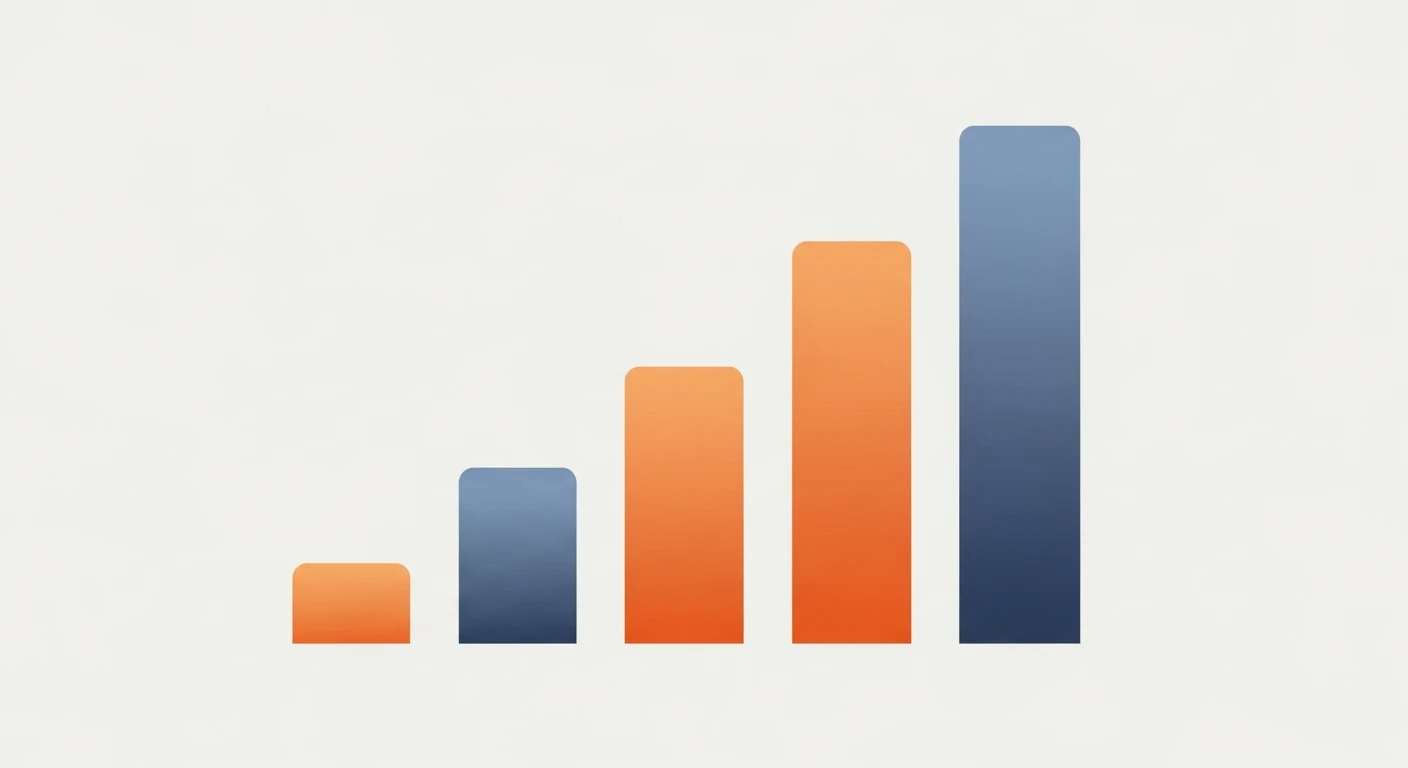 Mexico$35-$50/hr
Colombia$35-$52/hr
Brazil$38-$55/hr
Costa Rica$50-$69/hr
Mexico$35-$50/hr
Colombia$35-$52/hr
Brazil$38-$55/hr
Costa Rica$50-$69/hr
Brazil Staffing Vs Traditional US Staffing Agencies
A traditional US staffing agency filling a backend developer role typically bills $75 to $150 an hour once markup is included, benchmarked against the median US software developer salary of $133,080 that the Bureau of Labor Statistics reported in its most recent Occupational Outlook Handbook release, roughly $64 an hour in direct pay before any agency involvement. A comparable Brazil hire through a staffing agency runs $38 to $75 an hour for mid-to-senior talent. Even before factoring in CLT complexity, the savings case holds up clearly against a US hire.
Why Companies Pay Brazil’s Premium Over Cheaper Neighbors Anyway
Two things set Brazil apart from the rest of the region, and neither one is price. The first is sheer workforce depth. Brasscom’s most recent labor market outlook puts Brazil’s formal ICT workforce at roughly 2.15 million people heading into the end of 2026, still short of demand by an estimated 400,000 professionals, which tells you the market is large enough to keep growing into that gap rather than running dry. That scale matters most once a company needs to hire five, ten, or thirty people in the same specialization instead of just one.
A Timezone That Actually Overlaps
The second is timezone. Brazil abolished daylight saving time in 2019, and Brasilia Time has run a flat UTC-3 year round ever since. That puts Sao Paulo and Brasilia one hour ahead of US Eastern Time for most of the year and in sync with it during daylight saving months, without the seasonal drift that complicates scheduling with markets on the US Pacific coast. A support team or dev squad in Brazil can run a full overlapping workday with an East Coast headquarters without anyone starting before sunrise or working past dinner.
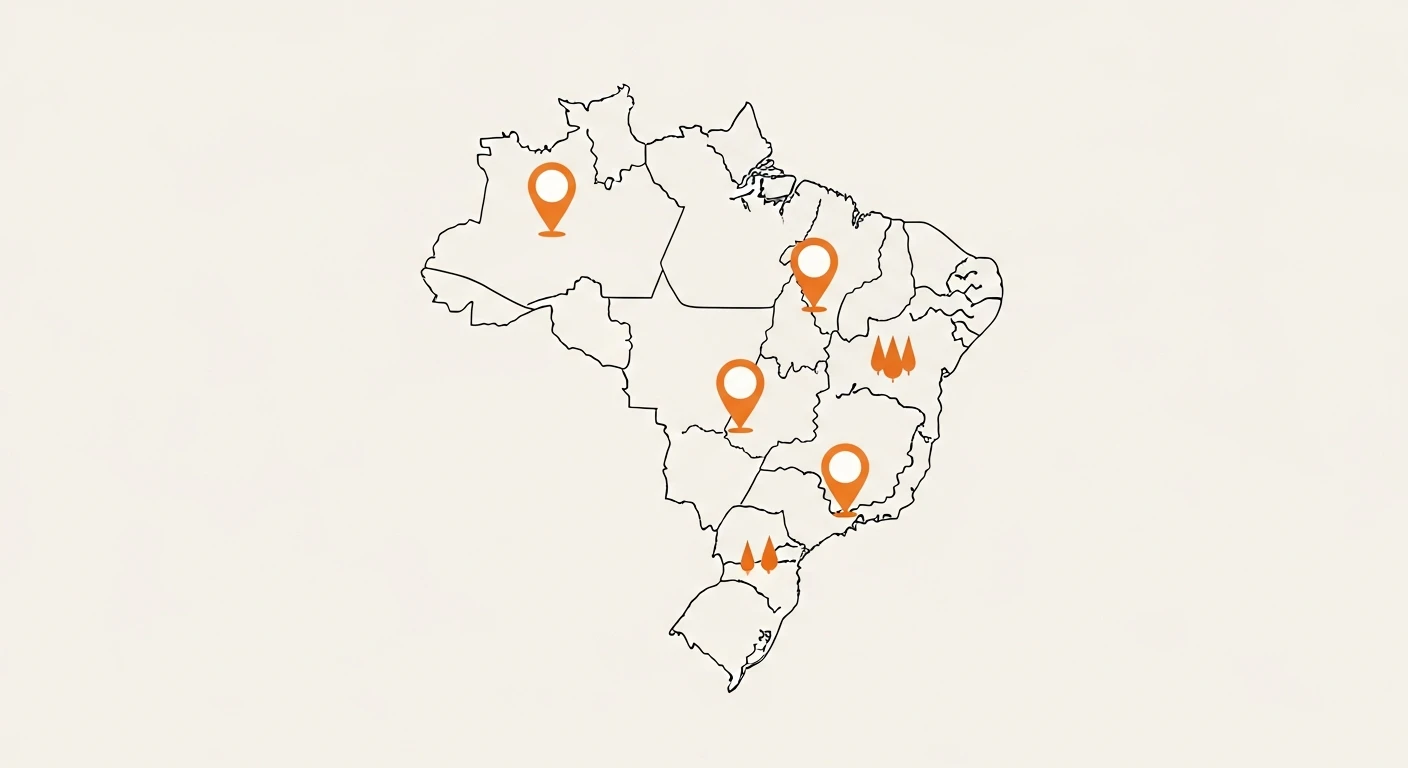 Sao PauloLargest Talent Pool
Florianopolis676 Startups
RecifePorto Digital, 20K Pros
Belo HorizonteEngineering Hub
Sao PauloLargest Talent Pool
Florianopolis676 Startups
RecifePorto Digital, 20K Pros
Belo HorizonteEngineering Hub
Neither of those advantages shows up on a rate card. They show up six months into a placement when the team hasn’t hit a hiring wall and the daily standup still lands at a normal hour for everyone on the call.
Where Brazil Staffing Is Not the Right Fit
Brazil earns its spot in this series honestly, which means saying where it doesn’t fit as well as where it does. Three things are worth knowing before you commit.
Three Things Worth Weighing Before You Commit
CLT complexity is real, not a sales objection to argue past. Brazil’s labor code is genuinely one of the more employee-protective frameworks in the world, and the 30% to 36% employer-cost load in this guide is only the payroll side of it. Meanwhile, termination rules, mandatory notice periods, and FGTS withdrawal procedures carry real compliance risk for a company without local expertise. Because of that, this is exactly the kind of overhead a staffing partner’s payroll and compliance handling is built to absorb, and it’s worth asking any vendor exactly how they handle CLT termination before you sign, not after.
Logistics and Timezone Tradeoffs to Weigh
The flight is longer than Mexico’s. Specifically, Sao Paulo to the US East Coast runs 8 to 10 hours in the air, compared to 2 to 3 hours from most Mexican tech hubs. So, if your team plans regular in-person visits, factor that into the total cost of the relationship, not just the hourly rate.
Pacific-time overlap is weaker than same-hemisphere alternatives closer to the US West Coast. Even so, Brazil’s UTC-3 clock works well against US Eastern hours, but a West Coast headquarters will see a bigger gap than it would with a market running Central or Mountain time. Therefore, companies anchored on the West Coast should weigh that against the workforce-depth advantage before assuming Brazil is the automatic regional pick.
Watch for automatic renewal escalators buried in staffing contract fine print, typically 5% to 8% a year. They’re legal, common, and almost never mentioned out loud during the sales conversation.
How to Budget With Margin for Error
To budget with some margin for error, take Brazil’s published direct-pay rate and add roughly 30% to 36% to account for the mandatory CLT employer-cost load. Then layer the agency’s stated markup on top of that loaded figure rather than on the bare base pay. That won’t be exact to the dollar, but it will keep your Brazil staffing agency pricing estimate close enough to avoid the sticker shock that hits companies who budgeted off the headline number alone.
Kore BPO is a US-owned staffing partner that has placed more than 6,200 hires for 257 clients across accounting, tech, marketing, and operations, with resumes typically delivered in two to five business days and no upfront fees. We break out base pay, statutory costs, and markup separately on every Brazil quote. Explore our guide to choosing a Latin America staffing partner for vetting criteria beyond price, or see how the full cluster compares in Latin America staffing vs traditional staffing agencies.
Questions US Companies Ask About Brazil Staffing Pricing
How much does a Brazil staffing agency actually charge per hour?
Roughly $10 to $17 an hour for support and admin roles, and $28 to $75 an hour for software developers in 2026 depending on seniority. Sao Paulo sets the national benchmark, but Florianopolis, Recife, and Belo Horizonte price close behind it.
Is Brazil staffing more expensive than Mexico or Colombia?
Slightly, usually 5 to 15% higher on comparable roles. Brazil’s CLT labor code adds one of the heaviest mandatory employer-cost loads in Latin America, roughly 30 to 36% above gross salary, which pushes bill rates a bit above Mexico and Colombia even though direct pay is often similar.
Is hiring through a Brazil staffing agency cheaper than a US hire?
Yes, by a wide margin. The Bureau of Labor Statistics puts the median US software developer salary at $133,080 a year, roughly $64 an hour in direct pay, before a traditional US staffing agency’s markup pushes the bill rate to $75 to $150 an hour. A mid-to-senior Brazil hire through a staffing agency typically runs $38 to $75 an hour.
More Questions About Brazil Staffing Costs
What’s the difference between staff augmentation, EOR, and direct placement pricing in Brazil?
Staff augmentation bills an hourly or monthly rate bundling base pay, CLT employer costs, and margin into one number, and it flexes with hours worked. An employer of record charges a flat monthly fee per worker, commonly $500 to $700, on top of salary to handle Brazilian payroll and CLT compliance. Direct placement charges a one-time fee, typically 15% to 25% of first-year salary, but you carry the CLT obligations yourself unless you already operate a Brazilian entity. Choose based on how certain your headcount plans are a year out, not which number looks smallest today.
What’s really inside a Brazil staffing agency’s bill rate?
Three layers. Base pay, which is what the worker actually earns. Mandatory CLT employer costs, roughly 30% to 36% of gross salary once INSS social security, FGTS severance contributions, and the 13th salary bonus are included. And agency markup on top of that loaded figure, averaging 25% to 71% depending on skill and contract length. A quote that won’t separate those three is bundling something you can’t verify.
Why Brazil Over a Cheaper Neighbor
Why would a company pick Brazil over a cheaper Latin American market?
Scale and timezone. Brazil’s ICT sector employs more than 2.15 million formal workers, the largest technical labor pool in Latin America, and Brasilia Time runs UTC-3 year round with no daylight saving since 2019, giving near-full overlap with US Eastern business hours. Companies that need deep specialized-skill benches or tight real-time collaboration often accept Brazil’s modest premium over Mexico or Colombia for that reason.
Rate ranges in this post reflect mid-2026 Brazil staffing market data for dedicated placements. Freelance platform rates and short-term project quotes may differ. Figures are pre-overhead unless otherwise noted and do not include client-side management time. Real-to-dollar conversions use exchange rates current as of August 2026 and will shift over time. Kore BPO internal figures refer to aggregate placement outcomes from 2024-2025.
Related Articles



Ready to See What Brazil Talent Actually Costs?
Kore BPO gives you an itemized quote for Brazil hires, base pay, CLT employer costs, and markup broken out separately.
Get an Itemized Quote